
Wearing a face mask has become a routine part of daily life for many people, whether for health precautions, workplace safety, or personal comfort. However, one persistent annoyance—especially for eyeglass wearers—is the constant fogging of lenses when breathing through a mask. The warm, moist air escapes from the top of the mask, hits the cooler surface of the lenses, and instantly condenses into a hazy film that obstructs vision. While anti-fog sprays are widely available, not everyone wants to rely on chemicals or carry extra products. Fortunately, there are several practical, accessible, and highly effective ways to prevent this issue—without using any specialized spray.
The key lies in understanding the root cause: improper mask fit. When a mask doesn’t seal snugly around the nose and upper cheeks, exhaled air is redirected upward instead of out the front or sides. By adjusting how the mask sits and modifying airflow, you can eliminate fogging using only common household items and minor behavioral changes.
Why Glasses Fog Under Masks
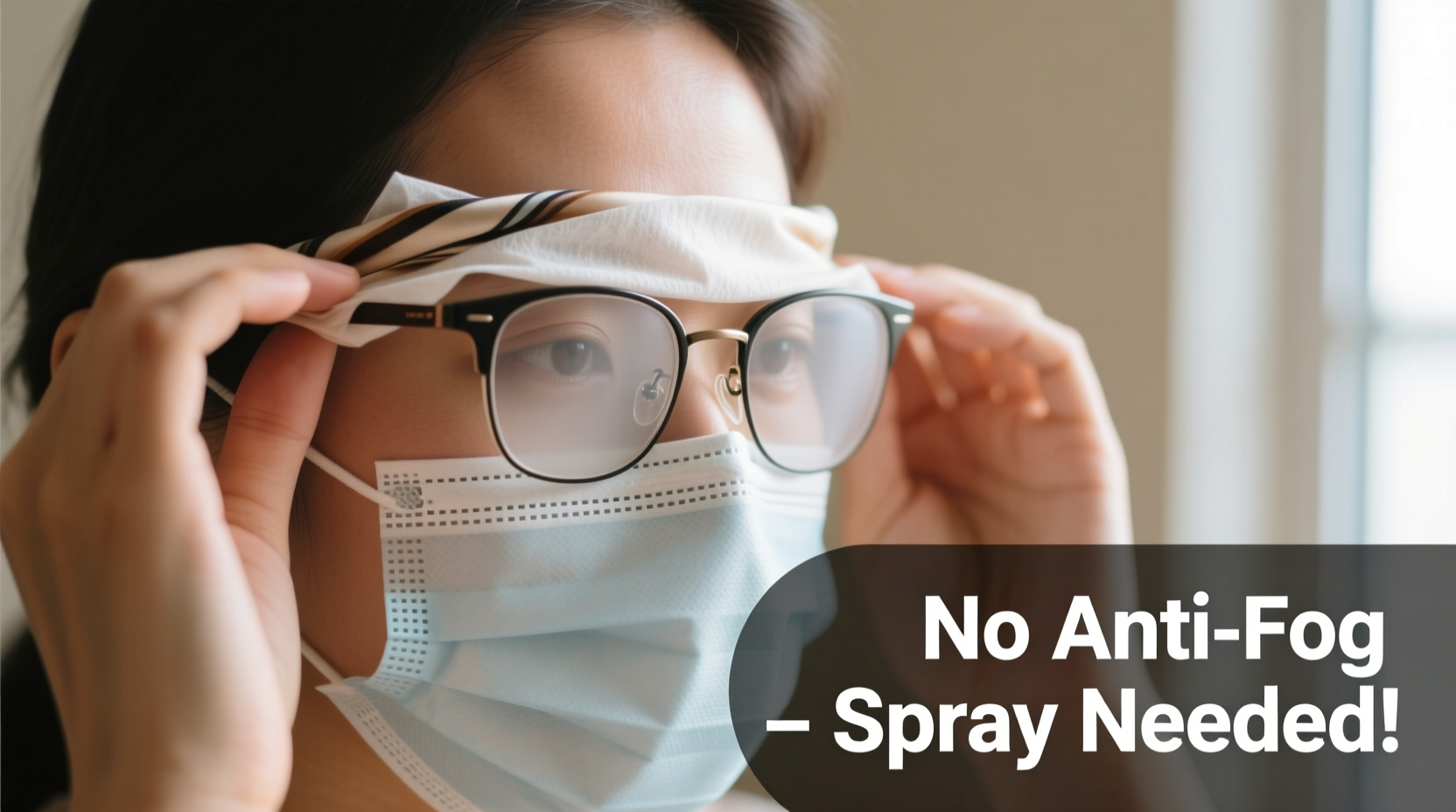
Fogging occurs due to a basic principle of physics: when warm, humid air meets a cooler surface, condensation forms. Your breath is warm and full of moisture. If your mask lacks a proper seal at the bridge of the nose, that air rises, hits your cooler lenses, and turns into tiny water droplets—creating fog.
This problem is worse in colder environments, where the temperature difference between your breath and the lens surface is greater. It also intensifies during physical activity or in poorly ventilated spaces, both of which increase respiratory output.
While anti-fog coatings work by altering the surface tension of the lens so moisture spreads evenly instead of clustering into droplets, mechanical solutions that redirect airflow are equally—if not more—effective, especially when sprays aren't an option.
1. Achieve a Proper Mask Fit with Nose Wire Adjustment
The most critical factor in preventing fogging is ensuring your mask fits securely over the nose. Many disposable and cloth masks come with a built-in bendable nose wire. This small strip of metal is designed to conform to the shape of your nasal bridge, sealing off the top edge of the mask.
To maximize its effectiveness:
- Press the wire firmly along the contour of your nose, from the bridge down to the sides.
- Use both thumbs to mold it while wearing the mask, ensuring no gaps exist above the nose.
- Check for escaping air by placing your hand just above your eyebrows while exhaling.
A well-fitted mask not only reduces fogging but also improves filtration efficiency and comfort over time.
2. Tape Your Mask to Create a Seal (Yes, Really)
Medical professionals have long used tape to secure masks and prevent air leakage. You can apply the same principle at home using hypoallergenic medical tape, waterproof bandages, or even fabric tape.
Here’s how:
- Position your mask correctly on your face.
- Cut two small strips of tape (about 1–2 inches long).
- Place them horizontally across the top edges of the mask, anchoring it to the skin on either side of your nose.
This method physically blocks air from escaping upward. Choose breathable, skin-safe tape to avoid irritation, especially if worn for extended periods.
“Sealing the upper edge of the mask is the single most effective non-chemical way to prevent lens fogging.” — Dr. Lena Patel, Optometrist and Vision Health Consultant
3. Use the Soap Method: A Simple, Scientific Solution
One of the oldest and most reliable DIY anti-fog tricks involves nothing more than liquid dish soap—a substance that alters surface tension much like commercial anti-fog products.
How it works: A thin layer of soap residue disrupts the formation of water droplets, causing moisture to form a transparent sheet instead of fog.
Step-by-Step Guide: Applying the Soap Technique
- Wash your hands thoroughly to avoid smudging lenses.
- Apply a small drop of clear liquid dish soap to each lens.
- Gently rub the soap across the entire surface using your fingertip.
- Rinse the lenses under lukewarm water.
- Shake off excess water and let the glasses air dry—do not wipe.
The invisible soap film remains after drying and can last for several hours, depending on environmental conditions. Reapply as needed, particularly after cleaning the lenses normally.
This method is backed by science: surfactants in soap reduce the contact angle of water droplets, promoting even dispersion. It's commonly used in diving masks and laboratory equipment.
4. Adjust How You Wear Your Mask: The T-Shirt Hack
Sometimes, the solution isn’t about adding anything—it’s about rethinking how you wear what you already have.
A clever technique gaining popularity involves folding a cotton T-shirt and placing it inside the mask over the nose area. The fabric acts as an absorbent barrier, capturing moisture before it reaches your glasses.
How to do it:
- Cut a strip from an old cotton T-shirt (about 2–3 inches wide).
- Fold it into a flat band and insert it into the top compartment of a pocket-style cloth mask.
- Position it along the inner edge that rests on your nose bridge.
The cotton absorbs warm air and slows its release, reducing upward flow. Plus, natural fibers are breathable and less likely to cause skin irritation.
5. Try the \"Double-Mask\" Strategy for Better Fit
Some public health experts recommend double-masking—not just for filtration, but for fit improvement. Wearing a surgical mask underneath a tightly woven cloth mask can significantly reduce gaps, including at the top near the nose.
Benefits:
- The outer cloth mask presses the inner surgical mask closer to the face.
- Multilayer compression enhances the seal without requiring adhesive or modifications.
- Reduces fogging and increases overall protection.
Ensure the outer mask has a nose wire or is structured enough to maintain shape. Avoid overly thick combinations that restrict breathing.
Do’s and Don’ts of Fog Prevention Without Spray
| Do’s | Don’ts |
|---|---|
| Adjust your mask’s nose wire every time you put it on | Assume one fit works all day—readjust as needed |
| Use liquid dish soap sparingly and rinse well | Apply excessive soap that leaves streaks |
| Try taping the top edges with medical-grade adhesive | Use duct tape or strong adhesives on sensitive skin |
| Wear glasses slightly lower on the nose (with caution) | Loosen glasses so much they slip constantly |
| Wash reusable inserts (like cotton strips) regularly | Leave damp fabric inside masks overnight |
Real-World Example: Nurse Maria’s Shift Solution
Maria, an emergency room nurse in Chicago, spends 12-hour shifts in N95 and surgical masks. For months, she struggled with fogged lenses that forced her to constantly clean her glasses during patient assessments.
She tried anti-fog sprays, but they irritated her eyes and wore off quickly. Then, she adopted a combination approach: she began using a surgical mask beneath a cloth mask with a reinforced nose wire, and applied a diluted drop of baby shampoo to her lenses each morning before her shift.
Within days, the fogging stopped. “I don’t have to step out to wipe my glasses anymore,” she said. “It’s a small change, but it makes my job safer and less frustrating.”
Maria now shares this method with colleagues and keeps a small bottle of gentle soap in her locker for quick touch-ups between shifts.
Alternative Household Items That Work Like Soap
If dish soap isn’t available, other mild surfactants can produce similar results:
- Baby shampoo: Designed to be non-irritating and lathers well; excellent alternative.
- Toothpaste (non-gel): Contains surfactants and glycerin—apply thinly, rinse thoroughly.
- Shaving cream: Often used by divers; apply a pea-sized amount, rub, rinse, and air dry.
All function by leaving behind a microscopic residue that prevents droplet formation. Always test on one lens first and avoid abrasive or gel-based formulas that could scratch coatings.
Behavioral Adjusts: Breathe Downward
Your breathing pattern influences fogging. Consciously directing your breath downward—through your mouth and toward the floor—can minimize upward airflow.
Practice diaphragmatic breathing: inhale deeply through the nose, exhale slowly through the mouth with a slight downward tilt of the chin. Over time, this becomes habitual and reduces reliance on mechanical fixes.
This technique is particularly useful in quiet settings like offices or libraries, where frequent mask adjustments aren’t practical.
Checklist: Stop Fogging in 5 Minutes or Less
- ▢ Ensure your mask has a nose wire and mold it snugly to your bridge.
- ▢ Apply a drop of liquid dish soap to each lens, rub gently, rinse, and air dry.
- ▢ Test the seal by exhaling sharply—no warm air should hit your lenses.
- ▢ Consider taping the top corners of the mask to your skin for added security.
- ▢ Wear your glasses over the mask’s top edge, pressing the frame against the fabric to block airflow.
FAQ: Common Questions About Fog-Free Vision
Can I use hand sanitizer to prevent fogging?
No. Hand sanitizer contains alcohol and fragrances that can damage lens coatings and cause eye irritation if vapors rise into your eyes. Stick to mild soaps or approved alternatives.
Why do my glasses fog up more with certain masks?
Masks made of loose-weave fabrics or lacking nose wires allow more air escape. Tight-knit, multi-layered masks with adjustable ear loops and nose wires perform best at containing airflow.
Is it safe to tape a mask to my face every day?
Yes, if you use skin-safe, hypoallergenic tape (like paper or medical tape) and remove it gently. Limit prolonged use if you have sensitive or acne-prone skin. Cleanse the area afterward.
Conclusion: Clear Vision Starts with Smart Habits
Foggy glasses under a mask don’t have to be an unavoidable nuisance. With a few simple, spray-free strategies—proper mask fitting, the soap trick, taping, or behavioral adjustments—you can maintain clear vision throughout the day. These methods are cost-effective, scientifically sound, and easy to integrate into your routine.
You don’t need special products or expensive gadgets. What matters most is consistency and attention to detail: molding the nose wire daily, reapplying the soap film when needed, and choosing masks that fit your face well.




 浙公网安备
33010002000092号
浙公网安备
33010002000092号 浙B2-20120091-4
Comments
No comments yet. Why don't you start the discussion?