
Watching your goldfish float belly-up or struggle to maintain balance is alarming. While it’s tempting to panic and rush to a veterinarian, especially if one isn’t nearby, many cases of buoyancy issues can be managed effectively at home. The key lies in understanding the root cause—most commonly related to digestion, water conditions, or feeding habits—and taking timely, targeted action. With careful observation and a few strategic adjustments, you can often restore your fish’s normal swimming behavior within days.
This guide walks through the science behind why goldfish lose buoyancy, how to diagnose the issue, and what practical steps you can take immediately. From adjusting their diet to fine-tuning your tank environment, these methods are grounded in aquarist experience and biological principles. Most importantly, they’re designed to be safe, accessible, and effective—without requiring emergency vet visits.
Understanding Why Goldfish Float Upside Down
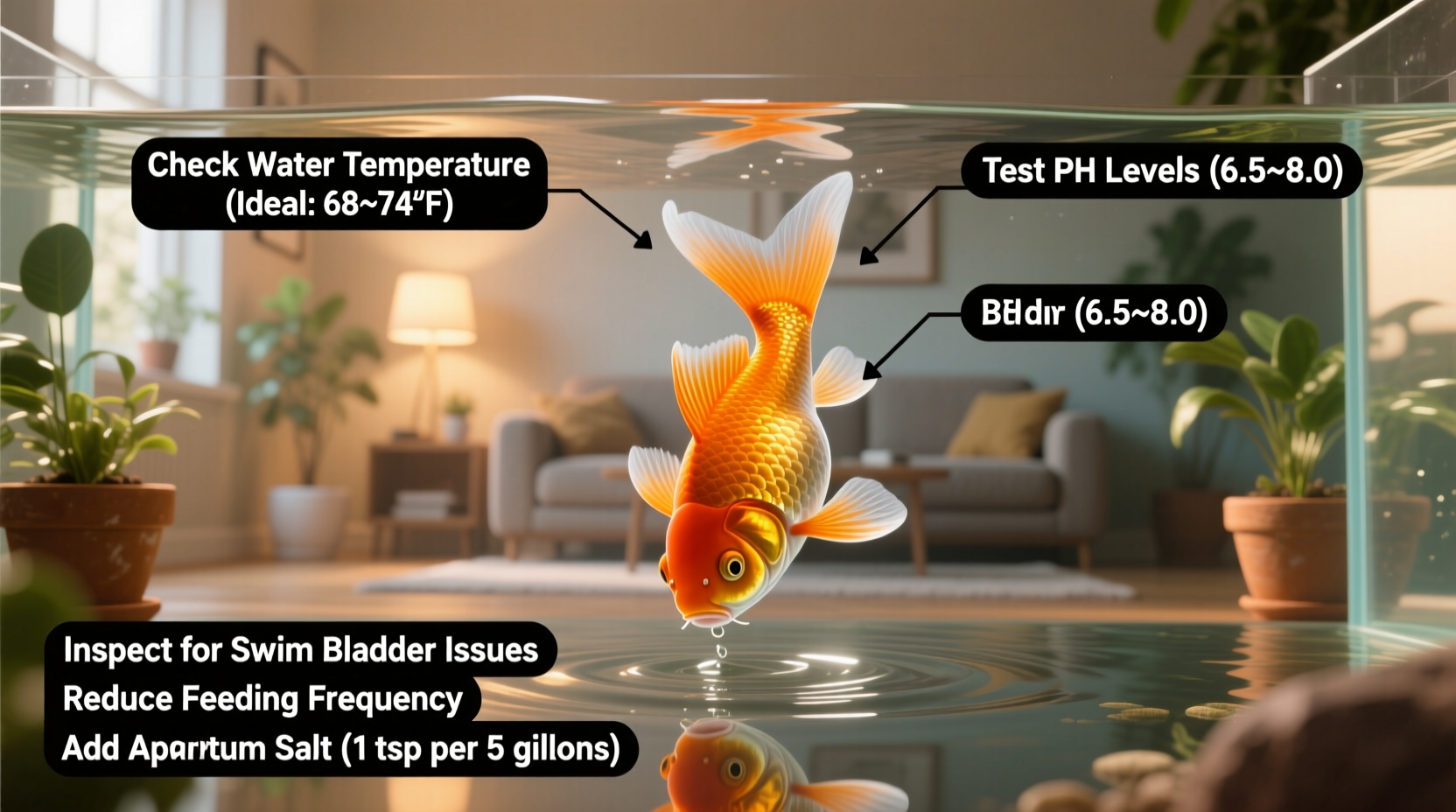
Goldfish don’t naturally swim upside down. When they do, it’s typically a sign of swim bladder disorder—a condition affecting the small internal organ responsible for regulating buoyancy. The swim bladder fills with gas to help the fish rise or deflate to sink. When this system malfunctions, the fish may tilt, bob at the surface, or roll completely over.
Swim bladder issues are rarely caused by infection in otherwise healthy tanks. More often, they stem from preventable factors such as:
- Dietary problems: Dry flake or pellet food expands when soaked in water, causing bloating in the digestive tract and compressing the swim bladder.
- Poor water quality: Ammonia, nitrite, or pH fluctuations stress the fish, weakening its immune system and impairing organ function.
- Constipation: A lack of fiber leads to impacted intestines, which physically press on the swim bladder.
- Rapid temperature changes: Cold water slows digestion, increasing the risk of gas buildup and impaired motility.
- Anatomical constraints: Fancy goldfish (like Orandas or Ranchus) have compressed body shapes that make them more prone to swim bladder issues.
Recognizing that most cases are functional rather than pathological means you can intervene early with environmental and dietary corrections—often avoiding the need for medication or professional treatment.
Step-by-Step Home Treatment Plan
When your goldfish starts floating abnormally, act quickly but calmly. Follow this structured approach to address the most common underlying causes:
- Isolate if necessary: If you have multiple fish and suspect poor water quality, move the affected goldfish to a clean, heated quarantine tank. Otherwise, treat the main tank directly.
- Stop regular feeding for 2–3 days: This gives the digestive system time to clear any blockages. Fasting is one of the most effective ways to relieve pressure on the swim bladder.
- Warm the water slightly: Raise the temperature to 72–74°F (22–23°C). Warmer water boosts metabolism and aids digestion.
- Introduce boiled peas: After fasting, feed one shelled, de-skinned pea half per small goldfish. Peas are high in fiber and help break up constipation.
- Switch to sinking pellets temporarily: Floating foods contribute to air ingestion. Sinking varieties reduce the chance of gulping air at the surface.
- Perform a 30% water change: Use dechlorinated water matched to tank temperature. Clean water reduces stress and supports recovery.
- Monitor for 5–7 days: Track improvements in posture, appetite, and movement. Repeat pea feedings every other day if needed.
This sequence addresses both digestive health and environmental stress—the two pillars of most non-infectious buoyancy problems. In many cases, noticeable improvement occurs within 48 hours of starting the regimen.
Diet Adjustments That Make a Difference
Feeding practices are the single biggest factor in preventing recurring swim bladder issues. Goldfish are often overfed or given inappropriate food, leading to chronic digestive strain.
The ideal diet balances nutrition, texture, and digestibility. Here’s how to optimize it:
- Soak dry food before feeding: Let pellets sit in tank water for 5–10 minutes before adding them. This prevents expansion inside the gut.
- Limit flakes: They expand rapidly and are harder to digest. Use high-quality sinking pellets as a staple.
- Add variety weekly: Include blanched spinach, zucchini, or daphnia to increase fiber and stimulate natural digestion.
- Avoid overfeeding: Feed only what your fish can consume in 2 minutes, once or twice daily. Uneaten food decays and pollutes the water.
| Fish Food Type | Buoyancy Risk | Recommended Use |
|---|---|---|
| Dry flakes | High | Limited; always pre-soaked |
| Floating pellets | High | Avoid during recovery |
| Sinking pellets | Low | Daily staple |
| Boiled peas | Very Low | Weekly or as needed |
| Live/frozen foods | Low | 1–2 times per week |
Consistency matters. Even after your goldfish recovers, maintaining a balanced feeding routine prevents relapse. Think of diet not just as sustenance, but as preventive medicine.
“Over 80% of swim bladder cases I see in home aquariums are linked to feeding errors—not disease. Simple changes in food prep can resolve them fast.” — Dr. Lena Torres, Aquatic Veterinarian & Pet Fish Care Consultant
Water Quality: The Silent Influencer
You can have the perfect diet, but if your tank water is off-balance, your goldfish will remain stressed and vulnerable. Poor water conditions weaken the immune system, slow healing, and exacerbate buoyancy problems.
Test your water regularly using a liquid test kit (more accurate than strips). Key parameters for goldfish include:
- Ammonia: 0 ppm (any detectable level is toxic)
- Nitrite: 0 ppm
- Nitrate: Below 40 ppm
- pH: 6.5–8.0 (stable is more important than exact number)
- Temperature: 68–74°F (20–23°C)
If tests reveal imbalances, correct them gradually. Sudden shifts in water chemistry can shock your fish more than the original problem. For example, if nitrates are high, perform 25% water changes every other day until levels drop—don’t replace 50% at once.
Also consider your filtration. Goldfish produce significant waste. An underpowered filter leads to rapid toxin buildup. Upgrade if necessary, and clean filter media monthly using tank water (never tap water, which kills beneficial bacteria).
Real-Life Example: Fixing Buoyancy in a Fancy Goldfish
Sarah, a hobbyist in Portland, noticed her 2-year-old Oranda named Bubbles was floating vertically every morning, tail down, struggling to reach food at the bottom. She panicked at first, thinking it was a serious illness. Instead of rushing to a clinic, she followed a home protocol similar to the one outlined here.
She fasted Bubbles for 48 hours, raised the tank temperature to 73°F, and performed a 30% water change. Afterward, she fed a quarter of a shelled, mashed pea. Within 24 hours, Bubbles began swimming normally. Over the next week, Sarah switched to sinking pellets and started soaking all dry food. She also tested her water and discovered high nitrates—prompting a schedule of biweekly water changes.
Three months later, Bubbles remains buoyant and active. Sarah credits the turnaround to consistent care, not medication. “I learned that prevention is everything,” she said. “Now I watch his poops like a hawk—if they’re stringy or white, I know it’s time for a pea.”
Essential Checklist for Immediate Action
When you spot abnormal floating, use this checklist to respond quickly and effectively:
- ✅ Stop feeding for 2–3 days
- ✅ Check water parameters (ammonia, nitrite, nitrate, pH)
- ✅ Perform a 30% water change with conditioned water
- ✅ Raise temperature to 72–74°F if below range
- ✅ Prepare a boiled, de-skinned pea
- ✅ Feed pea in small pieces; observe for 24 hours
- ✅ Resume feeding with soaked sinking pellets
- ✅ Monitor behavior for 5–7 days
- ✅ Maintain clean water with weekly partial changes
Follow each step in order. Skipping ahead—such as medicating without diagnosing—can do more harm than good.
Frequently Asked Questions
Can swim bladder disorder be permanent?
In most cases, no. If the cause is dietary or environmental, recovery is likely within days to a week. However, chronic cases in fancy goldfish with severe body conformation may result in recurring issues. Lifelong management through diet and tank setup is usually sufficient.
Should I use Epsom salt for buoyancy problems?
Epsom salt (magnesium sulfate) can help relieve constipation when used properly. Dose at 1–2 tablespoons per 10 gallons in a hospital tank for 12–24 hours. It acts as a muscle relaxant and osmotic agent, helping the fish pass blockages. Do not use in the main tank with live plants or gravel, as it can disrupt biology.
Is upside-down swimming always swim bladder related?
Mostly, yes—but not always. In rare cases, bacterial infections, parasites, or spinal deformities can cause loss of balance. If your fish shows additional symptoms like clamped fins, lethargy, sores, or curved spine, and doesn’t improve after 7–10 days of home care, veterinary consultation may be necessary.
Conclusion: Prevention Is the Best Cure
Seeing your goldfish float upside down doesn’t have to mean an emergency. In the majority of cases, simple, thoughtful interventions at home are enough to restore balance and health. The real victory isn’t just fixing the immediate problem—it’s building a routine that prevents it from returning.
Start today: evaluate your feeding habits, test your water, and commit to consistency. Your goldfish relies on you not just to react, but to create an environment where it can thrive. Small changes compound into long-term wellness. And remember—most fish recover faster when stress is minimized, not medicated.




 浙公网安备
33010002000092号
浙公网安备
33010002000092号 浙B2-20120091-4
Comments
No comments yet. Why don't you start the discussion?