
Rug curling is a common yet frustrating issue in homes, offices, and rental spaces alike. Whether it’s a plush area rug in your living room or a flat-weave mat near the entryway, curled edges not only look unattractive but also pose tripping hazards. Many people reach for double-sided tape or adhesive solutions, but these can damage floors, leave residue, or degrade over time. The good news? There are several effective, non-invasive ways to flatten and stabilize your rugs—no tape or glue required. This guide explores practical, proven methods grounded in material science and interior care expertise to help you keep your rugs lying flat and safe.
Understanding Why Rugs Curl
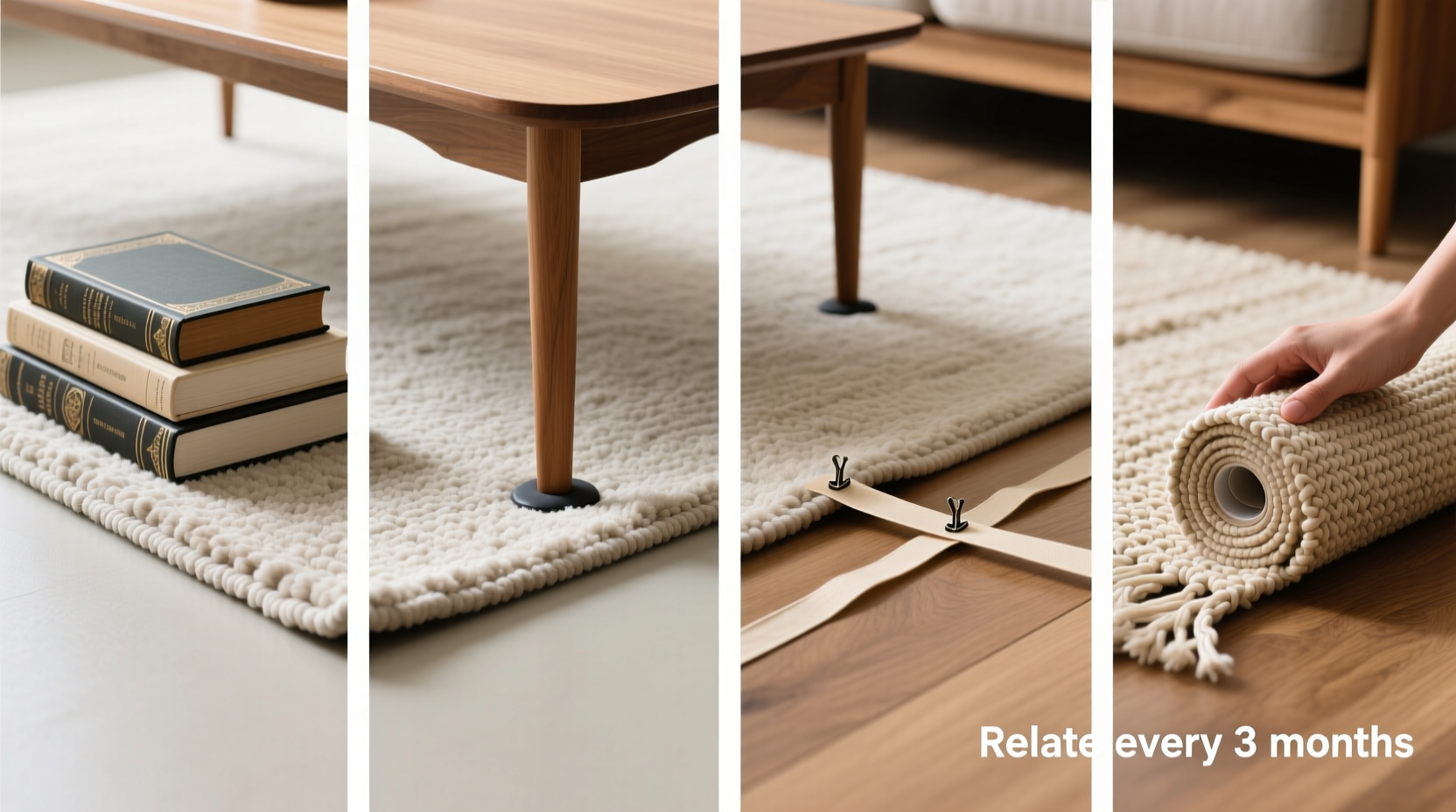
Rug curling typically occurs due to material memory, environmental stress, or improper storage. Most manufactured rugs—especially rolled ones—are stored tightly for long periods before reaching your home. This compression causes fibers and backing materials to “remember” their curled shape. When unrolled, they take time to relax and flatten completely. Additionally, temperature changes, humidity fluctuations, and foot traffic contribute to edge lifting.
Synthetic rugs like polypropylene or nylon tend to hold shape memory more than natural fibers. Meanwhile, thin-backed cotton or jute rugs may curl simply because they lack weight or structural stability. Understanding the root cause helps you choose the most suitable flattening method.
“Rugs behave like any other textile under tension—they respond to pressure, moisture, and gravity. The key is encouraging them to adapt to their new environment gradually.” — Dr. Lena Torres, Textile Preservation Specialist, National Home Furnishings Institute
Effective Methods to Flatten Rugs Without Tape or Glue
Below are seven reliable, non-damaging techniques to address curling edges. These methods work across various rug types, including wool, synthetic blends, cotton, and flatweaves. For best results, combine multiple approaches based on your rug’s size, thickness, and location.
1. Reverse Rolling Technique
This method counteracts the original roll direction during storage. By rolling the rug in the opposite direction, you disrupt the fiber memory causing the curl.
- Unroll the rug completely on a clean, dry surface.
- Flip the rug upside down so the backing faces up.
- Gently roll it from the opposite end (if it was rolled left-to-right, now roll right-to-left).
- Secure the roll with twine or fabric straps and let it rest for 24–48 hours.
- Unroll and lay flat; repeat if necessary.
2. Weighted Flattening Method
Applying consistent downward pressure encourages curled edges to conform to the floor. This passive method requires no tools beyond items likely already in your home.
- Place large books, decorative planters, or ottomans along the curled edges.
- Ensure even distribution of weight across all corners and sides.
- Leave weights in place for 3–7 days, checking daily for improvement.
For larger rugs, use dining chairs (upside down) or low coffee tables. Avoid sharp-edged objects that might crease the fabric.
3. Humidity and Steam Conditioning
Moisture temporarily relaxes textile fibers, making them more pliable. Controlled exposure to humidity can reset curl patterns.
For small to medium rugs:
- Lay the rug on a dry surface and lightly mist the underside with water using a spray bottle.
- Do not soak—just a fine mist to dampen the backing.
- Smooth the edges by hand and place weights along the perimeter.
- Allow 24 hours to air dry completely before walking on it.
Alternatively, use a garment steamer held 6–8 inches from the underside. Pass slowly over curled areas, then press flat and weigh down. This method works especially well on natural fiber rugs like wool or cotton.
4. Furniture Placement Strategy
Strategic furniture arrangement serves both aesthetic and functional purposes. Placing heavy or broad-based furniture across rug edges prevents lifting.
| Rug Location | Furniture Type | Tips |
|---|---|---|
| Living Room | Coffee table, sofa legs | Ensure all four legs sit on the rug to anchor it evenly. |
| Bedroom | Bed frame, nightstands | Position bed so front legs rest on the rug; adds visual balance and stability. |
| Dining Room | Dining table, chairs | Chairs should remain on the rug when pulled out to prevent edge wear and curling. |
| Entryway | Console table, bench | Add a lightweight bench with rubber feet to pin down the back edge. |
5. Rug Underlay as a Preventative Tool
While not technically part of the rug itself, a high-quality non-slip rug pad is one of the most effective long-term solutions—without involving adhesives. These pads grip both the floor and the rug, preventing movement and edge lift.
Choose a felt-rubber blend or recycled natural rubber underlay. Avoid cheap PVC pads, which can degrade and discolor flooring. Cut the pad slightly smaller than the rug to prevent visibility.
Real-World Example: Fixing a Curled Hallway Runner
Sarah, a homeowner in Portland, noticed her 8-foot jute hallway runner began curling dangerously at both ends within weeks of installation. She avoided tape due to hardwood floor concerns and disliked the idea of permanent solutions.
She first tried placing decorative baskets at each end, but light foot traffic caused gradual re-curling. Then, she flipped the rug and reverse-rolled it overnight. After unrolling, she applied a light mist to the backing and placed two heavy floor vases at the ends. Within three days, the edges lay completely flat. To maintain the result, she added a breathable rubber underlay cut to fit beneath the runner. Six months later, the rug remains stable and hazard-free.
This case illustrates how combining mechanical (reverse rolling), environmental (humidity), and physical (weight + underlay) methods yields lasting results.
Step-by-Step Timeline for Immediate Action
If you’re dealing with a newly arrived or recently curled rug, follow this 7-day plan for optimal flattening:
- Day 1: Unroll the rug completely. Flip it upside down and reverse-roll it. Secure with soft ties and let rest overnight.
- Day 2: Unroll and inspect. Lightly mist the backing if the rug is natural fiber. Smooth edges by hand.
- Day 2–7: Place weights (books, furniture) along all curled edges. Keep away from direct sunlight or HVAC vents.
- Day 4: Flip the rug right-side up. Check progress. If edges still lift, repeat misting and weighting.
- Day 6: Consider adding a non-slip underlay if the rug remains unstable.
- Day 7: Remove weights. Test by walking across edges. Repeat earlier steps if needed.
This timeline balances patience with proactive intervention, ensuring minimal disruption while maximizing effectiveness.
Common Mistakes to Avoid
Even well-intentioned efforts can backfire. Steer clear of these common errors:
- Over-wetting the rug: Excess moisture can lead to mold, warping, or dye bleeding—especially in wool or silk.
- Using heat guns or irons directly: High heat damages fibers and melts synthetic backings.
- Ignoring floor type: On glossy tiles or waxed wood, even slight stickiness from residues can mar surfaces.
- Impatience: Rushing the process leads to repeated curling. Allow time for fibers to acclimate.
FAQ: Your Rug Curling Questions Answered
Can I use water on a synthetic rug?
Yes, but sparingly. A light mist on the backing is safe for most synthetics. Avoid soaking, as water can get trapped between layers and cause delamination over time.
How long does it take for a rug to stop curling?
Most rugs begin to flatten within 48 hours of proper treatment. Full stabilization usually takes 3–7 days, depending on thickness, material, and environmental conditions.
Will my rug stay flat forever after these methods?
While results are often long-lasting, rugs in high-traffic areas may require periodic maintenance. Using a quality underlay significantly improves longevity and reduces the need for repeat treatments.
Proactive Care Checklist
Stay ahead of curling with this simple maintenance checklist:
- ✅ Unroll new rugs immediately upon arrival
- ✅ Reverse-roll stored rugs before reuse
- ✅ Use weights or furniture to pin edges for first week
- ✅ Apply a non-slip underlay for permanent installations
- ✅ Rotate rugs every 3–6 months to distribute wear
- ✅ Keep rugs away from direct heat sources and humidifiers
- ✅ Vacuum regularly to maintain pile integrity
Conclusion: Flatter Rugs, Safer Spaces
Stopping rug curling doesn’t require harsh chemicals, permanent fixtures, or hardware store runs. With an understanding of textile behavior and a few everyday tools, you can restore and maintain a sleek, safe floor surface. Whether you're dealing with a vintage Persian piece or a modern indoor-outdoor mat, the principles of pressure, moisture, and time work universally. Implement these strategies consistently, and you’ll enjoy not just a neater space, but a safer, more comfortable one too.




 浙公网安备
33010002000092号
浙公网安备
33010002000092号 浙B2-20120091-4
Comments
No comments yet. Why don't you start the discussion?