
There’s nothing more frustrating than pulling freshly washed sheets from the dryer only to find they’ve shrunk—now too tight for your mattress or uncomfortably snug around your feet. Shrinkage isn’t inevitable. With the right knowledge and habits, you can preserve the fit, softness, and longevity of your bedding. The key lies in understanding fabric behavior, adjusting your laundry routine, and making informed choices when purchasing new linens. This guide breaks down exactly what causes shrinkage, how to prevent it, and what to do if it’s already happened.
Why Do Sheets Shrink After Washing?
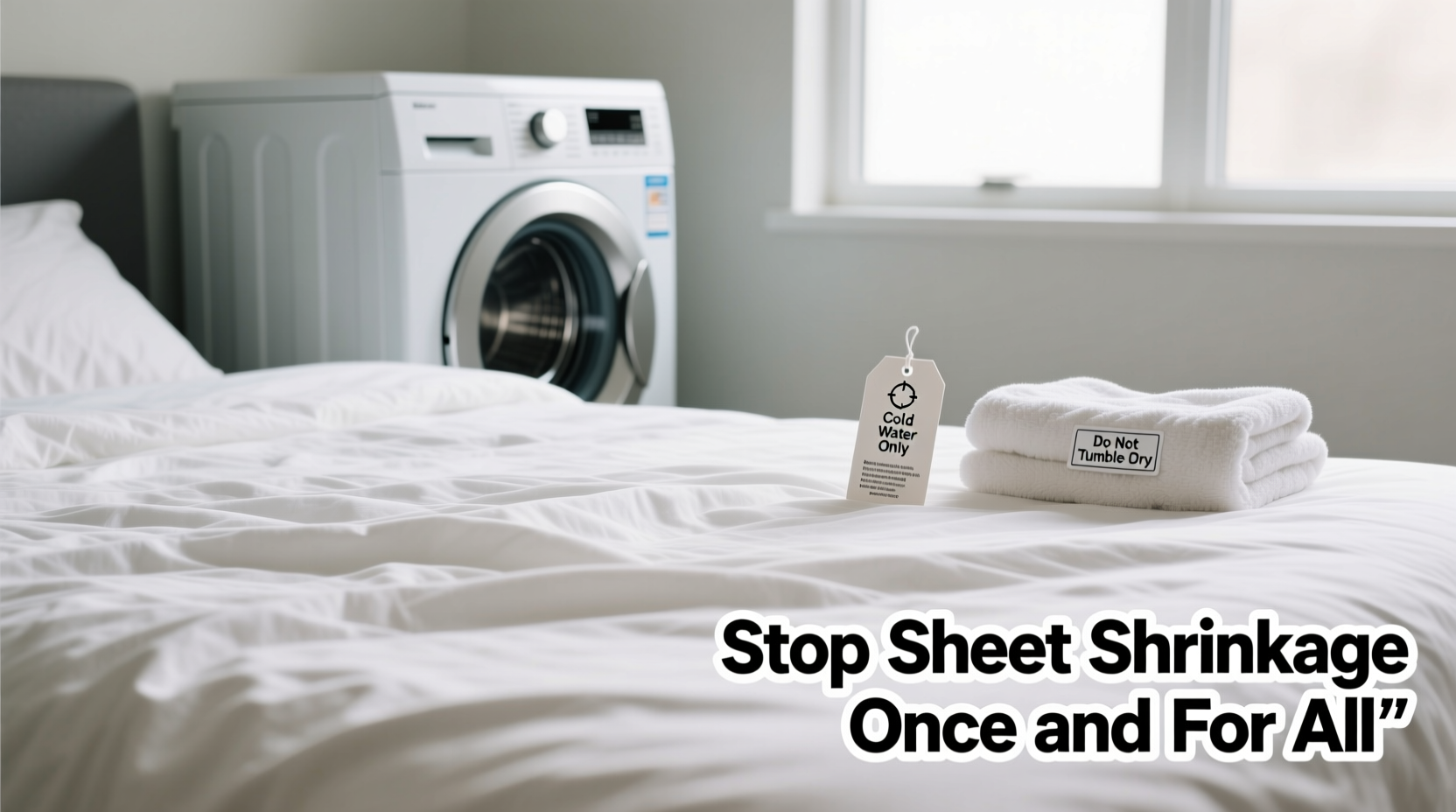
Sheet shrinkage occurs primarily due to the tension released in fabric fibers during washing and drying. During manufacturing, natural fibers like cotton are stretched and woven under tension. When exposed to heat and agitation, this tension releases, causing the fabric to contract. This is especially common in 100% cotton, which has a high absorbency and responds dramatically to temperature changes.
Synthetic blends like polyester resist shrinkage better because their fibers are engineered to be stable. However, even blended fabrics can degrade over time if treated harshly. Other contributing factors include:
- High water temperature – Hot water causes fibers to tighten and pull together.
- High-heat drying – Tumbling at high temperatures accelerates fiber contraction.
- Excessive agitation – Overloading or using aggressive wash cycles stresses fabric structure.
- Poor initial sizing – Some manufacturers cut sheets close to minimum dimensions, leaving little room for natural settling.
“Most shrinkage happens in the first few washes, especially with natural fibers. Pre-shrinking during production helps, but not all brands do it consistently.” — Dr. Lena Torres, Textile Scientist, University of Rhode Island
Fabric Types and Their Shrink Risks
Not all sheets react the same way to washing. Understanding your fabric type is the first step in preventing shrinkage. Below is a comparison of common sheet materials and their susceptibility to shrinking.
| Fabric Type | Shrink Risk | Heat Tolerance | Best Wash Method |
|---|---|---|---|
| 100% Cotton (especially non-pre-shrunk) | High | Low | Cold water, gentle cycle, low heat dry |
| Pima or Egyptian Cotton | Medium | Medium | Cool water, light tumble dry |
| Cotton-Polyester Blend (e.g., 50/50) | Low-Medium | High | Warm water, regular cycle, medium heat |
| Microfiber | Very Low | High | Warm water, standard cycle, medium heat |
| Linen | High | Low | Cold water, gentle cycle, air dry preferred |
| Bamboo Rayon | Medium | Low | Cold water, delicate cycle, no high heat |
As shown, natural fibers tend to shrink more than synthetics. If shrinkage is a major concern, consider blends or microfiber for durability. However, many people prefer the breathability of cotton and linen—so proper care becomes essential.
Step-by-Step Guide to Washing Sheets Without Shrinking
Preventing shrinkage doesn’t require special equipment—just consistency and attention to detail. Follow this six-step process every time you launder your sheets:
- Check the care label – Every set comes with specific instructions. Look for terms like “cold wash,” “tumble dry low,” or “do not bleach.” Ignoring these can void warranties and damage fibers.
- Use cold water – Set your washer to cold (below 30°C / 85°F). Cold water minimizes fiber stress and prevents dye fading. Modern detergents work effectively even in cool conditions.
- Select the gentle cycle – High spin speeds and aggressive agitation stretch and weaken fibers. The gentle or delicate cycle reduces mechanical stress.
- Avoid overloading – Sheets need room to move freely in the drum. Overcrowding leads to uneven cleaning and increased friction, which contributes to wear and shrinkage.
- Dry on low heat or air dry – Remove sheets while slightly damp and hang them on a clothesline or drying rack. If using a dryer, select low heat and remove promptly to prevent over-drying.
- Fold immediately – Once dry, fold your sheets neatly to prevent deep creases that can stress fibers over time.
Real Example: How One Household Fixed Chronic Shrinkage
The Martinez family had been replacing their bed sheets every eight months. They loved their 100% Egyptian cotton sets but noticed each wash made them tighter—eventually failing to stay on the mattress corners. After consulting a textile care specialist, they changed three key habits:
- Switched from hot to cold water washes.
- Stopped using the “extra dry” setting on their dryer.
- Began removing sheets from the dryer with slight dampness and finishing drying on a retractable indoor rack.
After six months, their sheets retained their original fit and felt softer. “We didn’t realize how much heat we were using,” said Maria Martinez. “Now our sheets last over two years, and we save money and hassle.”
Do’s and Don’ts of Sheet Care
To reinforce best practices, here’s a clear list of actions that protect your sheets versus those that accelerate shrinkage.
| Do’s | Don’ts |
|---|---|
| Wash in cold water | Use hot water regularly |
| Use mild, fragrance-free detergent | Overuse detergent or fabric softener |
| Dry on low heat or air dry | Tumble dry on high heat for extended periods |
| Wash sheets weekly or bi-weekly | Leave soiled sheets unwashed for weeks |
| Rotate between 2–3 sets to reduce wear | Use one set continuously without rest |
| Store clean sheets in a breathable cotton bag | Keep sheets in plastic bins where moisture can build |
One often-overlooked mistake is using fabric softener. While it makes sheets feel softer initially, it coats fibers with chemicals that reduce absorbency and break down cotton over time, increasing brittleness and vulnerability to shrinkage.
What to Do If Your Sheets Have Already Shrunk
If shrinkage has already occurred, don’t discard the sheets just yet. In some cases, you can partially restore their size.
Try this method:
- Fill a basin with lukewarm water (not hot).
- Add 1–2 tablespoons of hair conditioner or baby shampoo.
- Soak the sheet for 20–30 minutes to relax the fibers.
- Gently stretch the fabric back to its original dimensions while wet—pull lengthwise and widthwise.
- Lay flat on a drying rack and reshape as it dries.
This works best on cotton and linen, as the natural fibers respond well to hydration and manual manipulation. Results vary, but many users report regaining up to 80% of lost size. Note: this is a recovery tactic, not a long-term solution. Prevention remains far more effective.
Choosing Sheets That Resist Shrinkage
Your best defense begins at purchase. Not all sheets are created equal when it comes to dimensional stability. Look for these features when shopping:
- Pre-shrunk fabric – Reputable brands often pre-wash cotton to minimize post-purchase shrinkage.
- Tight weave construction – Percale and sateen weaves are generally more stable than loose weaves.
- Blended materials – A small percentage of polyester (10–20%) can significantly improve shape retention.
- Reinforced edges and corners – These areas are prone to stress; double stitching helps maintain integrity.
Brands like Brooklinen, Parachute, and Buffy emphasize pre-shrinking and durable construction. While they may cost more upfront, their longevity offsets replacement costs over time.
FAQ: Common Questions About Sheet Shrinkage
Can you unshrink sheets completely?
Complete restoration is unlikely, but partial recovery is possible using the soaking and stretching method. Success depends on fiber type and the severity of shrinkage. Prevention is always preferable.
Do all cotton sheets shrink?
Most 100% cotton sheets will shrink to some degree, typically 3–5%, unless they are labeled as pre-shrunk. Higher-quality cotton like Pima or Egyptian may shrink less due to longer, stronger fibers.
Is air drying really better than machine drying?
Yes. Air drying eliminates heat exposure entirely, preserving fiber integrity and preventing thermal contraction. It also reduces energy use and extends the life of your sheets by minimizing mechanical stress.
Conclusion: Take Control of Your Linen Longevity
Shrinking sheets aren’t a fact of life—they’re a sign of mismatched care and fabric knowledge. By choosing the right materials, adjusting your laundry settings, and treating your bedding with intention, you can maintain perfect-fitting sheets for years. Small changes like switching to cold water, avoiding high heat, and rotating your sets make a lasting difference. Think of your sheets not as disposable items but as long-term investments in comfort and sleep quality.




 浙公网安备
33010002000092号
浙公网安备
33010002000092号 浙B2-20120091-4
Comments
No comments yet. Why don't you start the discussion?