
Oversleeping is more than just a morning inconvenience—it disrupts your productivity, throws off your circadian rhythm, and can negatively impact mental health over time. Many people assume they lack willpower when they hit snooze repeatedly, but the real issue often lies in poor alarm strategy and misaligned sleep hygiene. The solution isn’t about forcing yourself awake; it’s about designing a system that makes waking up easier, more natural, and harder to ignore. This guide explores alarms that actually work, behavioral adjustments, and science-backed techniques to help you rise on time—without struggle.
The Science Behind Oversleeping and Alarm Failure
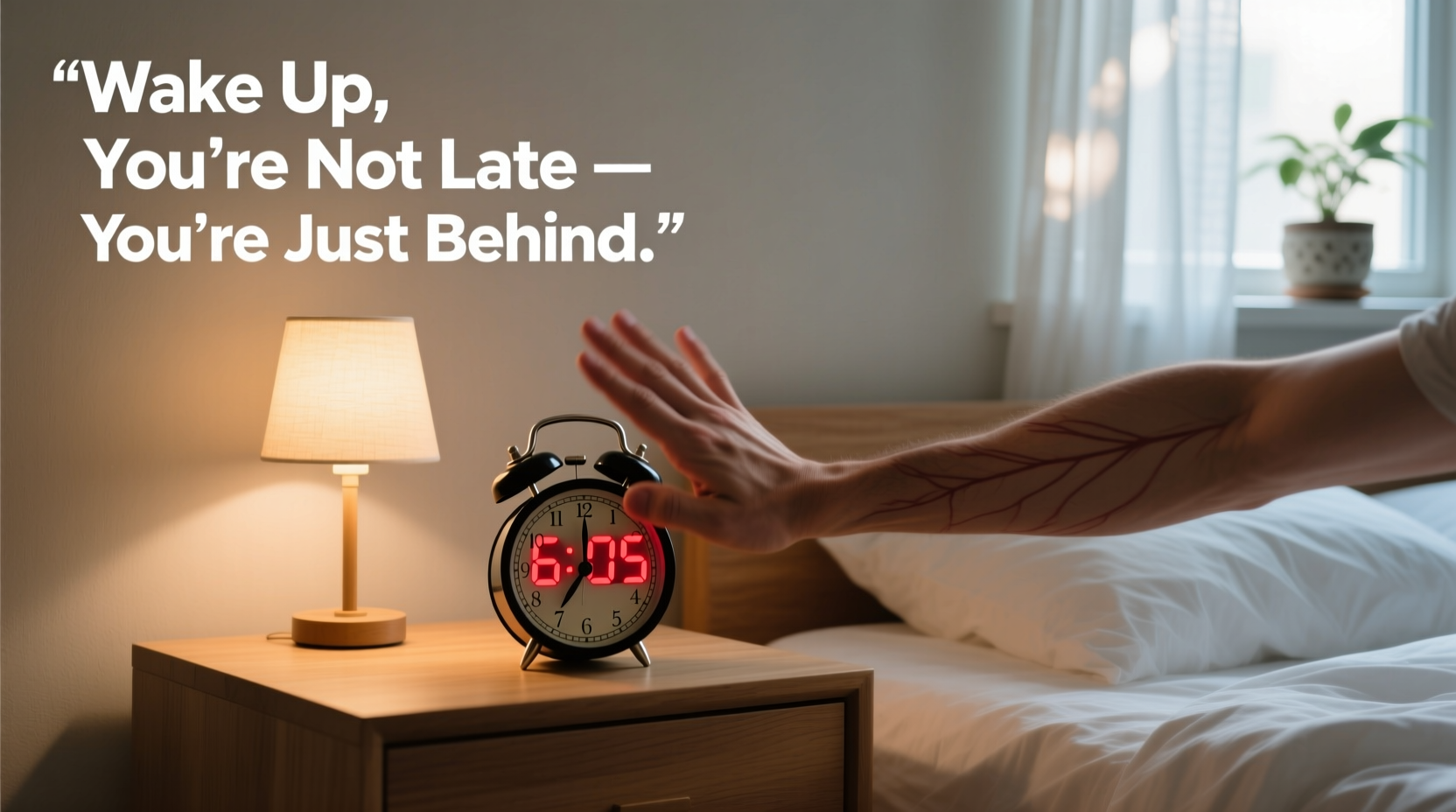
Your brain doesn’t simply “decide” to oversleep. It responds to biological signals, sleep quality, and environmental cues. When you set an alarm but consistently fail to respond, the root cause may not be laziness—it could be sleep inertia, fragmented sleep cycles, or even alarm desensitization.
Sleep inertia refers to the groggy state immediately after waking, especially if you’re pulled from deep sleep. If your alarm goes off during slow-wave sleep (stages 3 or 4), you’ll feel disoriented and more likely to shut it off instinctively. Research from the Sleep Research Society shows that waking during REM or light sleep leads to faster alertness and better mood upon rising.
Additionally, repeated exposure to the same alarm tone can lead to habituation—the brain learns to tune it out. That once-jarring beep becomes background noise, reducing its effectiveness over time.
“People don’t oversleep because they’re weak-willed. They oversleep because their environment and routines are working against their biology.” — Dr. Lisa Medalie, Behavioral Sleep Medicine Specialist
Alarms That Actually Work: Types and Effectiveness
Not all alarms are created equal. The key is choosing one that engages multiple senses and creates mild urgency without causing stress. Below is a breakdown of alarm types proven to reduce oversleeping.
| Alarm Type | How It Works | Effectiveness | Best For |
|---|---|---|---|
| Vibrating Alarm Clocks | Placed under pillow or mattress; uses physical vibration | High (especially for heavy sleepers) | Light-sensitive individuals, shared rooms |
| Smartphone Alarms with Movement Challenge | Requires solving math problems or scanning QR codes to turn off | Very High | Tech-savvy users who keep phones nearby |
| Gradual Light Simulation Alarms | Mimics sunrise by slowly brightening a lamp | High (boosts melatonin regulation) | People with seasonal affective disorder or delayed sleep phase |
| Physical Distance Alarms | Alarm placed across the room; forces起身 | Moderate to High | Those who respond to motion cues |
| Scent-Based Alarms | Releases energizing scent (e.g., peppermint, citrus) at wake time | Moderate (emerging tech) | Sensory learners, non-auditory responders |
The most effective alarms combine sensory engagement with behavioral friction—making it harder to dismiss the wake-up signal without conscious effort.
Step-by-Step: Building a Wake-Up System That Works
Success doesn’t come from a single alarm—it comes from a sequence of actions designed to support alertness. Follow this six-step process to create a reliable morning awakening routine.
- Determine Your Ideal Wake Time
Choose a consistent wake-up time—even on weekends. Variability confuses your internal clock. Use a sleep calculator to find a time aligned with the end of a 90-minute sleep cycle. - Set Multiple Alarms Strategically
Place one alarm across the room (physical distance), use a vibrating wristband (tactile), and set a smartphone alarm with a puzzle challenge (cognitive). Set the first alarm to go off 5 minutes before your target rise time to initiate partial arousal. - Use Light as a Biological Trigger
Invest in a dawn simulator lamp. Program it to start glowing 30 minutes before wake time. Natural light suppresses melatonin, signaling your body it’s time to awaken. - Create a Post-Wake Action Plan
Decide what you’ll do immediately upon standing: drink water, splash face with cold water, open curtains. Having a pre-planned action reduces decision fatigue while groggy. - Leverage Accountability
Tell a friend or coworker your wake-up time and ask them to text you at that hour. Better yet, join a morning accountability group via apps like StickK or Focusmate. - Test and Refine Weekly
Track how many times you hit snooze, whether you rose within 1 minute, and your energy level at 9 a.m. Adjust variables accordingly—swap alarm types, change placement, or tweak timing.
Real Example: How Sarah Stopped Hitting Snooze Every Morning
Sarah, a 32-year-old graphic designer, struggled with chronic oversleeping despite setting three phone alarms. She’d wake briefly, silence them, and fall back into deep sleep for up to an hour. After consulting a sleep coach, she implemented a multi-sensory alarm strategy:
- She bought a Philips SmartSleep Wake-Up Light that began simulating sunrise at 6:30 a.m.
- Placed her phone alarm across the bedroom, requiring her to stand to turn it off.
- Downloaded Alarmy, which forced her to take a photo of her sink to disable the alarm—prompting her to walk to the bathroom.
- Committed to drinking a glass of water immediately upon standing.
Within two weeks, Sarah reduced oversleeping incidents from five times a week to zero. Her mornings became more productive, and she reported improved focus throughout the day. The combination of light, movement, and micro-habits made the difference—not sheer willpower.
Essential Tips and Common Mistakes
Even with the best alarms, certain habits sabotage your efforts. Avoid these pitfalls and apply the following tips to maximize success.
Do’s and Don’ts of Effective Alarm Use
| Do | Don't |
|---|---|
| Use alarms that require physical movement | Rely solely on sound alarms near your head |
| Wake up at the same time daily, including weekends | Let your schedule drift by more than 30 minutes |
| Expose yourself to bright light within 5 minutes of waking | Stay in a dark room after getting up |
| Drink water immediately upon rising | Reach for caffeine before hydration |
| Test different alarm tones monthly | Use the same ringtone for years |
A common mistake is assuming that sleeping longer compensates for poor sleep quality. In reality, eight hours of fragmented sleep leaves you more fatigued than six and a half hours of consolidated, restorative rest. Prioritize sleep continuity over duration.
FAQ: Common Questions About Beating Oversleeping
Why do I not hear my alarm when I’m tired?
Your brain enters a protective mode during deep sleep, filtering out external stimuli. This is especially true if you're sleep-deprived or have irregular sleep patterns. Using tactile or visual alarms (like vibrations or light) bypasses auditory filtering and increases wake-up success.
Is it better to have one loud alarm or several spaced ones?
One well-designed alarm that requires action is better than multiple passive alarms. However, layering alarms—such as a gentle light ramp followed by a physical challenge alarm—can be highly effective. Spacing redundant sound alarms 5–7 minutes apart often leads to conditioned ignoring.
Can oversleeping be a sign of a medical issue?
Yes. Chronic oversleeping, especially when accompanied by daytime fatigue, may indicate conditions like sleep apnea, depression, or circadian rhythm disorders. If lifestyle changes don’t improve your wakefulness, consult a sleep specialist.
Final Checklist: Your Anti-Oversleeping Routine
Before bed, run through this checklist to ensure tomorrow’s wake-up is successful:
- ✅ Set your wake-up time and stick to it 7 days a week
- ✅ Place at least one alarm across the room or out of easy reach
- ✅ Activate a sunrise simulation light for 30 minutes before waking
- ✅ Charge your phone in another room—or use a puzzle-based app if kept nearby
- ✅ Prepare a simple post-wake task (e.g., drink water, open blinds)
- ✅ Avoid screens and heavy meals within 1 hour of bedtime
- ✅ Track your wake-up success for 7 days to identify patterns
Conclusion: Take Control of Your Mornings
Oversleeping isn’t a character flaw—it’s a systems failure. By replacing ineffective alarms with strategic, multi-sensory wake-up tools and aligning your habits with your biology, you can transform your mornings from chaotic to controlled. Start small: move your alarm across the room tonight, download a challenge-based app, or invest in a light-based alarm. Consistency compounds. Within weeks, rising on time will feel less like a battle and more like a natural transition. Your most productive self begins the moment you decide not to hit snooze.




 浙公网安备
33010002000092号
浙公网安备
33010002000092号 浙B2-20120091-4
Comments
No comments yet. Why don't you start the discussion?