
Artificial Christmas trees are a long-term investment in holiday tradition. With proper care, they can last 10 years or more, maintaining their fullness, color, and structural integrity. Yet, too often, these trees are packed away hastily after the holidays—stuffed into attics, garages, or damp basements without protection. The result? Brittle branches, faded needles, tangled wires, and layers of dust that cling stubbornly by next season.
The difference between a tree that looks brand-new year after year and one that appears worn-out lies not in the initial quality alone, but in how it's stored. Proper storage prevents physical damage, minimizes exposure to environmental hazards, and preserves the aesthetic appeal of your centerpiece. Whether you own a pre-lit model, a slimline design, or a towering 9-foot spruce, the principles of effective storage remain consistent across types.
Below is a comprehensive guide to storing your artificial Christmas tree so it remains in peak condition, ready to shine each December without fail.
1. Prepare Your Tree for Storage: Clean Before You Pack
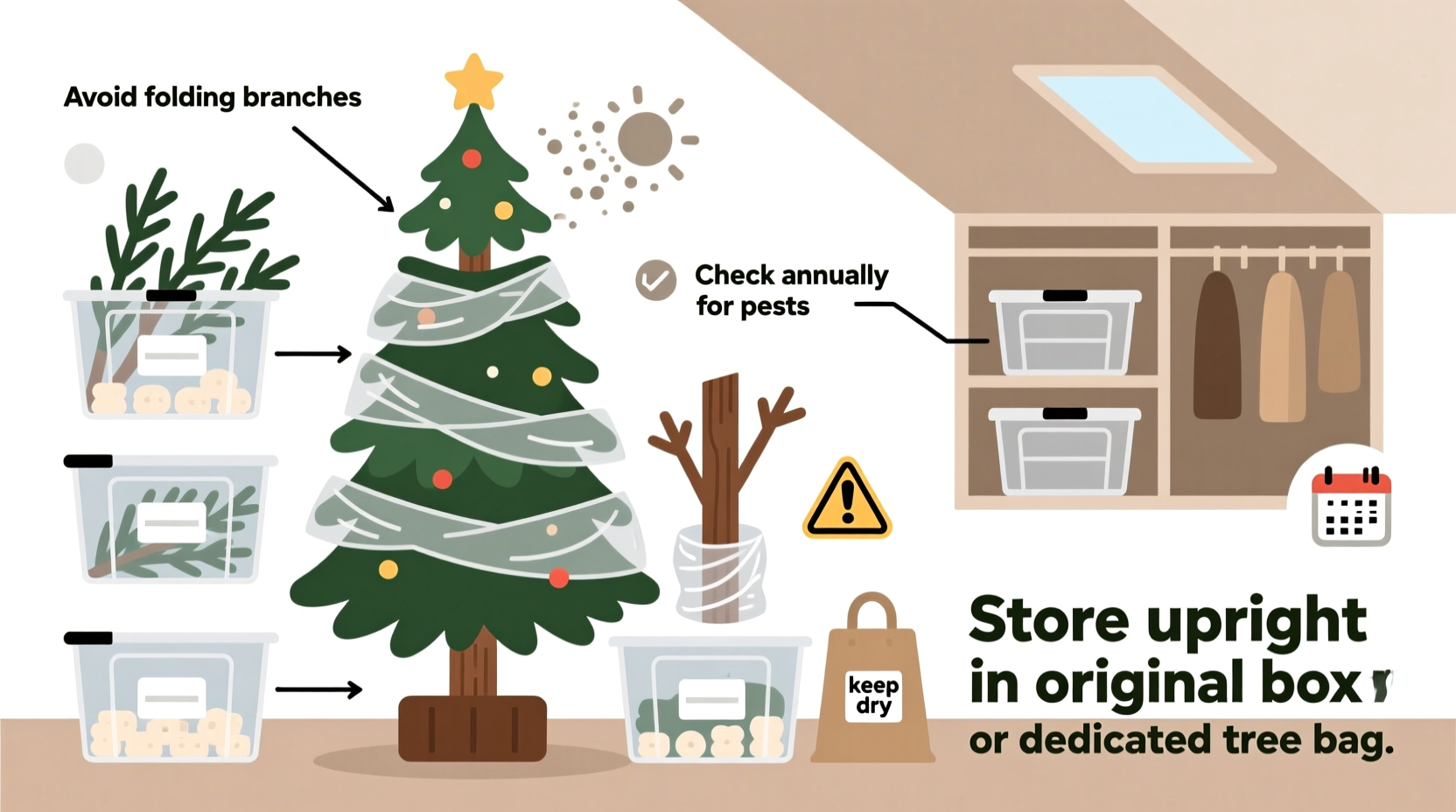
Storing a dirty tree invites mold, pests, and irreversible staining. Dust, pet hair, and even sugar residue from spilled drinks can accumulate on branches during display. Over time, especially in warm or humid environments, this debris degrades plastic components and attracts insects.
Begin by removing all decorations—ornaments, tinsel, lights (if removable), and tree toppers. Lay out a clean tarp or sheet beneath the tree to catch falling debris. Use a microfiber cloth or soft duster to gently wipe down each branch section. For heavier dust buildup, a handheld vacuum with a brush attachment works efficiently without bending delicate tips.
If your tree has built-in lighting, inspect each bulb and connection point before packing. Replace any burnt-out bulbs and ensure no wires are frayed or exposed. Test the lights once more after reassembly next year—but doing a final check now reduces troubleshooting later.
2. Disassemble with Care: Section by Section
Most artificial trees come in multiple sections designed to nest together. Handle each segment separately to avoid stress on hinges or central poles. Start from the top: remove the uppermost tier first, followed by middle and base sections. Place them upright on a clean surface as you go.
For hinged trees (those with permanently attached branches), open the limbs fully before collapsing them inward. This prevents unnatural bends that lead to breakage over time. Fold symmetrically and secure loosely with fabric ties or Velcro straps—never use rubber bands or twist ties, which can cut into plastic and leave permanent marks.
The center pole should be wiped down and stored either inside the largest tree section or separately in a labeled tube or sleeve. Losing the pole is a common frustration; keeping it organized ensures smooth setup in the future.
Step-by-Step: How to Disassemble and Pack Safely
- Remove all ornaments, lights, and tree topper.
- Lay a clean tarp or bedsheet under the tree to catch debris.
- Dust each branch using a microfiber cloth or vacuum with a soft brush.
- Inspect lights and replace faulty bulbs if accessible.
- Detach tree sections starting from the top.
- Fold hinged branches carefully toward the trunk.
- Secure folded branches with soft fabric ties—do not compress tightly.
- Wipe and store the center pole separately or within the base section.
- Pack each section individually before placing in storage containers.
3. Choose the Right Storage Solution: Boxes vs. Bags vs. Custom Cases
Not all storage methods are created equal. Many people reuse cardboard boxes from the original packaging, but these degrade over time, offer little moisture resistance, and collapse under pressure. Others resort to trash bags, which trap humidity and promote mildew.
The best option is a durable, purpose-built tree storage bag or hard-shell container. These are typically made from heavy-duty polyester or polypropylene with reinforced stitching and zippers. Some feature wheels, handles, or stackable designs for easier handling.
| Storage Type | Pros | Cons | Best For |
|---|---|---|---|
| Cardboard Box | Inexpensive, rigid structure | Not moisture-resistant, crushes easily | Short-term, climate-controlled spaces |
| Plastic Bin (with lid) | Airtight, pest-proof, stackable | Bulky, expensive initially | Garages, basements, long-term use |
| Fabric Storage Bag | Affordable, collapsible, often wheeled | Not fully waterproof, less crush protection | Attics, closets, moderate climates |
| Custom Hard Case | Maximum protection, weather-sealed | High cost, takes up space | High-end trees, harsh environments |
When selecting size, allow at least 2–3 inches of clearance around each packed section. Over-stuffing leads to bent tips and broken branches. If your tree came with its original box, consider reinforcing corners with duct tape and lining the interior with acid-free tissue paper to reduce static and friction.
4. Ideal Storage Environment: Location Matters More Than You Think
No matter how well-packed your tree is, storing it in an unsuitable environment can undo all your efforts. Heat, cold, moisture, and sunlight are the primary enemies of artificial trees.
- Heat: Attics in summer can exceed 130°F (54°C), causing PVC needles to warp, fade, or become brittle.
- Cold: Garages in winter may drop below freezing, making plastic components prone to cracking when handled.
- Moisture: Basements and crawl spaces often have high humidity, leading to mold growth and metal corrosion in light wiring.
- Light Exposure: UV rays from windows or skylights bleach green pigments, turning vibrant foliage dull or yellow.
The ideal storage location is a cool, dry, dark area with stable temperatures—such as an interior closet, under-bed space, or climate-controlled storage unit. Avoid exterior sheds, unheated garages, and areas near furnaces or water heaters.
“Temperature fluctuations are just as damaging as direct moisture. A tree stored in a stable 60–70°F (15–21°C) environment will outlast one subjected to seasonal extremes—even if both are in identical containers.” — Daniel Reeves, Home Goods Longevity Analyst
If you must store in a garage or attic, elevate containers off the floor using pallets or shelves to avoid contact with condensation or flood risks. Place silica gel packs inside storage units to absorb ambient moisture and inhibit mold.
5. Prevent Tangling, Breakage, and Dust Buildup: Pro Techniques
Dust accumulation is inevitable over months of storage, but it can be dramatically reduced with smart preparation. The goal is to create a sealed yet breathable barrier that keeps contaminants out while allowing minimal air circulation to prevent stagnation.
Before sealing your container, wrap each tree section in breathable cotton sheets or muslin cloth. This adds an extra layer of protection against scratches and absorbs minor internal moisture. Avoid plastic wraps or non-porous materials, which trap humidity and encourage mildew.
For pre-lit trees, take special care with cords. Coil excess wiring loosely and secure with twist-free ties. Store spare bulbs and fuses in a small labeled envelope taped to the outside of the container. This avoids frantic searches when one string fails mid-decorating.
Checklist: Pre-Storage Tree Care Routine
- ✅ Remove all decorations and tinsel
- ✅ Dust every branch with a microfiber cloth or soft brush
- ✅ Vacuum hard-to-reach areas between branches
- ✅ Inspect and test light strings; replace dead bulbs
- ✅ Detach and clean the center pole
- ✅ Fold hinged branches gently and secure with fabric ties
- ✅ Place each section into appropriately sized containers
- ✅ Add desiccant packs to control moisture
- ✅ Label containers clearly with contents and year
- ✅ Store in a cool, dry, dark location off the ground
Mini Case Study: From Faded to Flawless – One Family’s Fix
The Thompson family had used the same 7.5-foot pre-lit artificial tree for eight years. By the ninth season, it looked tired—branches drooped, several sections were missing tips, and dust clung so thickly it required hours of cleaning. They considered replacing it until they learned about proper storage techniques.
That January, they disassembled the tree carefully, cleaned each section, and invested in two heavy-duty wheeled storage bags with zippered enclosures. They moved their storage location from a leak-prone basement to a hall closet. Each year since, they’ve maintained the routine: quick dusting, inspection, and organized packing.
Now in its 14th season, the tree still receives compliments each holiday. While not new, it looks well-maintained and full—proof that consistent care extends lifespan far beyond expectations.
FAQ: Common Questions About Artificial Tree Storage
Can I store my artificial tree in the garage?
You can, but only if the garage is insulated and climate-controlled. Unheated garages expose trees to freezing temperatures and condensation, increasing the risk of cracked branches and corroded wiring. If unavoidable, use a hard-sided plastic bin with a tight seal and elevate it off the floor.
How do I prevent branches from getting crushed?
Use properly sized containers that don’t require forceful compression. Fold branches inward gently and use soft ties instead of binding them tightly. Insert rolled towels or pool noodles around fragile sections for added cushioning.
Is it safe to store an artificial tree in the attic?
Only if the attic is well-ventilated and temperature-regulated. Most attics become excessively hot in summer, accelerating material degradation. If storing there, choose a UV-resistant container, add insulation around the bin, and avoid placing it directly under the roofline.
Conclusion: Protect Your Holiday Investment Year-Round
An artificial Christmas tree isn’t just decor—it’s a seasonal centerpiece that brings joy and tradition into your home. Treating it with care during the off-season ensures it continues to deliver that magic, year after year. Simple habits like cleaning before storage, using the right containers, and choosing a stable environment make all the difference in preserving appearance and function.
You don’t need expensive gear to get started. Even upgrading from a trash bag to a sturdy fabric tote and moving your storage spot from the garage to a closet can significantly extend your tree’s life. The effort you invest now pays off in fewer repairs, less stress during setup, and a more beautiful display every December.




 浙公网安备
33010002000092号
浙公网安备
33010002000092号 浙B2-20120091-4
Comments
No comments yet. Why don't you start the discussion?