
Every year, millions of households unpack their artificial Christmas trees with excitement—only to find brittle branches, scattered needles, or misshapen silhouettes. While these trees are designed for reuse, improper storage is the leading cause of premature wear, shedding, and structural damage. With a little foresight and care, an artificial tree can last 10 years or more without losing its luster. The key lies not in how you decorate it, but in how you store it after the holidays.
Proper storage preserves the tree’s shape, protects delicate materials, and prevents dust buildup that accelerates deterioration. Whether your tree is pre-lit, flocked, or ultra-realistic spruce, the way it spends the other 11 months of the year determines its performance on display. This guide walks through every step—from disassembly to seasonal retrieval—with expert-backed strategies to keep your tree looking fresh year after year.
Why Artificial Trees Shed and Deteriorate
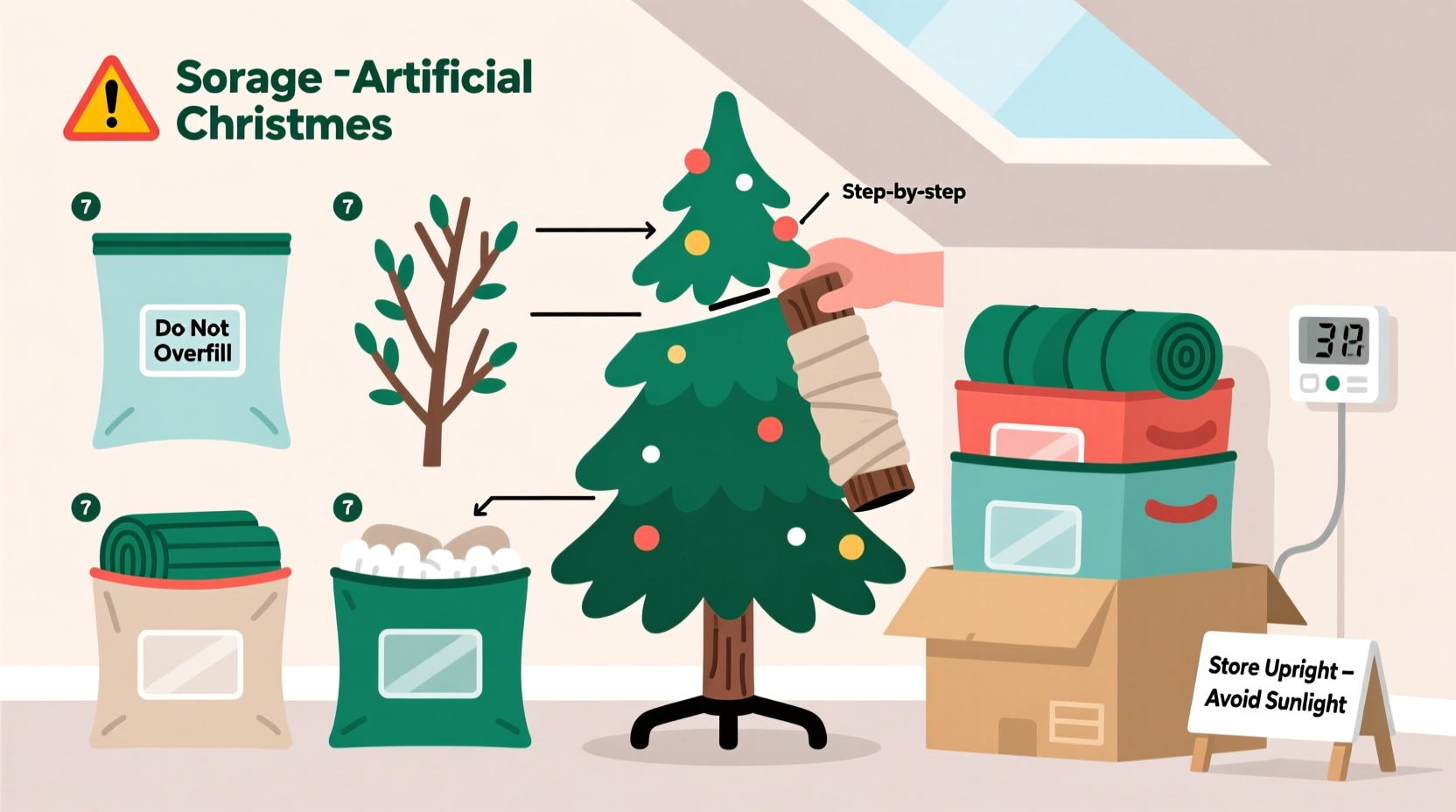
Unlike real trees, which dry out naturally, artificial trees shed due to mechanical stress, environmental exposure, and poor handling. Most shedding occurs not during use, but during storage. The primary culprits include:
- Poor compression: Squeezing branches into tight spaces causes PVC or PE needles to snap at the base.
- Dust and moisture: Stored in damp garages or dusty attics, trees attract mold and degrade plastic components.
- Exposure to temperature swings: Fluctuations in heat and cold make plastics brittle over time.
- Improper support: Laying a tree flat without internal structure leads to bent center poles and collapsed limbs.
The majority of artificial trees are made from polyvinyl chloride (PVC), polyethylene (PE), or a blend. These plastics are durable but not indestructible. When subjected to pressure or UV light, they become fragile. Flocked trees, which have a white powder coating to mimic snow, are especially vulnerable—the flocking can rub off if branches rub together in storage.
“Most artificial trees fail not from age, but from cumulative damage during storage. A well-protected tree can outlive three generations.” — Marcus Lin, Holiday Display Specialist, National Decorators Guild
Step-by-Step Guide to Storing Your Tree Correctly
Storing an artificial Christmas tree isn’t just about stuffing it into a box. It’s a deliberate process that protects each component. Follow this timeline to ensure longevity.
- Turn off and unplug all lights. Before disassembling, ensure the tree is unplugged and cooled down. Inspect each light strand for frayed wires or dark bulbs—replace as needed before storing.
- Remove all ornaments and garlands. Take down decorations carefully to avoid pulling on branches. Store ornaments separately in compartmentalized containers.
- Disassemble section by section. Start from the top and work downward. Unscrew each tier gently, supporting the branches as you remove them. Keep sections in order for easier reassembly next year.
- Shake out debris. Outside or in a garage, lightly shake each section to remove dust, pet hair, or leftover tinsel. Avoid vigorous shaking, which can loosen needle clusters.
- Inspect for damage. Check for bent branches, cracked tips, or loose pole connectors. Use pliers to straighten metal stems; discard broken sections if necessary.
- Use proper storage bags or containers. Never wrap a tree in plastic sheeting or leave it exposed. Invest in a purpose-built tree storage bag with padding and ventilation.
- Pack sections vertically when possible. If using a cylindrical bag, insert the bottom section first, then stack others on top like a column. This reduces lateral pressure on lower branches.
- Label each section. Use tags or colored tape to mark top, middle, and base segments. This speeds up setup and reduces confusion.
- Store upright in a climate-controlled space. Ideal locations include interior closets, under-bed storage, or climate-stable basements. Avoid attics, garages, or sheds unless insulated.
- Elevate off the floor. Place the storage container on a pallet or shelf to prevent moisture absorption and pest access.
Choosing the Right Storage Solution: Bags vs. Boxes vs. DIY
Not all storage options are created equal. The wrong container can do more harm than good. Below is a comparison of common methods based on protection, cost, and usability.
| Solution | Pros | Cons | Best For |
|---|---|---|---|
| Vertical Storage Bags | Upright design maintains shape, padded sides, often include wheels | Limited size options, may not fit wide trees | Trees under 8 feet, pre-lit models |
| Hard-Sided Cylindrical Cases | Superior crush resistance, weatherproof, lockable | Expensive, heavy, takes up space | High-end or flocked trees, long-term investment |
| Foldable Rectangular Bags | Affordable, compact when empty, easy to store | Requires horizontal packing, increases branch pressure | Budget-conscious users, smaller trees |
| DIY Cardboard Tube (e.g., concrete form) | Cheap, customizable height, reusable | No side protection, vulnerable to pests and moisture | Temporary solution, short-term storage |
| Plastic Tote with Lid | Stackable, keeps out dust, clear for visibility | Rarely tall enough, forces folding of branches | Tree toppers, garlands, or small tabletop trees |
For most homeowners, a vertical storage bag with reinforced stitching and breathable fabric offers the best balance of protection and affordability. Look for features like double zippers, internal straps to stabilize sections, and external pockets for storing stakes and cords.
Real Example: How One Family Saved Their 12-Year-Old Tree
The Rivera family in Portland, Oregon, has used the same 7.5-foot pre-lit artificial tree since 2012. By 2022, neighbors assumed it was new—it looked remarkably full and vibrant. Their secret? A strict post-holiday protocol.
After Christmas, they disassemble the tree indoors to avoid wind damage. Each section is wiped with a microfiber cloth slightly dampened with water (never chemicals) to remove dust. They inspect every light bulb and replace any flickering ones immediately. The tree is stored in a vertical canvas bag with foam-lined walls, kept in a closet under the stairs—away from humidity and temperature extremes.
They also rotate the tree’s orientation each year. “We don’t always face the same side forward,” says Maria Rivera. “It gives the branches a break and prevents one side from getting over-compressed.”
As a result, their tree shows minimal shedding, no bare spots, and remains fully lit. “It’s cheaper than buying a new one every five years,” she adds. “And it feels like part of our tradition.”
Checklist: Preparing Your Tree for Storage
Before sealing your tree away, complete this checklist to ensure it survives the off-season.
- ✅ Unplug and test all light strings
- ✅ Remove all decorations and store separately
- ✅ Disassemble in correct order (top to bottom)
- ✅ Shake or gently wipe each section to remove debris
- ✅ Straighten bent branches using hands or pliers
- ✅ Wrap central pole in soft material (bubble wrap or towel)
- ✅ Use a labeled, vertical storage bag or rigid case
- ✅ Pack sections with natural alignment—avoid twisting
- ✅ Store in a cool, dry, climate-stable location
- ✅ Elevate container off the floor and away from pests
Common Mistakes That Lead to Damage
Even with good intentions, many people unknowingly shorten their tree’s lifespan. Avoid these frequent errors:
- Storing while still decorated: Ornaments left on can break under pressure and scratch branch coatings.
- Using trash bags or plastic sheeting: These trap moisture and encourage mildew, especially in humid climates.
- Compressing too tightly: Forcing a tree into a small space crushes branch tips and creates permanent bends.
- Leaving in direct sunlight: UV rays degrade plastic needles, causing them to yellow and become brittle.
- Ignoring pre-storage cleaning: Dust buildup attracts mites and accelerates material fatigue.
- Storing horizontally in flimsy boxes: Weight from stacked items flattens lower sections beyond recovery.
One overlooked issue is rodent access. Mice and rats often nest in stored holiday items, chewing through wires and insulation. Always seal storage containers completely and consider placing natural deterrents like peppermint oil-soaked cotton balls nearby (but not touching the tree).
FAQ: Frequently Asked Questions
Can I store my artificial tree in the attic?
Only if the attic is climate-controlled. Uninsulated attics experience extreme temperature swings and high humidity, both of which degrade plastic and wiring. If you must use an attic, choose a hard-sided, sealed container and elevate it off the floor.
How do I stop my tree from shedding after storage?
Shedding after storage usually results from physical damage during packing. To minimize it, avoid crushing branches, use padded containers, and handle sections gently during disassembly and reassembly. A quick shake outdoors before decorating can remove loose particles.
Should I take my tree apart every year?
Yes. Even if your tree is marketed as \"hinge-style\" or \"easy assemble,\" taking it apart allows for inspection, cleaning, and proper compression. Leaving it assembled risks uneven pressure and makes storage bulkier.
Conclusion: Protect Your Investment Year-Round
An artificial Christmas tree is more than a decoration—it’s a recurring centerpiece of memory and tradition. The few hours spent storing it correctly can save hundreds of dollars and preserve sentimental value for years. By understanding how materials respond to stress, choosing the right storage method, and following a disciplined routine, you ensure that each holiday season begins with a tree that looks as good as new.
Don’t let poor storage turn a beloved fixture into a sad, shedding relic. Apply these steps this January, and your tree will stand tall and proud for many Decembers to come.




 浙公网安备
33010002000092号
浙公网安备
33010002000092号 浙B2-20120091-4
Comments
No comments yet. Why don't you start the discussion?