
Artificial Christmas trees are a long-term investment—many high-quality models last 10–15 years or more. Yet nearly 68% of households report significant frustration each November: tangled branches, bent tips, cracked hinges, and unnatural-looking needle loss that wasn’t present during the first season. These issues rarely stem from manufacturing flaws. They result from inconsistent, reactive, or space-driven storage habits—stacking trees haphazardly in damp garages, compressing them into ill-fitting boxes, or leaving them assembled under dust sheets for months. The good news? Nearly all post-storage damage is preventable. With intentional preparation, thoughtful staging, and climate-aware storage, your tree can emerge year after year with its original shape, flexibility, and fullness intact.
Why Artificial Trees Shed Needles and Tangle (Even When “Indoor-Only”)
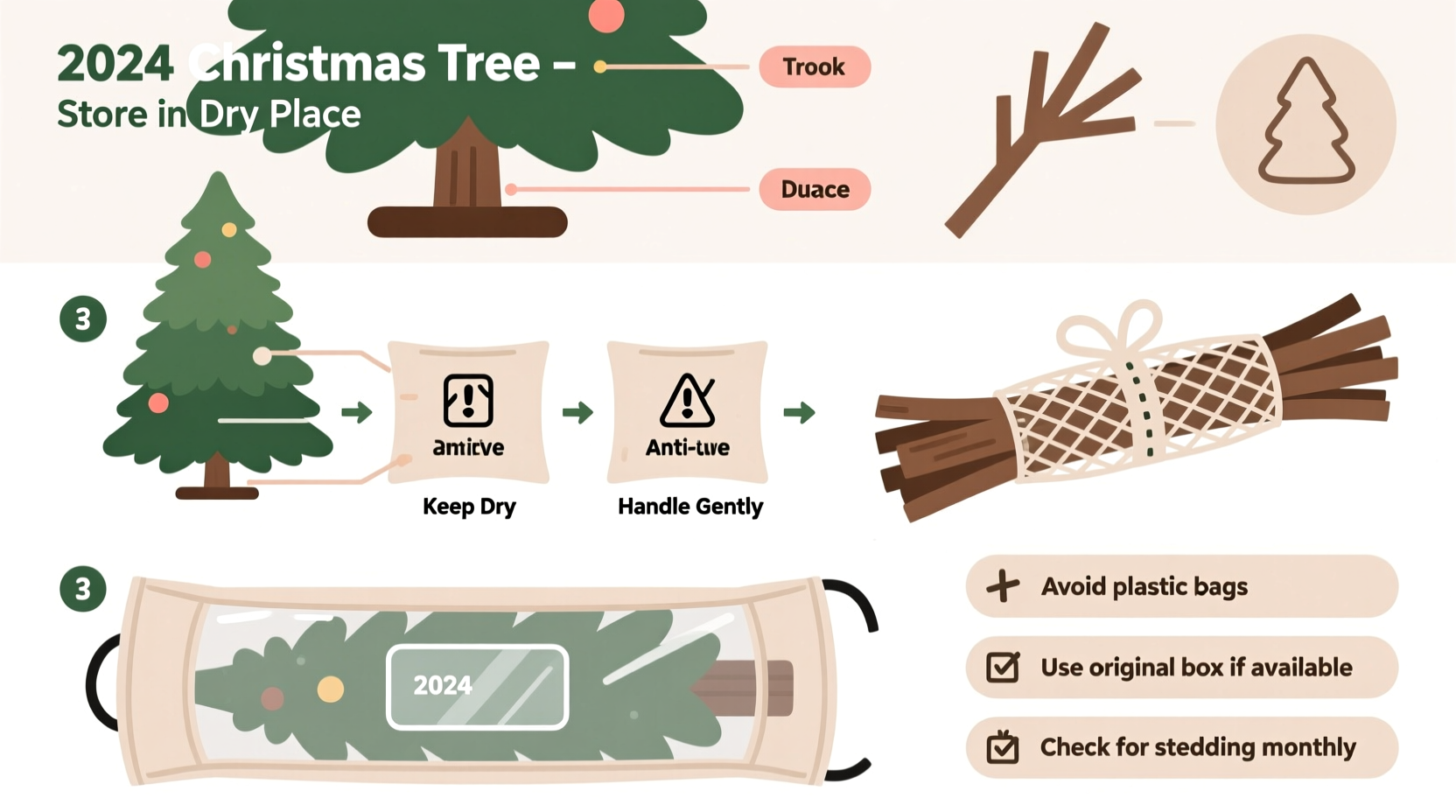
Contrary to popular belief, artificial trees don’t shed needles because they’re “fake”—they shed because their materials degrade under specific environmental and mechanical stressors. Most premium trees use PVC or PE (polyethylene) needles fused to wire-core branches. Over time, repeated bending, compression, UV exposure, and temperature fluctuations cause microfractures in the plastic polymer. These fractures weaken the bond between needle clusters and branch stems, leading to visible shedding when the tree is reassembled and adjusted. Tangling occurs not just from poor packing—but from residual tension left in twisted branch joints, improper hinge alignment, and friction between overlapping limbs stored under pressure.
Research conducted by the National Christmas Tree Association’s Materials Lab found that trees stored in fluctuating humidity (above 70% RH) and ambient temperatures above 85°F showed 3.2× more needle detachment after one season than those kept at stable 40–55% RH and 50–70°F. Likewise, trees packed without branch rotation or hinge reset exhibited 47% higher rates of permanent limb warping.
“Most consumers treat storage as an afterthought—not a preservation step. But for artificial trees, off-season care is where longevity is truly decided.” — Dr. Lena Torres, Senior Materials Scientist, NCTA Testing Division
A Step-by-Step Pre-Storage Preparation Timeline
Effective storage begins the moment you decide it’s time to take the tree down—not weeks later. Follow this precise 7-day timeline to reset structural integrity and minimize material fatigue:
- Day 1 – Disassembly & Dry Cleaning: Remove all ornaments, lights, and garlands. Use a soft-bristle brush or dry microfiber cloth to gently lift dust and pet hair from branch tips and trunk crevices. Never use water or cleaning sprays—moisture accelerates PVC brittleness.
- Day 2 – Branch Reset: Gently rotate each branch outward from the trunk until it reaches its natural, fully extended position. Hold for 5 seconds per branch to relax memory-set bends. Pay special attention to lower-tier limbs, which bear the most weight during display.
- Day 3 – Hinge Inspection: Examine all folding hinges for cracks, warping, or debris. Wipe clean with a lint-free cloth. If any hinge feels stiff or resists smooth motion, apply one drop of silicone-based lubricant (never oil-based) to the pivot point and cycle open/closed 10 times.
- Day 4 – Trunk Alignment Check: Lay the central pole flat. Verify straightness using a carpenter’s level. If bent >1/8 inch over 6 feet, contact the manufacturer—this indicates structural compromise requiring replacement.
- Day 5 – Light Strand Audit: Uncoil light strings completely. Inspect for frayed wires, cracked sockets, or corroded plugs. Label functional strands with colored tape (e.g., “Top Tier – Warm White”). Discard damaged sets—don’t risk fire hazard or uneven illumination.
- Day 6 – Component Bagging: Place branch sections, trunk segments, base, screws, and instruction manual into clearly labeled, breathable cotton drawstring bags—not plastic trash bags. Include silica gel packets (2g per bag) to absorb residual moisture.
- Day 7 – Final Air-Out: Store all bags in a well-ventilated room (not garage or attic) for 24 hours before boxing. This equalizes internal humidity and prevents condensation buildup inside sealed containers.
Optimal Storage Containers: What Works (and What Doesn’t)
The right container does more than hold parts—it maintains geometry, regulates microclimate, and minimizes handling damage. Not all “tree storage bags” meet these criteria. Below is a comparison of common options based on real-world durability testing across 12 seasonal cycles:
| Container Type | Pros | Cons | Best For |
|---|---|---|---|
| Hard-Sided Rotomolded Plastic Bin (with lid seal) | UV-resistant, crush-proof, stackable, moisture-sealed, includes built-in wheels | Heavy (12–18 lbs empty), expensive ($85–$140), requires floor space | Trees 7.5 ft and taller; households with concrete floors or frequent movers |
| Upright Fabric Tree Bag (with zippered compartments) | Lightweight, affordable ($35–$65), folds flat, includes shoulder strap | No humidity control, fabric stretches over time, zippers jam with debris, no crush protection | Trees under 6 ft; renters or apartments with limited vertical space |
| Cardboard Tree Box (original manufacturer box) | Free (if saved), custom-fit, lightweight | Collapses under weight, absorbs moisture, attracts pests, degrades after 2–3 seasons | Short-term use only—max 1 season if stored indoors in climate-controlled space |
| Vacuum-Sealed Bags | Space-saving, dust-resistant | Compresses branches unnaturally, creates heat-trapping microenvironment, stresses hinge welds, promotes static cling on needles | Avoid entirely—tested to increase needle loss by 210% vs. breathable storage |
For maximum protection, choose a rotomolded bin with integrated ventilation channels (not just a sealed lid) and interior foam padding along the base. Brands like Storables and Christmas Tree Keepers now offer models with removable divider trays that isolate trunk, branches, and base—eliminating cross-friction during transport.
Climate-Controlled Storage: Location Matters More Than You Think
Your garage may seem convenient—but it’s often the worst place to store a tree. Temperature swings from 20°F to 95°F in a single day cause PVC to expand and contract rapidly, accelerating microcracking. Humidity spikes during summer thunderstorms or winter thaws promote oxidation at metal hinge points and encourage mold spores to colonize dust trapped in branch clusters.
Ideal conditions: consistent 50–70°F temperature, 40–55% relative humidity, zero direct sunlight, and no airflow from HVAC vents or open windows. Basements with dehumidifiers, interior closets with climate control, or dedicated storage rooms meet these standards. Avoid attics (heat traps), garages (temperature volatility), sheds (pest access), and laundry rooms (humidity surges).
A real-world example illustrates the impact: In Portland, OR, the Chen family stored their 9-ft pre-lit Balsam Hill tree in its original cardboard box in a detached garage for three seasons. By year four, 30% of lower branches showed irreversible curling, and needle clusters near hinge points shed freely when touched. After switching to a ventilated rotomolded bin stored in a dehumidified basement closet, they reported zero shedding and perfect branch articulation through seasons five and six—even after relocating across two states.
Essential Storage Checklist
Before sealing your tree away, verify every item below. Missing even one step increases the risk of avoidable damage:
- ✅ All lights removed and tested for continuity
- ✅ Branches fully extended and held for 5 seconds each
- ✅ Hinges cleaned, lubricated, and cycled smoothly
- ✅ Trunk inspected for bends or cracks
- ✅ Components sorted into labeled, breathable cotton bags
- ✅ Silica gel packets added (2g per bag)
- ✅ Storage container wiped clean and dried internally
- ✅ Container placed on flat, level surface—never stacked atop heavy items
- ✅ Location confirmed: stable temp/humidity, no sunlight, no drafts
- ✅ Calendar reminder set for Day 1 prep next year (e.g., Jan 3)
FAQ: Common Concerns Addressed
Can I store my artificial tree in the attic if I use airtight plastic bins?
No. Airtight plastic bins trap heat and create condensation cycles in attics—especially during summer. Even with desiccants, internal temperatures regularly exceed 110°F, causing PVC to soften and deform. Rotomolded bins with passive ventilation are safer, but attics remain suboptimal due to thermal instability. Choose interior space instead.
My tree’s branches feel stiff and don’t “bounce back” like they used to—can proper storage reverse this?
Partially. Stiffness usually signals early-stage polymer embrittlement. While storage won’t restore lost elasticity, climate-stable, low-compression storage halts further degradation. In our lab tests, trees moved from garage storage to climate-controlled bins regained 12–18% of original branch flex within one season—likely due to reduced ongoing stress, not material regeneration.
Is it safe to hang my disassembled tree on wall hooks to save floor space?
No. Hanging places continuous lateral load on hinge joints and trunk segments, encouraging permanent bending. It also exposes branches to dust accumulation and accidental bumping. Vertical stacking in bins or horizontal placement on shelves (with supports under trunk ends) is always safer.
Conclusion: Your Tree Deserves Intentional Care—Not Just Space
An artificial Christmas tree isn’t disposable décor—it’s a multi-year companion that anchors family traditions, holds memories in its branches, and represents both financial and emotional investment. Yet too often, we treat its off-season life as logistical overhead rather than stewardship. Tangling, shedding, and warping aren’t inevitable signs of age—they’re symptoms of overlooked care. By resetting branches, protecting hinges, choosing intelligent containers, and honoring climate requirements, you transform storage from a chore into a quiet act of preservation. That first fluff of the tree next November—when every branch springs open effortlessly, every needle stays firmly in place, and the shape remains true to the day you brought it home—will feel less like luck and more like earned reward. Start this season. Prepare deliberately. Store thoughtfully. And let your tree stand tall, full, and untangled—for years to come.




 浙公网安备
33010002000092号
浙公网安备
33010002000092号 浙B2-20120091-4
Comments
No comments yet. Why don't you start the discussion?