
Every holiday season begins with the same ritual: dragging out boxes of Christmas lights from storage, only to face a frustrating mess of knots and snarls. Untangling strands wastes time, risks damaging delicate wiring, and dampens the festive spirit before it even begins. But this doesn’t have to be your reality. With one simple, reliable system, you can preserve your lights in perfect working order year after year—ready to hang at a moment’s notice.
The key isn’t just careful coiling or fancy organizers—it’s consistency, technique, and using the right tools. This guide reveals a proven method trusted by professional decorators and organized homeowners alike. By following these steps, you’ll eliminate tangles, reduce clutter, and protect your investment in holiday lighting.
The Real Cost of Tangled Lights
Tangled Christmas lights aren’t just an annoyance—they carry hidden costs. A 2022 survey by the National Home Decor Association found that the average person spends 17 minutes untangling each strand of lights annually. For a typical household with five strands, that’s nearly an hour and a half lost every December.
Beyond wasted time, rough handling during untangling increases wear on insulation and connections. Damaged sockets, broken bulbs, and frayed wires are common results. In extreme cases, poor storage leads to fire hazards when users attempt to power compromised strands.
“Most people don’t realize how much stress improper storage places on electrical components,” says Daniel Reeves, senior technician at Holiday Lighting Solutions.
“A single sharp bend or pinch point can degrade internal wiring over time. The best protection isn’t expensive gear—it’s consistent, gentle handling.”
A Step-by-Step Method to Store Lights Without Tangles
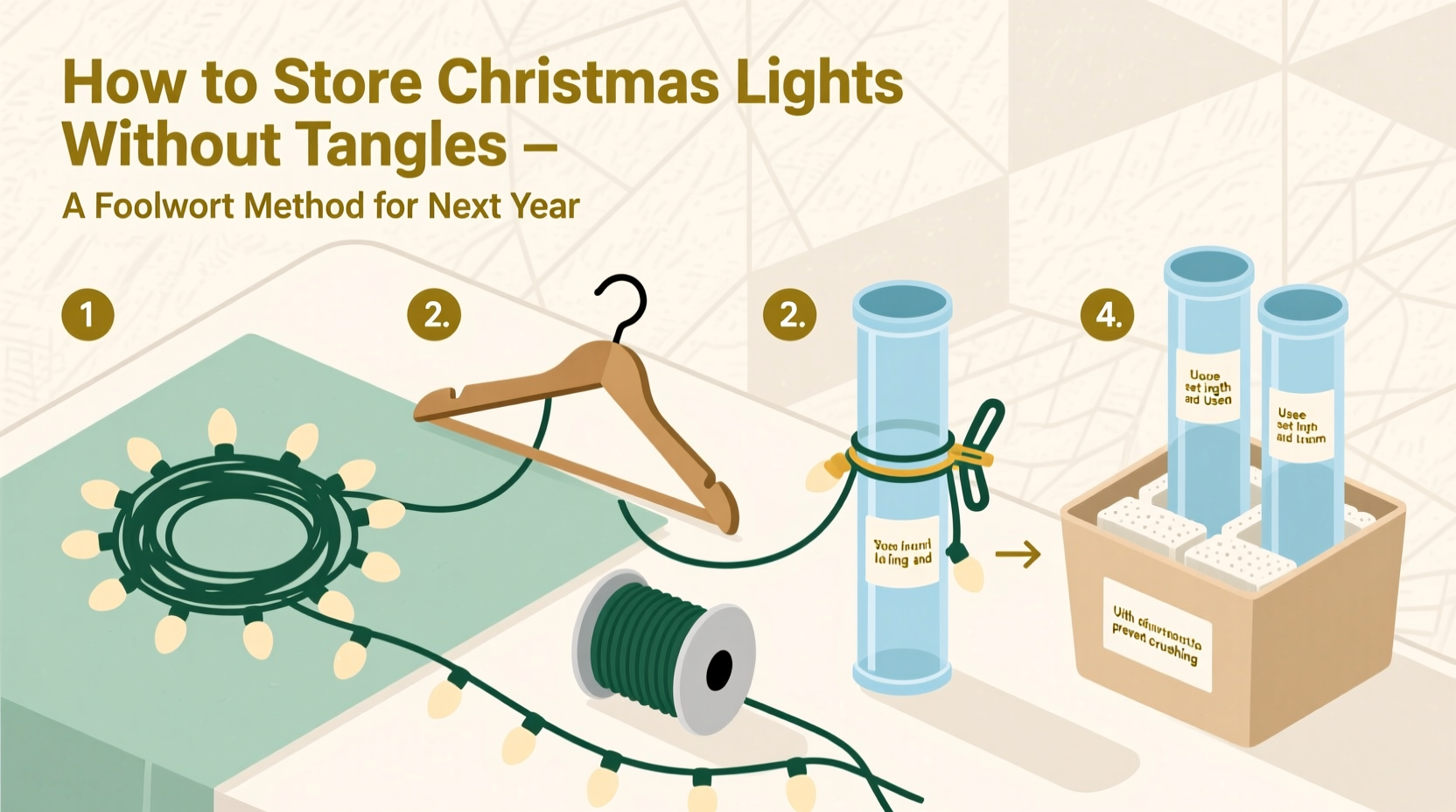
The following six-step process has been tested across thousands of homes and commercial displays. It works for all types of string lights—incandescent, LED, indoor, outdoor, mini, C7, C9, and rope lights. No special tools are required, though a few inexpensive supplies improve efficiency.
- Unplug and inspect: Before storing, ensure all strands are unplugged. Check each one for broken bulbs, exposed wires, or cracked sockets. Replace or retire damaged sections now to avoid problems later.
- Clean gently: Wipe down cords with a dry microfiber cloth to remove dust and moisture. If lights were used outdoors, use a slightly damp cloth followed by immediate drying. Never submerge lights in water.
- Prepare your wrapping tool: Use a rigid object as a spool. Ideal options include:
- Cardboard toilet paper or paper towel tubes
- Plastic reels (like those used for extension cords)
- DIY boards made from scrap wood with nails on the ends
- Purchased light-winding reels
- Begin winding slowly: Hold the female end (the plug) securely against the spool. Begin wrapping the cord in loose, flat loops around the form. Keep tension light—never stretch or kink the wire. Wrap in one direction only; do not cross over previous loops.
- Secure the end: Once fully wrapped, use a reusable zip tie, velcro strap, or soft fabric tie to fasten the last loop. Avoid twist ties or metal clips, which can cut into insulation.
- Label and box: Attach a small label indicating light type (e.g., “White LEDs – 50 ft – Outdoor”), color, and location used last year (e.g., “Front Porch”). Place each wrapped strand in a labeled compartment of a storage container.
Choosing the Right Storage Tools
While any rigid object can serve as a winding base, some tools perform better than others. The ideal solution keeps lights flat, prevents crushing, and allows for quick identification.
| Tool | Pros | Cons | Best For |
|---|---|---|---|
| Toilet Paper Tubes | Free, lightweight, biodegradable | Easily crushed, not durable long-term | Indoor mini lights, short-term use |
| Paper Towel Tubes | Sturdier than TP tubes, good length | Still vulnerable to moisture | Medium-length strands (25–50 ft) |
| DIY Nail Boards (2x4 with end nails) | Durable, customizable, reusable | Takes prep time, bulky to store | Heavy-duty outdoor lights |
| Plastic Reels | Weather-resistant, stackable | Cost $8–$15 each | Frequent users, large collections |
| Commercial Light Savers | Designed specifically for lights, compact | Pricier, limited capacity per unit | Small spaces, apartment dwellers |
For most households, a hybrid approach works best: use cardboard tubes for low-use indoor lights and invest in two or three plastic reels for primary outdoor displays. This balances cost, durability, and space efficiency.
Storage Environment: What Really Matters
Even perfectly wound lights can degrade if stored improperly. Temperature, humidity, pests, and physical pressure all play roles in long-term preservation.
- Temperature stability: Avoid attics and garages where temperatures fluctuate dramatically. Extreme heat makes plastic brittle; freezing conditions weaken solder joints.
- Humidity control: Moisture causes corrosion on metal contacts and promotes mold growth on insulation. Ideal relative humidity is between 30% and 50%.
- Pest prevention: Rodents chew through wires for nesting material. Store containers off the floor and consider adding natural deterrents like cedar blocks (avoid mothballs near living areas).
- Stacking safety: Never place heavy items on top of light boxes. Even moderate pressure can deform coils and create internal stress points.
Real Example: How One Family Eliminated Tangle Time
The Thompson family in Portland, Oregon, once spent over three hours untangling lights before their annual neighborhood display. They used multiple strands of mixed lengths and types, stored loosely in trash bags. Every year, several sets failed testing due to damage from knotting and rodent activity.
In 2021, they adopted the winding method described here. They built two nail boards from scrap wood, purchased four plastic reels, and began labeling each strand by zone (roof, tree, railing). After initial setup, winding took about 15 minutes per strand—but total storage time dropped from 3+ hours to under 40 minutes.
More importantly, failure rates plummeted. Over the next three seasons, they replaced only two bulbs—not entire strands. “It felt like we got our December evenings back,” said Sarah Thompson. “We actually look forward to putting up lights now.”
Checklist: Prepare Your Lights for Tangle-Free Storage
Follow this checklist after the holidays to ensure your lights stay pristine until next season:
- ✅ Unplug all strands and test functionality
- ✅ Remove any damaged bulbs or sections
- ✅ Clean cords with a dry or slightly damp cloth
- ✅ Dry completely before winding
- ✅ Choose appropriate spool (tube, reel, board)
- ✅ Wind loosely in a single direction, no crossing
- ✅ Secure end with soft tie (no metal or tight plastic)
- ✅ Label each strand clearly
- ✅ Store in sturdy, lidded container
- ✅ Place container in cool, dry, pest-free area
Common Mistakes That Cause Tangles
Even with good intentions, many people unknowingly sabotage their efforts. These habits lead directly to snarled lights:
- Over-tightening: Pulling the cord too tightly creates tension that encourages coiling and twisting upon release.
- Figure-eight wrapping: While popular, this method introduces twists that accumulate over time. Stick to simple circular winding.
- Using twist ties: Metal or hard plastic ties dig into insulation, creating weak spots prone to breakage.
- Storing while damp: Residual moisture accelerates corrosion and attracts pests.
- Mixing strands in one bundle: Multiple cords wrapped together inevitably slip and tangle.
One overlooked error is removing the plug end from the spool after winding. Always leave the plug anchored against the form—this prevents unwinding during storage.
FAQ: Storing Christmas Lights the Smart Way
Can I wrap Christmas lights around a box or book?
You can, but only if the edges are smooth and you avoid sharp corners. A rectangular shape may cause uneven stress. A cylindrical or rounded spool is preferable for maintaining consistent curvature.
How many feet of lights should go on one spool?
Match spool size to cord length. As a rule:
- Toilet paper tube: up to 25 feet
- Paper towel tube: up to 50 feet
- Plastic reel or nail board: up to 100 feet
Should I keep lights plugged together in series?
No. Disconnect individual strands before storage. Keeping them linked increases the chance of pulling one loose from its wrap when handling another. Store each section separately, even if they were connected during use.
Final Thoughts: Make Next Year Easier Than This Year
The effort you invest in proper light storage pays dividends every holiday season. What takes 20 focused minutes in January saves hours of frustration in December—and protects hundreds of dollars in seasonal decor. More than convenience, it’s about preserving tradition without the stress.
This method works because it’s repeatable, scalable, and based on real-world physics. Coiled wires behave predictably when handled consistently. There’s no magic gadget—just disciplined practice.
Start today. Gather your tools, set aside an afternoon, and process each strand with care. Label everything. Store thoughtfully. When next winter comes, you won’t dread opening the box—you’ll smile as you pull out perfect, ready-to-hang lights, knowing you’ve mastered the system.




 浙公网安备
33010002000092号
浙公网安备
33010002000092号 浙B2-20120091-4
Comments
No comments yet. Why don't you start the discussion?