
Every year, millions of households face the same frustrating ritual: untangling a chaotic knot of Christmas lights that were carefully stored—so they thought—the previous January. The promise of festive cheer quickly turns into an hour-long battle with wires, bulbs, and stubborn loops. But it doesn’t have to be this way. With a few thoughtful techniques and items already in your home, you can store Christmas lights neatly, safely, and completely tangle-free.
The key isn’t expensive organizers or specialty reels—it’s consistency, method, and understanding how cords naturally twist and coil. By applying practical physics and smart wrapping strategies, even the longest strands of mini-lights or heavy-duty outdoor sets can be preserved for years without damage or disarray.
Why tangled lights happen—and how to prevent them
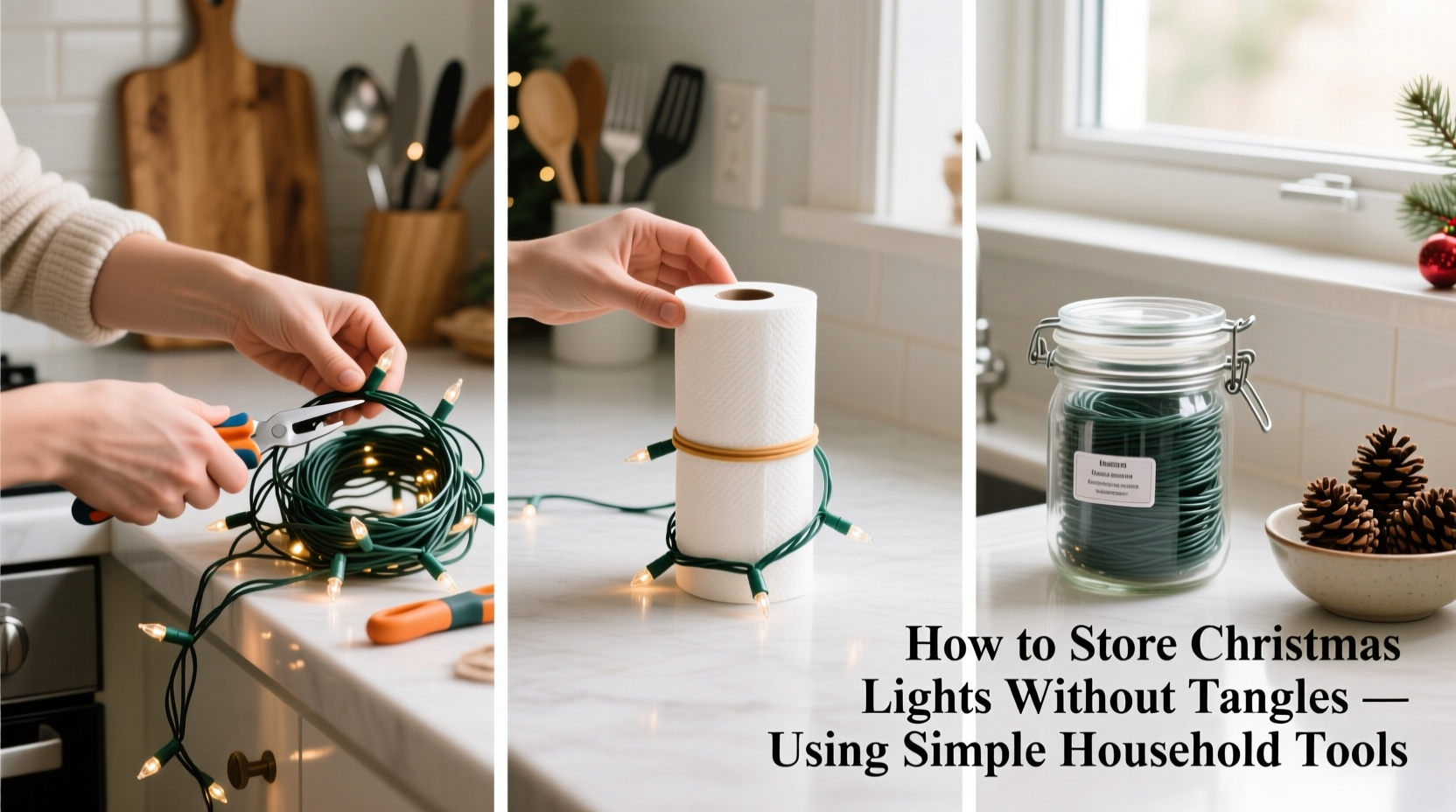
Tangled Christmas lights aren’t just bad luck—they’re the result of improper storage methods. When cords are haphazardly dropped into boxes, wrapped too tightly, or pulled from the middle during unwinding, they develop kinks, twists, and knots that worsen over time. Each strand has a natural lay—a preferred direction it wants to coil—which, when respected, reduces internal stress on the wire.
Most people make the mistake of wrapping lights around their hand or elbow. While convenient, this method introduces torque and uneven tension, leading to snarls. Over several seasons, repeated misuse weakens the insulation, loosens bulb connections, and increases the risk of electrical faults.
The solution lies not in buying more gear, but in rethinking how we handle what we already own. Simple household tools—like toilet paper rolls, cardboard, coat hangers, and plastic bottles—can become highly effective light-storage systems when used correctly.
Step-by-step guide to tangle-free storage using common household items
Below is a proven sequence of actions that ensures your lights come out next season exactly as you left them: neat, functional, and ready to hang.
- Test each strand before storing: Plug in every set of lights to check for dark bulbs or flickering sections. Replace faulty bulbs now to avoid last-minute surprises later.
- Clean gently if needed: Wipe down cords with a dry microfiber cloth. For outdoor lights, use a slightly damp cloth followed by thorough drying. Never submerge wired sets.
- Choose your storage tool: Select one of the household-based methods outlined below based on your available materials and light type.
- Wrap slowly and deliberately: Use a consistent winding pattern—always clockwise or always counterclockwise—to maintain uniform coil memory.
- Secure the ends properly: Avoid metal clips or tight rubber bands. Instead, use soft fabric ties, twist-ties saved from bread bags, or folded paper clips.
- Label each strand: Note length, color, indoor/outdoor use, and location (e.g., “Front porch,” “Tree top”). A small piece of masking tape works perfectly.
- Store upright and separated: Keep coils in open bins or stacked vertically so they don’t crush each other. Avoid stacking heavy items on top.
Method 1: Toilet paper or paper towel rolls (ideal for short to medium strands)
This method works exceptionally well for indoor string lights up to 50 feet. The cardboard tube keeps the coil round and prevents flattening.
- Slide the end plug through the center of a toilet paper roll.
- Begin wrapping the lights evenly around the outside, keeping tension light but firm.
- Once fully wrapped, secure the final loop with a twist-tie or strip of fabric.
- Place multiple rolls side-by-side in a shoebox or bin, plugs facing the same direction for easy access.
Method 2: Cardboard squares with notches (best for precision control)
Create custom winding boards using scrap cardboard. This gives maximum control over tension and is excellent for delicate LED strings.
- Cut a square of cardboard about 6x6 inches.
- Make two U-shaped notches—one on the top edge, one on the bottom.
- Feed the plug through the bottom notch and begin wrapping vertically from bottom to top.
- After completing the wrap, thread the final end through the top notch to lock it in place.
- Stack multiple boards together and store flat in a drawer or container.
Method 3: Plastic bottles (great for outdoor and heavy-duty lights)
Empty 2-liter soda bottles or large water jugs serve as durable, transparent spools for thick-gauge outdoor lighting.
- Cut off the bottom of the bottle with scissors or a utility knife.
- Insert the plug end into the neck opening.
- Wrap the cord around the cylindrical body in a spiral motion.
- Use the cap to seal the top and hold the final loop in place.
- The clear plastic allows visibility of the strand without unwrapping.
Method 4: Coat hanger reel (for long runs and commercial-grade lights)
A repurposed wire coat hanger becomes a quick-release spool ideal for lengthy runs like roofline or driveway lighting.
- Straighten the hanger slightly, leaving the hook at the top.
- Bend the bottom into a small loop to act as a stopper.
- Wrap lights around the vertical rod, starting near the bottom loop.
- Clip the final end under the hook to secure.
- Hang the entire assembly in a closet or garage for easy access next year.
“Cord memory is real. Treat your lights like garden hoses—coil them with care, and they’ll unroll smoothly every time.” — Daniel Ruiz, Electrical Systems Technician
Do’s and Don’ts of Christmas light storage
To reinforce best practices, here’s a concise comparison table summarizing effective habits versus common mistakes.
| Do | Don’t |
|---|---|
| Use soft ties like fabric strips or twist-ties | Use rubber bands (they degrade and snap) |
| Wind in the same direction every year | Alternate wrapping directions randomly |
| Label each strand clearly | Assume you’ll remember where each goes |
| Store in a cool, dry place away from rodents | Keep in damp basements or attics with pests |
| Unplug lights before wrapping | Wrap while still plugged in (fire hazard) |
| Check for frayed wires annually | Ignore visible damage or exposed copper |
Real-world example: How one homeowner cut setup time by 70%
Sarah Thompson, a homeowner in Portland, Oregon, used to spend nearly three hours every December untangling her collection of 14 light strands—some used for her rooftop display, others for tree and railing wraps. After switching to the cardboard square method with labeled notches, she reduced her annual setup time to under 45 minutes.
She began by testing all strands in January after the holidays, replacing two dimming LED sets immediately. Then, she cut eight 6-inch squares from an old moving box, notching each with scissors. Each strand was wrapped clockwise, secured with a bread clip, and labeled with its location and length using permanent marker.
She stores them standing upright in a plastic tote marked “Lights – Top Shelf.” Now, when she pulls out a strand, it unfurls cleanly with no twisting. “I used to dread decorating,” she said. “Now I look forward to it because I know nothing will be a mess.”
Checklist: Your annual Christmas light storage routine
Follow this checklist every January to ensure hassle-free retrieval next holiday season:
- ✅ Test every strand for functionality
- ✅ Replace dead bulbs or faulty sections
- ✅ Clean cords with a dry or slightly damp cloth
- ✅ Choose appropriate storage method (roll, board, bottle, hanger)
- ✅ Wrap slowly in consistent direction
- ✅ Secure ends without crushing bulbs
- ✅ Label each strand with details
- ✅ Store in a dry, rodent-free area
- ✅ Keep containers accessible and organized
- ✅ Inspect storage spot mid-year if possible
Frequently asked questions
Can I use duct tape to secure wrapped lights?
No. Duct tape leaves a sticky residue that attracts dust and can damage wire coatings over time. It also tends to dry out and lose adhesion. Opt instead for reusable fasteners like Velcro strips, fabric ties, or twist-ties.
Is it safe to store lights in plastic bags?
Only if the lights are completely dry. Moisture trapped inside sealed bags encourages mold growth and corrosion on metal contacts. If you must use bags, leave them partially open or include a silica gel packet to absorb humidity.
How many times can I reuse the same cardboard roll?
Typically 3–5 seasons, depending on thickness and storage conditions. Replace any roll that shows warping, soft spots, or crumbling edges. Reusing damaged forms defeats the purpose by allowing slack and movement within the coil.
Final thoughts: Make tangle-free tradition part of your holidays
Storing Christmas lights without tangles isn't about perfection—it's about consistency. The effort you invest in a single afternoon each January pays dividends in peace of mind, safety, and joyful efficiency for years to come. You don’t need fancy tools or extra money. What you need is intention: the decision to treat these small strands of light with the respect they deserve, knowing they carry more than electricity—they carry memory, warmth, and celebration.
By using everyday household items creatively, following a repeatable process, and learning from both experts and real-life successes, you transform a chore into a ritual. And when December rolls around again, instead of wrestling with knots, you’ll simply unspool, plug in, and watch your home glow—just as it should.




 浙公网安备
33010002000092号
浙公网安备
33010002000092号 浙B2-20120091-4
Comments
No comments yet. Why don't you start the discussion?