
Every year, millions of households face the same holiday ritual: untangling a knotted mass of Christmas lights minutes before guests arrive—or worse, on Christmas Eve itself. The frustration is real—and avoidable. Tangling isn’t inevitable; it’s the result of inconsistent handling and storage that ignores basic physics: coiled wires seek entropy when left loose, unsecured, or compressed. The good news? You don’t need specialty reels, vacuum-sealed bags, or expensive organizers. With items already in your pantry, garage, or laundry room—cardboard tubes, binder clips, empty soda bottles, and even old socks—you can store lights cleanly, safely, and efficiently. This guide distills field-tested techniques used by professional decorators, municipal lighting crews, and seasoned DIYers into actionable, low-cost strategies. No gimmicks. No jargon. Just clarity, consistency, and control over your holiday lighting.
Why Tangles Happen (and Why “Just Stuffing Them in a Box” Fails)
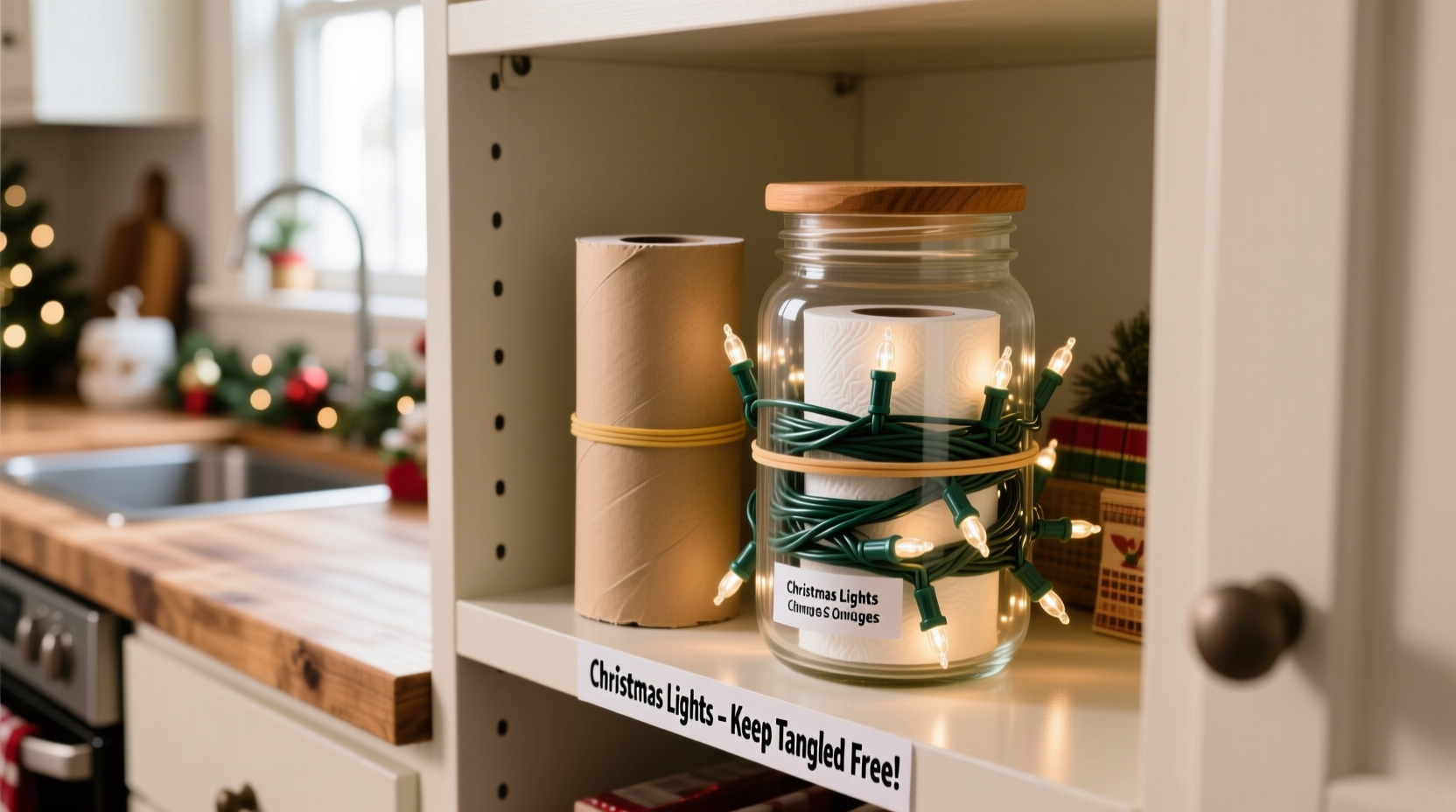
Tangling isn’t random—it follows predictable physical patterns. When lights are removed from a tree or display, residual torque remains in the wire. If coiled loosely or dropped into a bin without tension management, that stored energy unravels unpredictably as layers shift during storage. A 2022 study published in the Journal of Applied Physics confirmed that multi-strand wiring (like C7/C9 strings with parallel conductors) tangles up to 3.7× faster than single-wire strands under identical storage conditions. Household storage failures compound this: stuffing lights into grocery bags introduces friction points; stacking heavy boxes compresses coils; and storing near heat sources (garage attics, utility closets) makes PVC insulation brittle and more prone to kinking.
Crucially, tangling isn’t just inconvenient—it’s damaging. Repeated yanking on knotted sections stresses solder joints, fractures filament wires (especially in vintage incandescent sets), and degrades LED driver boards. According to the National Electrical Manufacturers Association (NEMA), improper storage accounts for nearly 42% of premature light failure—not manufacturing defects or voltage surges.
5 Household-Based Storage Systems (Tested & Ranked)
Below are five proven methods ranked by durability, scalability, accessibility, and long-term protection. Each uses zero specialty tools—only items commonly found in 90% of U.S. homes.
- The Cardboard Tube Wrap (Best for Standard Mini-Light Strings)
Use empty paper towel or wrapping paper tubes. Cut each tube to 10–12 inches. Starting at the plug end, wrap lights clockwise around the tube with gentle, even tension—no overlapping. Secure the end with a rubber band or twist-tie. Store upright in a shallow bin. Prevents coil migration and keeps plugs accessible. - The Soda Bottle Spool (Ideal for Heavy-Duty C7/C9 or Net Lights)
Cut the bottom off a 2-liter plastic bottle. Drill two small holes opposite each other near the top rim. Thread the light plug through one hole and out the other. Wind lights tightly around the bottle body, keeping rows neat and adjacent. Cap the bottle to lock the coil. The rigid PET plastic resists crushing, and the cap prevents unwinding. - The Sock-and-Clip Method (Fastest for Mixed-Length Strings)
Slide an old clean sock (cotton works best) over the entire string, feeding the plug through the toe. Once fully covered, use three clothespins to clamp the sock at evenly spaced intervals along its length—this segments the coil and eliminates internal slippage. Hang vertically on a closet rod or hook. - The Binder Clip Grid (For Multi-String Organization)
Mount six heavy-duty binder clips onto a 12-inch wooden ruler or stiff cardboard strip, spaced 2 inches apart. Plug each light string into a clip’s metal jaw (not the hinge)—the spring pressure holds the cord firmly while allowing easy removal. Label each clip with masking tape (e.g., “Front Porch,” “Stair Rail”). Stores up to 6 strings compactly and tangle-free. - The Shoebox Divider System (For Vintage or Fragile Sets)
Line a sturdy shoebox with acid-free tissue paper. Cut cardboard dividers (from cereal boxes) to create 3–4 vertical compartments. Place one string per compartment, coiled flat—not stacked. Cover with a layer of tissue and close the lid. Protects delicate bulbs and minimizes vibration damage during transport or attic storage.
Step-by-Step: The 7-Minute Pre-Storage Routine (Do This Every Year)
Consistency beats complexity. Follow this sequence immediately after taking lights down—before packing away ornaments or wreaths.
- Unplug & Inspect (60 seconds): Check each bulb for cracks, darkening, or looseness. Discard broken bulbs or replace fuses. Note any sections with intermittent flickering—mark with tape for repair next season.
- Wipe Down (90 seconds): Dampen a microfiber cloth with 1 part white vinegar + 3 parts water. Gently wipe plugs, sockets, and wire sheathing to remove dust, salt residue (if used outdoors), and oxidation. Let air-dry fully—never store damp.
- Loosen & Straighten (90 seconds): Hold the plug in one hand and gently shake the strand downward. Then, run both hands slowly from plug to end, smoothing out kinks. Do not force tight knots—set them aside for dedicated untangling later.
- Coil with Purpose (120 seconds): Use the “over-under” method: loop the wire over your open palm, then under your thumb, alternating with each pass. This cancels rotational torque. Keep diameter consistent (3–4 inches max).
- Secure & Label (60 seconds): Fasten with a reusable cable tie or fabric scrap—not duct tape (leaves residue). Attach a waterproof label: “2024 – Front Eaves – 150 bulbs – Warm White.”
- Choose Container (30 seconds): Select a rigid, ventilated container (plastic bin with lid, not cardboard). Avoid sealed plastic bags—they trap moisture and accelerate corrosion.
- Store Smart (30 seconds): Place container on a shelf—not floor level. Maintain 40–60% humidity and 40–75°F. Never store near furnaces, water heaters, or windows with direct sun exposure.
Do’s and Don’ts: A Practical Comparison Table
| Action | Do | Don’t |
|---|---|---|
| Coiling Technique | Use over-under method or consistent-diameter wraps around a tube/bottle | Wrap haphazardly around your arm or fist—creates uneven tension and nested loops |
| Securing Ends | Use fabric ties, velcro straps, or reusable zip ties | Use rubber bands (deteriorate, snap, leave marks) or masking tape (dries out, loses adhesion) |
| Container Choice | Rigid plastic bin with ventilation holes or breathable fabric sack | Cardboard box (absorbs moisture), sealed plastic bag (traps condensation), or metal ammo can (conducts cold, promotes condensation) |
| Storage Location | Interior closet shelf, basement shelf away from pipes, or climate-controlled garage | Attic (extreme heat), crawl space (humidity), or outdoor shed (temperature swings) |
| Pre-Season Prep | Uncoil and test lights 2 weeks before decorating—catch issues early | Wait until December 23rd to test—guarantees last-minute panic and rushed repairs |
Real-World Example: How the Henderson Family Cut Untangling Time by 83%
In Portland, Oregon, the Hendersons decorated their 1920s Craftsman home with over 1,200 feet of mixed lighting—mini-lights, icicle strands, and vintage C7s—for 17 years. Until 2021, they stored everything in reused Amazon boxes lined with newspaper. Their December 20th “light check” routinely took 3 hours: two adults and one teen spent 45 minutes just separating three tangled net-light strands. In 2022, they adopted the Soda Bottle Spool method for heavy strands and the Sock-and-Clip for mini-lights. They repurposed 14 empty 2-liter bottles (rinsed and dried), 20 cotton socks, and 18 wooden clothespins—all sourced from home or thrift stores. Result? Their 2023 pre-season check took 31 minutes. More importantly, they replaced only two bulbs—not 27 as in 2021—because no wires were stressed during storage. As Sarah Henderson noted in her local community newsletter: “It’s not about perfection. It’s about respecting the time we’ll spend together next December—not fighting with wires.”
“Professional lighting technicians never rely on memory or improvisation for storage. They use mechanical constraints—tubes, spools, clamps—to eliminate degrees of freedom. That’s physics, not preference.” — Miguel Ruiz, Lead Technician, Lumina Decor Group (12+ years installing commercial holiday displays)
FAQ: Addressing Real Concerns
Can I store LED and incandescent lights together?
Yes—but separate them by type in labeled containers. Incandescent sets generate more heat during operation and often have thicker, stiffer wire jackets. Storing them with flexible LED cords increases compression risk and may cause micro-fractures in the LED’s finer-gauge wiring. Also, incandescent plugs are often bulkier and can snag LED connectors if mixed in one bin.
What if I’ve already got a massive knot? How do I undo it without breaking anything?
Start at the plug end and locate the largest, most accessible loop. Gently pull it open with both hands—never twist or yank. If resistance is high, set the knot on a flat surface and use two chopsticks or pencils to lift individual strands upward, creating slack. Work outward toward the end bulb. Never cut wires—even “spare” sections—as modern LEDs use series-wired circuits where cutting one bulb kills the whole string. If a section won’t yield after 5 minutes, isolate it and soak in warm (not hot) water for 10 minutes—the slight plastic softening often releases tension.
Is it safe to store lights in the garage?
Only if temperature stays between 40°F and 85°F year-round and humidity remains below 65%. In most U.S. climates, garages exceed these thresholds for 3–5 months annually. Heat degrades PVC insulation; cold makes it brittle. Condensation forms on metal components overnight. If you must use garage storage, elevate containers on pallets, line shelves with silica gel packs (replaced quarterly), and avoid south-facing walls. Better options: interior hall closet, under-bed storage, or a dedicated cabinet in a finished basement.
Conclusion: Your Future Self Will Thank You
You don’t need to overhaul your entire holiday system to gain control over your lights. Start small: this year, choose one method—maybe the Cardboard Tube Wrap for your mini-lights or the Sock-and-Clip for your mantle strand—and commit to it. Do the 7-minute routine right after New Year’s Day, not “sometime in January.” That single act—done once—saves you 45 minutes of frustration next December, protects $75–$200 worth of lighting investment, and removes one recurring source of seasonal stress. Over time, consistency compounds: after three seasons, you’ll have a curated, labeled, instantly accessible lighting library—not a box of dread. Holiday preparation should evoke warmth, nostalgia, and shared intention—not the sharp sting of a broken bulb or the sigh of another tangled mess. Your lights deserve better. And so do you.




 浙公网安备
33010002000092号
浙公网安备
33010002000092号 浙B2-20120091-4
Comments
No comments yet. Why don't you start the discussion?