
Every holiday season, millions of homes light up with festive cheer—strings of glowing bulbs draped across trees, rooftops, and railings. But when the decorations come down, one task consistently frustrates homeowners: untangling Christmas lights. The knotting, looping, and frustration that comes with pulling last year’s strands from a box can drain the joy out of seasonal prep. Fortunately, there’s a proven solution—the spool method—a simple yet highly effective way to store Christmas lights so they’re ready to use, tangle-free, every time.
This method leverages controlled winding around a flat, rigid surface to maintain consistent loop spacing and prevent wires from twisting over themselves. When done correctly, it transforms what was once a 20-minute wrestling match into a 30-second plug-and-play setup. Below, you’ll learn exactly how to apply the spool method, why it works, and how to adapt it for different types of lights and storage needs.
Why Traditional Storage Fails
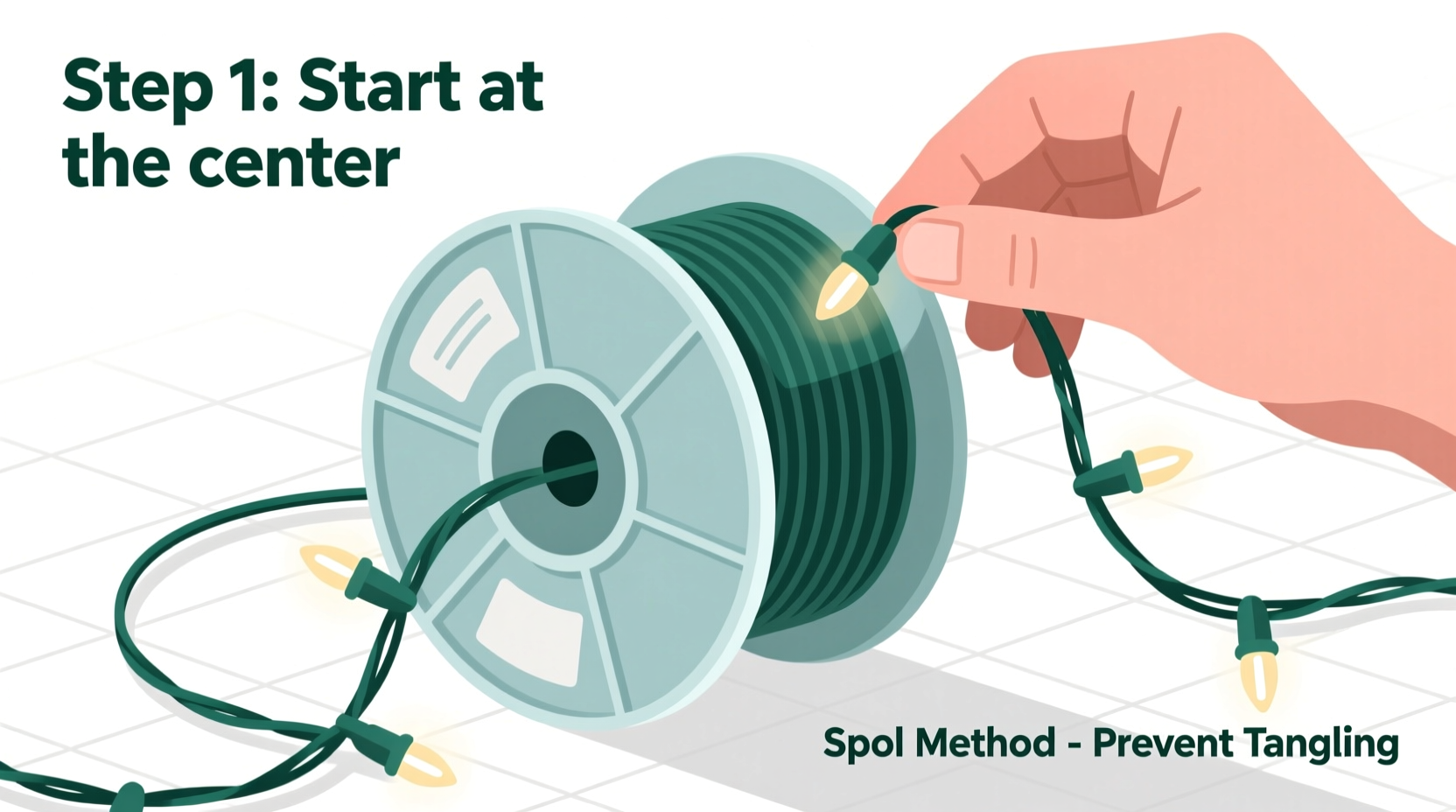
Most people toss their Christmas lights into boxes or loosely wrap them around their hands before bundling with twist ties or rubber bands. While convenient in the moment, this approach leads to chaos by next December. Without structure, wires shift during storage, cross over each other, and create friction points that evolve into stubborn knots.
The root issue is randomness. Haphazard wrapping allows slack sections to slip between tighter coils, forming loops within loops. Once compressed in a box, these micro-tangles bind under pressure and temperature changes. Even “careful” hand-wrapping often results in inconsistent tension—too loose at some points, too tight at others—increasing the risk of kinks and wire damage.
“Improper storage is the leading cause of premature failure in holiday lighting. Tangles don’t just waste time—they stress the wiring and connectors.” — Daniel Reeves, Electrical Systems Technician with 18 years in residential lighting
Over time, repeated yanking and untangling weaken solder joints, fray insulation, and compromise plug integrity. The result? More burnt-out bulbs, flickering strings, and shorter lifespans. The spool method eliminates these problems by enforcing uniformity, reducing physical stress, and protecting delicate components through organized coiling.
What Is the Spool Method?
The spool method involves winding Christmas lights around a flat, rigid object—like a piece of cardboard, plastic reel, or custom-made spool—to maintain even tension and prevent overlapping. Unlike wrapping around your hand or a random tube, this technique ensures each loop sits parallel to the next, minimizing contact between separate turns and eliminating crossing points where tangles form.
The principle is borrowed from industrial cable management. Electricians, audio engineers, and stage technicians use similar techniques to manage long runs of wire without snags. By adapting this professional standard for home use, you gain reliability and efficiency in your holiday routine.
At its core, the spool method is about control: controlling direction, tension, and alignment. Done right, a single strand can be wound and unwound hundreds of times without developing a single knot.
Step-by-Step Guide: Applying the Spool Method
Follow this sequence to store any string of Christmas lights using the spool method. This process works for incandescent, LED, mini lights, C7s, C9s, and net lights alike.
- Unplug and inspect: Before winding, ensure the lights are cool and unplugged. Check for broken bulbs, frayed wires, or damaged plugs. Replace or repair faulty sections now to avoid issues later.
- Choose your spool: Select a flat, rigid base. Options include:
- Cardboard cut to 8\"x10\"
- Plastic lid from a coffee can or storage bin
- Purchased plastic reels designed for cords
- Wooden spools (available at hardware stores)
- Anchor the plug end: Tape the male plug securely to one corner of the spool. This keeps it protected and prevents accidental unwinding.
- Begin winding: Hold the wire taut but not stretched. Wrap the lights in consistent, side-by-side loops along the length of the spool. Keep each turn snug against the previous one, avoiding gaps or overlaps.
- Maintain tension: Use your non-dominant hand to guide the wire while the dominant hand controls the pace. Do not pull aggressively—moderate tension preserves bulb alignment and wire integrity.
- Finish with the female end: Once fully wound, secure the opposite end (usually the female connector) with tape or a reusable zip tie. Label the spool with light type, color, length, and location used (e.g., “Front Porch – 50 Red LEDs”).
- Store upright: Place spooled lights vertically in a storage container or stack horizontally with padding between layers. Avoid placing heavy items on top.
When it’s time to decorate again, simply unroll the wire from the spool—no shaking, no pulling, no cutting through knots. The lights will feed smoothly, ready for immediate use.
Choosing the Right Spool Material
Not all spools are created equal. The best choice depends on durability, reusability, and storage conditions. Below is a comparison of common options.
| Material | Pros | Cons | Best For |
|---|---|---|---|
| Cardboard | Free, easy to cut, customizable size | Wears out after 1–2 seasons; vulnerable to moisture | Temporary or budget-conscious storage |
| Plastic Lids/Containers | Durable, waterproof, stackable | Limited sizes; may warp under pressure | Kitchen-safe environments or humid garages |
| Commercial Cord Reels | Long-lasting, ergonomic, often labeled | Cost $5–$15 each; bulkier than DIY options | Frequent users or large light collections |
| Wooden Spools | Sturdy, attractive, excellent tension control | Requires tools to make; heavier to store | Permanent setups or heirloom-quality displays |
For most households, a hybrid approach works best: use cardboard for temporary or infrequently used strands, and invest in plastic or wooden spools for primary display lights used year after year.
Real-World Example: A Homeowner’s Transformation
Sarah M., a homeowner in Portland, Oregon, used to spend over an hour each November untangling her six sets of outdoor tree lights. She tried everything—paper towel rolls, garden hose reels, even vacuum-sealed bags—but nothing prevented the inevitable snarls.
In 2022, she adopted the spool method using repurposed cardboard from shipping boxes. She cut eight rectangles, labeled each for specific locations (e.g., “Pine Tree,” “Gutters”), and carefully wound her lights following the step-by-step process. Last November, she retrieved the first spool, unrolled the lights, and plugged them in—all in under 45 seconds.
“It felt like magic,” she said. “No knots, no swearing, no scissors involved. I actually looked forward to putting up the lights this year.”
Her success wasn’t due to luck—it came from consistency and proper technique. Now, she teaches neighbors the same method during annual holiday prep gatherings.
Advanced Tips for Maximum Efficiency
- Group by circuit: If you connect multiple strings together, spool them as a set so they deploy together.
- Avoid heat sources: Store spools away from furnaces, water heaters, or attics with extreme temperature swings.
- Use Velcro straps instead of zip ties: They’re gentler on wires and reusable.
- Rotate storage position: Flip spools every 6 months to prevent one-sided compression.
- Keep spare bulbs and fuses nearby: Store them in a small envelope taped to the spool.
For commercial-grade or heavy-duty lighting (such as C9s used on large displays), consider building a dedicated wooden rack with pegs spaced every 6 inches. This allows you to hang multiple spools vertically, maximizing space and airflow.
Common Mistakes to Avoid
Even with the right method, errors can undermine your efforts. Watch out for these pitfalls:
- Wrapping too tightly: Excessive tension can crack bulb sockets or deform wire insulation.
- Allowing diagonal wraps: Angled loops create crossover points where tangles begin.
- Skipping labeling: Without clear identification, you lose the time-saving benefit.
- Stacking without protection: Placing one spool directly on top of another can crush bulbs and distort coils.
- Using metal fasteners: Staples or paper clips can scratch wires and lead to shorts.
“The difference between a good wrap and a great wrap is attention to alignment. One degree off and you invite chaos.” — Lena Torres, Professional Holiday Lighting Installer
FAQ: Frequently Asked Questions
Can I use the spool method for pre-lit wreaths or garlands?
Yes, but with modifications. For flexible garlands, use a larger spool (at least 12\" wide) and wrap gently to avoid crushing pinecones or berries. For rigid wreaths, remove lights if possible, or store the entire unit in a dedicated wreath box with internal supports.
How many times can I reuse a cardboard spool?
Typically 1–3 seasons, depending on storage conditions. Replace if the cardboard warps, tears, or shows signs of mold. Plastic and wood alternatives offer longer lifespans.
Do LED lights tangle less than incandescent?
LEDs are generally lighter and more flexible, which can reduce tangling slightly, but they are not immune. All wires—regardless of type—will tangle without structured storage. The spool method benefits all kinds equally.
Essential Checklist for Tangle-Free Storage
- Inspect lights for damage before storing
- Select appropriate spool material (cardboard, plastic, wood)
- Cut spool to optimal size (8\"x10\" standard)
- Secure plug end with tape before winding
- Wind in straight, parallel loops—no diagonals
- Maintain moderate, consistent tension
- Secure open end and label clearly
- Store in cool, dry place away from direct sunlight
- Keep spools separated or padded if stacked
- Add spare bulbs/fuses to storage
Conclusion: Make Next Holiday Season Effortless
Storing Christmas lights without tangling isn’t a myth—it’s a matter of applying the right technique. The spool method transforms a frustrating chore into a quick, repeatable process that saves time, reduces stress, and extends the life of your decorations. Whether you're managing a single string or an elaborate rooftop display, this system scales effortlessly.
Start this year. Don’t wait until next November to regret another tangled mess. As soon as your lights come down, take 10 extra minutes to wind them properly. That small investment pays dividends every holiday season forward.




 浙公网安备
33010002000092号
浙公网安备
33010002000092号 浙B2-20120091-4
Comments
No comments yet. Why don't you start the discussion?