
Delicate ribbon bows are more than just decorative accents—they carry sentiment, style, and often represent the care poured into a gift or event. Whether used on holiday presents, wedding favors, or seasonal décor, these bows are crafted with precision and artistry. Yet too often, after one season of use, they emerge from storage flattened, crushed, or tangled beyond repair. With thoughtful handling and proper storage techniques, it’s entirely possible to preserve their three-dimensional form and vibrant texture for years to come.
The key lies not in simply tucking them away but in understanding the fragility of curled ribbons, wired edges, and layered loops. This guide offers a comprehensive approach to storing ribbon bows so they remain intact, springy, and ready to reuse—without sacrificing their charm or structure.
Understanding Ribbon Bow Vulnerabilities
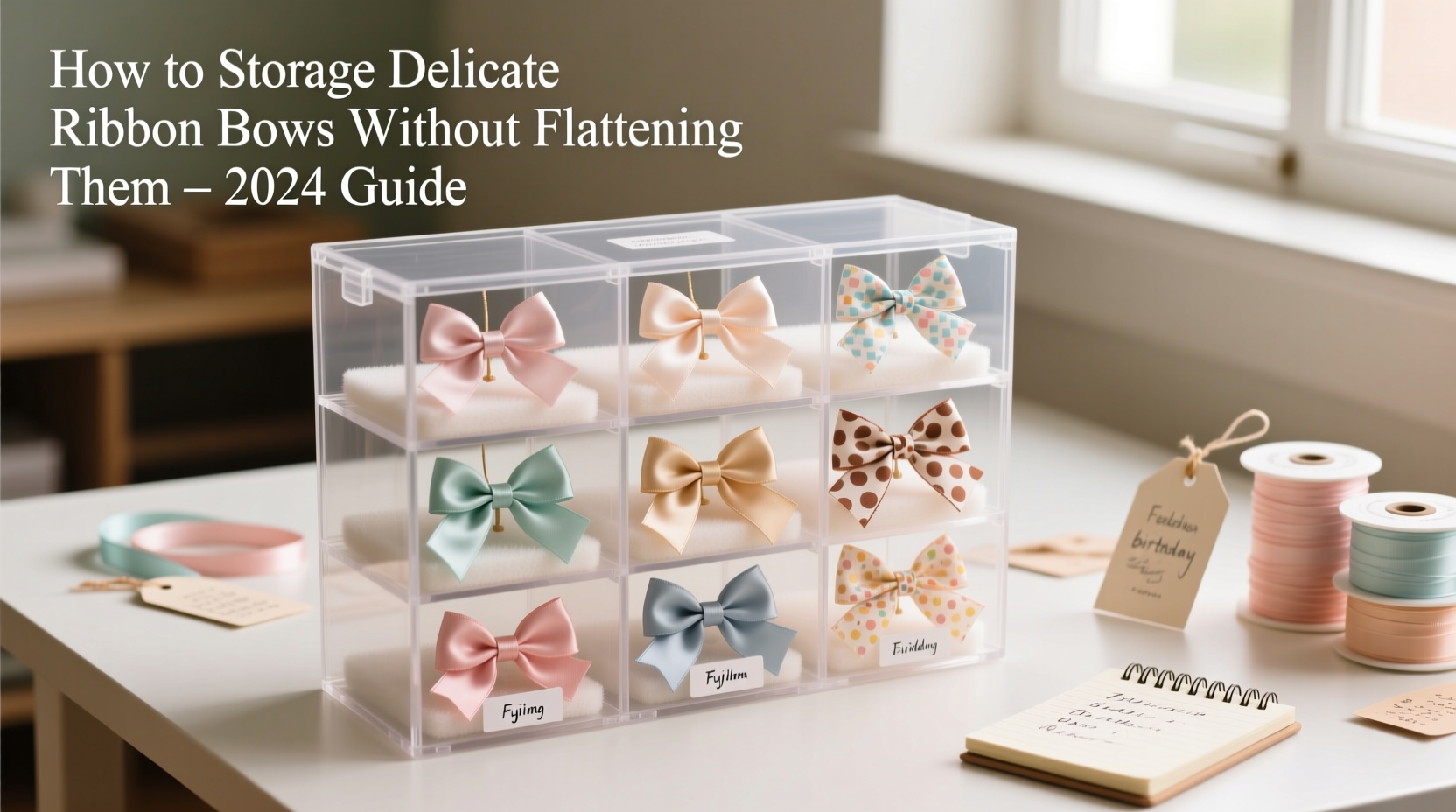
Ribbon bows, especially those made from satin, organza, velvet, or curling ribbon, are inherently delicate. Their volume depends on precise folding, tension, and sometimes internal wire support. When stored improperly, several factors can degrade their condition:
- Compression: Stacking heavy items on top collapses loops and crushes the bow’s center knot.
- Moisture: Damp environments encourage mildew, which weakens fibers and causes discoloration.
- Heat and light: Prolonged exposure to sunlight fades colors and makes synthetic materials brittle.
- Tangling: Loose storage leads to snarled tails and deformed shapes that are difficult to restore.
- Static cling: Lightweight ribbons attract dust and stick together, making separation damaging.
Recognizing these risks is the first step toward prevention. The goal isn’t just preservation—it’s maintaining the bow’s original elegance so it looks freshly tied when reused.
Step-by-Step Guide to Safe Storage
Preserving ribbon bows requires deliberate organization and protective packaging. Follow this sequence to ensure long-term integrity:
- Clean gently (if needed): Use a soft brush or lint roller to remove dust. Avoid washing unless absolutely necessary—most ribbons degrade with moisture. For spot cleaning, dab with a barely damp cloth and air-dry flat away from direct heat.
- Fluff and reshape: Carefully separate each loop using fingers or a blunt tool like a chopstick. Restore symmetry by adjusting proportions. If the bow has a wire edge, gently bend wires back into position without over-flexing.
- Label for identification: Attach a small tag indicating color, size, occasion, or event. This avoids rummaging through containers later.
- Select appropriate containers: Choose rigid boxes with low depth and wide surface area. Shoeboxes, craft organizers, or custom archival boxes work well. Avoid deep drawers where weight accumulates.
- Create individual compartments: Use cardboard dividers, egg cartons, or segmented trays to isolate each bow. This prevents contact and crushing.
- Store upright or suspended: Place bows vertically with loops facing up, mimicking their natural orientation. Alternatively, hang them loosely inside a closet using padded hangers and breathable garment bags.
- Add cushioning: Line the container with acid-free tissue paper or unbleached cotton fabric. Do not use plastic wrap or bubble wrap directly against the ribbon—static buildup can distort shape.
- Seal and store: Close the container securely but allow slight airflow if storing long-term. Keep in a climate-controlled space like an interior closet, avoiding attics, basements, or garages.
This process takes only minutes per bow but dramatically increases longevity. Treat each as a keepsake, not disposable decoration.
Do’s and Don’ts of Ribbon Bow Storage
| Do | Don’t |
|---|---|
| Use rigid containers with dividers | Crush bows under books or clothes |
| Store in cool, dry, dark places | Leave in hot cars or sunlit rooms |
| Wrap tails in tissue to prevent fraying | Tie tails tightly around the bow |
| Use acid-free paper for padding | Use newspaper (ink transfers) |
| Inspect annually for pests or mold | Forget about them for decades |
Expert Insight: Why Preservation Matters
Proper storage goes beyond practicality—it honors the emotional value embedded in handmade or meaningful decorations. According to textile conservation specialist Dr. Lena Whitmore, “Decorative elements like ribbon bows are part of our material memory. A wedding favor bow or a child’s first birthday decoration carries narrative weight. Preserving them properly ensures future generations can connect with those moments.”
“Even small items deserve archival consideration. Buffered tissue, stable environments, and isolation from pollutants make all the difference.” — Dr. Lena Whitmore, Textile Conservator, National Heritage Institute
Her advice underscores a broader principle: sentimental objects require intentional care. A ribbon may seem trivial, but its survival speaks to attention and respect for detail.
Real Example: A Holiday Organizer’s Success Story
Sarah M., a professional event planner from Portland, Oregon, faced recurring frustration every December. Her carefully curated gift bows—many handmade with double-faced satin and wired edges—arrived at holiday prep week looking lifeless. Loops were smashed, centers collapsed, and re-fluffing took hours.
Determined to change this, she implemented a new system after Thanksgiving. She purchased shallow, lidded plastic bins typically used for sweater storage. Inside, she arranged upside-down egg cartons cut to size, placing one bow per cup. Each was wrapped lightly in white tissue, tails secured with paper tape (not adhesive), and labeled by recipient type (e.g., “Family,” “Clients”). The bins were stored horizontally on a high shelf in her bedroom closet, away from temperature fluctuations.
The following year, she opened the container and found every bow intact—some even retained their original curl. “It felt like magic,” she said. “I saved over two hours of prep time, and the gifts looked instantly polished.” Sarah now uses this method year-round for weddings, baby showers, and corporate events, rotating out bows seasonally while keeping others preserved.
Checklist: Prepare Your Bows for Long-Term Storage
Before putting away your ribbon bows, go through this checklist to ensure optimal condition upon retrieval:
- ✅ Gently clean each bow of dust and debris
- ✅ Reshape loops and tighten any loose knots
- ✅ Trim frayed ends neatly with sharp scissors
- ✅ Label each bow with occasion, color, and size
- ✅ Wrap tails in acid-free tissue paper
- ✅ Place in individual compartments within a rigid container
- ✅ Store container in a cool, dry, dark location
- ✅ Mark calendar to check condition every 6–12 months
Completing these steps systematically ensures consistency across collections, whether you're saving five bows or fifty.
Frequently Asked Questions
Can I store ribbon bows in vacuum-sealed bags?
No. Vacuum sealing compresses air out of the environment, flattening the bow permanently. Even if the bag is large, the suction effect distorts loops and creases ribbons. These materials rely on air retention to maintain shape—removing it defeats the purpose of careful storage.
What should I do if my stored bow arrives flattened?
Gently steam it from a distance of 6–8 inches using a handheld garment steamer. Do not touch the ribbon directly. Allow the warmth and moisture to relax the fibers, then reshape loops by hand. Let dry completely before storing again. For wired bows, carefully rebend the frame using fingers or pliers with cloth protection.
Are plastic containers better than cardboard boxes?
Both have pros and cons. Plastic offers superior protection against moisture and pests but can trap humidity if sealed completely. Cardboard is breathable and lightweight but less durable over time. For best results, use plastic with ventilation holes or line cardboard boxes with cotton fabric to buffer against environmental shifts.
Conclusion: Preserve Beauty with Intention
Delicate ribbon bows deserve more than being tossed into a drawer and forgotten. With minimal effort, they can be preserved in pristine condition, ready to bring joy again next season. The methods outlined here—careful reshaping, compartmentalized storage, environmental control, and routine checks—are simple but transformative.
By treating these small details with care, you elevate the entire experience of gifting and decorating. A perfectly shaped bow signals thoughtfulness, continuity, and respect for craftsmanship. Start today: gather your favorite bows, prepare your containers, and give them the safe haven they need. Next year, you’ll open the box not to disappointment, but to delight.




 浙公网安备
33010002000092号
浙公网安备
33010002000092号 浙B2-20120091-4
Comments
No comments yet. Why don't you start the discussion?