
Wine is meant to be enjoyed, but not always in one sitting. Whether you're savoring a glass after dinner or hosting a small gathering, it’s common to have leftover wine. The challenge arises when you don’t have the original cork or a vacuum pump on hand. Many assume that without these tools, the wine is doomed to spoil overnight. But with the right techniques, you can extend its life significantly—sometimes up to five days—without specialized equipment.
The key lies in minimizing oxidation, which occurs when wine is exposed to air. Oxygen interacts with the alcohol and phenolic compounds, leading to flat flavors, loss of aroma, and eventually vinegar-like sourness. While airtight sealing is ideal, several accessible strategies can slow this process effectively. From kitchen staples to clever repurposing, here's how to store open wine bottles safely and efficiently—even without a cork or pump.
Understanding Wine Oxidation and Shelf Life
Oxidation begins the moment a bottle is opened. Light exposure, temperature fluctuations, and prolonged air contact accelerate degradation. However, not all wines oxidize at the same rate. Lighter whites and sparkling wines are more vulnerable due to their delicate structure, while fuller-bodied reds and fortified wines (like Port or Sherry) resist spoilage longer thanks to higher tannin and alcohol content.
On average:
- Light white and rosé wines: Last 3–5 days refrigerated
- Full-bodied whites (Chardonnay, Viognier): 3–4 days chilled
- Red wines: 3–5 days in a cool, dark place
- Sparkling wines: Best consumed within 1–2 days
- Fortified wines: Up to several weeks if stored properly
While you can't stop oxidation entirely, slowing it down preserves taste and aroma. The goal isn’t perfection—it’s practical preservation using what you already have.
Effective Storage Methods Without a Cork or Pump
You don’t need expensive gadgets to protect an open bottle. Household items and smart habits can make a meaningful difference. Below are proven, low-cost solutions for preserving wine quality.
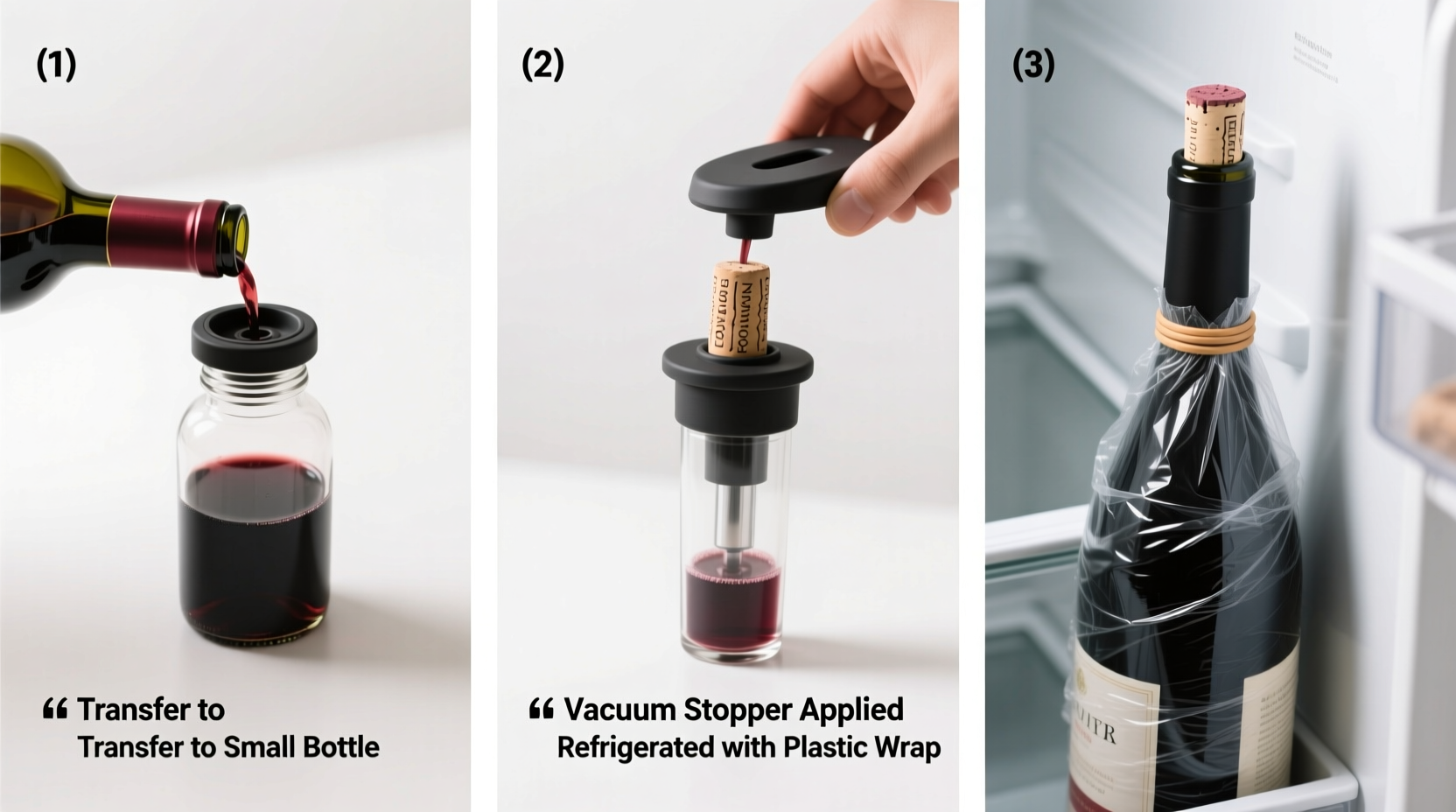
1. Transfer to a Smaller Container
Reducing headspace—the empty space between the wine and the bottle cap—is one of the most effective ways to limit oxygen exposure. Pour the remaining wine into a smaller vessel such as a clean jar, flask, or half-size wine bottle.
Glass containers with tight-fitting lids work best. Mason jars with rubber seals or repurposed sauce bottles with screw caps create a near-airtight environment. Make sure the container is thoroughly cleaned and dried before use to avoid contamination.
“Transferring wine to a smaller container is a classic sommelier trick when proper closures aren’t available. It dramatically reduces oxidation.” — Carlos Mendez, Certified Sommelier and Beverage Director
2. Use Plastic Wrap and Rubber Bands
If you must keep the wine in its original bottle, plastic wrap offers a surprisingly effective temporary seal. Stretch a piece tightly over the bottle’s mouth and secure it with a rubber band or twist tie. Press down gently to eliminate gaps.
This method won’t create a vacuum, but it does form a physical barrier against dust and airborne particles while reducing airflow. It’s especially useful for short-term storage (1–2 days).
3. Repurpose Bottle Stoppers from Other Products
Many kitchen products come with reusable stoppers or pour spouts—think olive oil bottles, syrup dispensers, or liquor decanters. If the diameter matches, these can serve as improvised wine seals.
Silicone stoppers from spice jars or food storage containers often fit standard wine bottles snugly. For a better seal, lightly dampen the rim before inserting to create slight suction.
4. Store Bottles Upside Down (For Short Durations)
A lesser-known technique involves placing the open bottle upside down in the refrigerator. The wine forms a liquid seal at the neck, blocking additional air from entering. This only works if the bottle has enough wine to cover the opening—typically at least one-third full.
Limit this method to 24 hours, as prolonged inversion may cause leakage or damage labels. Also, ensure the shelf is stable and protected from vibrations.
5. Use a Wine Preserver Spray (If Available)
Though not strictly “no equipment,” inert gas sprays like Private Preserve are affordable and long-lasting. A single can lasts for dozens of uses. These sprays release a layer of heavier-than-air gases (argon, nitrogen, CO₂) that settle over the wine, creating a protective blanket.
If you frequently open wine, keeping one on hand is a worthwhile investment. Simply spray for 1–2 seconds before recapping with foil or plastic wrap.
Step-by-Step Guide: Preserving Open Wine in 5 Minutes
Follow this quick routine to maximize freshness using everyday items:
- Pour Remaining Wine: Transfer leftover wine into a clean, dry glass jar or smaller bottle.
- Seal Tightly: Use the original lid, a compatible stopper, or plastic wrap secured with a rubber band.
- Label (Optional): Note the date and variety with a marker or sticky label.
- Refrigerate Whites and Rosés: Place in the coldest part of the fridge, away from strong-smelling foods.
- Store Reds in a Cool, Dark Spot: A closet or pantry shelf works well. Avoid heat sources like stoves or direct sunlight.
This process takes less than five minutes and can extend drinkability by several days. For best results, minimize agitation when pouring and avoid repeated opening.
Do’s and Don’ts of Wine Storage Without Proper Seals
| Do’s | Don’ts |
|---|---|
| ✔ Transfer to smaller, airtight containers | ✖ Leave wine in a large, half-empty bottle |
| ✔ Refrigerate white, rosé, and sparkling wines | ✖ Store opened wine on the countertop for more than a day |
| ✔ Use plastic wrap + rubber band for temporary sealing | ✖ Use paper towels or napkins as makeshift covers |
| ✔ Keep bottles upright to reduce surface exposure | ✖ Store bottles on their side when open (increases oxidation) |
| ✔ Smell and taste before serving—trust your senses | ✖ Assume wine is bad just because it’s been open 3+ days |
Real-Life Example: Hosting with Leftover Wine
Sophie, a freelance designer in Portland, often opens a bottle during her weekly virtual book club. With six members and only one bottle, there’s usually half left afterward. She didn’t own a wine pump and lost the cork once when her dog knocked over the recycling bin.
Instead of wasting wine, she began transferring leftovers into a 375ml glass swing-top bottle she reused from a craft soda. She cleans it with hot water and lets it air-dry, then pours the wine inside, seals it, and stores it in the fridge. Her Sauvignon Blanc stayed fresh for four days, and she even used the last glass in a citrus vinaigrette.
“I used to feel guilty tossing half a bottle,” she says. “Now I see it as a chance to get creative—whether drinking it later or using it in recipes.”
Alternative Uses for Slightly Oxidized Wine
Even if your wine passes its prime for sipping, it doesn’t need to go down the drain. Mildly oxidized wine retains acidity and depth, making it valuable in the kitchen.
- Cooking: Use in sauces, stews, or deglazing pans. Red wine enhances beef bourguignon; white wine lifts seafood dishes.
- Baking: Add to fruit compotes, poached pears, or chocolate desserts for complexity.
- Marinades: Combine with olive oil, garlic, and herbs to tenderize meats.
- Vinegar Base: Let wine sit uncovered for 1–2 weeks to naturally ferment into homemade vinegar.
Just avoid using wine that smells vinegary, moldy, or musty. Off-putting odors indicate spoilage beyond safe use.
FAQ: Common Questions About Storing Open Wine
Can I use aluminum foil to seal a wine bottle?
Yes. Crinkle a small piece of foil and press it firmly over the bottle neck. For added security, wrap it around the top and secure with a rubber band. Foil creates a decent moisture-resistant barrier and works well for 1–2 days of storage.
Does freezing wine ruin it?
Freezing alters texture slightly, especially in delicate whites, but it won’t destroy flavor. Thaw frozen wine slowly in the refrigerator. Use thawed wine only for cooking, not drinking, as carbonation in sparkling wines may cause bottles to burst.
How can I tell if my wine has gone bad?
Signs include a sharp vinegar smell, dull brownish color (especially in whites), or a flat, lifeless taste. If it tastes sour or off but not rancid, it may still be usable in recipes. When in doubt, pour a small amount and assess visually and aromatically.
Final Checklist: What to Do Right After Opening Wine
- Reseal immediately—even if temporarily.
- Transfer to a smaller container if possible.
- Use plastic wrap, foil, or a substitute stopper to close securely.
- Store white, rosé, and sparkling wines in the refrigerator.
- Keep reds in a cool, dark area away from light and heat.
- Label with the date to track freshness.
- Taste before serving—don’t automatically discard.
- Repurpose if no longer drinkable: cook, bake, or ferment into vinegar.
“The best wine preserver isn’t a gadget—it’s awareness. Knowing how wine changes and acting quickly makes all the difference.” — Lena Torres, Winemaker and Educator
Conclusion: Smart Habits Over Special Tools
You don’t need a vacuum pump or specialty stopper to enjoy wine responsibly and reduce waste. Simple actions—like transferring wine to a smaller jar, using plastic wrap, or storing bottles correctly—can preserve quality far longer than expected. The real secret isn’t equipment; it’s consistency and attention to detail.
Every time you open a bottle, consider how much you’ll drink and plan accordingly. By adopting even one or two of these techniques, you’ll save money, reduce waste, and maintain better-tasting wine across multiple servings.




 浙公网安备
33010002000092号
浙公网安备
33010002000092号 浙B2-20120091-4
Comments
No comments yet. Why don't you start the discussion?