
Opening a bottle of wine doesn’t always mean finishing it in one sitting. Whether you're savoring a glass after dinner or hosting a small gathering, chances are you’ll have leftover wine. But without a cork, preserving its quality becomes a challenge. Oxygen exposure degrades wine quickly, dulling its flavors and aromas within hours. The good news? You don’t need the original cork to keep your wine tasting fresh. With simple tools and smart techniques, you can extend the life of an opened bottle significantly—sometimes for days.
This guide explores practical, science-backed methods to store opened wine when a cork isn’t available. From household hacks to specialized tools, we’ll cover everything you need to maintain your wine’s integrity and enjoy every last drop.
Why Wine Degrades After Opening
Wine is a dynamic beverage, evolving through chemical reactions even after bottling. Once exposed to air, two primary processes begin: oxidation and evaporation.
- Oxidation: Oxygen reacts with alcohol and phenolic compounds in wine, altering its taste and aroma. In small amounts, this can enhance complexity (a process called “breathing”), but prolonged exposure leads to flat, vinegary flavors.
- Evaporation: Alcohol and volatile aromatic compounds gradually escape into the air, diminishing the wine’s bouquet and body.
Light and heat accelerate both processes. A white wine left uncorked on a sunny countertop may spoil in under 12 hours, while a red stored properly in a cool place could remain drinkable for up to three days.
Effective Alternatives to a Cork
You don’t need a traditional cork to seal wine effectively. Many common kitchen items and affordable tools can create an adequate barrier against air. Below are five reliable alternatives, ranked by effectiveness and accessibility.
1. Wine Stopper (Best Long-Term Option)
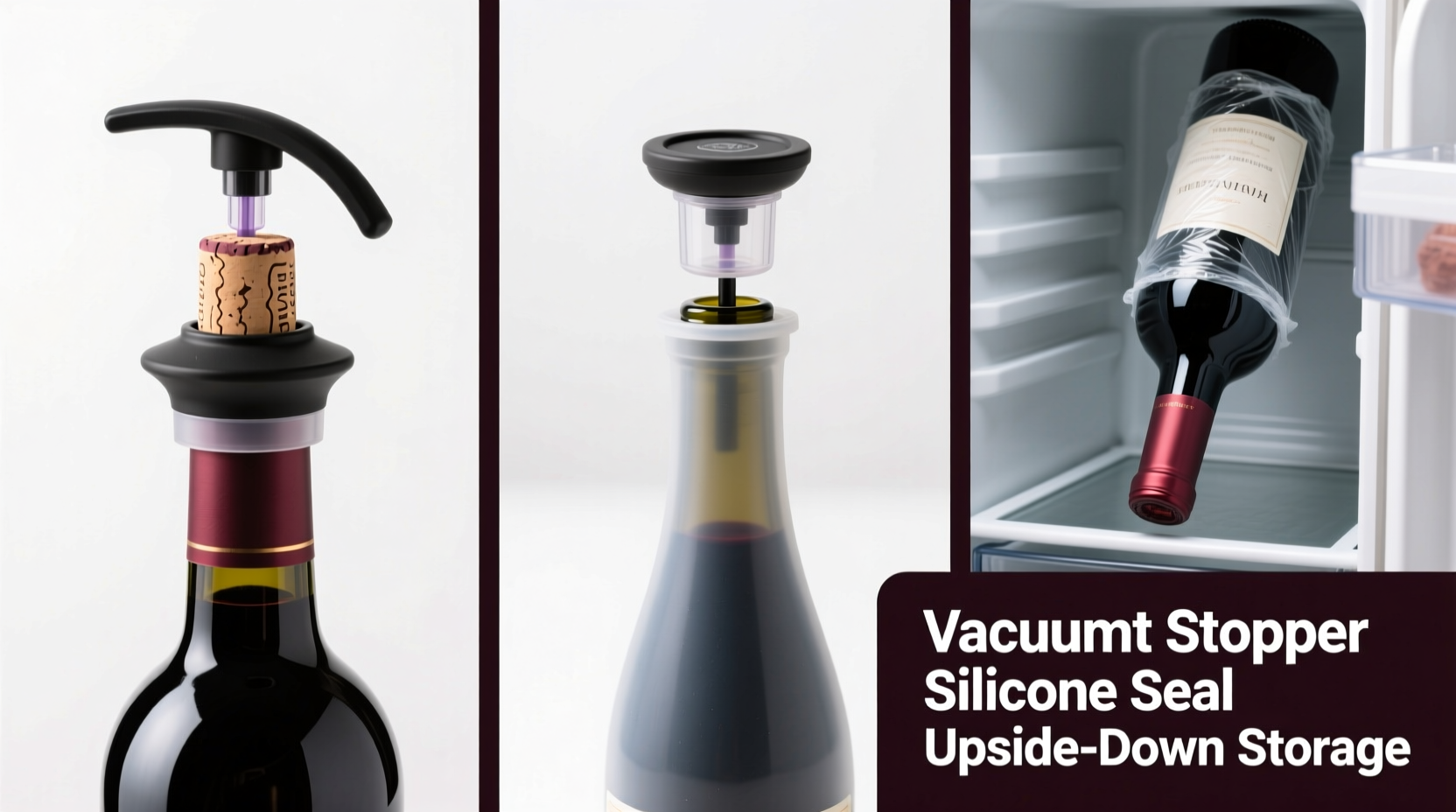
Even if you lost the original cork, a universal wine stopper is a worthwhile investment. These silicone or rubber stoppers fit most bottle necks snugly and form an airtight seal. Available in sets online or at kitchen supply stores, they’re reusable and dishwasher-safe.
2. Plastic Wrap and Rubber Band
A quick fix using items you likely already have:
- Cover the bottle opening tightly with plastic wrap.
- Secure it with a rubber band around the neck.
- Tuck any excess wrap underneath for a tighter seal.
This method reduces airflow significantly and works well for short-term storage (1–2 days).
3. Spoon Trick (Myth vs. Reality)
A popular myth suggests placing a metal spoon in the neck of a champagne or sparkling wine bottle prevents it from going flat overnight. There’s no scientific evidence supporting this. Carbon dioxide is heavier than air and will dissipate regardless of a spoon’s presence. This method does not work for still wines either.
4. Transfer to a Smaller Container
One of the most effective ways to reduce oxidation is minimizing headspace—the empty space between wine and the container lid. Pour the remaining wine into a smaller bottle or jar with a tight-sealing lid (like a mason jar or clean liquor bottle). Fill it as close to the top as possible.
5. Vacuum Pump System
Vacuum pumps remove air from the bottle, slowing oxidation. Attach the pump to a reusable stopper, then pump out the air. While not perfect—some oxygen remains dissolved in the wine—it can extend freshness by 2–3 extra days. Note: Avoid using vacuum systems with sparkling wines, as they remove carbonation.
Step-by-Step Guide: Storing Opened Wine Without a Cork
Follow this sequence to maximize the shelf life of your opened wine using accessible tools:
- Assess the wine type: Light whites and sparkling wines degrade faster than full-bodied reds. Prioritize delicate wines for quicker consumption or better sealing.
- Choose your sealing method: If you have a wine stopper or vacuum pump, use it. Otherwise, opt for plastic wrap and a rubber band.
- Minimize air exposure: If storing for more than a day, transfer wine to a smaller container to reduce headspace.
- Seal tightly: Ensure no gaps exist between the seal and the bottle rim. For plastic wrap, stretch it taut before securing.
- Refrigerate immediately: All opened wines benefit from cold storage. Refrigeration slows chemical reactions, preserving freshness.
- Label and date: Use tape and a marker to note the date opened. Most wines last 3–5 days max after opening.
When ready to drink again, let red wine sit at room temperature for 20–30 minutes before serving. White and rosé wines can be poured directly from the fridge.
Do’s and Don’ts of Storing Opened Wine
| Do’s | Don’ts |
|---|---|
| Do refrigerate all opened wines. Cold temperatures slow oxidation. | Don’t leave wine at room temperature. Heat speeds up spoilage. |
| Do use airtight seals. Silicone stoppers or sealed jars work best. | Don’t reuse corks. They crack and lose elasticity, creating poor seals. |
| Do transfer to smaller bottles. Less air means slower degradation. | Don’t shake or agitate the bottle. This introduces more oxygen. |
| Do finish delicate wines first. Sauvignon Blanc spoils faster than Cabernet Sauvignon. | Don’t store near strong odors. Wine can absorb smells through imperfect seals. |
Real Example: How Sarah Saved Her Pinot Noir
Sarah opened a bottle of Oregon Pinot Noir for a quiet evening but only drank half. Without a cork, she considered pouring the rest down the drain—until she remembered a tip from a sommelier friend. She poured the remaining 3 oz into a clean 100ml glass liquor bottle, sealed it with its screw-top cap, and placed it in the fridge.
Three days later, she reopened it for a cheese platter. Though slightly less vibrant, the wine retained its bright cherry notes and silky texture. “I was shocked it wasn’t vinegary,” she said. “Now I always keep small bottles in my cabinet just for this.”
Sarah’s experience highlights a key principle: reducing air volume is often more effective than relying on a perfect seal alone.
“Preserving opened wine isn’t about perfection—it’s about minimizing damage. Even a basic seal in the fridge buys you time.” — Marcus Tran, Certified Sommelier and Beverage Director
Checklist: Store Opened Wine Without a Cork
Use this checklist the next time you’re left with unfinished wine:
- ☐ Determine wine type (red, white, sparkling) to assess shelf life
- ☐ Choose a sealing method (stopper, plastic wrap, smaller container)
- ☐ Minimize headspace by transferring to a smaller bottle if needed
- ☐ Seal tightly—no loose covers or cracks
- ☐ Label with the date opened
- ☐ Place in the refrigerator immediately
- ☐ Taste before serving on subsequent days; discard if sour or flat
Frequently Asked Questions
Can I use a regular bottle cap to seal wine?
Yes, if the wine is transferred to a container with a screw top—like a small liquor bottle or mason jar. Standard beer or soda caps won’t fit wine bottles, but repurposing a compatible container with a tight metal lid is highly effective.
How long does opened wine last without a cork?
It depends on the method used:
- Plastic wrap + fridge: 1–2 days
- Transfer to small bottle + cap: 3–4 days
- Wine stopper or vacuum seal: 3–5 days
Is it safe to drink wine that’s been open for over a week?
While not dangerous, wine older than 5–7 days typically tastes stale or vinegary due to acetic acid formation. If it smells like wet cardboard, nail polish remover (ethyl acetate), or sharp vinegar, it’s best discarded. When in doubt, smell and taste a small amount first.
Advanced Tips for Frequent Wine Drinkers
If you regularly open bottles but don’t finish them, consider upgrading your preservation strategy:
- Inert Gas Sprays: Products like Private Preserve release a layer of argon, nitrogen, and CO₂ into the bottle, forming a protective blanket over the wine. One spray before sealing can extend freshness up to a week.
- Coravin System: This device extracts wine through the cork using a needle and replaces it with argon gas, allowing you to pour a glass without removing the cork. Ideal for collectors or those who sip slowly.
- Dedicated Wine Fridge: Maintains consistent temperature (45–55°F) and humidity, ideal for both unopened and opened bottles. Some models even include vacuum storage trays.
For casual drinkers, these may be overkill—but for enthusiasts, they offer unmatched preservation.
Conclusion
Not having a cork doesn’t mean your opened wine is doomed. With thoughtful handling and the right techniques, you can preserve its character and enjoy it days later. The keys are minimizing air exposure, sealing tightly, and refrigerating promptly. Whether you use plastic wrap, a spare jar, or invest in a vacuum system, every step you take helps protect the craftsmanship in each bottle.
Wine is meant to be savored—not rushed or wasted. By mastering these simple storage methods, you gain flexibility, reduce waste, and deepen your appreciation for every varietal. Try one technique this week, share your results, and toast to smarter sipping.




 浙公网安备
33010002000092号
浙公网安备
33010002000092号 浙B2-20120091-4
Comments
No comments yet. Why don't you start the discussion?