
Vintage t-shirts are more than just clothing—they’re wearable history. Whether it’s a band tee from the ‘80s, a concert souvenir, or a rare graphic print from a defunct brand, these garments carry cultural significance and personal nostalgia. But their age makes them vulnerable. Sunlight fades colors, gravity stretches fabric, and improper storage accelerates deterioration. Preserving vintage tees isn’t just about keeping them clean; it’s about creating an environment where time slows down. With the right techniques, you can protect your collection from both visible damage and invisible wear, ensuring that every detail—from ink saturation to cotton softness—remains intact for decades.
Understanding Why Vintage Tees Deteriorate
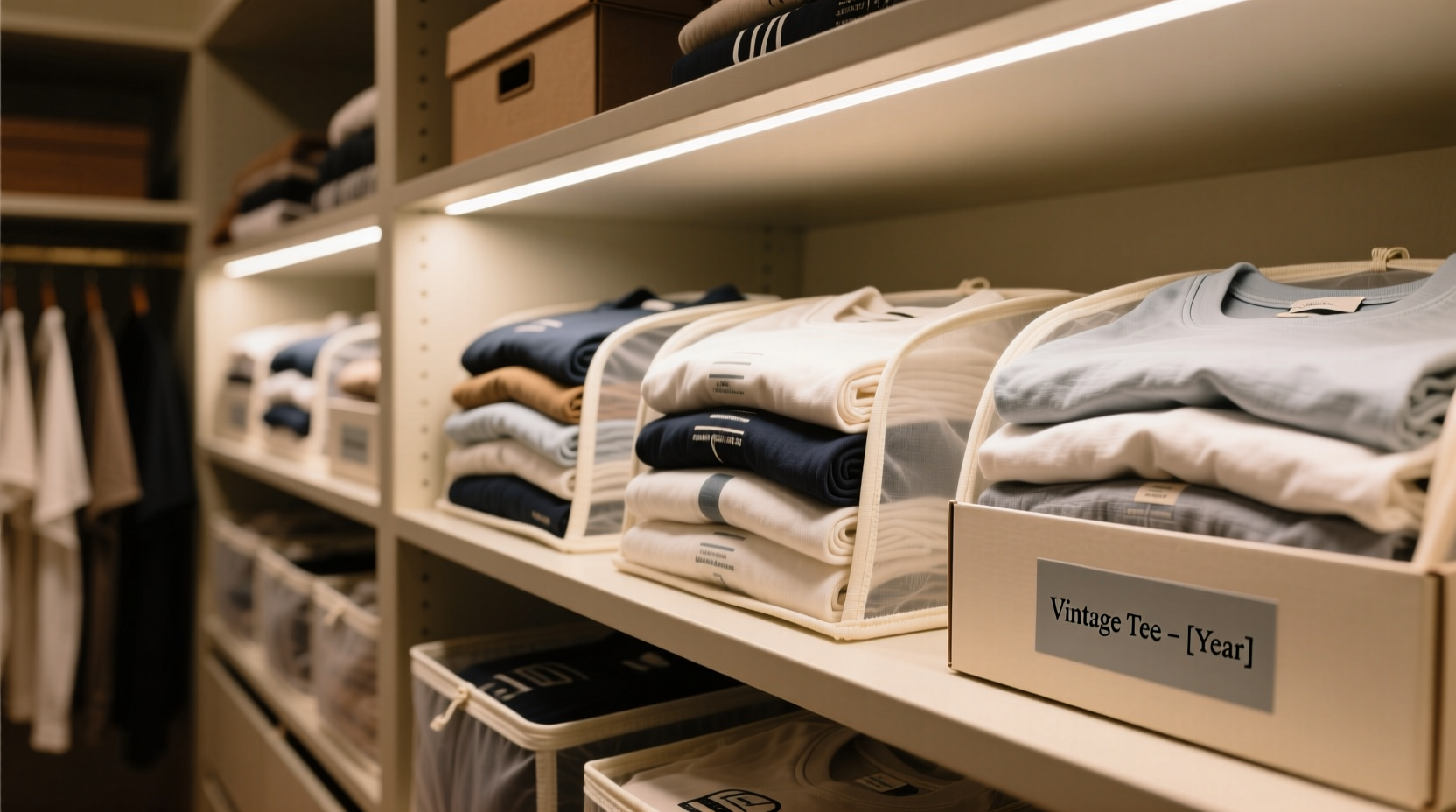
Cotton, the primary material in most vintage tees, is a natural fiber that breathes but also degrades over time. Exposure to oxygen, light, moisture, and physical stress all contribute to breakdown. The dyes used in older screen printing often lack modern UV stabilizers, making graphics especially prone to fading. Additionally, repeated folding along the same lines creates permanent creases and weakens fibers, while hanging can distort shoulder seams and stretch the body of the shirt.
Humidity encourages mold and mildew, particularly in dark closets or basements. Meanwhile, synthetic storage materials like plastic bags trap moisture and off-gas chemicals that yellow fabric. Even air pollution—such as ozone from electronics or cigarette smoke—can oxidize dyes and weaken fibers. Recognizing these threats is the first step toward prevention.
“Textiles are fragile archives. Every fold, stain, or fade tells a story—but not all stories should be forced by poor storage.” — Dr. Lila Chen, Textile Conservator at the American Fashion Archive
Step-by-Step Guide to Preparing Tees for Storage
Before any shirt enters long-term storage, it must be properly prepared. Storing a dirty or damp tee invites irreversible damage. Follow this sequence to ensure each piece is preserved correctly:
- Inspect thoroughly: Check for stains, moth holes, loose threads, or weakened areas. Address minor repairs before storing.
- Wash only if necessary: Over-washing wears out vintage cotton. If soiling is present, hand wash in cold water with a pH-neutral detergent designed for delicates.
- Air dry flat: Never use a dryer. Lay the shirt on a clean towel, reshaping it gently to its original dimensions. Avoid direct sunlight during drying.
- Press with caution: Use low heat and a pressing cloth. Never iron directly over printed graphics, as heat can crack old ink.
- Allow full cooling: Let the shirt rest for 24 hours after washing or pressing to stabilize fibers before folding.
Best Storage Methods: Folding vs. Hanging
The debate between folding and hanging vintage tees hinges on fabric weight and design. Lightweight cotton tees (under 5 oz/yd²) should almost always be folded. Hanging causes gravitational pull that elongates the shoulders and stretches the neckline over months or years. Heavier garments like vintage sweatshirts or denim jackets may tolerate careful hanger use, but standard tees do not.
Folding reduces strain on seams and prevents distortion. However, improper folding can create sharp creases that break down fibers over time. Use a consistent, gentle method that minimizes pressure points.
| Method | Best For | Risks | Recommended? |
|---|---|---|---|
| Folding | Standard cotton tees, graphic prints, lightweight fabrics | Creasing if folded repeatedly in same place | ✅ Yes – with rotation |
| Hanging | Structured tops, denim, heavier knits | Stretching, shoulder bumps, neck deformation | ❌ No – avoid for vintage tees |
| Rolling | Tees with large graphics, silk-screened backs | Less space-efficient | ✅ Alternative to folding |
How to Fold a Vintage Tee Without Damage
Use the “file fold” method to minimize stress:
- Lay the shirt face-down on a clean surface.
- Smooth out wrinkles gently with hands—never tug.
- Fold one side inward at a 90-degree angle from the armpit.
- Repeat on the other side.
- Fold bottom hem up to just below the collar.
- Place in storage box with similar-colored or neutral items.
Rotate the fold direction every 6–12 months to prevent permanent crease lines.
Choosing the Right Storage Environment
Location matters as much as method. Ideal conditions mimic museum textile storage: cool, dark, dry, and stable.
- Temperature: Maintain between 60–70°F (15–21°C). Avoid attics and garages, where temperatures fluctuate drastically.
- Humidity: Keep relative humidity between 40–50%. Above 60% invites mold; below 30% makes fibers brittle.
- Light: Eliminate direct sunlight and reduce artificial light exposure. UV radiation breaks down dyes and weakens cellulose.
- Air quality: Store away from kitchens, basements, or areas with high pollution. Avoid proximity to cardboard boxes, which emit acids over time.
Storage Containers That Protect
Not all containers are created equal. Prioritize breathable, acid-free materials:
- Archival document boxes: Rigid, lidded, and made from acid-free board. Ideal for stacking folded tees vertically like files.
- Muslin garment bags: Breathable fabric covers that shield from dust while allowing airflow.
- Cotton pillowcases: A budget-friendly alternative for individual protection.
Avoid plastic bins, trash bags, or vacuum-sealed pouches. These trap moisture and promote yellowing. If you must use plastic, choose polypropylene bins with ventilation holes and line them with acid-free paper.
Real Example: Preserving a 1978 Rolling Stones Tour Tee
Jamal, a collector from Portland, inherited his father’s 1978 Rolling Stones “Some Girls” tour tee. The shirt had been stored in a plastic bin under a bed for 15 years. When retrieved, the red logo had faded to pink, and the neckline was stretched. After consulting a conservator, he took action:
- Washed the tee in cold water with Orvus paste (a conservation-grade cleaner).
- Dried it flat on a white towel, reshaping the collar by hand.
- Folded it using the file method and placed it inside an archival box lined with acid-free tissue.
- Stored the box in a closet on the second floor, away from exterior walls and windows.
Six months later, the color remained stable, and no new creases formed. By rotating the fold annually and checking condition quarterly, Jamal ensured the shirt stayed museum-quality. His experience underscores that even damaged pieces can be stabilized with proper care.
Essential Do’s and Don’ts for Long-Term Preservation
| Do | Don't |
|---|---|
| Store in a dark, climate-stable room | Leave tees in direct sunlight or near windows |
| Use acid-free tissue to cushion folds | Fold along the same lines indefinitely |
| Inspect garments every 3–6 months | Forget about them for years at a time |
| Label boxes externally with contents | Write directly on shirts or tags |
| Wash hands before handling delicate pieces | Touch prints with oily or lotion-covered hands |
FAQ: Common Questions About Storing Vintage Tees
Can I hang my vintage band tees on the wall for display?
Yes, but only for short periods. Prolonged display exposes fabric to light and dust. If framing, use UV-protective glass, mount with fabric-safe straps (not pins), and rotate displayed pieces every 3–6 months. Never hang a vintage tee on a regular hanger for storage.
How often should I check my stored tees?
Inspect every 3 to 6 months. Look for signs of mold, insect activity, fading, or new creases. Rotate folds and refold if needed. Early detection prevents major damage.
Is it safe to store vintage tees in cedar chests?
Cedar repels moths but emits oils that can stain fabric over time. If using a cedar chest, line it with acid-free paper and place tees in muslin bags first. Avoid direct contact between wood and clothing.
Preservation Checklist
- ☐ Inspect each tee for stains or damage
- ☐ Hand wash only if necessary, using cold water and gentle detergent
- ☐ Dry flat, reshaping collar and sleeves
- ☐ Press with low heat and a protective cloth (optional)
- ☐ Fold using the file method or roll gently
- ☐ Insert acid-free tissue in folds for support
- ☐ Store in archival box or breathable fabric bag
- ☐ Keep in a cool, dark, dry location (40–50% humidity)
- ☐ Rotate folds every 6–12 months
- ☐ Inspect condition every 3–6 months
Conclusion: Treat Your Vintage Tees Like Artifacts
Vintage t-shirts are cultural artifacts woven from cotton and memory. They deserve more than being shoved into a drawer or tossed into a bin. By understanding the science of fabric degradation and applying mindful storage practices, you honor their history and extend their life. Fading and stretching aren’t inevitable—they’re preventable. Whether you own one prized tee or a curated archive, the habits you build today will determine what future generations see tomorrow. Start with one shirt, follow the checklist, and build a system that protects not just fabric, but legacy.




 浙公网安备
33010002000092号
浙公网安备
33010002000092号 浙B2-20120091-4
Comments
No comments yet. Why don't you start the discussion?