
Finding the perfect pair of boots often comes down to more than just style—fit is everything. Even the most stylish boots can become a source of discomfort if they pinch, rub, or restrict movement. Many people assume that tight boots will “break in” naturally over time, but wearing ill-fitting footwear without proper stretching can lead to blisters, calluses, and long-term foot strain. The good news: you don’t have to live with discomfort or replace your boots prematurely. With the right techniques, you can gently and safely stretch boots that are too tight—preserving both comfort and material integrity.
Whether your boots are made of full-grain leather, suede, nubuck, or even high-quality synthetics, there are effective, low-risk methods to expand their fit. The key lies in understanding your boot’s material, applying gradual pressure, and avoiding aggressive tactics that compromise durability.
Understanding Boot Materials and Stretch Potential
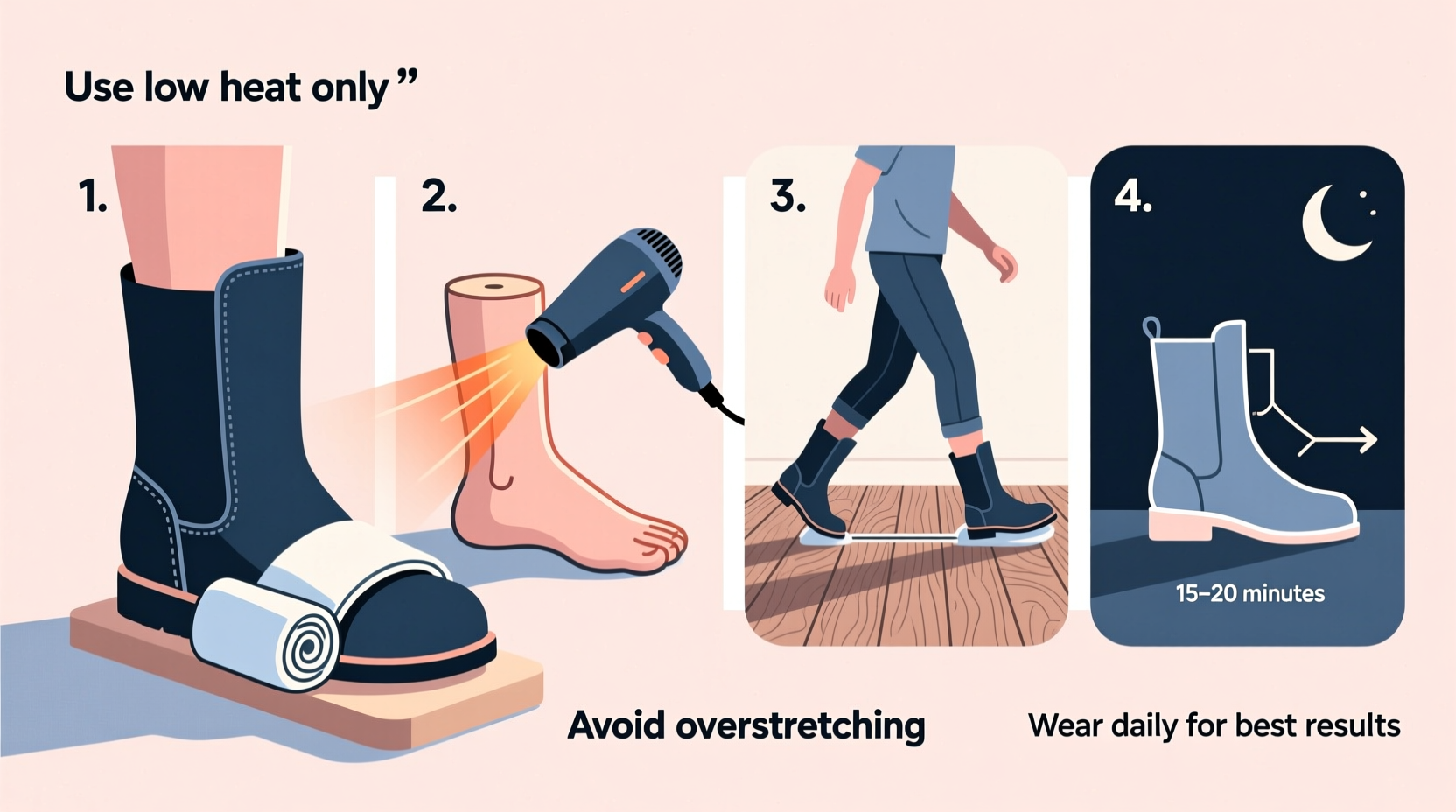
Not all boots respond to stretching in the same way. The success of any method depends largely on the type of material used. Recognizing what your boots are made from helps determine which stretching technique will work best—and which ones could do more harm than good.
| Material | Natural Stretch? | Best Stretching Methods | Avoid |
|---|---|---|---|
| Full-Grain Leather | Moderate to high | Wear with thick socks, use shoe stretchers, apply leather conditioner | Excessive heat, soaking for long periods |
| Suede / Nubuck | Moderate (but delicate) | Steam + wear, cedar shoe trees, spray-on stretcher | Direct water exposure, harsh chemicals |
| Textile / Synthetic | Low | Limited options; spot-stretching only | Heat-based methods, moisture-heavy treatments |
| Exotic Leathers (e.g., snake, ostrich) | Very low | Professional stretching only | DIY methods, moisture |
Leather, especially full-grain, has natural fibers that loosen when warmed and flexed, allowing for controlled expansion. Suede and nubuck require extra caution—they absorb moisture easily and can stain or warp if mishandled. Synthetics rarely stretch meaningfully, so adjustments must be minor and localized.
“Stretching should never feel like forcing. If resistance is strong, stop and reassess. Healthy stretching enhances longevity; aggressive methods ruin structure.” — Daniel Reeves, Master Cobbler & Footwear Restorer
Safe At-Home Stretching Techniques
Most tightness occurs across the instep, around the toes, or along the heel collar. Targeted stretching can relieve pressure in these zones without distorting the boot’s overall shape. Below are five proven, low-damage methods suitable for home use.
1. Wear Boots with Thick Socks and Heat
This classic method uses body heat and friction to relax leather fibers gradually.
- Put on two or three pairs of thick wool or thermal socks.
- Use a hairdryer to warm the tightest areas of the boot (30–45 seconds per zone).
- Immediately put the boots on and walk around for 20–30 minutes.
- Leave them on until they cool completely—do not remove while warm.
2. Use a Dual-Axis Shoe Stretcher
For consistent, measurable results, a quality wooden shoe stretcher is one of the safest tools available.
- Choose a stretcher with width and length adjustment knobs.
- Apply a few drops of leather stretching solution or rubbing alcohol to problem areas (optional).
- Insert the stretcher fully and turn the knob slowly—just one-quarter turn per day.
- Leave in place for 24–48 hours between adjustments.
Cedar wood is ideal because it absorbs moisture and odors while providing steady pressure. Avoid plastic models, which lack grip and may slip out.
3. Freeze Water Expansion Method
Perfect for localized stretching—especially in the toe box.
- Fill a sandwich-sized zip-top bag with water.
- Place it inside the boot where stretching is needed (e.g., the toe area).
- Seal the boot in a larger plastic bag to protect surroundings.
- Put the boot in the freezer overnight.
- As the water freezes and expands, it gently pushes against the interior.
- Remove, thaw, and repeat if necessary (max 2–3 times).
This method works best on leather and avoids direct heat damage. Never use glass or metal containers—expansion can crack or puncture materials.
4. Steam and Flex Technique
Steam opens up leather pores, making fibers more pliable.
- Hold a garment steamer or kettle spout 2–3 inches from the boot surface (do not soak).
- Warm the tight area for 20–30 seconds.
- Immediately put on thick socks and wear the boots for 15–20 minutes.
- Flex your feet and ankles actively to encourage expansion.
Never apply steam directly to suede unless using a professional-grade suede brush afterward to restore texture.
5. Professional Stretching Spray Application
Commercial sprays contain mild solvents that temporarily soften leather, allowing deeper fiber movement.
- Test spray on a small, hidden area first (e.g., inside tongue).
- Apply evenly to the interior or exterior of tight zones.
- Put on thick socks and wear the boots for 30–60 minutes.
- Allow to air dry naturally—never use heat to speed drying.
Popular brands like Kiwi Instant Stretch or Reshoevn8r Stretch Aid are formulated to minimize discoloration and drying.
Step-by-Step Timeline: 7-Day Boot Stretching Plan
For optimal results without damage, follow this structured timeline. This plan assumes moderate tightness and leather construction.
| Day | Action | Goal |
|---|---|---|
| 1 | Clean boots; apply leather conditioner. Insert adjustable shoe stretcher (no expansion yet). | Prepare material for stress. |
| 2 | Turn stretcher knob ¼ turn. Leave in place 24 hours. | Begin gentle widening. |
| 3 | Remove stretcher. Wear boots with thick socks for 30 minutes. | Assess comfort; check for hot spots. |
| 4 | Reinsert stretcher. Another ¼ turn. Use stretching spray on instep if needed. | Target specific pressure points. |
| 5 | Freeze water bag in toe box overnight. | Expand cramped toe area. |
| 6 | Steam upper shaft; wear boots with socks for 45 minutes. | Improve ankle flexibility fit. |
| 7 | Final wear test with regular socks. Assess overall comfort. | Determine if further treatment is needed. |
If tightness persists after Day 7, wait 3–5 days before repeating. Overworking leather leads to thinning, creasing, or seam failure.
Mini Case Study: Recovering a Heirloom Leather Riding Boot
Sarah M., a historian in Vermont, inherited her grandmother’s vintage riding boots—beautifully crafted from oiled cowhide but painfully tight across the instep. She avoided wearing them for months due to blistering. Instead of taking them to a cobbler immediately, she tried the 7-day plan above.
She started with conditioning, then used a dual-axis cedar stretcher with incremental turns. On Day 5, she applied the freeze method to slightly widen the toe box, which had been pressing into her second toe. By Day 7, she could wear the boots comfortably with medium-weight socks—the original stiffness was gone, but the structure remained intact.
Sarah noted: “I was afraid I’d ruin them, but going slow made all the difference. Now I wear them every fall during historical reenactments.”
The case illustrates that patience and precision matter more than speed. Her boots retained value and function because she prioritized preservation over immediate relief.
Checklist: Safe Boot Stretching Do’s and Don’ts
Follow this checklist to avoid common mistakes that compromise boot quality.
✅ Do:
- Condition leather before and after stretching.
- Use gradual pressure over multiple sessions.
- Target only the areas that need expansion.
- Test any liquid product on a hidden spot first.
- Let boots rest between treatments.
❌ Don’t:
- Soak leather boots in water for extended periods.
- Use boiling water, radiators, or hairdryers on high heat for long durations.
- Force feet into boots violently—this tears stitching.
- Stretch synthetic boots beyond 1/8 inch.
- Ignore signs of material fatigue like whitening or deep creases.
Frequently Asked Questions
Can I stretch boots half a size larger?
Yes, most leather boots can be stretched by about half a size safely using gradual methods. Going beyond that risks weakening seams and distorting the sole. For increases greater than half a size, consult a professional cobbler who has industrial stretching machines.
Will wetting my boots ruin them?
Controlled moisture—such as light steaming or brief freezing—is safe for leather. However, prolonged soaking causes fibers to swell unevenly, leading to warping, glue breakdown, and permanent stiffness once dry. Always dry boots slowly at room temperature if they get wet.
How long does it take to stretch boots properly?
Gentle stretching takes 5–10 days for noticeable improvement. Rushing the process with excessive heat or force may yield faster results but often damages structural integrity. Patience ensures lasting comfort without sacrificing durability.
Conclusion: Comfort Without Compromise
Tight boots don’t have to mean discarded style or enduring pain. With knowledge of materials, the right tools, and a disciplined approach, you can expand your boots’ fit while preserving their craftsmanship. The goal isn’t just to make them wearable—it’s to extend their life, enhance comfort, and protect your investment.
Start with the least invasive method, monitor progress closely, and never push beyond the material’s limits. Whether you’re breaking in new winter boots or reviving a sentimental pair, thoughtful stretching delivers results that last far beyond a single season.




 浙公网安备
33010002000092号
浙公网安备
33010002000092号 浙B2-20120091-4
Comments
No comments yet. Why don't you start the discussion?