
Canvas shoes are a wardrobe staple—lightweight, breathable, and effortlessly stylish. But when they’re new or stored for long periods, they often feel tight, stiff, and uncomfortable. Forcing your feet into unyielding fabric can lead to blisters, pressure points, and even long-term foot discomfort. The key isn’t to wear them through the pain but to stretch them intelligently. Done correctly, stretching preserves both comfort and structure. Done poorly, it warps seams, weakens stitching, or distorts the sole alignment. This guide delivers practical, field-tested methods to loosen canvas footwear gently while maintaining its original silhouette and integrity.
Why Canvas Shoes Become Stiff—and How Stretching Helps
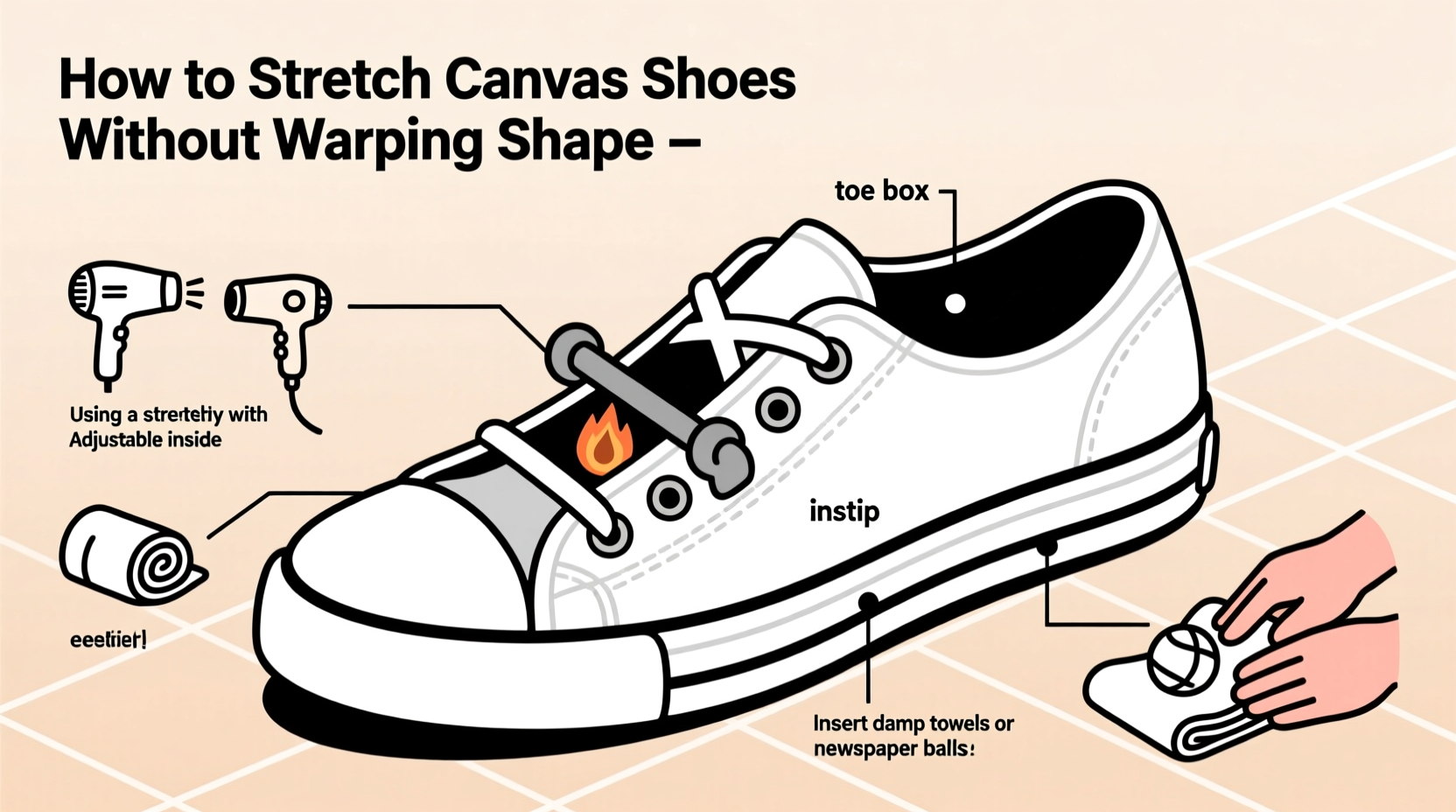
New canvas shoes are typically stiff due to tightly woven fabric and reinforced toe caps or heel counters designed for durability. Over time, exposure to moisture, temperature changes, or improper storage (like folding or stacking) can also cause fibers to tighten. Unlike leather, which naturally molds to the foot, canvas has limited elasticity. However, with controlled manipulation, you can encourage the material to relax without compromising support.
The goal of stretching isn’t to enlarge the shoe dramatically but to ease tension in high-pressure zones—particularly across the instep, around the toes, and along the heel collar. A well-stretched canvas shoe should feel like it was made for your foot, not fought onto it.
“Canvas is forgiving if treated with patience. Aggressive stretching leads to sagging uppers and collapsed arches. Gentle, incremental methods preserve function and form.” — Daniel Ruiz, Footwear Restoration Specialist
Step-by-Step Guide: Safe Methods to Stretch Canvas Shoes
Below are five effective, low-risk techniques to stretch canvas shoes. Each method uses household items or affordable tools and prioritizes structural preservation. Always start with clean shoes—dirt and oils can weaken fibers during treatment.
1. The Wear-and-Walk Method (Gradual Break-In)
This is the most natural approach: let your body do the work over time. Wear thick socks and walk in your shoes for increasing durations each day. The combination of heat, moisture from your feet, and repeated flexing softens the canvas gradually.
- Put on thick athletic or wool socks.
- Wear the shoes indoors for 30–60 minutes the first day.
- Increase wear time by 30 minutes daily, up to 3–4 hours.
- Avoid outdoor use until stiffness subsides.
2. The Freezer Technique (Cold Expansion)
Leverage water’s expansion when frozen to apply outward pressure evenly. This method targets localized tightness without heat damage.
- Fill two zip-top plastic bags with water, removing excess air.
- Place one bag inside each shoe, positioning it where tightness occurs (e.g., toe box).
- Seal shoes in a larger plastic bag to prevent freezer odor absorption.
- Freeze overnight (at least 8 hours).
- Remove and let ice melt completely before wearing.
The expanding ice gently pushes against the canvas, creating micro-stretches. Repeat once if needed, but avoid multiple cycles to prevent seam stress.
3. The Hairdryer and Wear Method (Controlled Heat + Pressure)
Heat loosens cotton fibers, making them more pliable. Combined with foot pressure, this technique offers targeted relief.
- Put on thick socks.
- Insert shoe trees or crumpled paper to maintain shape.
- Use a hairdryer on medium heat to warm tight areas for 30–60 seconds.
- Immediately put on the shoes and walk around for 10–15 minutes.
- Let shoes cool completely while still on your feet to set the new shape.
This mimics professional heat-molding processes used in cobbling. Avoid high heat or prolonged exposure, which can degrade glue or discolor fabric.
4. Shoe Stretcher with Canvas-Safe Spray
Shoe stretchers are ideal for maintaining toe box volume and heel fit. Use them with a canvas-specific stretching spray to enhance effectiveness.
- Spray the inside of the shoe lightly with a canvas-safe stretching solution (look for alcohol-free, pH-balanced formulas).
- Insert an adjustable shoe stretcher, focusing on width or length expansion.
- Leave in place for 6–8 hours or overnight.
- Repeat 2–3 times as needed.
Choose a stretcher with a rubber-coated surface to prevent snagging the fabric. Dual-axis models allow independent adjustments for a customized fit.
5. Damp Towel Method (Moisture Relaxation)
Mild dampness relaxes cotton fibers without oversaturating the shoe. Ideal for moderate stiffness.
- Dampen a hand towel with lukewarm water—wring thoroughly so it’s moist but not dripping.
- Stuff each shoe with the towel, ensuring contact with tight zones.
- Let sit for 2–3 hours in a well-ventilated area, away from direct heat.
- Remove towels and let shoes air-dry completely on shoe trees.
- Wear with socks to finalize shaping.
Never soak canvas shoes. Excess water can warp the midsole, promote mildew, or delaminate glued layers.
Do’s and Don’ts: Protecting Shape While Stretching
Maintaining the shoe’s intended structure is as important as improving comfort. The table below outlines critical actions to take—and avoid.
| Action | Do | Don't |
|---|---|---|
| Moisture Use | Apply light dampness via spray or towel | Soak shoes in water or leave wet overnight |
| Heat Application | Use medium heat briefly with immediate wear | Expose to direct sunlight, radiators, or high-heat blow dryers |
| Storage During Process | Use shoe trees or paper stuffing to hold form | Leave shoes collapsed or stacked under weight |
| Stretching Tools | Use adjustable wooden or plastic stretchers | Force in oversized objects like books or bottles |
| Post-Treatment | Allow full air drying before reuse | Speed dry with heaters or tumble dryers |
Real Example: Reviving Vintage Canvas Sneakers
Maya, a vintage apparel collector, inherited her grandfather’s 1970s canvas sneakers. Though structurally sound, the uppers were brittle and pinched her wide forefoot. She avoided wearing them, fearing damage. After researching safe restoration, she used the freezer method twice—first targeting the toe box, then the lateral side where her pinky toe pressed. Between sessions, she stuffed the shoes with acid-free tissue to maintain shape. After three weeks of gentle wear with cushioned insoles, the shoes conformed to her foot. “They still look classic,” she said, “but now they feel like they were custom-made.”
This case highlights that even aged canvas responds well to careful stretching—without sacrificing authenticity or symmetry.
Checklist: Stretch Your Canvas Shoes Safely
- ✅ Clean shoes before starting any stretching method
- ✅ Identify exact areas of tightness (toe, arch, heel)
- ✅ Choose one primary method based on severity and tools available
- ✅ Use shoe trees or stuffing to maintain shape during treatment
- ✅ Limit aggressive techniques to one or two applications max
- ✅ Allow full drying time between attempts
- ✅ Test fit frequently to avoid overstretching
- ✅ Combine methods only if necessary (e.g., dampen before using stretcher)
Frequently Asked Questions
Can I stretch canvas shoes more than one size?
It’s unlikely—and inadvisable. Canvas lacks the memory and elasticity of leather. Attempting a full size increase risks permanent deformation, seam splitting, or sole detachment. Focus on improving comfort within half a size. If your shoe is more than a half-size too small, consider exchanging it.
Will stretching make my canvas shoes look baggy?
Not if done correctly. Controlled methods target specific pressure points without loosening the entire upper. Using internal supports like shoe trees during and after stretching helps retain crisp lines. Avoid over-wetting or excessive heat, which can cause drooping at the ankle collar or wrinkling at the toe.
How long does it take to stretch canvas shoes comfortably?
Most people notice improvement within 3–7 days using consistent, gentle techniques. Full adaptation may take 2–3 weeks, especially with the wear-and-walk method. Rushing the process increases the risk of irreversible damage. Patience ensures longevity.
Expert Tips for Long-Term Comfort and Care
Once your shoes are broken in, maintain their fit and appearance with routine care. Store them on shoe horns or in breathable cotton bags to prevent re-tightening. Rotate footwear to give canvas time to recover its shape between wears. If stiffness returns after washing, repeat the damp towel method to restore flexibility.
For frequent wearers, consider applying a fabric protector spray annually. These treatments repel moisture and dirt without coating fibers too heavily, preserving breathability and texture.
“Preserving shape starts the moment you stop wearing them. A shoe tree isn’t just for leather—it keeps canvas architecture intact.” — Lena Cho, Sustainable Footwear Consultant
Conclusion: Stretch Smart, Wear Comfortably
Stiff canvas shoes don’t have to mean painful break-ins or compromised style. With the right techniques, you can achieve a personalized fit that feels effortless while keeping the shoe’s original design intact. Whether you use freezing water, targeted heat, or mechanical stretchers, the principles remain the same: go slow, support the structure, and respect the material’s limits. Now that you know how to stretch your canvas shoes safely, you can enjoy all-day comfort without sacrificing aesthetics or durability.




 浙公网安备
33010002000092号
浙公网安备
33010002000092号 浙B2-20120091-4
Comments
No comments yet. Why don't you start the discussion?