
Integrating a Christmas tree into a room that already features prominent wall art or large mirrors can be a delicate balancing act. The goal isn’t just to fit the tree in—it’s to make it feel like a natural extension of your space, enhancing rather than overwhelming your existing décor. Many homeowners hesitate to place a tree near artwork or reflective surfaces, fearing visual clutter or glare. But with thoughtful planning, these elements can actually elevate your holiday display. When done right, your tree becomes part of a cohesive seasonal narrative, not a standalone interruption.
The key lies in understanding spatial dynamics, color harmony, light reflection, and scale. Whether you're working with a gallery wall above a console or a full-length mirror beside the sofa, every surface plays a role in how your tree is perceived. This guide offers practical strategies for styling a Christmas tree that complements—not competes with—your permanent décor.
Assess Your Space and Focal Points
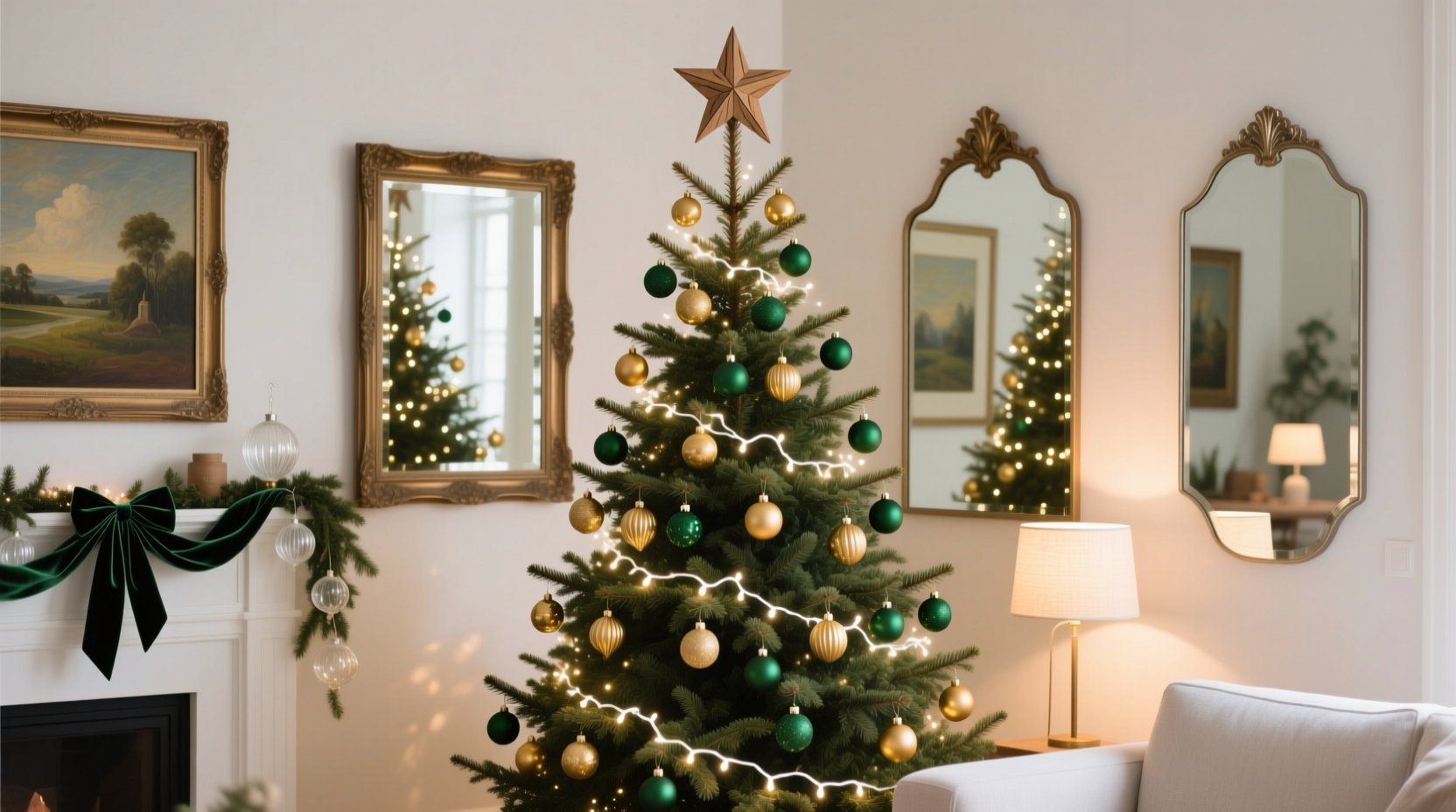
Before bringing in any decorations, take a step back—literally. Walk around the room and identify the primary focal points: Is it a large painting? A vintage mirror? A statement shelf? These pieces likely anchor your room’s aesthetic year-round, and they shouldn’t be ignored during the holidays.
Begin by sketching a rough layout of the room or taking photos from multiple angles. Note where natural sightlines lead when someone enters the space. If your eye is drawn immediately to a piece of art or mirror, your tree should either support that path or create a harmonious counterpoint.
Consider this: a mirror opposite a window will reflect daylight and, later, tree lights, doubling the sense of brightness. A bold abstract painting on an adjacent wall may demand a more subdued ornament palette to avoid sensory overload. Recognizing these relationships early prevents haphazard decorating and encourages intentional design.
Strategic Tree Placement Near Mirrors
Mirrors amplify both space and light—assets during the darker winter months. However, placing a tree too close to a mirror can result in a disorienting echo effect, especially if the reflection shows tangled branches or tangled lights.
Aim for one of three positioning strategies:
- Adjacent Placement: Position the tree beside the mirror rather than directly in front of it. This allows the mirror to reflect the side profile of the tree, adding depth without creating a symmetrical double image.
- Angled Approach: Place the tree at a 30–45 degree angle to the mirror so only a portion reflects. This creates intrigue and avoids repetition.
- Backdrop Integration: If the mirror is on the wall behind where the tree will stand, ensure the tree is narrow enough (or the room wide enough) that the top third remains visible in the reflection. This frames the tree elegantly and gives the illusion of height.
If your mirror is ornate—say, gilded or carved—echo those details in your ornament selection. For example, gold-trimmed baubles or ribbon can pick up on the frame’s finish, creating continuity. Avoid placing heavy garlands or tall stands directly in front of the mirror, as they may obstruct its function and aesthetic value.
Managing Light Reflections
Christmas lights are magical, but their reflections in mirrors can become excessive. To maintain balance:
- Use warm white LEDs instead of multicolored or strobing lights—they reflect more softly.
- Cluster lights toward the inner branches to create a glowing core rather than a blinding outer shell.
- Turn off overhead lighting when displaying the tree at night; let the tree and ambient lamps provide illumination.
“Reflections aren’t a problem—they’re an opportunity. A well-placed mirror can turn a modest tree into a centerpiece by multiplying its glow.” — Lena Pruitt, Interior Stylist & Seasonal Design Consultant
Harmonizing with Wall Art: Color, Theme, and Scale
Your wall art sets the tone for the room. Ignoring it while decorating for Christmas is like wearing a neon sweater to a black-tie event—jarring, even if well-intentioned.
Start by analyzing the dominant colors in your artwork. Is it a seascape with blues and grays? A rustic landscape with deep greens and browns? Match your ornament palette accordingly. This doesn’t mean replicating the art exactly—just pulling in one or two key hues to establish cohesion.
For instance, if your living room features a modern red-and-white abstract piece, consider using white frosted ornaments with matte red accents and silver wire stars. The tree then becomes a subtle nod to the art, not a competing element.
Respecting Visual Hierarchy
Wall art often occupies prime wall space—eye level, centered, or above furniture. Placing a tree too close can disrupt this hierarchy. Follow these guidelines:
- Keep at least 18–24 inches between the edge of the artwork and the nearest branch tip.
- If the art hangs above a console or sideboard, avoid placing the tree directly behind it unless the ceiling is high (9 feet or more).
- Use taller, slimmer trees (like pencil or slimline varieties) when flanking artwork to preserve sightlines.
Step-by-Step Guide: Styling the Tree in Context
Follow this sequence to integrate your tree seamlessly into a room with existing décor:
- Clear and Assess: Remove nearby decorative items temporarily. Evaluate traffic flow, outlet access, and visibility of art/mirrors.
- Mark the Spot: Use tape to mark the tree’s base and projected width. Step back and view from common entry points.
- Select the Right Tree: Choose a shape and size that fits the zone. Narrow spaces call for pencil trees; open corners allow for fuller profiles.
- Dress the Base: Use a tree skirt that echoes either the art’s colors or the mirror’s frame material (e.g., velvet for warmth, metallic for glam).
- String Lights First: Weave them inward for soft reflection in mirrors and to avoid glare on glossy artwork.
- Add Ornaments Strategically: Place larger or reflective balls away from direct mirror line-of-sight to prevent visual noise.
- Incorporate Thematic Toppers: If a mirror faces the tree, choose a topper that reads well in reflection—a classic star, not a lopsided fabric angel.
- Final Walkthrough: View the setup from multiple angles, including seated positions and through the mirror. Adjust as needed.
Do’s and Don’ts: Balancing Décor Elements
| Do | Don’t |
|---|---|
| Choose ornaments that reflect the undertones of your wall art (e.g., brass finishes near gold-framed paintings). | Hang large, shiny ornaments directly facing a mirror—they create distracting flashes. |
| Use the mirror to preview your decorating progress from different angles. | Block access to wall art with tree stands, stools, or tangled cords. |
| Layer textures—velvet ribbons, wood slices, linen tags—to complement canvas or framed photography. | Overload the tree with themed ornaments if your art is minimalist; keep it refined. |
| Incorporate small mirrored ornaments sparingly to echo existing reflective surfaces. | Place candles or flame-like lights too close to flammable materials or low-hanging art. |
Real Example: A Gallery Wall and Floor Mirror Combo
Sarah, a designer in Portland, faced a challenge each December: her cozy living room featured a curated gallery wall of black-and-white family photos and a tall antique mirror beside the fireplace. Every year, her traditional green tree felt “stuck in” rather than styled.
Her solution? She switched to a silver aluminum tree—a non-traditional choice, but one that reflected ambient light beautifully. She used monochrome ornaments in white, gray, and smoked glass, with thin silver ribbon woven throughout. The tree’s cool tones echoed the grayscale photos, and its reflective surface played off the antique mirror, making the room feel larger and brighter.
To bridge the gap between the tree and art, she added a few miniature silver picture frames among the branches, holding tiny holiday snapshots. This created a thematic loop between the permanent and seasonal décor. The result was a festive yet sophisticated look that guests consistently complimented—without overshadowing the room’s original character.
Checklist: Pre-Decorating Preparation
Before assembling your tree, run through this checklist to ensure harmony with existing décor:
- ☐ Measure available space, accounting for art and mirror clearances
- ☐ Identify dominant colors and textures in wall art
- ☐ Test mirror reflections with a temporary light source (e.g., string lights in a box)
- ☐ Choose a tree shape that complements the room’s proportions
- ☐ Select ornaments and tree skirt that echo at least one element from the art or mirror
- ☐ Plan cord management to avoid tripping hazards near high-traffic zones
- ☐ Confirm outlet access for lights and any rotating tree stands
- ☐ Gather tools: step stool, gloves, ornament storage bins, tape measure
Frequently Asked Questions
Can I hang anything on the wall behind the tree?
It’s best to avoid hanging new items directly behind the tree, as they’ll be obscured. However, you can enhance the area above the tree by spotlighting existing art with adjustable track lighting or picture lights. This draws attention upward and integrates the tree into the vertical composition.
What if my mirror makes the tree look crooked?
This is common with wide-angle or slightly warped antique mirrors. First, verify the tree’s actual alignment using a level. If it’s straight but appears skewed in reflection, try adjusting the viewing angle—sometimes stepping slightly to the left or right corrects the illusion. You can also minimize the issue by reducing highly directional lighting that accentuates asymmetry.
How do I prevent the tree from clashing with busy artwork?
Opt for a minimalist tree approach. Use a neutral palette—white, cream, silver, or natural wood tones—and focus on texture over color. Sparse ornamentation keeps the eye moving gracefully between the art and tree. Consider a “themeless” tree: one that feels festive through form and light rather than overt holiday symbols.
Conclusion: Create Harmony, Not Competition
Styling a Christmas tree around existing wall art and mirrors isn’t about compromise—it’s about collaboration. The most memorable holiday décors aren’t those that cover everything in tinsel, but those that thoughtfully weave seasonal joy into the fabric of everyday living spaces. By respecting scale, reflecting color stories, and leveraging light intelligently, your tree can enhance your home’s personality rather than mask it.
This season, resist the urge to start from scratch. Instead, begin with what’s already meaningful—the art that inspires you, the mirror that has greeted you for years—and let those pieces guide your choices. A tree that feels like it belongs is always more powerful than one that merely fills a corner.




 浙公网安备
33010002000092号
浙公网安备
33010002000092号 浙B2-20120091-4
Comments
No comments yet. Why don't you start the discussion?