
In compact urban living spaces, the holidays present a unique design challenge: how to celebrate with festive flair without overwhelming limited square footage. A traditional floor-to-ceiling tree may dominate a studio or one-bedroom apartment, but that doesn’t mean you have to sacrifice seasonal joy. By rethinking placement, proportion, and perception, it’s possible to create a stunning holiday centerpiece that enhances rather than encroaches on your space. The key lies in leveraging verticality and reflective surfaces—two powerful tools in interior design that can transform even the tiniest corner into a magical focal point.
Vertical space is often underutilized in small apartments, yet walls and high shelves offer prime real estate for creative holiday displays. Meanwhile, mirrors and metallic finishes don’t just add sparkle—they visually expand the room, bounce light, and amplify the glow of twinkling ornaments. When combined thoughtfully, these elements allow for a tree that feels abundant, intentional, and perfectly suited to modern micro-living.
Choose the Right Tree Form and Placement
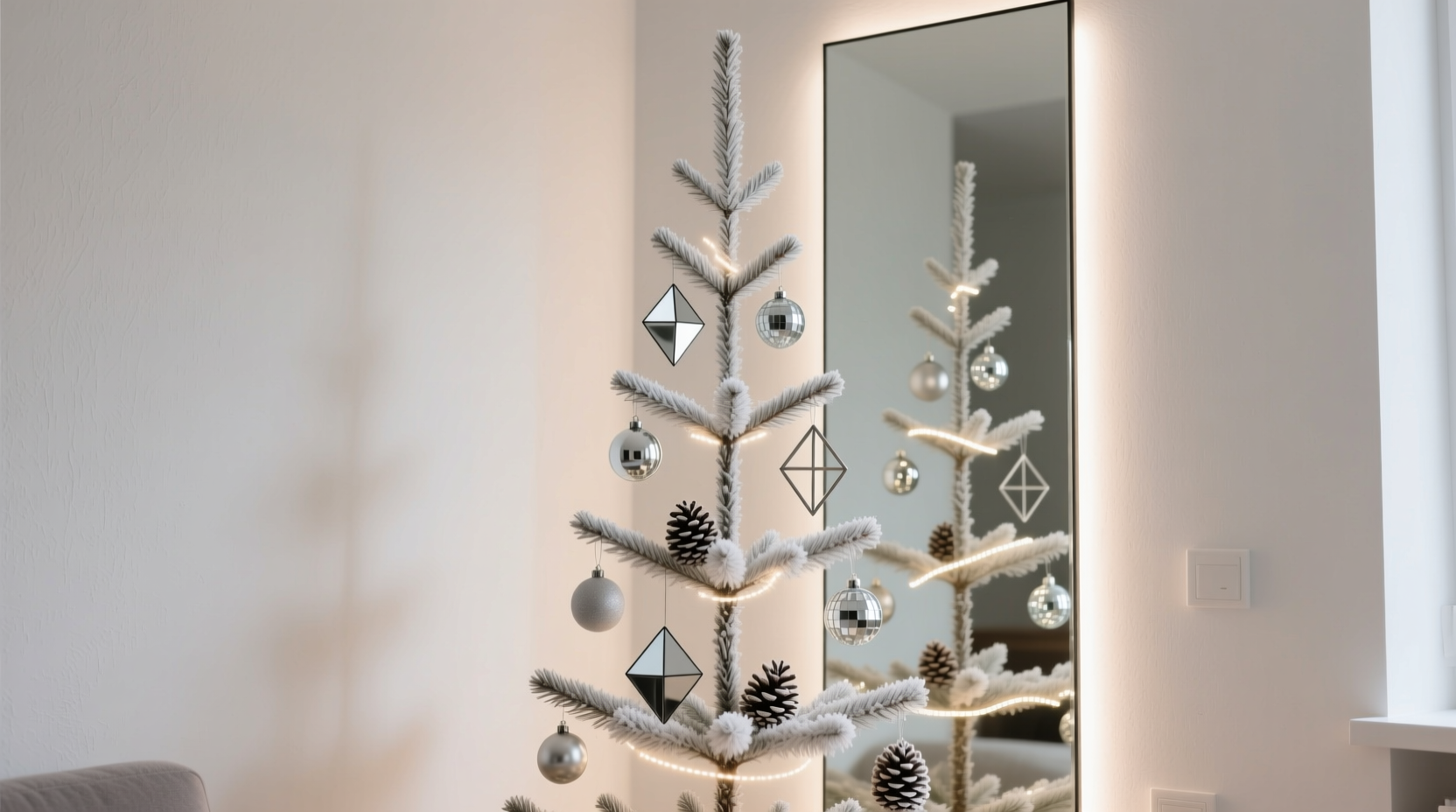
The first step in styling a Christmas tree for a small apartment is selecting a form that aligns with spatial constraints while maximizing visual impact. While a standard 7-foot tree may be impractical, alternatives such as narrow pencil trees, wall-mounted silhouettes, or tiered tabletop versions offer festive presence without footprint overload.
A pencil tree, typically 10–18 inches in diameter, fits neatly into corners or beside bookshelves. Its tall, slender profile draws the eye upward, enhancing the sense of height in a low-ceilinged room. Alternatively, consider a “tree” built from stacked geometric shapes mounted vertically on a wall—constructed from reclaimed wood, metal frames, or even string lights arranged in a triangular outline. This approach eliminates bulk entirely while preserving symbolism and seasonal rhythm.
Location matters as much as size. Avoid placing the tree in high-traffic zones like hallways or between furniture groupings. Instead, opt for underutilized vertical zones: beside a window frame, behind a sofa (if wall-mounted), or adjacent to a tall mirror. These placements integrate the tree into existing spatial flow rather than disrupting it.
Amplify Space with Mirrored Accents
Mirrors are not merely decorative—they’re functional illusions. Strategically placed, they reflect light, double visual content, and make confined areas feel more expansive. In holiday styling, mirrored surfaces enhance tree brilliance by scattering ornament colors and amplifying bulb glow throughout the room.
One effective method is positioning a full-length mirror directly opposite or adjacent to the tree. Even a modest 24x36-inch mirror will create a symmetrical illusion, making the tree appear as part of a larger ensemble. For tighter spaces, lean a decorative mirror against the wall behind the tree base. As light filters through baubles and tinsel, the reflection generates depth, turning a single tree into what appears to be a pair.
Ornaments themselves can incorporate reflective materials. Swap out matte or fabric-covered balls for mercury glass, chrome-finish, or mirrored acrylic options. These catch ambient light even when the tree lights are off, maintaining sparkle throughout the day. Consider layering textures—matte velvet ribbons contrast beautifully with shiny silver orbs, creating dimension without clutter.
“Reflection is one of the most underrated tools in small-space holiday design. A well-placed mirror doesn’t just show your back—it shows twice the beauty.” — Lena Torres, Interior Stylist & Urban Living Specialist
Step-by-Step Guide: Building a Vertical Tree Display
Follow this sequence to install a space-conscious, visually striking tree using vertical strategy and reflective elements.
- Assess available vertical zones: Identify walls with height clearance (at least 6 feet) and proximity to natural or artificial light sources.
- Select tree type: Choose a slim live or artificial tree (under 20 inches wide) or design a wall-mounted alternative using wireframe triangles, ladder shelves, or floating shelves in ascending order.
- Anchor with symmetry: Position the tree near a central axis—such as between two windows or aligned with a doorway—to create balance.
- Introduce a mirror: Place a leaning or hung mirror within 2–4 feet of the tree at an angle that captures its fullest side.
- String lights vertically: Begin at the base and spiral upward, ensuring even distribution. Use warm white LEDs for coziness without heat output.
- Add reflective ornaments: Concentrate mirrored, glass, or metallic decorations on outer branches and upper tiers where they’ll catch the most light.
- Incorporate height-extending decor: Attach ribbon streamers, garlands, or fairy lights that drape from ceiling hooks above the tree to elongate its perceived scale.
- Finish with a mirrored base: Use a tray with silver, chrome, or glass finish to reflect upward light and unify the theme.
Do’s and Don’ts: Small-Space Tree Styling Table
| Do’s | Don’ts |
|---|---|
| Use narrow or wall-mounted trees to save floor space | Place wide trees in walkways or entry paths |
| Position mirrors to reflect the tree and nearby lights | Use dark, non-reflective backdrops behind the tree |
| Opt for LED lights to reduce heat and energy use | Overload branches with heavy ornaments |
| Extend visual height with hanging icicles or ceiling drapes | Cluster all decorations at eye level—distribute vertically |
| Choose a cohesive color palette (e.g., silver, white, rose gold) | Mix too many clashing themes or overly bright hues |
Real Example: A Studio Apartment Transformation
Consider Maria, a graphic designer living in a 450-square-foot Brooklyn studio. Her main challenge was balancing work, sleep, and social zones—all within one open room. Each year, she avoided a tree, fearing it would make the space feel cramped. Then, she tried a new approach.
She purchased a 6.5-foot pencil tree with pre-lit warm white LEDs and positioned it in the corner between her Murphy bed and bookshelf. Behind the tree, she leaned a vintage arched mirror she’d found at a thrift store. She decorated with mercury glass balls in icy blue and silver, interspersed with frosted pinecones and satin ribbons. Above the tree, she attached adhesive hooks and strung a delicate garland of faux snowflakes downward, connecting ceiling to treetop.
The result? The mirror reflected both the tree and the city lights outside her window, creating a layered, luminous effect. Guests commented that the apartment felt “larger and more inviting” during the holidays. The tree didn’t dominate—it elevated the entire space. By focusing on vertical alignment and reflective repetition, Maria achieved a festive atmosphere without sacrificing functionality.
Checklist: Your Tiny-Apartment Tree Styling Plan
- ☐ Measure available floor-to-ceiling clearance in potential tree zones
- ☐ Select a narrow, tall tree or wall-mounted alternative
- ☐ Source a mirror (floor-standing, wall-hung, or tabletop) to place near the tree
- ☐ Purchase LED string lights and test brightness/temperature
- ☐ Choose a limited color palette with at least 40% reflective or metallic ornaments
- ☐ Plan vertical extensions—ceiling drapes, hanging stars, or overhead garlands
- ☐ Decorate from top to bottom, emphasizing upper branches for visual lift
- ☐ Style the base with a mirrored tray or metallic skirt for cohesion
- ☐ Step back and view from multiple angles—adjust for balanced reflection
- ☐ Take a photo at night to assess glow and spatial harmony
Frequently Asked Questions
Can I use a mirror if I don’t have wall space?
Absolutely. Leaning a full-length mirror against the wall behind or beside the tree requires no installation and can be moved seasonally. Opt for a lightweight aluminum frame or a decorative standing mirror with a stable base.
How do I keep a tall, narrow tree from tipping over?
Ensure it’s secured in a sturdy stand and placed in a low-traffic area. For added safety, use clear fishing line anchored to a wall hook at the top third of the tree. If using a wall-mounted design, confirm all brackets are screwed into studs or use heavy-duty drywall anchors.
Are mirrored ornaments overwhelming in a small space?
Only if used excessively. Aim for balance—mix matte and shiny finishes. Use mirrored pieces as accent points rather than covering every branch. Cluster them near light sources to maximize their reflective benefit without visual chaos.
Conclusion: Elevate Your Holiday Spirit, Not Just Your Tree
Styling a Christmas tree in a tiny apartment isn’t about compromise—it’s about creativity. By embracing vertical space and the optical magic of mirrors, you can craft a holiday centerpiece that feels grand in spirit, not square footage. The goal isn’t to replicate a suburban living room display, but to reinterpret tradition through the lens of modern, efficient living.
Every ornament placed with intention, every reflection catching candlelight, contributes to an atmosphere of warmth and wonder. Whether your tree reaches toward the ceiling or lives flat against the wall, let it rise as a symbol of ingenuity and joy. With these strategies, your small space doesn’t just accommodate the holidays—it celebrates them with elegance and intelligence.




 浙公网安备
33010002000092号
浙公网安备
33010002000092号 浙B2-20120091-4
Comments
No comments yet. Why don't you start the discussion?