
Each year, millions of households decorate their homes with festive trees adorned in glittering ornaments, lights, and tinsel. While the tradition brings joy, it often comes at an environmental cost: mass-produced decorations, plastic baubles, and single-use items end up in landfills after just one season. But there’s a more thoughtful, sustainable alternative. Styling a Christmas tree using only secondhand or upcycled materials not only reduces waste but also adds unique character and personal history to your holiday display.
This approach embraces creativity, resourcefulness, and a deep respect for the planet. By reimagining what already exists—whether from attic boxes, thrift stores, or repurposed household items—you can craft a tree that tells a story, reflects your values, and stands out in its authenticity. This guide walks you through every step, from sourcing materials to final styling, offering practical strategies and inspiration for building a beautiful, eco-conscious centerpiece.
Why choose secondhand and upcycled decor?
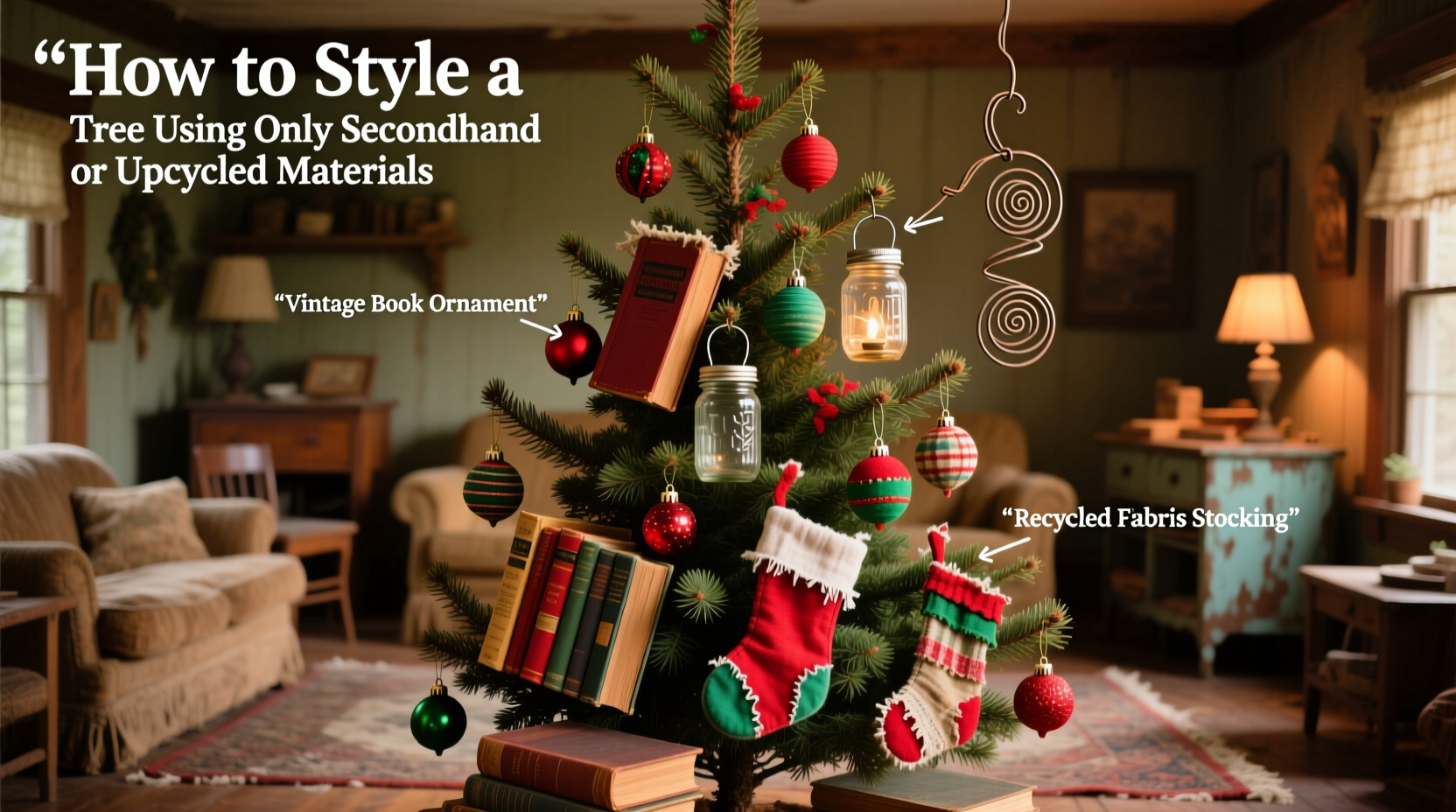
The environmental impact of holiday decorations is often overlooked. Many traditional ornaments are made from non-recyclable plastics, foils, and synthetic fabrics. According to the Environmental Protection Agency, household waste increases by more than 25% between Thanksgiving and New Year’s Day, with decorative items contributing significantly. Opting for secondhand or upcycled materials interrupts this cycle of consumption and disposal.
Beyond sustainability, there’s emotional value in using reclaimed pieces. A chipped porcelain doll from a grandmother’s collection, vintage buttons from an old coat, or fabric scraps from a child’s first outfit carry memories. These items transform a tree from a seasonal decoration into a living archive of family, history, and craftsmanship.
“Sustainability isn’t about sacrifice—it’s about reinvention. Every reused item has a second chance to bring beauty.” — Maya Lin, Sustainable Design Advocate
Additionally, secondhand sourcing is often far more affordable. Instead of spending hundreds on new decor, you can create a striking display for a fraction of the cost—or even for free—by tapping into community resources like thrift shops, online marketplaces, and craft swaps.
Sourcing materials: Where and how to find secondhand treasures
The foundation of a sustainable tree lies in thoughtful sourcing. Begin by auditing what you already own. Old gift wrap, fabric remnants, unused ribbons, or forgotten ornaments tucked in storage may be all you need. Expand your search beyond home inventory with these proven sources:
- Thrift stores and charity shops: Look for vintage linens, costume jewelry, ceramic trinkets, books, and textiles.
- Estate sales and flea markets: These often yield high-quality, unique items such as hand-blown glass, antique lace, or wooden toys.
- Online marketplaces: Platforms like Craigslist, Freecycle, or Facebook Marketplace frequently list free or low-cost holiday items post-Christmas.
- Community swap events: Organize or attend a decoration exchange where neighbors trade unused ornaments.
- Repurposing household discards: Cardboard tubes, wine corks, scrap paper, egg cartons, and worn-out clothing can be transformed into stunning ornaments.
When selecting items, consider color palette and theme coherence. Even eclectic pieces benefit from a unifying element—such as neutral tones, natural textures, or consistent material types like wood or fabric—to prevent visual chaos.
| Material | Potential Source | Idea for Use |
|---|---|---|
| Vintage fabric | Old curtains, scarves, quilts | Fabric garlands, stuffed ornament shapes |
| Books/magazines | Discarded novels, outdated catalogs | Paper chains, rolled cone ornaments |
| Glass jars/bottles | Recycled containers | Mini terrariums, candle holders |
| Wood scraps | Packaging, broken furniture | Laser-cut shapes, rustic stars |
| Metal hardware | Drawer pulls, keys, washers | Industrial-chic ornaments |
Step-by-step guide to building your upcycled tree
Creating a cohesive, visually appealing tree from reclaimed materials requires planning and layering. Follow this sequence to ensure balance and depth.
- Select or prepare your tree: Use a real cut tree, potted live tree, or a reusable artificial one you already own. If crafting a DIY tree, consider a ladder silhouette made from salvaged wood or a wall-mounted design using branches.
- Start with lighting: Use energy-efficient LED string lights from previous years. If unavailable, make fairy lights from battery-operated tea lights placed in upcycled glass jars or hung in fabric pouches.
- Add a base layer of texture: Wrap burlap strips, linen tape, or braided fabric ropes around the trunk and lower branches to ground the tree visually.
- Create garlands: String popcorn (unsalted, unbuttered), dried citrus slices, or cranberries. Alternatively, weave fabric strips, old beads, or folded book pages into long chains.
- Hang primary ornaments: Distribute larger pieces first—vintage teacups, framed mini photos, or handmade felt shapes. Vary heights and spacing for dimension.
- Incorporate thematic clusters: Group similar items together, such as a branch filled with upcycled bird nests and feather accents, or a section dedicated to childhood memorabilia.
- Finish with a topper: Replace traditional stars or angels with a repurposed item—a vintage brooch, a woven macramé piece, or a large origami shape made from sheet music.
Real example: The ‘Memory Lane’ tree by Clara Mendoza
Clara Mendoza, a teacher from Portland, Oregon, began her journey toward sustainable decorating after inheriting her mother’s sewing box and a stack of vintage greeting cards. Last winter, she committed to creating a Christmas tree using only secondhand and upcycled materials—no new purchases allowed.
She started with a small artificial tree she’d owned for over a decade. For lighting, she used solar-powered string lights stored in her garage. Her garland was made from strips of her children’s outgrown flannel pajamas, braided and knotted into a soft, cozy chain.
Ornaments included button bouquets mounted on wire stems, miniature stockings sewn from scrap fabric, and photo frames made from discarded picture frames painted white. She transformed old cassette tapes into reflective spirals and hung handwritten recipe cards from her grandmother on twine.
The result was deeply personal and widely admired. “People thought I bought it from a boutique,” she said. “But every piece had a story. My son cried when he saw the ornament made from his baby blanket.”
Her total spending? $12—for twine and a few replacement light bulbs. The rest was already in her home.
Checklist: Preparing your upcycled Christmas tree
Use this checklist to stay organized throughout the process:
- ☐ Audit existing decorations and household items for usable materials
- ☐ Visit local thrift stores or schedule pickups from online free groups
- ☐ Choose a color scheme or theme (e.g., rustic, vintage, monochrome)
- ☐ Gather basic tools: scissors, glue, wire, twine, paint (if needed)
- ☐ Prepare ornaments: clean, repair, or modify secondhand items
- ☐ Test lights and repair any broken strands
- ☐ Assemble garlands and strings in advance
- ☐ Style the tree in layers: lights → texture → garlands → ornaments → topper
- ☐ Photograph your finished tree for inspiration sharing
- ☐ Plan for post-holiday storage using recycled boxes or fabric wraps
Creative upcycling ideas for unique ornaments
The charm of a secondhand tree lies in its originality. Here are inventive ways to turn everyday discards into standout decorations:
- Dried citrus wreaths: Slice oranges, lemons, or grapefruits thinly, bake at 200°F for 3–4 hours until dry, then string into rings with cinnamon sticks.
- Book page angels: Fold old book pages into origami angels or stars. Seal with non-toxic spray to preserve.
- Jar lid frames: Remove metal lids from mason jars, insert tiny photos or watercolor art, and hang with ribbon.
- Denim snowflakes: Cut snowflake patterns from old jeans, fray edges slightly, and back with contrasting fabric.
- Wine cork reindeer: Glue three corks together, add twig antlers and bead eyes for simple rustic figures.
- Tin can lanterns: Punch holes in cleaned food cans, place tea lights inside for glowing forest-floor accents.
These projects require minimal skill and are ideal for involving children. They also serve as conversation starters—guests will want to know the story behind each piece.
Frequently asked questions
Can I still use lights if I’m going fully upcycled?
Absolutely. Reuse existing string lights or borrow them from last year’s display. If they’re broken, repair them or replace only the faulty sections. Solar-powered or battery-operated lights are excellent low-impact options. Avoid buying new plastic-heavy sets—opt instead for simple, durable designs you can reuse annually.
What if I don’t have time to craft everything?
That’s perfectly fine. Focus on what’s accessible. A tree decorated with vintage doilies, mismatched silverware hooks, and secondhand glass bottles can be stunning without a single handmade ornament. Prioritize curation over creation. Sometimes, less effort yields more elegance.
How do I store upcycled decorations for next year?
Use recycled cardboard boxes labeled by category (e.g., “garlands,” “fragile ornaments”). Wrap delicate items in old newspapers or fabric scraps instead of bubble wrap. Store in a cool, dry place away from pests. Consider keeping a digital photo album of your tree each year to track what worked and inspire future designs.
Final thoughts: A tradition worth passing down
Styling a Christmas tree with secondhand or upcycled materials isn’t just an eco-friendly choice—it’s a return to the heart of holiday spirit: meaning, memory, and mindful celebration. In a culture that often equates festivity with excess, this approach offers a quiet rebellion: beauty born not from spending, but from seeing anew.
Every ornament becomes a testament to care—care for the environment, care for objects, and care for the people who once used them. When future generations look at your tree, they won’t just see decorations. They’ll see stories, resilience, and love stitched into every thread and shard.
“The most sustainable ornament is the one that already exists.” — Lena Cho, Circular Design Collective




 浙公网安备
33010002000092号
浙公网安备
33010002000092号 浙B2-20120091-4
Comments
No comments yet. Why don't you start the discussion?