
Amid the sensory overload of the holiday season, a minimalist Christmas tree offers a quiet kind of magic—one defined by intentionality, balance, and refined beauty. Rather than layering on ornament after ornament in pursuit of festivity, minimalism invites you to distill the essence of celebration into something more meaningful. By limiting your palette to just three colors and eliminating visual noise, you create a space that feels calm, curated, and deeply personal. This approach isn’t about deprivation; it’s about elevation. It transforms your tree from a decoration into a design statement.
A minimalist tree doesn’t require less effort—it requires better judgment. Every element must earn its place. The result is not emptiness, but clarity. When done well, a tree styled with restraint can become the most striking focal point in your home, drawing attention not through volume, but through harmony.
The Philosophy Behind Minimalist Holiday Design
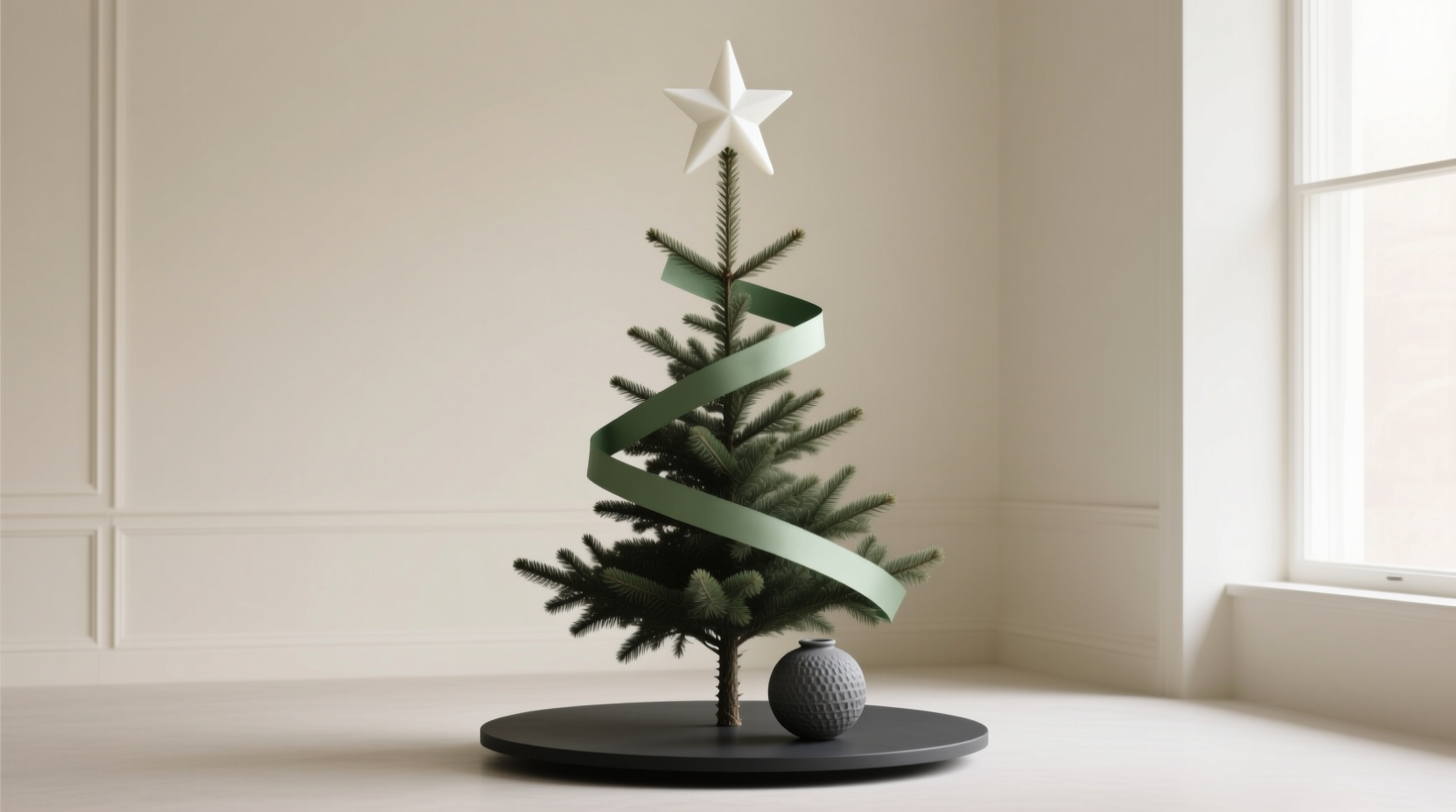
Minimalism in holiday decor stems from a desire to shift focus—from consumption to presence, from chaos to calm. It reflects a growing movement toward mindful living, where the holidays are not measured by how much we display, but by how deeply we experience them. A minimalist Christmas tree supports this mindset by removing distractions and allowing space for reflection, connection, and authenticity.
This aesthetic draws inspiration from Scandinavian, Japanese wabi-sabi, and modernist design traditions—all of which value simplicity, natural materials, and asymmetrical balance. Instead of covering every branch, minimalist styling emphasizes negative space, texture contrast, and thoughtful placement. Ornamentation becomes purposeful rather than habitual.
“Simplicity is the ultimate sophistication.” — Leonardo da Vinci
In the context of holiday decorating, this quote resonates powerfully. Choosing fewer elements allows each one to be appreciated fully. A single hand-blown glass ball catching the light holds more emotional weight than a dozen identical ones competing for attention.
Selecting Your Three Colors: Strategy Over Spontaneity
The foundation of a cohesive minimalist tree lies in a disciplined color scheme. Limiting yourself to three colors forces curation and ensures visual harmony. But choosing those colors isn’t arbitrary—it should reflect both your personal taste and your existing interior design.
Begin by assessing your room’s dominant hues. Is your space warm-toned with wood accents and cream walls? Cool-toned with gray furnishings and black metal finishes? Your tree should complement, not clash with, its surroundings. Then consider mood: do you want serenity (soft neutrals), warmth (creams and golds), or drama (black, white, and deep green)?
Here are three proven minimalist palettes:
- White, Cream, Natural Wood – Evokes snow-covered forests and quiet mornings. Ideal for airy, Scandinavian-inspired homes.
- Black, White, Gold – High contrast and modern. Perfect for contemporary spaces seeking elegance without tradition.
- Fog Gray, Evergreen, Silver – A nature-inspired blend that feels grounded and serene, especially in urban lofts or industrial settings.
Once selected, stick to your palette strictly. No “just one red ribbon” exceptions. Discipline here is what separates minimalist design from accidental sparseness.
Step-by-Step: Building Your Tree with Intention
Styling a minimalist tree follows a deliberate sequence. Rushing through leads to imbalance. Take time at each stage to assess, adjust, and refine.
- Start with a clean, high-quality tree. Whether real or artificial, ensure it’s full enough to support sparse ornamentation without looking bare. A scraggly tree will emphasize gaps instead of grace. For minimalism, symmetry matters—choose a tree with even branching.
- Use a monochromatic base layer of lights. String warm white or cool white LED lights evenly throughout. Avoid multicolored or twinkling varieties—they disrupt cohesion. Aim for 100 lights per foot of tree height. Wrap slowly, stepping back frequently to check coverage.
- Add texture before color. Before hanging any ornaments, weave in natural elements: thin braids of dried eucalyptus, cotton stems, or delicate pinecones painted in one of your three colors. These add depth without visual weight.
- Place largest ornaments first. Select 5–7 substantial pieces—such as 3-inch matte balls or handmade ceramic shapes—in your primary color. Position them deep within the branches, spaced evenly around the tree. These act as anchors.
- Layer medium and small ornaments sparingly. Use only 15–25 total ornaments across all sizes. Distribute them asymmetrically but balanced—like a composition in a painting. Avoid clustering. Let some branches remain bare.
- Incorporate reflective elements strategically. One or two mirrored baubles or frosted glass drops catch light and create subtle sparkle without glitter. Place them where they’ll interact with lamps or candles.
- Finish with a simple topper. Skip oversized stars or bows. Instead, use a twisted loop of linen ribbon, a single dried citrus slice on a string, or a slender brass rod bent into a soft arc.
The entire process should feel meditative, not rushed. Walk around the tree often. View it from your sofa, hallway, and kitchen. Adjust until it feels resolved—not finished, but complete.
What to Exclude: The Power of Omission
Minimalism is as much about what you remove as what you include. To achieve zero clutter, certain traditional elements must be left behind—even if they’re sentimental.
| Element | Why It Doesn’t Work | Better Alternative |
|---|---|---|
| Tinsel or garland | Adds visual noise and distracts from clean lines | Natural raffia or undyed wool cord wrapped loosely |
| Multiples of the same ornament | Creates repetition that feels busy, not rhythmic | One-of-a-kind pieces like hand-dipped ceramics or vintage finds |
| Tree skirts with patterns | Draws attention downward and competes with tree | Solid linen sack, woven basket base, or no skirt at all |
| Over-lighting | Glare undermines subtlety | Low-lumen LEDs with warm tone, evenly diffused |
| Themed ornaments (snowmen, Santas) | Introduces narrative clutter | Abstract shapes that suggest winter without literalism |
Also reconsider placement. A minimalist tree should stand alone—no surrounding presents piled high, no additional decor on nearby surfaces. If possible, position it in a quiet corner or against a blank wall. Let it breathe.
Real Example: A Brooklyn Brownstone Transformation
Claire, a graphic designer in Brooklyn, spent years struggling with her holiday decor. Her previous trees were overloaded—37 ornaments from family collections, tinsel strands, blinking lights, and a lopsided star. Each year, setting it up felt like a chore, and taking it down was a relief.
Determined to change the pattern, she committed to a minimalist approach using only black, white, and brass. She began by unpacking everything and selecting just nine ornaments: four matte black spheres, three frosted glass cylinders, and two small brass hoops. She added warm white micro-lights and wrapped the base in unbleached linen.
The transformation stunned her. “I expected it to feel incomplete,” she said. “But when I turned off the overhead light and lit a candle nearby, the reflections in the glass and metal created movement. It wasn’t empty—it was alive.”
Her guests commented more on this tree than any previous one. “People kept saying, ‘It’s so peaceful,’ or ‘I could look at it for hours.’ That’s when I realized minimalism isn’t cold—it’s inviting in a different way.”
“The ability to simplify means to eliminate the unnecessary so that the necessary may speak.” — Hans Hofmann
Essential Checklist for a Clutter-Free Tree
- ☐ Choose exactly three colors and write them down
- ☐ Edit your ornament collection—keep only pieces in those colors
- ☐ Limit total ornaments to under 25
- ☐ Use only one type of lighting (warm or cool white)
- ☐ Incorporate at least one natural material (wood, cotton, dried plant)
- ☐ Avoid patterns, words, or figurative decorations
- ☐ Style the tree over two sessions—place lights one day, ornaments the next
- ☐ Step back frequently to assess balance and spacing
- ☐ Remove one more item than you think you should
Frequently Asked Questions
Can I include sentimental ornaments in a minimalist tree?
Yes—but selectively. Choose one or two truly meaningful pieces and integrate them thoughtfully. If an ornament doesn’t align with your color scheme, consider photographing it and displaying the image nearby instead. Sentiment belongs in memory, not necessarily in sightline.
How do I keep a minimalist tree from looking sad or unfinished?
The key is proportion and quality. Use larger-scale ornaments (2.5 inches or more) so each piece carries visual weight. Prioritize texture—matte, glossy, metallic, or woven surfaces create interest without quantity. And ensure lighting is generous and even. Shadows and highlights add dimension that compensates for fewer objects.
Is a minimalist tree appropriate for families with children?
It can be, with adaptation. Involve kids in creating a few handmade ornaments using natural materials—salt dough shapes painted in your palette, pinecone dips in one color, or fabric scraps tied into knots. This preserves meaning while maintaining control over clutter. Rotate which child’s creation appears each year to keep numbers low.
Conclusion: Beauty in Restraint
Styling a minimalist Christmas tree with only three colors and zero clutter is not a limitation—it’s an invitation to refine your vision. In a world that equates abundance with joy, this approach stands as a quiet rebellion. It says that meaning isn’t found in accumulation, but in attention. That beauty emerges not from how much you show, but from how well you see.
Your tree doesn’t need to shout to be noticed. Let it whisper instead. Let it glow with restraint, resonate with silence, and reflect the peace so many seek during the holidays. When you walk past it at night, pause. Watch how the light plays on a single brass orb. Notice how the absence of noise makes space for presence.
This season, resist the urge to fill. Embrace the courage to edit. Create not for display, but for depth. And if someone asks why your tree looks so different, you won’t need to explain. They’ll already feel it.




 浙公网安备
33010002000092号
浙公网安备
33010002000092号 浙B2-20120091-4
Comments
No comments yet. Why don't you start the discussion?