
In an age of sensory overload and overstuffed living rooms, the minimalist Scandinavian approach to holiday decorating offers a quiet rebellion. Rather than filling every branch with color and charm, it embraces restraint, natural textures, and thoughtful placement. The result is not emptiness, but intentionality—a Christmas tree that feels calm, cohesive, and deeply rooted in seasonal peace.
Styling a minimalist Scandinavian tree doesn’t mean sacrificing beauty. On the contrary, it elevates it. By limiting yourself to just three ornament types and eliminating visual noise, you create space for each element to breathe and matter. This guide walks through how to build such a tree—from selecting the right base to arranging ornaments with precision—and why less truly becomes more when done right.
The Philosophy Behind Minimalist Scandinavian Decor
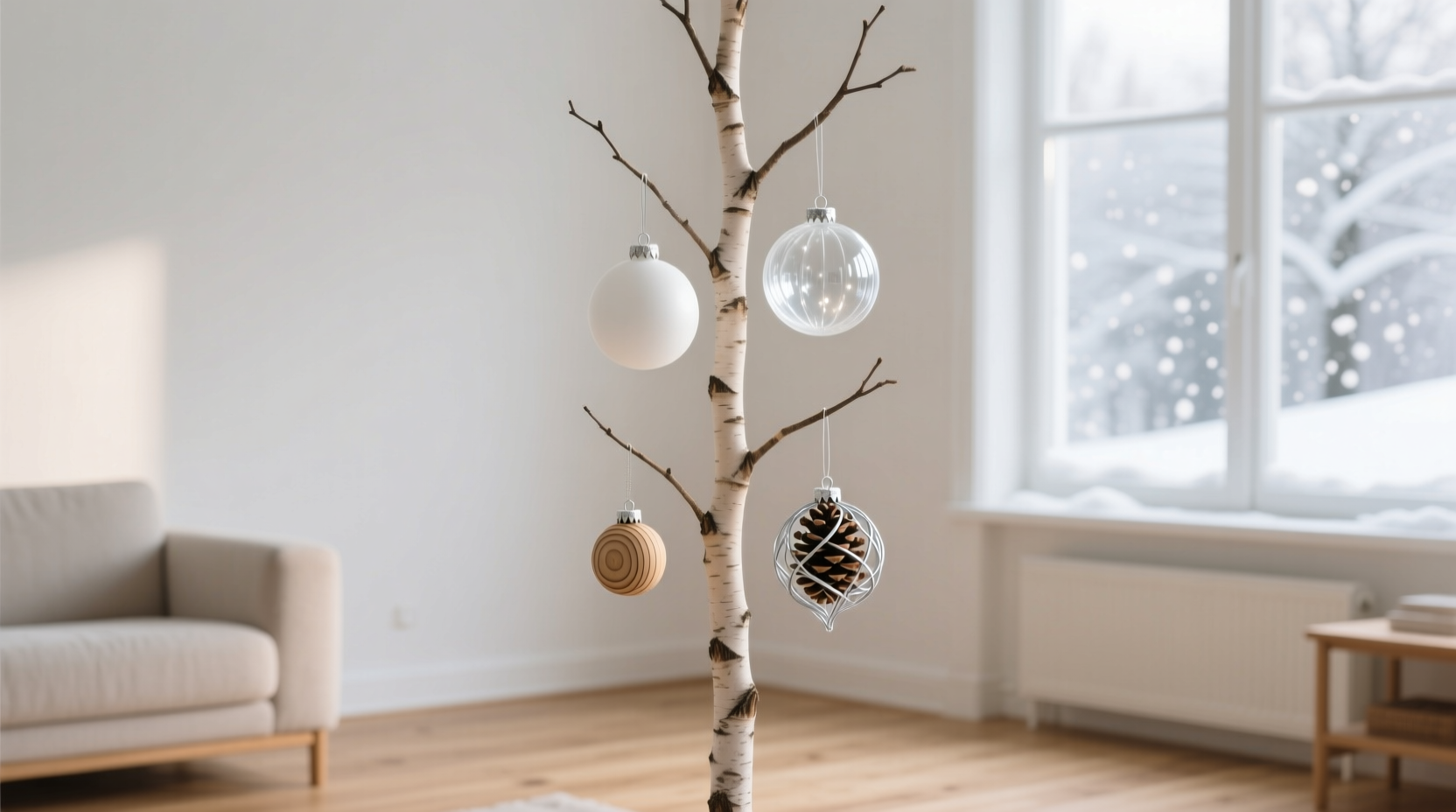
Scandinavian design principles prioritize function, simplicity, and connection to nature. Originating in Nordic countries where long winters dominate, this aesthetic evolved to make interiors feel warm, light, and unburdened. During the holidays, these values translate into trees that are understated yet rich in atmosphere.
A key tenet is *lagom*—a Swedish concept meaning “just the right amount.” Not too little, not too much. Applied to Christmas trees, this means avoiding excess while ensuring warmth and character remain intact. Ornamentation is selective, materials are honest (wood, glass, wool), and color palettes lean toward whites, creams, soft grays, and muted metallics.
“Minimalism in holiday decor isn’t about deprivation—it’s about focus. When you remove the noise, what remains speaks louder.” — Lina Bergström, Interior Designer & Author of *Nordic Light: Living with Less*
This philosophy shapes every decision, from tree selection to final placement of the star. It encourages mindfulness in decoration, turning tree styling into a ritual rather than a chore.
Selecting the Right Tree and Base Elements
The foundation of any successful minimalist tree is the tree itself. For a Scandinavian look, opt for a real or high-quality artificial Nordmann fir, spruce, or pine. These varieties have full, symmetrical silhouettes with soft needles that reflect light gently. If using a real tree, ensure it's freshly cut and well-hydrated; dry branches disrupt the clean aesthetic.
Color matters. Choose a tree with cool green tones over yellowish or overly dark foliage. A neutral backdrop allows ornaments to stand out without competing. Avoid pre-lit trees with colored lights or bulky wiring—these add visual clutter.
Lighting should be subtle. Use warm white LED fairy lights with thin, nearly invisible wires. String them evenly from top to bottom, wrapping around each tier of branches. Aim for 100 lights per foot of tree height. Turn them on before adding ornaments to assess glow and shadow distribution.
For the base, skip patterned skirts. Instead, use a natural linen cloth, a woven seagrass basket, or a stained wooden crate painted in matte white or gray. These support the organic theme and keep attention upward.
Choosing Your Three Ornament Types
The core rule: only three types of ornaments. This constraint forces curation and ensures harmony. Each type should differ in texture or form but align in tone and palette. Below is a recommended trio that embodies Scandinavian minimalism:
- Natural Wood Ornaments – Hand-carved stars, geometric shapes, or simple discs made from birch or ash. Unfinished or lightly oiled wood adds warmth without brightness.
- Matt Glass Baubles – In white, cream, or pale gray. Avoid shiny finishes. Look for hand-blown pieces with slight imperfections—they carry soul.
- Felt or Wool Accents – Small animals (like deer or birds), hearts, or pouches in undyed wool or naturally dyed fabric. These introduce softness and handmade charm.
| Ornament Type | Material | Color Palette | Quantity Guide (per ft) |
|---|---|---|---|
| Wood Shapes | Birch, ash, pine | Natural wood tone | 1–2 |
| Matte Glass | Hand-blown glass | White, cream, stone gray | 3–4 |
| Felt/Wool | Merino wool, organic felt | Oat, moss, charcoal | 1–2 |
Stick to no more than 15 total ornaments per foot of tree height. Over-decoration undermines the minimalist effect. Place larger pieces toward the bottom and mid-level branches; smaller ones near the top.
Step-by-Step Styling Process
Building the tree is a deliberate sequence. Follow this timeline for best results:
- Day 1: Set up the tree and lights. Allow it to settle in the room for at least 12 hours. Observe how light plays across the branches during different times of day.
- Day 2: Assess balance and shape. Gently fluff outer branches to open the silhouette. Prune any awkwardly protruding twigs with small scissors.
- Day 3: Begin ornament placement. Start with glass baubles—these act as anchors. Distribute them evenly across all sides, focusing on depth rather than density. Tuck some deeper into the canopy to create dimension.
- Day 4: Add wood elements. Position these at eye level or slightly above. Hang one near the top as a focal point—perhaps a star or crescent moon—to draw the gaze upward.
- Day 5: Introduce felt accents. These go on mid-to-lower branches where they’re easily seen. Cluster no more than two together; let each piece occupy its own visual space.
- Final Touch: Top the tree. Use a simple wooden star, a loop of braided wool, or a dried citrus wreath. Avoid large, glittery finials.
Walk around the tree after each step. View it from doorways, adjacent rooms, and seating areas. Adjust placements if something feels off-balance. Remember: asymmetry is acceptable if it feels natural, but chaos is not.
A Real Example: Anna’s Apartment Tree in Malmö
Anna, a graphic designer in Malmö, lives in a 45-square-meter apartment with floor-to-ceiling windows facing a snowy courtyard. Every December, she dedicates one weekend to creating her holiday centerpiece—a 1.8-meter Nordmann fir in the corner of her living space.
She uses exactly 27 ornaments: nine matte cream glass balls, six birch stars, and twelve small wool reindeer in oat and charcoal tones. Her lights are warm white LEDs with nearly invisible wiring. She skips tinsel, garlands, and themed decorations entirely.
Last year, a friend remarked, “It looks like a painting.” That was the goal. Anna finds joy not in accumulating decorations, but in refining them. She stores her ornaments in a vintage wooden tray lined with linen, ready for reuse. “It takes me two hours to decorate,” she says, “but I enjoy it every day for four weeks.”
Her tree doesn’t shout. It whispers—and in doing so, fills the room with presence.
Common Pitfalls and How to Avoid Them
Even with a clear plan, it’s easy to slip into old habits. Here are frequent missteps and their solutions:
- Over-lighting: Too many bulbs create glare. Stick to warm white, low-lumen LEDs and test before finalizing.
- Mismatched scale: Large ornaments on a small tree overwhelm. Ensure proportions align—no single ornament should exceed 1/10 of the tree’s width.
- Ignoring negative space: Empty branches aren’t flaws—they’re features. Let some limbs remain bare to emphasize the ones that are adorned.
- Using plastic or synthetic materials: These clash with the natural ethos. Opt for wood, glass, wool, paper, or metal.
- Adding “just one more”: Resist the urge to include sentimental or mismatched pieces. Save them for other displays.
“The most peaceful spaces are those where nothing fights for attention.” — Elias Hagen, Architect & Co-author of *Silent Interiors: Designing Calm*
Checklist: Building Your Minimalist Tree
Use this checklist to stay on track:
- ☐ Choose a real or realistic artificial tree with soft green tones
- ☐ Install warm white fairy lights with thin, concealed wires
- ☐ Select three ornament types based on texture and tone
- ☐ Limit total ornaments to 10–15 per foot of height
- ☐ Distribute ornaments evenly, prioritizing depth over density
- ☐ Use a neutral, natural base (linen, wood, wicker)
- ☐ Top with a simple, non-reflective finial
- ☐ Step back daily to assess balance and mood
- ☐ Store ornaments properly for future use
Frequently Asked Questions
Can I include family heirloom ornaments in a minimalist tree?
Yes—but selectively. Choose one meaningful piece that fits the palette and texture profile. For example, a vintage silver bell can work if it’s matte and small. If it clashes, display it elsewhere, like on a shelf or mantle, to honor it without disrupting the tree’s harmony.
What if I want color? Isn’t Scandinavian decor sometimes colorful?
Traditional rural Scandinavian trees did use red and white, especially in Norway and Sweden. However, modern minimalist interpretation favors neutrality. If you desire subtle color, use muted versions: dusty rose instead of bright red, sage instead of emerald. Keep it within the same tonal family and limit saturation.
Is this style suitable for families with children?
Absolutely. In fact, it can be ideal. Use durable materials like felt and wood that are safe and washable. Involve kids in making simple ornaments—felt stars, salt-dough shapes, or painted wood slices. This keeps the spirit alive while maintaining aesthetic control.
Conclusion: Embrace the Quiet Beauty of Less
Styling a minimalist Scandinavian tree with only three ornament types isn’t a limitation—it’s liberation. It frees you from the pressure to collect, match, and fill. It invites slowness, observation, and care. In a season often defined by excess, this approach offers clarity.
Your tree doesn’t need to dazzle to be meaningful. It can simply exist—calm, grounded, and quietly beautiful. By embracing restraint, you create space not just in your living room, but in your mind. And that might be the most valuable gift of all.




 浙公网安备
33010002000092号
浙公网安备
33010002000092号 浙B2-20120091-4
Comments
No comments yet. Why don't you start the discussion?