
A Christmas tree is more than a tradition—it’s a centerpiece. In recent years, the shift from cluttered, maximalist trees to sleek, modern designs has brought a new kind of holiday elegance into homes. One of the most compelling trends in this evolution is the use of geometric light patterns. Rather than wrapping lights haphazardly, today’s designers are crafting deliberate shapes—diamonds, spirals, grids, and even 3D forms—that transform the tree into a luminous work of art. This approach combines precision, technology, and design intuition to create a festive focal point that feels both contemporary and timeless.
Styling a modern Christmas tree with geometric light patterns isn’t about complexity; it’s about intention. With the right tools, planning, and attention to detail, you can achieve a look that appears professionally designed but is entirely achievable at home. Whether your taste leans toward Scandinavian minimalism, industrial chic, or futuristic glam, geometric lighting offers a versatile canvas for self-expression.
Selecting the Right Tree and Lights
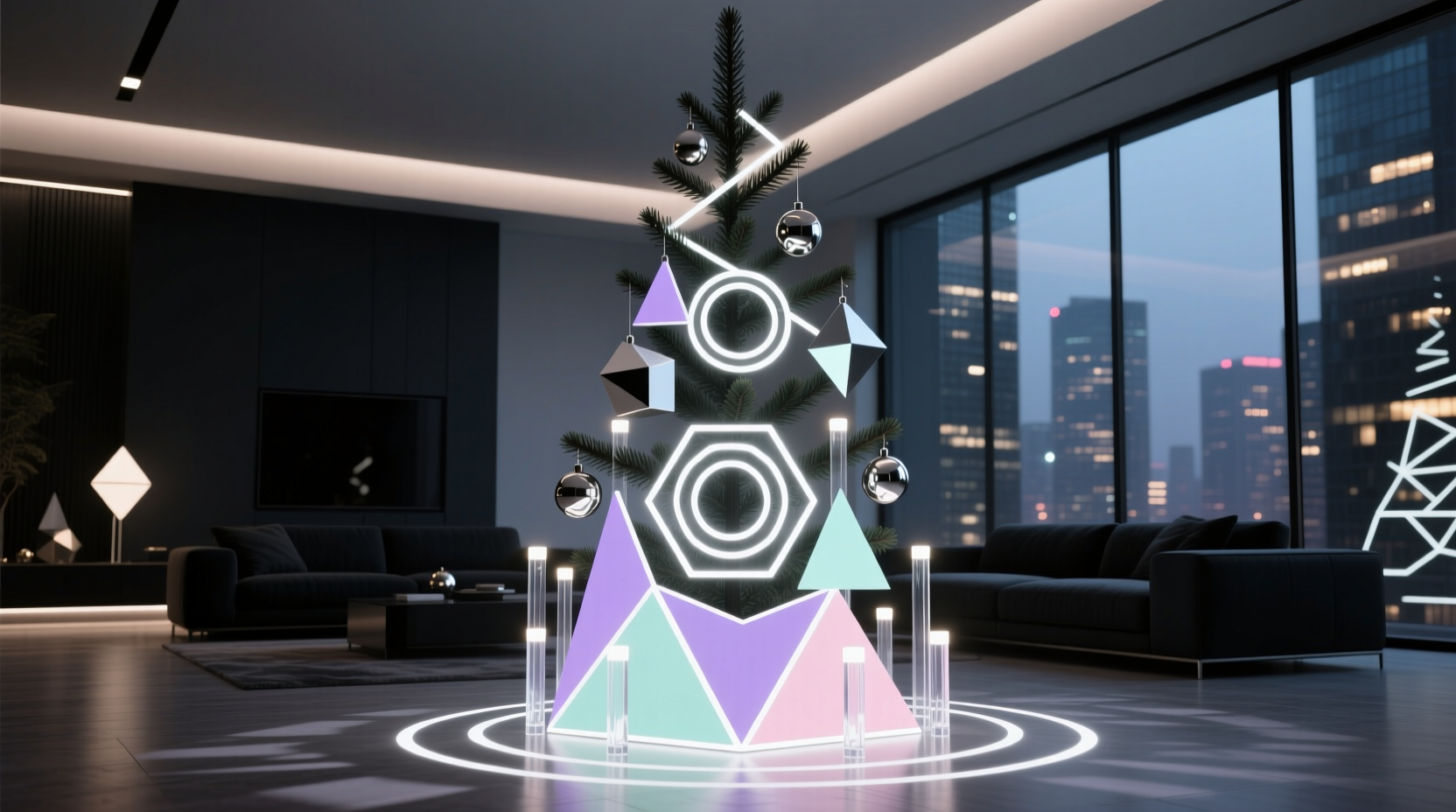
The foundation of any successful geometric lighting design is the tree itself. For structured light patterns to be visible and effective, the tree must support clean lines and consistent depth. Artificial trees are generally preferred for this style because they offer uniform branch placement, consistent density, and durability across seasons. Look for models labeled “ultra-realistic” or “hinged branch” for the best balance between fullness and control.
Pine, spruce, and fir silhouettes work well, but for a truly modern aesthetic, consider a slim-profile or pencil tree. These take up less space and emphasize verticality, making diagonal and horizontal light patterns more pronounced. Alternatively, a pre-lit tree with warm white or cool white LED lights gives you a base layer—but avoid colored or multicolored strands if you’re aiming for a refined, architectural effect.
When choosing additional lighting, opt for commercial-grade mini LED string lights. These are brighter, more durable, and come in longer runs with fewer interruptions. Key features to prioritize:
- Consistent spacing (typically 4–6 inches between bulbs)
- Clear wire coating to minimize visual distraction
- Dimmable function for mood control
- Warm white or daylight white color temperature (2700K–5000K)
Planning Your Geometric Light Design
Before touching the tree, sketch your desired pattern. This step separates casual decoration from intentional design. Common geometric approaches include:
- Vertical Columns: Strands run straight up and down, emphasizing height.
- Diagonal Crisscross: Creates an X-pattern across the front and back planes.
- Spiral Helix: A continuous diagonal wrap that ascends like a DNA strand.
- Diamond Grid: Intersecting diagonals forming repeating rhombuses.
- Horizontal Bands: Evenly spaced rings around the tree at set intervals.
Each design creates a different optical effect. Vertical lines elongate the tree, making ceilings feel higher. Diagonals add dynamism and movement. Grids lend a sense of order and sophistication, especially when paired with monochrome ornaments.
To plan effectively, measure your tree’s height and circumference at three points: base, middle, and top. Use these dimensions to calculate how many strands you’ll need. As a rule of thumb, one 10-foot string covers approximately 1 vertical foot of tree when used in non-traditional layouts.
“Light is the skeleton of modern tree design. Without structure, even the finest ornaments fall flat.” — Lena Torres, Interior Stylist & Holiday Design Consultant
Step-by-Step Guide to Installing Geometric Light Patterns
Executing a geometric lighting scheme requires patience and precision. Follow this timeline for professional results:
- Step 1: Prep the Tree
Fluff branches evenly, working from bottom to top. Rotate the tree as you go to ensure symmetry. Let it settle for 24 hours if newly assembled. - Step 2: Anchor the First Strand
Begin at the base on the back side. Secure the plug end inside the trunk or behind a lower branch where it won’t be seen. - Step 3: Mark Reference Points
Use removable tape or twist ties to mark start and end points for each segment of your pattern. For a diamond grid, mark diagonal paths every 12 inches around the circumference. - Step 4: Apply Lights with Tension Control
Keep gentle but firm tension on the strand. Avoid sagging by securing every third or fourth bulb to a branch with a clear plastic clip or twist tie. Never knot the wire. - Step 5: Maintain Consistent Spacing
Use a measuring tape or ruler for horizontal and vertical patterns. For diagonals, count branch intervals to keep angles uniform. - Step 6: Test and Adjust
Plug in the lights after each section. View the tree from multiple angles—especially from your primary viewing location—to correct misalignments while fresh. - Step 7: Layer Additional Strands
Add secondary patterns only after the primary design is complete. Overlapping too early can distort alignment.
Enhancing the Design with Minimalist Decor
Geometric lighting is the star—ornaments should complement, not compete. Choose a restrained palette: matte black, brushed brass, frosted glass, or deep charcoal. Limit ornament size to no more than 3 inches in diameter to preserve line clarity.
Strategic ornament placement can reinforce the light pattern. For example:
- Place spherical ornaments at the intersection points of a diamond grid to highlight nodes.
- Hang linear metallic stars along vertical columns to amplify height.
- Use mirrored baubles sparingly to reflect and multiply light without visual noise.
Consider skipping tinsel or garlands entirely. They blur edges and soften defined lines, undermining the geometric intent. If you desire texture, try thin ribbons in satin or velvet, cut to 18 inches and tucked between branches with the ends pointing downward.
| Design Goal | Recommended Ornament Style | Placement Strategy |
|---|---|---|
| Emphasize verticality | Cylindrical shapes, tall stars | Align along central axis and outer edges |
| Highlight geometry | Faceted crystals, angular metals | At light intersection points |
| Add warmth | Muted wood slices, ceramic spheres | Evenly spaced within lower third |
| Create contrast | Matte black, deep navy | Alternating with lit zones |
Real Example: The Urban Loft Tree Transformation
In a 700-square-foot downtown loft, designer Marcus Reed faced a challenge: the living space had high ceilings but limited floor area. His client wanted a statement tree but didn’t want it to feel overwhelming. Reed selected a 7-foot pencil tree with tight branch spacing, ideal for directional lighting.
He mapped a double-helix pattern using two sets of 20-foot warm white LEDs. Starting from opposite sides at the base, the strands ascended in parallel spirals, crossing every 18 inches. To enhance depth, he added a secondary grid of short horizontal strands at mid-level, forming floating rectangles.
Ornaments were limited to 12 matte gold tetrahedrons, placed where helices intersected. A single ribbon in deep plum ran vertically from top to bottom, anchored by a brass topper. The result was a tree that felt sculptural and immersive—guests often paused to study how the light bent through the branches.
“It wasn’t just a tree,” the client said. “It was part of the architecture.”
Common Mistakes and How to Avoid Them
Even experienced decorators can undermine their efforts with small oversights. Here are frequent pitfalls and solutions:
- Mistake: Starting without a plan.
Solution: Sketch your design on paper or use digital tools like Canva or SketchUp to visualize the outcome. - Mistake: Using mismatched light colors.
Solution: Stick to one color temperature. Mixing warm and cool whites creates visual dissonance. - Mistake: Overloading the tree with ornaments.
Solution: Apply the “one per square foot” rule—no more than 7–10 small ornaments on a 6-foot tree. - Mistake: Poor wire management.
Solution: Use twist ties or floral pins to secure wires discreetly. Never leave dangling connections.
“Modern doesn’t mean cold. It means edited. Every element must earn its place.” — Sofia Kim, Architectural Stylist
Checklist: Pre-Lighting Preparation
Before installing lights, ensure you have everything ready:
- ✅ Tree fully assembled and fluffed
- ✅ All light strings tested and untangled
- ✅ Measuring tape and marker clips on hand
- ✅ Extension cords rated for indoor use
- ✅ Ladder or step stool for upper sections
- ✅ Notebook for tracking strand paths
- ✅ Camera to document progress from key angles
Frequently Asked Questions
Can I use smart lights for geometric patterns?
Yes, smart LED strings (like Philips Hue or Govee) can enhance geometric designs with color transitions or pulsing effects. However, for pure modern styling, stick to static white modes. Dynamic colors tend to distract from structural clarity.
How do I hide the power cords?
Route cords along the baseboard and secure them with cord clips. Use a rug or furniture to conceal the path from outlet to tree. For wall outlets behind the tree, coil excess neatly inside the stand or trunk cavity.
Will this work on a real tree?
Possibly, but with limitations. Real trees have irregular branch structures and needle drop, which can disrupt precise patterns. If using a live tree, choose a species with strong, evenly spaced limbs like Fraser fir. Install lights last to minimize damage during setup.
Conclusion: Illuminate with Intention
Styling a modern Christmas tree with geometric light patterns is an exercise in restraint, vision, and craftsmanship. It moves beyond seasonal decoration into the realm of interior storytelling—where light becomes line, and the tree becomes sculpture. By selecting the right materials, planning with precision, and editing with discipline, you create more than a holiday display. You create a moment of calm brilliance in a season often defined by chaos.
This year, resist the urge to decorate by habit. Instead, design with purpose. Measure before you hang. Step back before you commit. Let each strand serve a role. When the room dims and the pattern glows, you’ll know the effort was worth it—not just for the beauty it brings, but for the mindfulness it reflects.




 浙公网安备
33010002000092号
浙公网安备
33010002000092号 浙B2-20120091-4
Comments
No comments yet. Why don't you start the discussion?