
Fall is the season of layers, textures, and rich tones—and few accessories embody that spirit quite like the scarf. More than just a tool for warmth, a well-styled scarf can transform an ordinary outfit into something polished, intentional, and fashion-forward. Whether you're wearing a chunky knit for crisp mornings or a lightweight silk for transitional afternoons, how you drape, knot, or loop your scarf makes all the difference. The right technique adds balance, draws attention to your face, and complements your outerwear. With endless fabric options and lengths available, mastering a few key styling methods ensures you’ll never run out of fresh looks throughout the season.
The Classic Loop: Simple, Warm, and Timeless
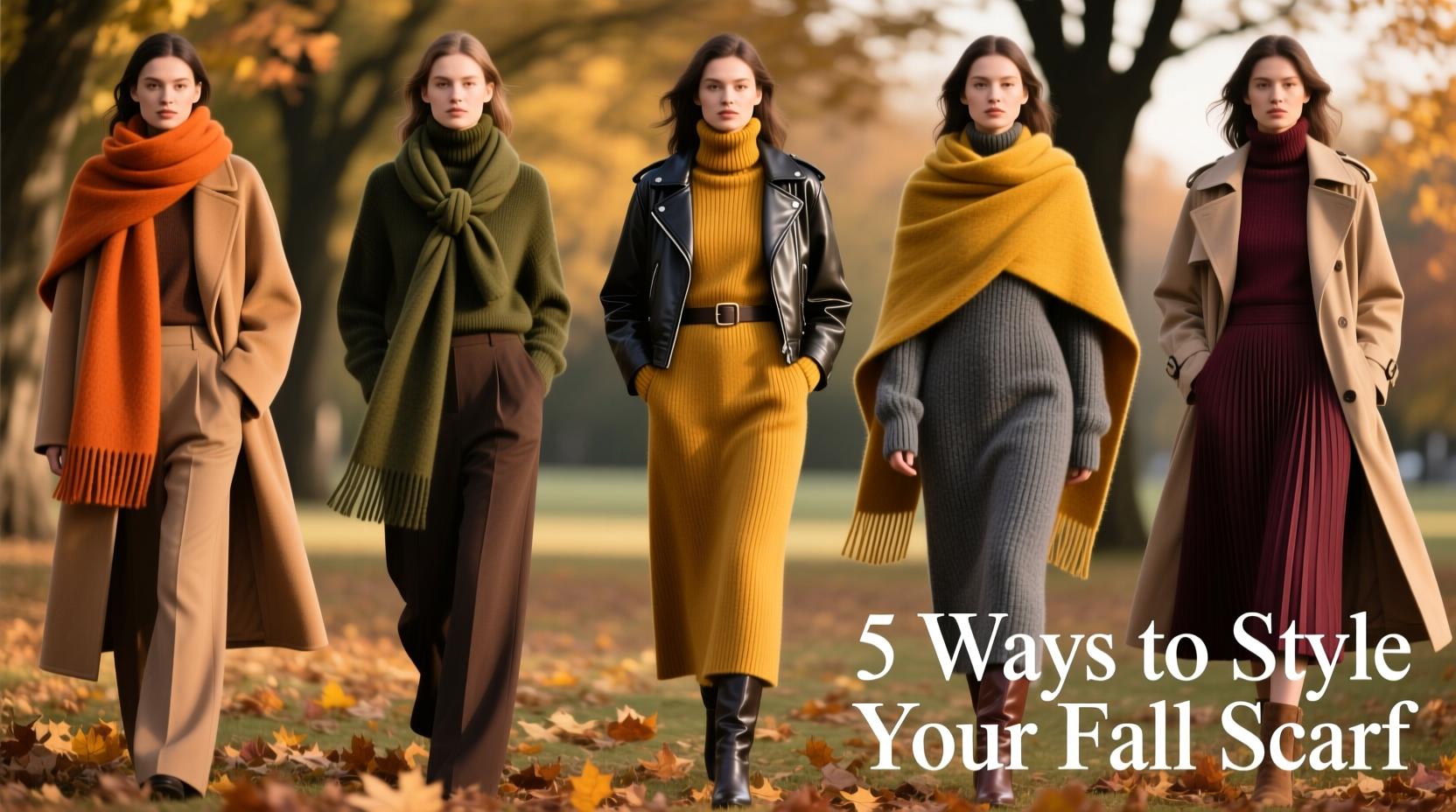
The single loop is the foundation of scarf styling—effortless, warm, and universally flattering. It works best with medium to long rectangular scarves (around 70 inches) made from wool, cashmere, or soft acrylic blends. This method keeps the neck covered without overwhelming your frame, making it ideal for pairing with trench coats, pea coats, or oversized blazers.
To achieve the classic loop:
- Fold the scarf in half lengthwise to create a thinner strip.
- Place the folded edge around your neck, letting the loop hang at the front.
- Take the loose ends and pull them through the loop.
- Adjust gently so the knot sits slightly off-center or centered, depending on preference.
This style maintains a clean silhouette and works especially well with neutral-toned scarves—think camel, charcoal, or heather gray—that blend seamlessly with structured outerwear. Fashion stylist Lena Patel notes:
“The classic loop is my go-to for client fittings. It’s elegant without stealing focus from tailored pieces.”
The Parisian Knot: Effortless Elegance in Minutes
Originating from street-style scenes in cities like Paris and Milan, the Parisian knot exudes understated sophistication. It’s not about perfection—it’s about looking like you threw on your scarf without trying, yet still appearing completely put together. Best suited for lightweight to mid-weight scarves (silk, cotton, or fine merino), this method shines when worn with minimalist coats or leather jackets.
Follow these steps:
- Drape the scarf around your neck so one end is significantly longer than the other—about a 3:1 ratio.
- Take the longer end and wrap it once around the base of your neck.
- Let both ends fall naturally over one shoulder.
- Tug lightly on the shorter end to tighten the twist subtly.
The asymmetry creates movement and draws the eye diagonally across the torso, which can elongate your silhouette. This knot pairs beautifully with turtlenecks, belted coats, or even open-front cardigans.
| Scarf Type | Best Outerwear Pairings | Avoid With |
|---|---|---|
| Silk blend | Trench coat, denim jacket | Bulky puffer jackets |
| Fine wool | Blazer, wool coat | High-collared parkas |
| Cashmere | Pea coat, tailored coat | Overly structured shoulders |
The Belted Drape: A Chic Statement Over Coats
When you want your scarf to function as both accessory and focal point, the belted drape turns heads. This method works particularly well with large square scarves or oversized rectangles (90+ inches). Instead of being wrapped tightly, the scarf is draped loosely over the shoulders and cinched at the waist with a belt, creating a cape-like effect that elevates any fall ensemble.
Real-world example: Sarah, a marketing executive in Chicago, uses this style during weekday commutes. “I have a burgundy herringbone wool scarf that I drape over my black wool coat,” she explains. “Then I add a slim brown leather belt over everything at my natural waist. It instantly makes my workwear feel editorial—like something I’d see in a catalog.”
Steps to recreate:
- Lay the scarf flat and fold it into a wide triangle or rectangle.
- Drape it over your shoulders like a shawl, ensuring even distribution.
- Put on your coat or wear it open over a sweater. <4>Add a narrow belt (1–1.5 inches wide) over your coat or top layer, securing it at the smallest part of your waist.
- Adjust the scarf corners so they frame your chest symmetrically or asymmetrically.
This technique adds dimension and breaks up monochrome layers. It’s especially effective with patterned scarves—plaid, paisley, or geometric weaves—that introduce visual interest without clashing.
The Ascot Twist: Polished and Unexpected
The ascot twist borrows from menswear elegance but adapts beautifully for modern women’s fashion. It’s more structured than the Parisian knot but less formal than a tie, making it perfect for brunch dates, office wear, or layered looks with collared shirts peeking underneath. Ideal for medium-weight scarves (silk, viscose, or blended knits), this style emphasizes symmetry and refinement.
How to tie:
- Place the scarf around your neck with one end slightly longer than the other.
- Cross the longer end over the shorter one at the base of your throat.
- Wrap the longer end behind the shorter, then bring it forward again.
- Tuck the end neatly under the scarf band at the front, letting it rest against your chest.
- Flatten and adjust so the front forms a neat \"X\" or layered fold.
The ascot twist stands out when paired with button-down shirts, roll-neck sweaters, or fitted blazers. It adds formality without requiring a suit, making it a smart choice for hybrid work environments or semi-formal events.
The Infinity Wrap: Cozy, Modern, and Low-Maintenance
For those who prioritize comfort without sacrificing style, the infinity wrap is a fall favorite. Seamless and circular, this pre-knotted design eliminates slipping and constant readjustment. While many buy ready-made infinity scarves, you can easily convert a long rectangular scarf by sewing or tying the ends together permanently.
Wearing it couldn’t be simpler:
- Loop it once around your neck for a snug, cabled look.
- Double-loop it for extra warmth and volume in colder weather.
- Twist one loop before placing it on for a braided effect.
This style excels with chunky knits, cable weaves, or fuzzy mohair fabrics. It pairs effortlessly with beanies, boots, and oversized flannel shirts for a weekend-ready aesthetic. Design expert Marcus Tran observes:
“The infinity scarf bridges function and fashion. It’s the only accessory people reach for when they say, ‘I don’t care what I look like—I just need to be warm.’ And somehow, they end up looking great anyway.”
Checklist: Master Your Scarf Game This Fall
Before heading out, use this quick checklist to ensure your scarf enhances—not overwhelms—your outfit:
- ✔️ Match scarf weight to weather: Lightweight for mild days, heavy knits for cold snaps.
- ✔️ Coordinate colors with your coat or shoes, not necessarily your top.
- ✔️ Keep proportions balanced—bulky scarves need simple clothing.
- ✔️ Adjust tightness: You should fit two fingers between scarf and neck comfortably.
- ✔️ Refresh fabric: Lightly steam wool; spot-clean silk; air out after wear.
- ✔️ Experiment with texture contrast—pair smooth scarves with tweed or corduroy.
Frequently Asked Questions
What length scarf works best for most styles?
A 70-inch rectangular scarf is the most versatile. It’s long enough for loops and knots but not so long that it becomes cumbersome. For infinity or dramatic draping, opt for 85–90 inches.
Can I wear a patterned scarf with a busy coat?
Proceed with caution. If your coat has strong patterns (houndstooth, large plaid), choose a scarf in one of its accent colors but in a solid or subtle texture. Alternatively, let the coat be the statement and keep the scarf neutral.
How do I stop my scarf from slipping off my coat?
Use a small safety pin discreetly on the inside of the scarf where it meets your shoulder. Alternatively, choose scarves with textured weaves (cable knit, bouclé) that grip fabric better than smooth silks.
Final Thoughts: Elevate Your Fall Wardrobe One Scarf at a Time
Styling a scarf isn’t about following rigid rules—it’s about adapting timeless techniques to suit your body, wardrobe, and mood. The five methods outlined here offer a foundation: the classic loop for reliability, the Parisian knot for flair, the belted drape for drama, the ascot twist for polish, and the infinity wrap for cozy practicality. Each serves a purpose and fits a moment in your daily life.
As temperatures dip and layers multiply, let your scarf be more than insulation. Let it be an expression of intention—a final touch that says you paid attention. Rotate fabrics, play with proportions, and don’t hesitate to mix vintage finds with modern staples. The most stylish people aren’t those with the most expensive pieces, but those who know how to wear what they have with confidence.




 浙公网安备
33010002000092号
浙公网安备
33010002000092号 浙B2-20120091-4
Comments
No comments yet. Why don't you start the discussion?