
Winter demands both practicality and personal expression. As temperatures drop, the scarf becomes more than an accessory—it’s a functional necessity and a powerful fashion statement. When paired correctly with a winter coat, a scarf can elevate your silhouette, provide critical insulation, and reflect your unique aesthetic. Yet many people drape scarves haphazardly, missing opportunities for enhanced comfort and visual impact. The key lies in understanding fabric, proportion, knotting technique, and seasonal coordination. This guide breaks down how to style a scarf with a winter coat not just to survive the cold, but to command attention while doing so.
Choose the Right Scarf Material for Winter Conditions
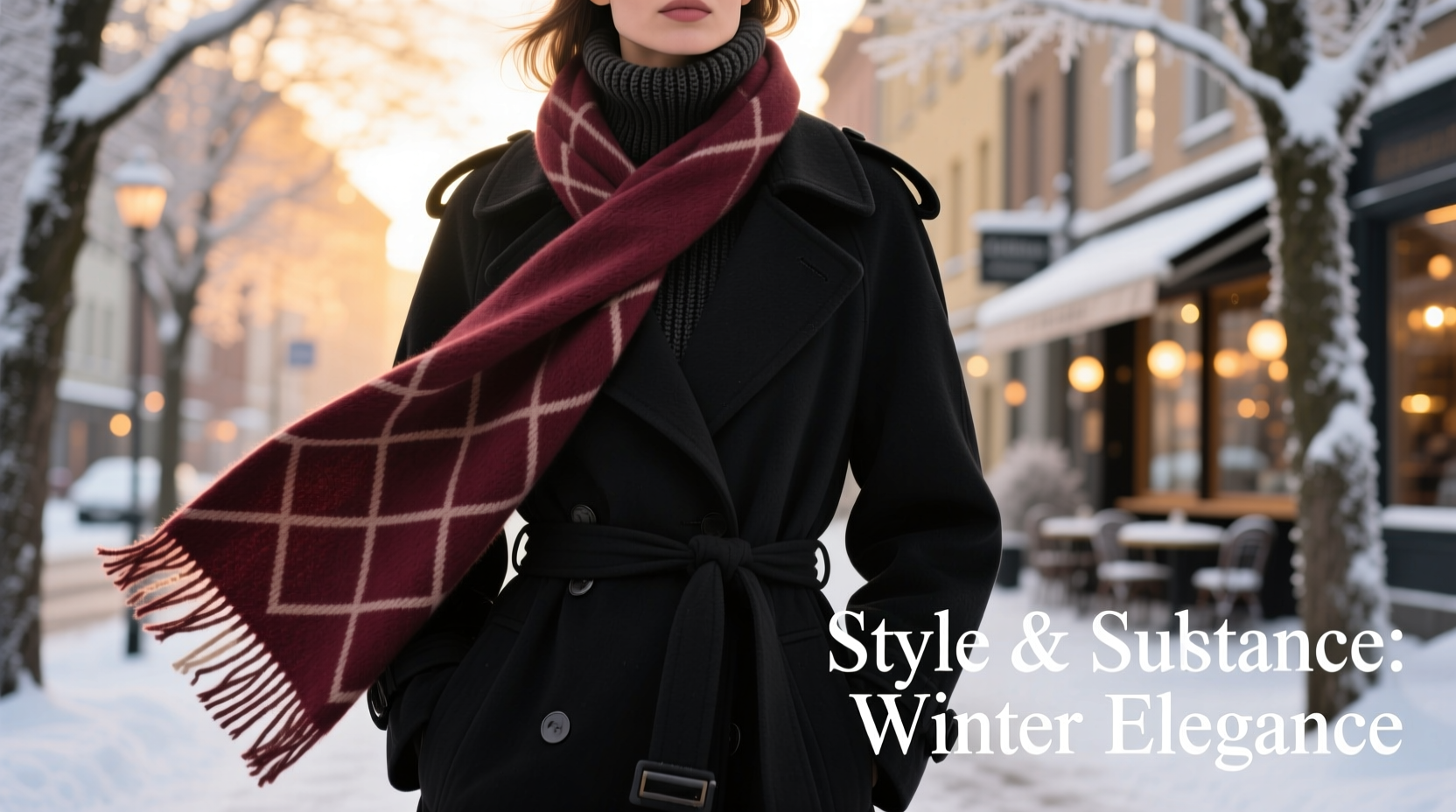
The foundation of effective scarf styling begins with material selection. Not all fabrics offer equal protection against wind, moisture, or sub-zero temperatures. The wrong choice can leave you shivering despite multiple layers, while the right one enhances thermal efficiency without sacrificing elegance.
Wool remains the gold standard for winter scarves. Merino wool is soft against the skin and highly insulating, while cashmere delivers luxurious warmth with a lightweight feel. For those seeking durability and affordability, acrylic blends offer decent warmth and come in a wide range of colors and textures. However, they may lack breathability and can pill over time.
In extremely wet climates, consider water-resistant materials like tightly woven alpaca or treated wool blends. Silk-lined wool scarves combine the moisture-wicking properties of silk with the heat retention of wool—ideal for urban commuters who move between heated interiors and icy sidewalks.
Fabric Comparison for Winter Scarves
| Material | Warmth Level | Weight | Best For |
|---|---|---|---|
| Cashmere | ★★★★★ | Light | Luxury wear, city outings |
| Merino Wool | ★★★★☆ | Medium-light | Daily wear, sensitive skin |
| Alpaca | ★★★★☆ | Medium | Active use, dry cold |
| Acrylic Blend | ★★★☆☆ | Medium-heavy | Budget-friendly options |
| Silk-Wool Mix | ★★★☆☆ | Light | Layering, office-to-outdoor |
“Thermal efficiency starts with fiber. Natural fibers like wool and alpaca wick moisture and retain heat even when damp—a crucial advantage in freezing weather.” — Lena Torres, Textile Designer & Cold-Weather Stylist
Match Scarf Proportion to Coat Silhouette
A well-styled scarf complements—not competes with—your coat. Oversized scarves on slim coats can overwhelm the frame, while narrow scarves disappear under bulky parkas. Understanding proportion ensures visual balance and functional coverage.
For tailored coats like pea coats, trench styles, or single-breasted wool overcoats, medium-width scarves (7–9 inches) work best. These allow clean draping and precise knotting without adding excess volume. Opt for scarves around 60–70 inches in length to achieve a single loop with two hanging ends.
Bulky coats—such as puffer jackets, parkas, or double-breasted duffle coats—demand wider, longer scarves. A width of 10–12 inches and a length of 80+ inches enables full wrapping that seals gaps at the neck. Consider using oversized blanket scarves for dramatic effect and added insulation.
Proportional harmony extends to texture. A sleek, minimalist coat pairs beautifully with a finely knit scarf, while a rugged shearling-trimmed coat suits chunky cable knits or fringe details.
Master Essential Scarf-Knotting Techniques
The way you tie your scarf affects both warmth and style. Some knots maximize coverage, others emphasize drape and movement. Below are four proven techniques suitable for different coat types and conditions.
1. The Parisian Loop (Ideal for Wool Coats)
- Fold the scarf in half lengthwise for a slimmer profile.
- Place the folded edge around your neck, letting the loop hang in front.
- Pass the loose ends through the loop and pull gently.
- Adjust so the knot sits slightly off-center for asymmetry.
This style keeps the neck covered while allowing the coat collar to remain visible. It’s elegant and low-bulk—perfect for professional settings.
2. The Double Wrap (Best for Extreme Cold)
- Drape the scarf evenly around your neck.
- Wrap one end around your neck once, then again with the second wrap overlapping slightly.
- Let both ends fall to one side or tuck one end loosely into your coat.
Creates three layers of fabric at the throat—the warmest configuration. Ideal for long commutes or windy days. Works best with longer scarves (80+ inches).
3. The Ascot Knot (Elegant & Secure)
- Cross one end over the other at the base of the neck.
- Take the top end and loop it under and through the back, pulling it up like a tie knot.
- Flatten the knot and adjust the drape over your coat lapel.
Sophisticated and stays in place. Excellent for formal wool coats or overcoats. Use with silk-blend or fine-knit scarves.
4. The Loose Drape (Casual & Flowing)
- Simply drape the scarf around your neck with equal lengths on both sides.
- Leave it unknotted or give one end a half-tuck into your coat.
- Allow the fabric to fall naturally over the coat.
Maximizes fabric visibility and works well with patterned or textured scarves. Best in milder winter conditions or indoor-outdoor transitions.
Coordinate Color and Pattern with Your Coat
Color harmony transforms a functional layer into a focal point. While contrast adds vibrancy, tonal pairing exudes sophistication. The goal is cohesion without monotony.
For neutral-toned coats—black, navy, charcoal, beige—use scarves to introduce color. A deep burgundy, forest green, or mustard yellow scarf adds richness without clashing. Alternatively, go monochromatic: pair a camel coat with an oatmeal or rust-toned scarf for a layered earth-tone effect.
Patterned scarves require careful handling. If your coat has texture (herringbone, tweed), choose a scarf with a complementary but non-competing pattern—e.g., a small geometric print or subtle stripe. Avoid pairing large plaids with heavily textured coats; the visual noise undermines both pieces.
Seasonal palettes matter. Deep jewel tones (emerald, sapphire, amethyst) dominate winter wardrobes for good reason—they absorb light and project warmth. Metallic-threaded scarves catch artificial light beautifully in evening settings.
Do’s and Don’ts of Scarf-Color Pairing
| Situation | Do | Don't |
|---|---|---|
| Black wool coat | Try ruby red, ivory, or silver-gray | Use neon green or bright orange unless intentional |
| Tweed overcoat | Select a solid-color scarf in a dominant thread hue | Pick a busy tartan that clashes with the weave |
| Puffer jacket | Go bold with a solid bright or graphic print | Choose a delicate silk scarf that gets buried |
| Beige trench | Add depth with navy, chocolate, or olive | Pair with another light neutral unless layering |
Real-World Example: Styling for a Winter Commute
Sophie, a marketing executive in Chicago, faces a 15-minute walk from the train station to her office each morning. Her commute includes wind gusts off Lake Michigan and rapid temperature shifts between heated transit and outdoor exposure.
She wears a knee-length navy wool coat with a notched collar. To combat the cold, she uses a 9-inch-wide, 80-inch-long merino-cashmere blend scarf in heather gray. Each morning, she applies the Double Wrap technique, securing warmth without excessive bulk. The neutral tone complements her coat and matches her gloves and hat, creating a cohesive look.
Upon entering her office, she loosens the scarf into a loose drape, maintaining style while adjusting to indoor warmth. By choosing a high-quality, versatile scarf and mastering one effective knot, Sophie maintains comfort, professionalism, and personal flair throughout her day.
Essential Checklist: Perfect Scarf-and-Coat Pairing
- ✔ Select a scarf material suited to your climate (wool, cashmere, blend)
- ✔ Ensure scarf length allows for at least one full wrap
- ✔ Match scarf width to coat bulk (narrow for tailored, wide for puffer)
- ✔ Use proper knotting technique based on warmth needs and coat style
- ✔ Coordinate colors using contrast or tonal harmony
- ✔ Adjust scarf position relative to coat collar (under or over)
- ✔ Carry a spare compact scarf for unexpected cold snaps
Frequently Asked Questions
Can I wear a patterned scarf with a patterned coat?
Yes, but only if the patterns differ in scale and share at least one common color. For example, a houndstooth coat pairs well with a scarf featuring small polka dots in one of the coat’s base tones. Avoid matching patterns of similar size and density, as this creates visual chaos.
How do I keep my scarf from slipping off my coat?
Use the Ascot or Double Wrap method to anchor the scarf securely around your neck. Alternatively, pin the scarf to your coat’s inner collar with a discreet safety pin or decorative brooch. Avoid overly slippery fabrics like pure silk unless layered under a coat with a high closure.
Should scarves be worn inside or outside the coat?
Functionally, scarves should be worn *under* the coat collar to seal in heat. However, for style or mild conditions, draping the scarf *over* the coat works well. In very cold weather, layer a thin scarf underneath your coat and add a decorative one on top for both warmth and flair.
Final Thoughts: Elevate Your Winter Wardrobe Intentionally
Styling a scarf with a winter coat is not a minor detail—it’s a strategic act of self-presentation and environmental adaptation. The most polished winter looks aren’t achieved by expensive garments alone, but by thoughtful layering, intelligent fabric choices, and deliberate execution. Whether you’re braving a blizzard or walking to brunch, your scarf should serve you in both form and function.
Start by auditing your current scarves: Are they warm enough? Do they complement your most-worn coats? Practice one new knot this week. Experiment with color layering. Notice how small adjustments influence both comfort and confidence.




 浙公网安备
33010002000092号
浙公网安备
33010002000092号 浙B2-20120091-4
Comments
No comments yet. Why don't you start the discussion?