
Early spring is a fashion limbo. The air still carries winter’s chill, but the promise of warmth lingers just around the corner. It's the perfect time to transition your wardrobe—bringing out lighter fabrics while holding on to structured footwear like ankle boots. But pairing ankle boots with dresses can be tricky. Done poorly, the combination risks looking heavy, shapeless, or outdated. Done right, it creates a balanced, modern silhouette that’s both stylish and seasonally appropriate.
The key lies not in avoiding ankle boots during this transitional period, but in styling them intentionally. With thoughtful attention to proportions, fabric choices, hemlines, and accessories, you can wear ankle boots confidently with dresses—even in March or April—without sacrificing elegance or appearing frumpy.
Understand the Frump Factor: Why Boot-and-Dress Combos Go Wrong
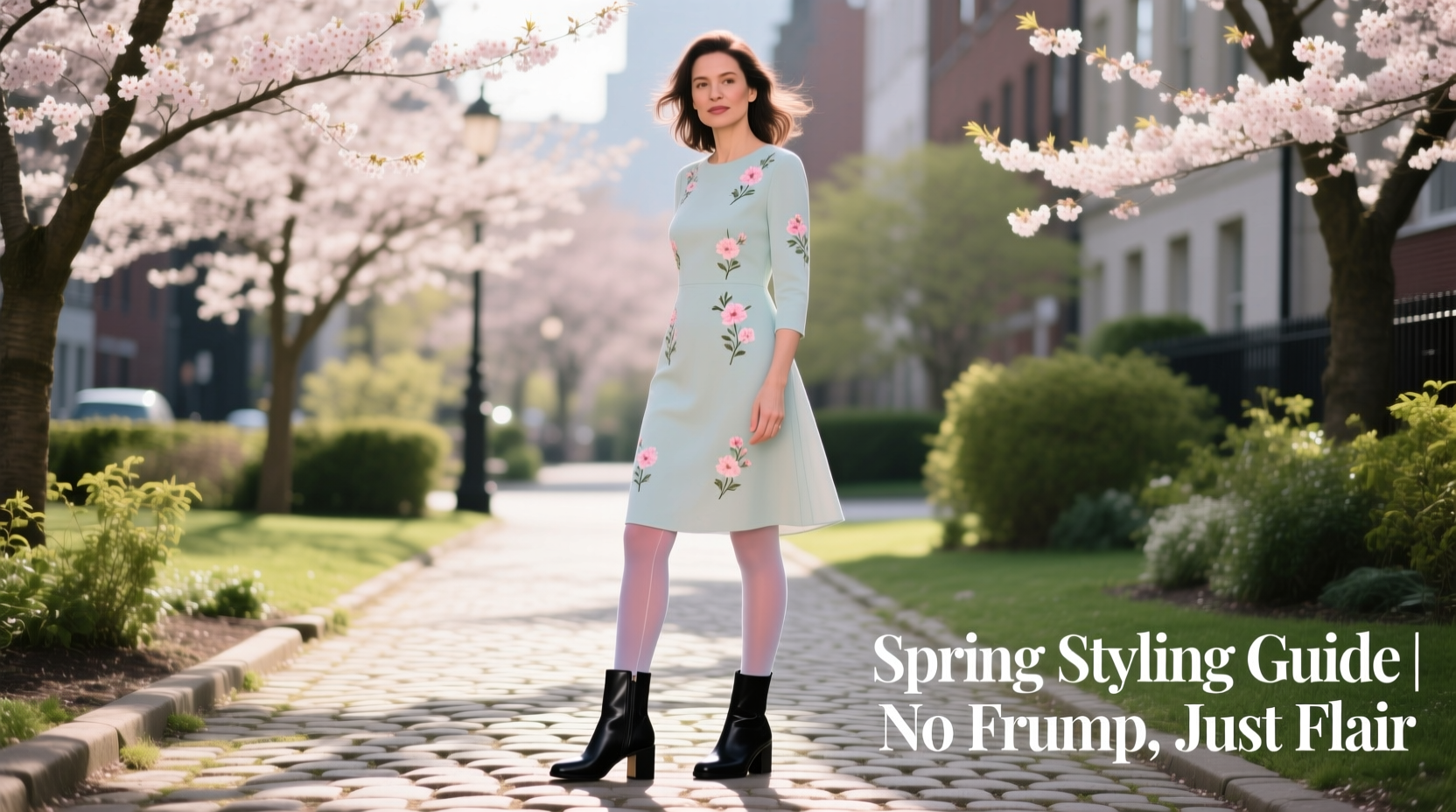
The term “frumpy” often describes an outfit that lacks definition, appears too bulky, or fails to highlight the body’s natural lines. When ankle boots are paired with dresses in early spring, several common missteps contribute to this effect:
- Too much fabric pooling at the ankles – A long dress that drapes over the boots conceals their structure and breaks the leg line.
- Mismatched textures – Heavy knits or thick wools paired with delicate boot styles create visual imbalance.
- Poor length proportion – Dresses that hit mid-calf tend to shorten the leg and draw unflattering attention to the lower half.
- Over-layering – Adding chunky cardigans or scarves without defining the waist adds bulk.
Avoiding these pitfalls starts with understanding how to balance volume, define the waist, and maintain a continuous vertical line from dress to boot.
Choose the Right Dress Length and Silhouette
Dress length is one of the most critical factors when styling ankle boots. The goal is to either show off the boot entirely or allow just a sliver of skin or sock to bridge the gap between hem and shoe.
The most flattering lengths for pairing with ankle boots are:
- Knee-length (or slightly above) – This hits at or just above the narrowest part of the calf, framing the boot perfectly and elongating the leg.
- Mini (mid-thigh) – Works well with heeled ankle boots, especially in sleek materials like suede or patent leather. Adds youthful energy and contrast.
- Midi (just above the ankle) – Ideal for showing off the entire boot shaft without covering it. Avoid midi lengths that graze the top of the boot—they disrupt the line.
Avoid dresses that fall between mid-calf and ankle unless they’re cut with intentional slits or movement. These lengths chop the leg visually and make even the most stylish boots disappear into a sea of fabric.
“Length is everything. A dress that ends at the widest part of your calf will always drag down your silhouette. Aim for intentionality.” — Lena Torres, Fashion Stylist & Wardrobe Consultant
Master the Proportion Game: Balance Volume with Structure
Ankle boots come in many forms—slim Chelsea styles, rugged lace-ups, block-heeled western designs—but each requires different balancing tactics when worn with dresses.
Consider this formula: When the boot has volume, keep the dress streamlined. When the dress is flowy, opt for sleeker boots.
| Dress Style | Recommended Boot Type | Why It Works |
|---|---|---|
| Fitted sheath or bodycon | Heeled ankle boot (suede or leather) | Adds height and polish without competing with the dress’s form. |
| Flowy wrap or shirt dress | Sleek black Chelsea or chelsea-style bootie | Grounds the outfit and prevents floatiness. |
| Knit midi dress | Slouchy suede or Western-inspired boot | Matches texture weight and enhances casual-cool vibe. |
| Shirtwaist or shirtdress | Lace-up combat or minimalist flat boot | Creates a smart-casual contrast with clean lines. |
In early spring, lean toward lighter-weight knit dresses instead of winter-weight woolens. A fine-gauge merino or cotton-blend knit maintains warmth without heaviness, making it easier to pair with refined ankle boots.
Real Example: Transitional Workwear That Works
Claire, a marketing manager in Portland, needed a weekday outfit that could handle unpredictable spring weather while remaining office-appropriate. She chose a tailored taupe shirtdress hitting just above the knee, belted at the waist with a slim brown leather belt. She paired it with low-heeled almond-toe ankle boots in cognac suede and added sheer camel tights for extra warmth.
The result? A polished, put-together look that transitioned seamlessly from morning meetings to after-work coffee. The defined waist prevented bulk, the dress length showcased the boots, and the warm-toned suede softened the overall palette. No layers were piled on haphazardly—just a structured trench coat when needed.
This example illustrates how small details—belt placement, hem length, and material harmony—can elevate a simple boot-and-dress combo from functional to fashionable.
Define the Waist and Break Up Bulk
One of the fastest ways to avoid a frumpy appearance is to emphasize the waist. Even the most flowing dress can look sharp when cinched strategically.
Use these techniques to define your shape:
- Belt the dress – Whether built-in or added externally, a belt draws attention to your narrowest point and separates top from bottom.
- Tuck in a sweater or layer – If wearing a sweater over a slip dress, lightly tuck the front to suggest waist definition.
- Layer with fitted jackets – A cropped blazer, denim jacket, or waist-cinching vest adds structure without hiding the dress.
When layering, avoid long cardigans that skim the same length as the dress. Instead, choose cropped styles or longer coats that extend beyond the hemline to preserve vertical continuity.
Accessorize Strategically: Socks, Hosiery, and Jewelry
Accessories can make or break the ankle boot and dress equation. In early spring, temperature fluctuations mean you might need hosiery—but the wrong choice can add visual weight.
Here’s how to accessorize wisely:
- Skinny socks – For a casual, modern look, try ribbed ankle socks in neutral tones peeking slightly above the boot. Best with flat or low-heeled boots and mini/midi dresses.
- Sheer tights (15–30 denier) – Add subtle warmth and polish without opacity. Choose nude, taupe, or light gray depending on your dress color.
- No-show socks – Ideal under leather boots with shorter dresses to prevent sweat lines while maintaining a bare-leg illusion.
- Jewelry with purpose – Long pendant necklaces or layered chains draw the eye upward, balancing the grounded feel of boots.
Avoid thick opaque tights unless absolutely necessary—and if worn, pair them only with shorter hemlines (above the knee) to maintain leg visibility.
Step-by-Step Guide: Building a Spring-Ready Boot-and-Dress Outfit
Follow this sequence to assemble a chic, non-frumpy ensemble:
- Select your dress: Choose a knee-length or slightly above-the-knee style in a spring-appropriate fabric (cotton, lightweight knit, or silk blend).
- Pick your boots: Match the boot heel height and toe shape to the dress’s formality. Heels elevate; flats ground.
- Check the hemline: Ensure the dress doesn’t cover the boot shaft. Adjust by rolling, belting, or choosing a shorter style.
- Add waist definition: Use a belt, tucked layer, or naturally fitted design to sculpt the silhouette.
- Choose hosiery or socks: Opt for sheer tights or no-show options unless temps demand more coverage.
- Top with a tailored layer: A trench, cropped jacket, or long-line cardigan should enhance—not hide—the outfit.
- Finish with jewelry: Add earrings or a necklace to lift the gaze and complete the look.
This method ensures every element supports the overall aesthetic, preventing accidental bulk or imbalance.
Do’s and Don’ts at a Glance
| Do | Don’t |
|---|---|
| Pair knee-length dresses with heeled ankle boots for elongation | Wear mid-calf dresses that end at the widest part of your leg |
| Use a belt to define your waist on loose-fitting dresses | Add bulky layers without breaking up the silhouette |
| Opt for sheer tights or no-show socks in cool weather | Wear thick, dark tights with long, flowy dresses |
| Match boot toe shape to dress vibe (pointed = dressy, rounded = casual) | Pair delicate dresses with heavy lug-sole boots |
| Choose ankle boots in complementary colors (e.g., camel with cream) | Mix too many clashing textures (e.g., sequins + rugged suede) |
Frequently Asked Questions
Can I wear ankle boots with a maxi dress in early spring?
Yes, but with caution. Only attempt this if the maxi dress is fitted through the hips and has a high slit or side opening. Otherwise, the fabric will pool over the boots, creating a bulky look. Better alternatives include open-front dusters worn over ankle-boot-friendly dresses.
What kind of socks should I wear with ankle boots and dresses?
For a polished look, stick to sheer tights or invisible no-show socks. For a trendy, casual edge, try thin ribbed ankle socks in neutral or tonal shades. Avoid athletic or crew-length socks unless going for a deliberate streetwear aesthetic.
Are flat ankle boots too casual for dresses?
Not at all. Flat ankle boots—especially sleek styles like Chelsea or elastic-sided silhouettes—can look elegant with the right dress. Pair them with a tailored shirt dress or a structured shift for a sophisticated, low-effort look.
Final Thoughts: Confidence Is the Ultimate Accessory
Styling ankle boots with dresses in early spring isn’t about following rigid rules—it’s about making intentional choices that reflect your personal style while honoring proportion and seasonality. The fear of looking frumpy often stems from uncertainty, not the outfit itself. Once you understand how to balance lengths, define your shape, and choose harmonious textures, you’ll find that ankle boots are one of the most versatile footwear options available during the shoulder months.
Spring is a time of renewal, and your wardrobe should reflect that energy. Don’t pack away your favorite ankle boots too soon. Instead, reframe them as transitional allies—pieces that anchor your lighter dresses with stability and style.




 浙公网安备
33010002000092号
浙公网安备
33010002000092号 浙B2-20120091-4
Comments
No comments yet. Why don't you start the discussion?