
Winter fashion often comes down to a balancing act: staying warm while maintaining a polished, intentional look. Few combinations are as essential—and as commonly mismanaged—as pairing ankle boots with jeans. While this duo is a seasonal staple, the result can easily veer into disheveled territory if the denim bunches awkwardly above the boot shaft. The solution isn’t just about choosing the right jeans or boots—it’s about understanding proportion, fabric behavior, and subtle styling techniques that keep your look sleek from hem to heel.
Avoiding unsightly folds and excess fabric at the ankle doesn’t require complicated tricks. With the right approach, you can wear jeans with ankle boots confidently, whether you're stepping out for coffee, heading to work, or navigating a snowy sidewalk. This guide breaks down proven methods, common pitfalls, and real-world adjustments that deliver clean lines and effortless style all winter long.
Choose the Right Jean Fit and Rise
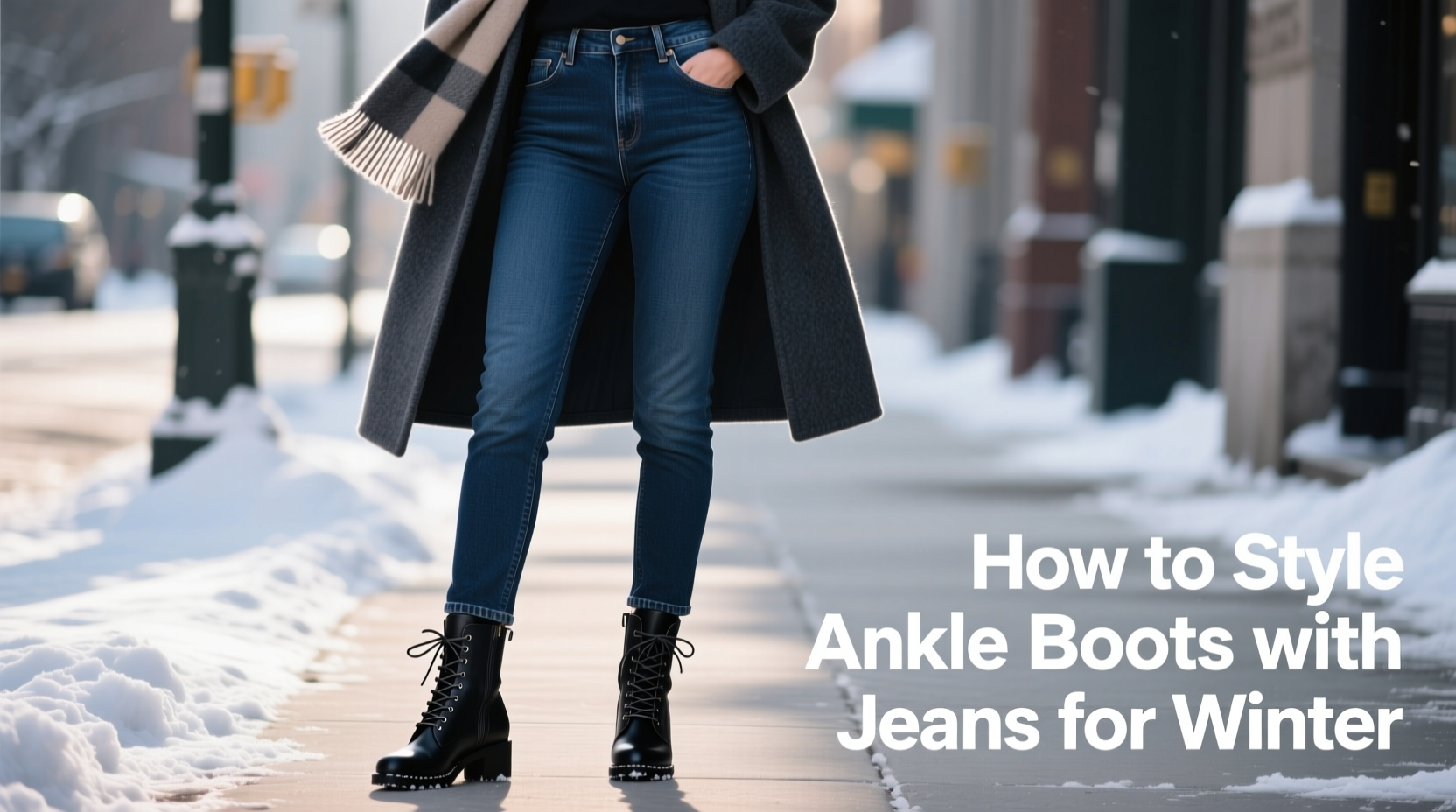
The foundation of a smooth ankle boot look starts with selecting jeans that align with your body type and the boot’s height. Not all jeans behave the same way when tucked or layered over footwear. High-rise, mid-rise, and low-rise cuts each interact differently with ankle boots, especially when sitting or walking.
High-waisted jeans offer the most control. They stay securely in place, reducing the chance of slippage or pooling at the ankle. When paired with a tucked-in top or sweater, they create a streamlined silhouette that visually elongates the leg—especially important when wearing shorter boots.
Mid-rise jeans can work well but require more attention to cuffing or tucking. Because they sit closer to the natural waist, they may shift slightly throughout the day, leading to minor bunching. Opt for styles with a bit of stretch (1–3% elastane) to maintain shape without constriction.
Low-rise jeans are the trickiest to style with ankle boots. Without adequate waist support, they tend to slide down, creating slack in the leg that gathers at the ankle. If you prefer lower rises, pair them only with cropped or cuffed styles to avoid excess fabric stacking at the boot opening.
Master the Cuff: Clean Hemlines That Work
Cuffing jeans is one of the most effective ways to eliminate bunching. A well-executed cuff lifts the hem off the foot, prevents dragging, and showcases the boot’s design. But not all cuffs are created equal—precision matters.
A single 1.5-inch fold works best for slim and straight-leg jeans. It maintains structure without adding bulk. For wider legs, a double roll of 2 inches keeps the hem neat and proportional to the boot. Avoid excessive rolling, which can widen the ankle area and counteract the sleek effect you’re aiming for.
“A clean cuff is like a tailored finish—it signals intention. One crisp fold speaks volumes about personal style.” — Lena Torres, Fashion Stylist & Wardrobe Consultant
Raw-hem or frayed cuffs can add character, but use them sparingly. On thick denim, raw edges may flare outward, creating visual clutter near the boot. Stick to clean, folded hems for professional settings or minimalist aesthetics.
Step-by-Step Guide to the Perfect Cuff
- Put on your ankle boots and jeans.
- Adjust the pant leg so it rests flat against the front of the boot, just above the sole.
- Fold the hem upward by 1.5 to 2 inches, ensuring even tension across the leg.
- Smooth out any wrinkles with your hands.
- Walk a few steps to confirm the cuff stays in place and doesn’t pull tight.
For non-cuffable jeans, consider a professional hem. Tailors can shorten denim to exact boot height, eliminating the need for folding altogether. A 1/4-inch unfinished hem preserves the original look while removing excess length.
The Tuck-In Technique: When to Full, Half, or French
Tucking jeans into ankle boots is a bold move that, when done correctly, delivers a sharp, fashion-forward result. However, it demands precision. Denim that’s too thick or wide will bulge at the shaft, defeating the purpose.
Slim-fit or skinny jeans are ideal for full tucks. Their narrow profile slides smoothly into most boot openings. Start by folding the hem inward once to create a clean edge, then gently push the leg down into the boot. Use a soft cloth or tissue inside the shaft to protect the lining during insertion.
For those wary of a full tuck, the “half-tuck” offers a relaxed alternative. Fold only the front portion of the pant leg into the boot, leaving the back and sides resting naturally. This method reduces bulk while still minimizing bunching from the front view—a smart compromise for casual outings.
The French tuck—tucking only the front of your shirt—isn’t limited to tops. Apply the concept to jeans by lightly tucking just the front quarter of the pant leg. It creates a subtle drape that avoids stiffness while keeping the ankle clear.
Boot Height and Shaft Width: Matching Proportions
Ankle boots vary significantly in shaft height and circumference. Some rise barely above the ankle bone; others extend toward the calf. Choosing the right proportions relative to your jeans is critical to avoiding awkward gaps or squeezing.
Boots with a narrower shaft (8–10 inches in circumference) work best with slim or straight-leg jeans. Wider legs may not fit comfortably, leading to strained fabric or difficulty pulling the boot on. Conversely, wide-shaft boots (11+ inches) suit relaxed or boyfriend jeans, especially when cuffed.
Consider the boot’s closure mechanism. Zip-up styles allow for tighter fits without compromising entry. Elastic-sided or pull-on designs may require more give in the denim, particularly if the leg is snug.
| Jeans Style | Best Boot Match | Bunching Risk | Styling Tip |
|---|---|---|---|
| Skinny | Narrow-shaft zip ankle boot | Low | Full tuck or minimal cuff |
| Straight-Leg | Medium-shaft boot, 9–10\" | Moderate | Single 1.5\" cuff |
| Boyfriend / Relaxed | Wide-shaft or side-zip boot | High | Double roll or hem short |
| Cropped (ankle-length) | Any ankle boot | Very Low | Wear loose over boot |
When shopping for boots, prioritize flexibility in the upper material. Suede and soft leather conform better to denim than stiff, structured leathers. Look for styles with gusseted zippers or side elastic panels—they accommodate slight variations in pant thickness without distorting the line.
Real-World Example: From Bulky to Balanced
Sophie, a marketing manager in Chicago, struggled every winter with her favorite dark-wash boyfriend jeans and Chelsea boots. No matter how she adjusted them, the denim would crumple around the shaft, making her legs look shorter and the outfit appear messy.
She tried cuffing, but the rolls were uneven. She attempted tucking, but the thick denim resisted and stretched the boot lining. Frustrated, she brought both pieces to a stylist for advice.
The solution? A two-part fix. First, she had the jeans hemmed to 27 inches—an ideal length for a clean single cuff. Second, she switched to a pair of side-zip ankle boots with a slightly wider calf opening. The combination eliminated resistance and allowed the denim to drape neatly over the boot.
“It sounds simple,” Sophie said, “but those small changes made me feel put together again. I don’t spend time adjusting my pants every time I stand up.”
Her revised routine: cuff precisely, choose boots with functional zippers, and verify the fit weekly as denim stretches over time.
Essential Checklist: Bunch-Free Boot Styling
- ✔ Measure your inseam and match it to your boot height
- ✔ Choose jeans with moderate stretch for better drape
- ✔ Cuff slim or straight-leg jeans by 1.5–2 inches
- ✔ Hem oversized or long jeans for a precise fit
- ✔ Use a full tuck only with thin, flexible denim
- ✔ Opt for side-zip or elastic-paneled boots for easier layering
- ✔ Test the look while walking and sitting
- ✔ Refresh cuffs daily to maintain crispness
Frequently Asked Questions
Can I wear wide-leg jeans with ankle boots?
Yes, but with modifications. Avoid letting wide legs pool on the floor or sag into the boot. Instead, cuff generously or have the jeans hemmed to end just above the boot shaft. Alternatively, consider boots with a higher shaft to balance the volume.
How do I stop my jeans from riding up when tucked?
This usually happens when the denim is too tight or lacks enough give. Try sizing up half a size in jeans or opting for a boot with a roomier opening. You can also use a light fabric tape (like double-sided fashion tape) on the inner cuff to secure it temporarily to the boot lining.
Are cropped jeans the easiest option?
Absolutely. Cropped or ankle-length jeans eliminate bunching entirely by ending above the boot. Just ensure the hem hits at the right point—ideally, 0.5 to 1 inch above the boot’s top edge—for a balanced proportion.
Final Tips for a Polished Winter Look
Styling ankle boots with jeans shouldn’t be a daily struggle. The key lies in preparation: selecting compatible pieces, tailoring where needed, and applying consistent techniques. Remember that fabrics change with wear—denim stretches, boots mold—and periodic reassessment keeps your look fresh.
Invest in versatile basics: a well-fitting pair of mid-rise straight-leg jeans, a cropped dark wash, and two sets of ankle boots (one sleek, one with a wider calf). Rotate them based on your outfit and weather conditions. Layer with socks strategically—thin merino wool under the boot won’t add bulk, while thicker knits may require looser pant legs.
Most importantly, observe how your clothes behave in motion. Fashion isn’t just about appearance in a mirror—it’s about how you move through your day. A look that stays smooth from morning commute to evening errands is one worth mastering.




 浙公网安备
33010002000092号
浙公网安备
33010002000092号 浙B2-20120091-4
Comments
No comments yet. Why don't you start the discussion?