
For many, bangs are a bold fashion statement—framing the face, accentuating the eyes, and adding dimension to any hairstyle. But when humidity hits, that carefully styled fringe can quickly transform into a puffy, unruly halo of frizz. This is especially true in tropical or coastal regions where moisture in the air disrupts even the most meticulous styling routine. The good news: frizz isn’t inevitable. With the right approach to cutting, product selection, and daily maintenance, you can keep your bangs sleek, defined, and humidity-resistant—even in the stickiest conditions.
Why Humidity Makes Bangs Frizz: The Science Behind the Fluff
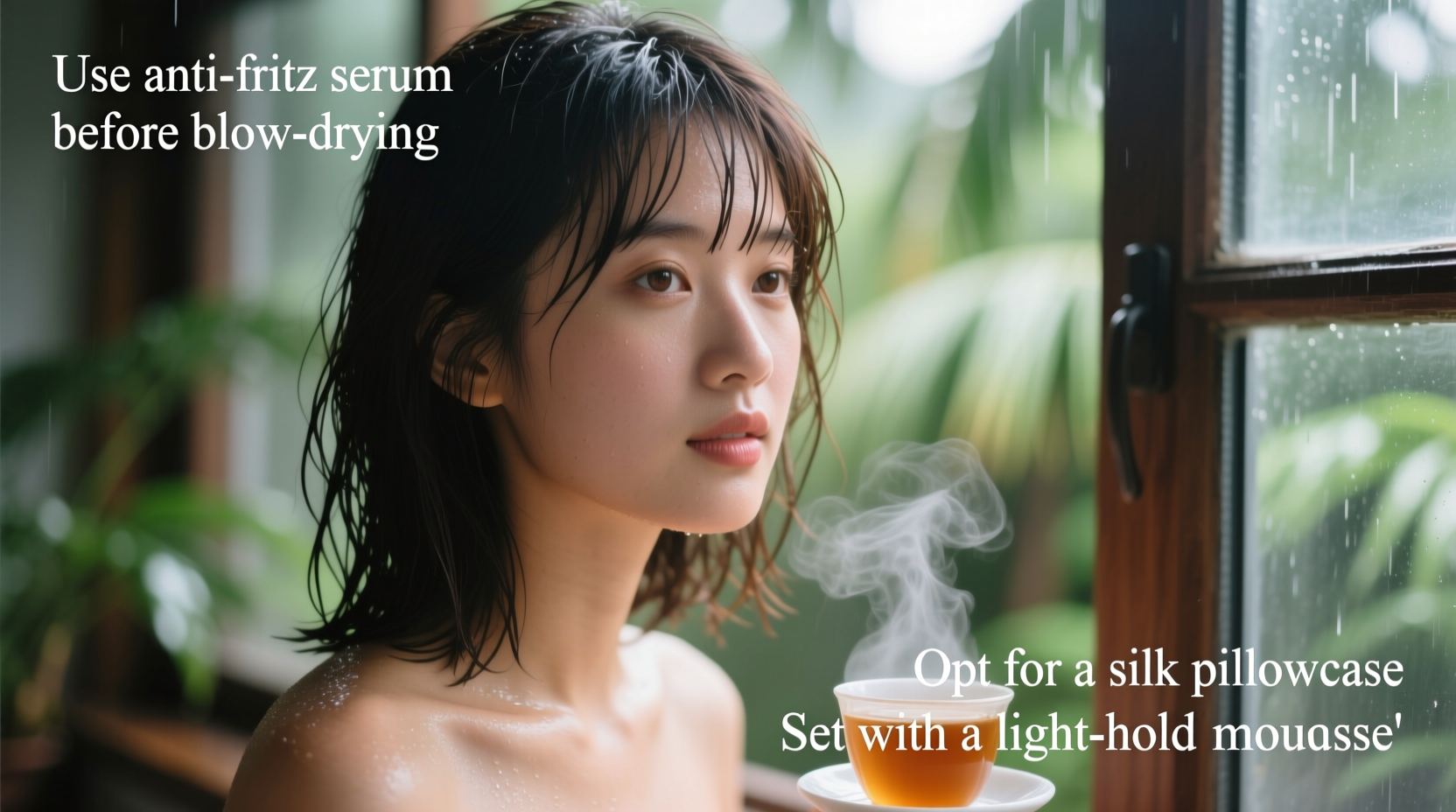
Bangs are particularly vulnerable to humidity because they’re short, exposed, and often fine or layered—qualities that make them highly reactive to environmental changes. Hair absorbs moisture from the air, and in high-humidity environments, this causes the hair shaft to swell. When the cuticle lifts, it creates a rough texture, leading to static, puffiness, and loss of shape.
Fine or thin hair tends to frizz more easily because it has less structural density to resist environmental stressors. Additionally, bangs typically grow from the forehead, an area prone to oil and sweat, which can further destabilize styling efforts when combined with atmospheric moisture.
“Humidity doesn’t just affect hair—it rewrites its behavior. Understanding how moisture interacts with your hair’s protein structure is the first step toward control.” — Dr. Lena Torres, Trichologist and Hair Research Specialist
The key is not to fight humidity head-on but to work with your hair’s natural tendencies while creating a protective barrier against excess moisture absorption.
Choosing the Right Cut for Humid Climates
Your haircut plays a foundational role in how well your bangs withstand humidity. Not all bang styles react the same way to moisture, and some are inherently more manageable in sticky conditions.
| Bang Style | Frizz Risk Level | Best For Hair Type | Why It Works (or Doesn’t) in Humidity |
|---|---|---|---|
| Blunt Bangs | Low-Medium | Thick, straight, or wavy | Dense weight helps resist puffiness; clean edge maintains shape |
| Side-Swept Bangs | Low | All types, especially fine | Longer length integrates better with rest of hair; easier to anchor |
| Curtain Bangs | Medium | Wavy, medium-thick | Natural wave pattern blends with humidity-induced texture |
| Wispy Bangs | High | Fine, straight | Too light—easily disrupted by moisture and movement |
| Micro Bangs | Very High | Not recommended for humid zones | Extremely short; no weight to hold shape; frizz shows immediately |
If you live in a consistently humid climate, opt for side-swept or slightly longer blunt bangs. These styles offer enough length to be manipulated and secured without relying solely on flatness. Avoid overly short or feathered cuts—they lack the density needed to resist swelling and tend to flare outward when exposed to moisture.
Step-by-Step: Styling Bangs for Long-Lasting Hold in Humidity
A successful anti-frizz routine for bangs involves preparation, precise application, and finishing protection. Follow this detailed process every time you wash or refresh your hair.
- Start with a sulfate-free shampoo and hydrating conditioner. Over-drying strips hair of natural oils, making it more porous and prone to absorbing humidity. Focus conditioner only on the mid-lengths and ends—avoid the roots and bangs to prevent greasiness.
- Towel-dry gently. Rubbing with a towel increases friction and cuticle damage. Instead, press out excess water with a microfiber towel or soft cotton T-shirt.
- Apply a heat protectant + anti-humidity serum. While hair is still damp, use a dime-sized amount of a silicone-based serum or cream. Look for ingredients like dimethicone, cyclomethicone, or argan oil. These form a breathable shield around the hair shaft.
- Blow-dry with tension. Use a round brush and pull the bangs taut as you direct airflow downward. Always finish with a blast of cool air to seal the cuticle. For side-swept styles, angle the brush diagonally across the forehead.
- Flat iron on low heat (if needed). Only use a flat iron if your hair is fully dry. Set it to 300–350°F (150–175°C). One slow pass is enough—overheating weakens the hair and increases porosity over time.
- Lock in with a lightweight, flexible-hold hairspray. Hold the can 10–12 inches away and mist only the bangs. Avoid overspray onto the scalp, which can lead to buildup and greasiness.
- Final touch: Anti-frizz veil. On especially humid days, apply a frizz-control spray designed for flyaways. Many contain polymers that create an invisible moisture-resistant film.
This routine takes under 10 minutes but can extend your smooth look by hours. Consistency matters more than perfection—doing it the same way each time trains the hair to fall into place.
Product Selection: What Works (and What Doesn’t)
Not all frizz-fighting products are created equal. In humid climates, the wrong formula can trap moisture or weigh hair down, making frizz worse. Here’s what to look for—and avoid.
- Look for: Humectant blockers (like silicones), ceramides, and fatty alcohols. These coat the hair without clogging pores.
- Avoid: Heavy oils (coconut, olive) near the roots—they attract moisture and increase greasiness. Also skip alcohol-heavy sprays that dry out the hair and increase brittleness.
- Best formats: Creams and serums for damp hair; sprays and drops for dry touch-ups.
Recommended product categories:
- Leave-in conditioner with humidity resistance (e.g., Living Proof No Frizz Leave-In)
- Anti-humidity shine serum (e.g., Moroccanoil Treatment Light)
- Flexible-hold hairspray (e.g., Ouai Memory Mist)
- Travel-size flat iron for midday touch-ups (e.g., T3 Micro Iron)
Carry a mini version of your serum or a frizz-control wipe in your bag. A quick refresh during the day prevents cumulative frizz buildup.
Real-Life Example: Maria’s Monsoon-Proof Bangs Routine
Maria, a graphic designer based in Miami, struggled for years with her blunt bangs puffing up within an hour of leaving home. Her turning point came after a photoshoot where her fringe ballooned under studio lights—despite using a strong-hold gel.
She consulted a local stylist who specialized in humidity-prone hair and made three key adjustments:
- She switched from a full-coverage gel to a lightweight mousse applied only to damp bangs before blow-drying.
- She began using a silk pillowcase to reduce friction at night, minimizing morning disruption.
- She started carrying a travel flat iron and a pea-sized amount of serum in her desk drawer for a 2-minute midday refresh.
Within two weeks, Maria noticed her bangs stayed sleek for 8+ hours, even on 90% humidity days. “It wasn’t about using more product,” she said. “It was about using the right kind, in the right order, and accepting that maintenance is part of the style.”
“Bangs in humid climates aren’t high-maintenance—they’re precision-maintained. A few smart habits replace endless fixing.” — Jamal Reed, Celebrity Stylist, Miami Salon Collective
Checklist: Daily Bang Care in Humid Conditions
Use this checklist each morning to ensure your bangs stay frizz-free:
- ✅ Wash hair with sulfate-free shampoo 2–3 times per week
- ✅ Condition only from ears down—never on bangs
- ✅ Apply anti-humidity serum to damp bangs
- ✅ Blow-dry with tension and cool-shot finish
- ✅ Use flat iron sparingly (once, max)
- ✅ Seal with flexible-hold hairspray
- ✅ Store a mini serum or frizz wipe in your bag
- ✅ Sleep on a silk or satin pillowcase
- ✅ Refresh with cool air or a quick iron pass if needed
- ✅ Trim every 4–6 weeks to prevent split ends from traveling up
Frequently Asked Questions
Can I air-dry my bangs in a humid climate?
Air-drying increases frizz risk because hair swells as it transitions from wet to dry, especially in moist air. If you must air-dry, twist your bangs into a loose rope and pin them to your forehead until fully dry. This encourages a smoother set and reduces random puffing.
Is there a hairstyle that eliminates bang frizz entirely?
No style is completely immune, but deep side parts with long, side-swept bangs integrated into the rest of the hair tend to blend better with humidity-induced waves. They also allow for easier smoothing with a flat iron touch-up.
Do hair masks help with frizz-prone bangs?
Yes—but apply them only to the mid-lengths and ends of your hair, never directly on bangs. Over-moisturizing the front section can make it limp and more susceptible to environmental changes. Use a protein-rich mask once a week to strengthen hair and reduce porosity.
Conclusion: Embrace Control, Not Perfection
Styling bangs in humid climates isn’t about achieving flawlessness—it’s about building resilience. Frizz will happen, but with the right cut, routine, and products, it becomes manageable, temporary, and far less frequent. The goal isn’t to eliminate humidity’s influence but to anticipate it and respond efficiently.
Start by auditing your current routine: Are you using heavy products? Skipping heat protection? Over-washing? Small adjustments compound into lasting results. Commit to consistency, invest in a few high-performance products, and don’t underestimate the power of a silk pillowcase or midday refresh.




 浙公网安备
33010002000092号
浙公网安备
33010002000092号 浙B2-20120091-4
Comments
No comments yet. Why don't you start the discussion?