
Styling bangs without heat isn’t just a trend—it’s a smart, sustainable approach to hair care. Constant exposure to flat irons, curling wands, and blow dryers can weaken hair over time, leading to split ends, dryness, and breakage. For those with fine, thin, or already-damaged hair, skipping the heat is not only safer but often more effective in achieving long-lasting, natural-looking styles. The secret lies in leveraging simple tools like clips and strategic overnight techniques that shape your bangs while you sleep or go about your day. This guide dives into practical, no-heat methods that deliver polished results without compromising hair health.
Why Avoid Heat When Styling Bangs?
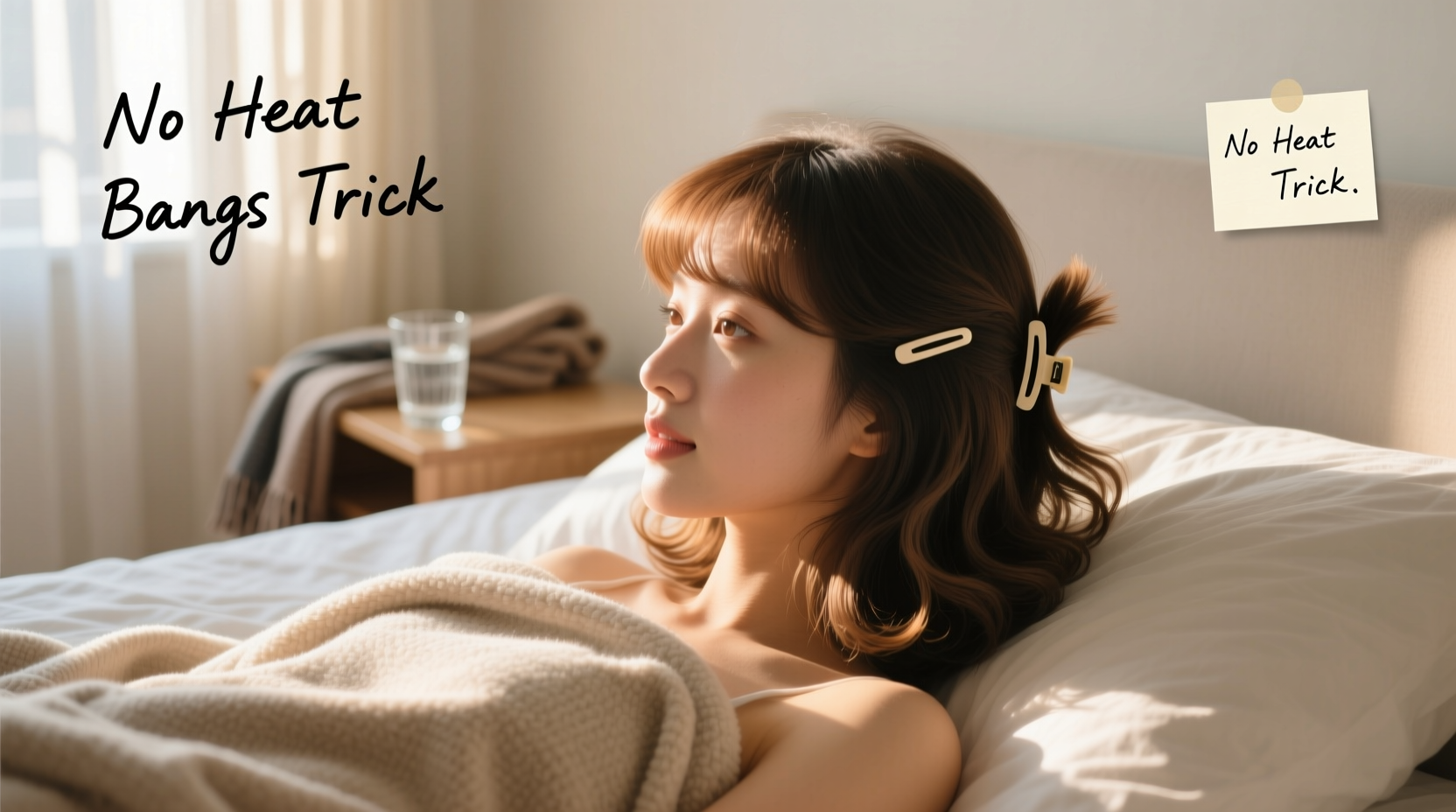
Bangs are among the most visible parts of your hairstyle, making them prone to frequent styling. But because they’re shorter and often finer than the rest of your hair, they’re also more vulnerable to heat damage. Repeated use of hot tools strips moisture, disrupts the hair’s cuticle, and accelerates frizz—especially in humid conditions.
Going heat-free preserves your hair’s integrity, enhances natural texture, and reduces dependency on styling products. It’s particularly beneficial for people with curly, wavy, or easily weighed-down hair. Plus, it saves time: many no-heat techniques happen passively, allowing you to multitask while your bangs set naturally.
“Skipping heat even two days a week can significantly reduce long-term damage. Overnight setting with clips is one of the gentlest ways to shape bangs.” — Lila Monroe, Celebrity Hairstylist & Keratin Care Specialist
Essential Tools for Heat-Free Bang Styling
You don’t need a professional toolkit to achieve great results. Most items are likely already in your bathroom drawer. Here’s what works best:
- Bobby pins: Ideal for securing sections in place without slippage.
- Soft claw clips: Provide strong hold without creasing or pulling.
- Satin or silk hair ties: Gentle on hair, prevent kinks when used in twists or buns.
- Rod rollers or foam rollers: Great for creating soft waves or volume at the root.
- Sleeping cap or silk scarf: Protects style and reduces friction during sleep.
- Light-hold hairspray or texturizing spray: Optional, for added grip or definition.
Step-by-Step: Overnight Bang Curling with Clips
This method creates soft, face-framing curls that last all day—with zero heat. Best done on damp (not soaking wet) hair for maximum hold.
- Wash and towel-dry your hair until it’s about 70% dry. Apply a lightweight leave-in conditioner or curl cream if desired.
- Part your bangs as usual and comb them forward.
- Twist each side section of your bangs tightly toward the center of your forehead.
- Cross the twisted strands at the crown or back of your head and secure them with a soft claw clip.
- Sleep with the twist in place. For extra hold, wrap your head in a silk scarf to prevent unraveling.
- In the morning, gently release the clip and shake out the curls with your fingers.
- Finish with a light mist of texturizing spray to enhance bounce and separation.
The result? Romantic, lived-in curls that frame your eyes and cheekbones—perfect for casual or dressed-up looks.
Variation: Pin Curls for Defined Waves
If you prefer tighter, more structured waves, try pin curls:
- Divide bangs into 1-inch sections.
- Roll each section tightly around your finger, then tuck the end under and secure with a bobby pin.
- Leave in overnight and release in the morning.
This classic technique works especially well for straight or slightly wavy hair types looking for added dimension.
Daytime Clip Styling: On-the-Go Bang Shaping
Not everyone has time for an overnight routine. For instant, heat-free shaping during the day, clips offer a quick fix. This method is ideal for smoothing cowlicks, adding volume, or training stubborn bangs to fall in a specific direction.
Flat-Finish Smoothing with Flat Clips
To tame flyaways or create a sleek fringe:
- Dampen your bangs slightly with water or a hydrating mist.
- Comb them into your desired position.
- Place a flat, wide clip (like a duckbill or jaw clip) horizontally across the roots, pressing gently against the scalp.
- Wait 15–30 minutes while the hair dries naturally.
- Remove the clip and style as usual.
The pressure flattens the root structure temporarily, giving you a polished, ironed look without any heat.
Volume Boost at the Crown
If your bangs tend to fall flat by midday:
- Lift the front section upward.
- Insert a small velcro roller or fold a piece of tissue paper for cushioning.
- Secure with a clip for 20 minutes.
This lifts the roots and adds lasting lift that survives humidity and movement.
Comparison: Heat vs. No-Heat Styling Methods
| Method | Time Required | Hair Health Impact | Hold Duration | Best For |
|---|---|---|---|---|
| Flat Iron | 3–5 minutes | High risk of damage with daily use | 4–6 hours (may wilt in humidity) | Straight, sleek finishes |
| Curling Wand | 5–10 minutes | Moderate to high damage risk | 6–8 hours (depends on hair type) | Defined curls or bends |
| Overnight Clip Twist | 5 minutes prep + overnight | No damage, improves elasticity | All day (resists humidity) | Natural waves, volume |
| Daytime Clip Set | 15–30 minutes | No damage, gentle shaping | 6–10 hours | Smoothing, training growth pattern |
| Foam Rollers (overnight) | 10 minutes prep + overnight | Low risk, hydrating effect | All day | Loose curls, thick hair |
As shown, no-heat methods may require more patience but offer superior longevity and protection. They also allow your hair to adapt to its natural growth pattern over time.
Real Example: Transforming Stubborn Side-Swept Bangs
Sophie, a 28-year-old graphic designer, struggled with her side-swept bangs flipping outward every morning. She relied on a flat iron daily, which left her fringe brittle and prone to splitting. After switching to an overnight clip method, she noticed dramatic improvement within two weeks.
Each night, she parted her bangs deeply to the side, twisted them backward along the hairline, and secured them with a small claw clip near her temple. She wrapped her head in a silk scarf to maintain tension. By morning, her bangs fell smoothly against her cheekbone—no heat needed.
“It took some getting used to,” she said, “but now my bangs actually *want* to go in the right direction. My hair feels healthier, and I save at least five minutes every morning.”
Checklist: Mastering Heat-Free Bang Styling
Follow this checklist to build a consistent, effective routine:
- ✅ Wash and partially dry hair before styling.
- ✅ Use clips or rollers suited to your desired outcome (twists for waves, flat clips for smoothing).
- ✅ Secure firmly but gently to avoid tension or dents.
- ✅ Sleep on a silk pillowcase or wear a silk scarf to preserve the set.
- ✅ Release slowly in the morning; avoid brushing immediately.
- ✅ Finish with a light product for hold or shine, if needed.
- ✅ Repeat regularly to train hair growth direction.
Consistency is key. Hair remembers shape over time, so repeating these techniques helps your bangs fall naturally into place—even on off days.
Frequently Asked Questions
Can I use this method on thick or coarse hair?
Absolutely. Thicker hair may require slightly longer setting time or stronger clips, but the results are often more durable due to natural weight and texture. Consider using foam rollers overnight for deeper shaping.
What if my bangs are too short to clip?
For very short bangs, try using mini bobby pins to pin small sections close to the scalp in the direction you want them to lie. Dampen lightly and let air-dry. You can also use a soft headband to gently press them into place while working at a desk or sleeping.
How long does it take to see results?
Most people notice improved shape after 3–5 nights of consistent clipping. Over two to three weeks, your bangs will begin to \"learn\" their new pattern, requiring less intervention to stay in place.
Final Tips for Long-Term Success
The beauty of heat-free styling is that it aligns with long-term hair wellness. Unlike temporary fixes, these methods contribute to stronger, more manageable hair over time. To maximize results:
- Be patient. Training hair takes repetition.
- Avoid over-styling—let your bangs breathe on some days.
- Use sulfate-free shampoos to maintain natural oils.
- Trim every 6–8 weeks to keep shape clean and prevent heaviness.
“Hair is memory-based. Shape it gently and consistently, and it will follow.” — Jamal Reyes, Master Stylist & Texture Specialist
Conclusion: Style Smarter, Not Harder
Styling bangs without heat isn’t a compromise—it’s an upgrade. By embracing clips and overnight techniques, you protect your hair, save time, and achieve results that feel effortless and authentic. Whether you're curling, smoothing, or training your fringe, these methods prove that great style doesn’t require extreme measures. Start tonight: twist, clip, and sleep your way to healthier, more beautiful bangs.




 浙公网安备
33010002000092号
浙公网安备
33010002000092号 浙B2-20120091-4
Comments
No comments yet. Why don't you start the discussion?