
Caring for curly hair comes with its own set of challenges—especially when it comes to the delicate area of your face-framing bangs. Curly bangs are stylish, soft, and full of personality, but they often lose their shape within hours of styling, puffing out into a halo of frizz or expanding beyond their intended silhouette. This frustrating transformation isn’t inevitable. With the right techniques, products, and maintenance habits, you can keep your curly bangs sleek, defined, and under control all day long.
The key lies in understanding the unique behavior of curly hair: high porosity, natural lift, and sensitivity to humidity. Bangs, being shorter and more exposed, react faster to environmental changes and daily movement. The good news? You don’t need complicated tools or expensive treatments. What you do need is consistency, precision, and a few smart strategies tailored specifically to this tricky section of hair.
Why Curly Bangs Puff Out: The Science Behind the Frizz
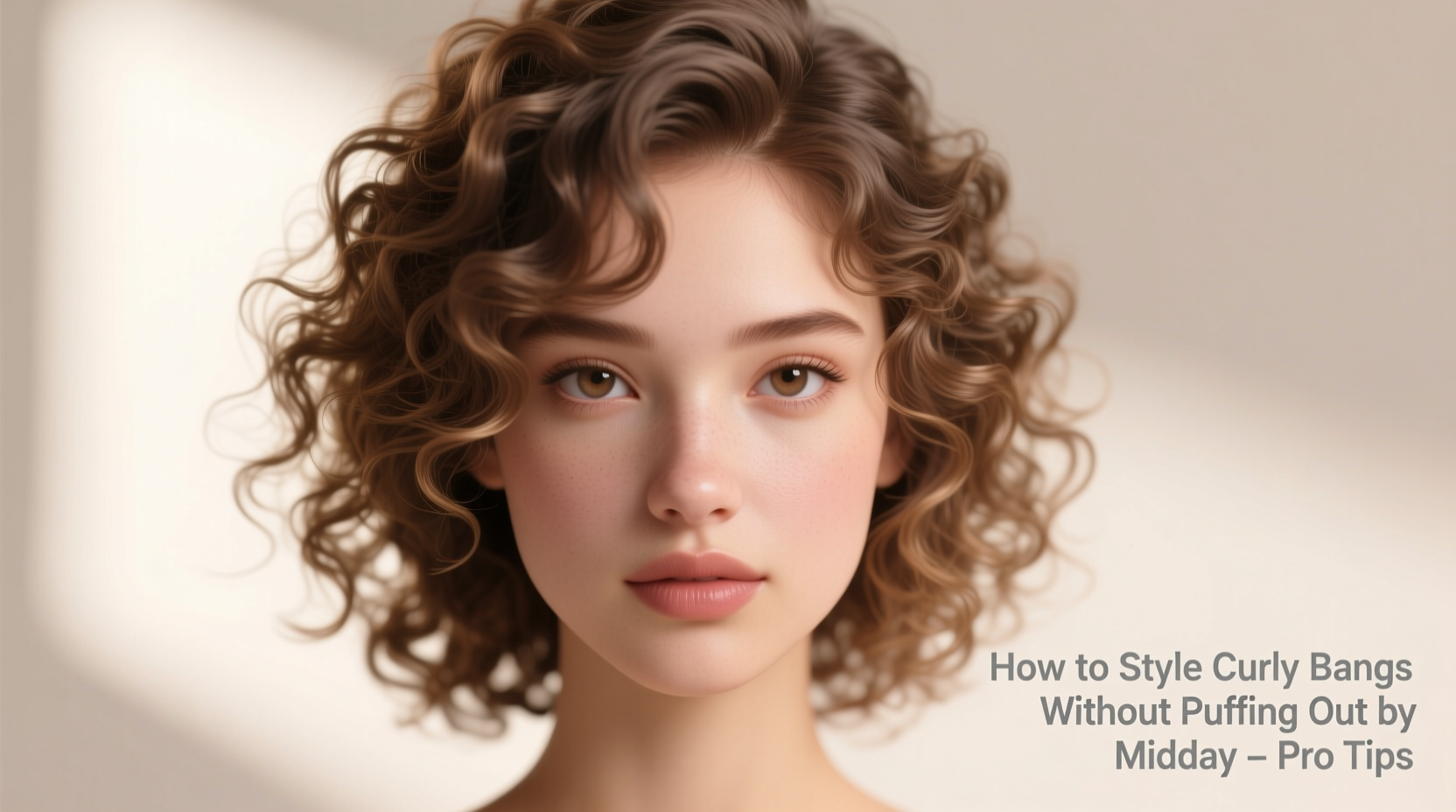
Curly hair has an inherent tendency to expand outward due to its spiral structure. Each curl coil naturally wants to lift away from the scalp, creating volume. When applied to bangs—which are typically cut shorter and styled closer to the forehead—this expansion becomes visually amplified. The result? By midday, what started as a polished curtain of curls may balloon into a puffy fringe that obscures your vision and disrupts your overall look.
Several factors contribute to this puffing effect:
- Humidity exposure: Moisture in the air causes curly hair to swell, especially if it’s porous or damaged.
- Lack of support: Without proper product hold or setting technique, curls revert and lose definition.
- Touch and friction: Constantly brushing, touching, or tucking bangs behind your ears introduces disruption and static.
- Inadequate drying method: Air-drying without tension or direction leads to random curl formation and puffiness.
Understanding these triggers allows you to address them proactively rather than reacting after the damage is done.
Step-by-Step Routine for Long-Lasting Curly Bang Styling
A consistent morning routine makes all the difference. Follow this timeline to lock in shape from wake-up to wind-down.
- Start on damp (not wet) hair: If you’re refreshing second-day bangs, mist lightly with water. For freshly washed hair, towel-dry gently until just damp.
- Apply leave-in conditioner: Use a dime-sized amount and emulsify between palms before smoothing over bangs. Focus on mid-length to ends—avoid heavy buildup at the roots.
- Add a curl-defining cream: Choose a lightweight formula designed for definition, not stiffness. Smooth evenly through the strands using the “praying hands” method.
- Use a light-hold gel: Apply a pea-sized amount of flexible-hold gel to enhance curl memory. Scrunch gently upward to encourage clumping.
- Diffuse with tension: Tilt your head forward and stretch bangs slightly while diffusing on low heat. Hold them taut against your forehead for 30–60 seconds to train the curl pattern downward.
- Pin or clip while cooling: Once dry, secure bangs flat against your forehead with bobby pins or a mini claw clip for 5–10 minutes. This sets the shape and reduces initial bounce-back.
- Final seal with shine spray: A light mist of anti-humidity or glossing spray helps lock out moisture and adds polish without crunch.
This process trains your curls to fall in a controlled arc rather than springing straight up. Consistency over several days reinforces muscle memory in the hair shaft, leading to longer-term improvement.
Product Selection: Do’s and Don’ts
Using the wrong products can sabotage even the best technique. Here’s a guide to help you choose wisely.
| Category | Do | Don’t |
|---|---|---|
| Curl Cream | Choose water-based, non-greasy formulas with humectants like glycerin (in moderation) | Avoid heavy butters or oils that weigh down short strands |
| Styling Gel | Opt for alcohol-free, flake-free gels with flexible hold (e.g., aloe-based) | Never use strong-hold gels that cause stiffness or white cast |
| Leave-In Conditioner | Use sprays or milks specifically made for fine or short sections | Don’t apply thick conditioners meant for long lengths |
| Finishing Spray | ||
| Anti-frizz or humidity-blocking mists with silicones (if tolerated) | Skip aerosols with high alcohol content that dry out curls |
One common mistake is overloading bangs with product. Because they’re shorter and thinner, they absorb formulations quickly and show residue faster. Less is more—start with half the amount you’d use on the rest of your hair.
“Short curly bangs need precision, not power. A pea-sized amount of the right product does more than a handful of the wrong one.” — Naomi Reyes, Celebrity Curl Specialist
Real-Life Example: How Maya Transformed Her Morning Struggle
Maria, a graphic designer with 3A curls, used to spend 20 minutes every morning trying to tame her puffing bangs. She’d style them perfectly only to find them expanded into a cloud by noon. After switching jobs to a hybrid role with frequent video calls, presentation became essential.
She consulted a curl stylist who introduced her to the “pin-and-cool” method during blow-drying. Instead of letting her bangs dry freely, she began stretching them slightly forward and securing them with mini clips once dry. She also swapped her heavy butter-based cream for a lightweight mousse-gel hybrid.
Within three days, her bangs held their shape until evening. Now, she uses a microfiber scarf at night to protect them while sleeping and reapplies a drop of serum only if needed post-lunch. Her confidence improved so much that she started a small Instagram series documenting curly bang hacks.
Her experience proves that minor adjustments yield major results—especially when targeting the root causes of puffiness.
Prevention Strategies for All-Day Hold
Beyond styling, proactive habits prevent puff-out before it starts.
- Sleep protection: Use a satin bonnet or pillowcase to reduce friction. Pull bangs forward slightly when tying your hair up at night to avoid kinking.
- Midday refresh kit: Keep a travel-size curl refresher spray and a tiny wide-tooth comb in your bag. A quick spritz and gentle scrunch revives shape without reapplying heavy products.
- Trim regularly: Split ends or uneven layers cause frizz and imbalance. Schedule trims every 6–8 weeks to maintain clean edges.
- Limit heat exposure: Frequent flat ironing damages curl structure and increases porosity. If necessary, use a heat protectant and never exceed 300°F.
Checklist: Daily Curly Bang Maintenance
Follow this simple checklist each morning to ensure lasting style:
- ✅ Dampen bangs slightly if dry
- ✅ Apply leave-in conditioner (pea-sized amount)
- ✅ Smooth on curl cream with praying hands
- ✅ Add flexible-hold gel and scrunch
- ✅ Diffuse with tension, pulling slightly forward
- ✅ Pin flat for 5–10 minutes after drying
- ✅ Finish with anti-humidity mist
- ✅ Avoid touching throughout the day
Frequently Asked Questions
Can I use a flat iron on my curly bangs to keep them flat?
You can, but sparingly. Heat flattens curls by breaking hydrogen bonds, but repeated use weakens the hair and increases frizz over time. If you must, use a ceramic iron at low heat (under 300°F), always apply a heat protectant, and avoid daily straightening. Better alternatives include pinning damp bangs flat overnight or using a hooded dryer with tension.
How do I stop my bangs from getting oily too fast?
Curly bangs often appear greasy because product builds up near the forehead, where sebum production is higher. To prevent this, avoid applying conditioner or oil directly at the roots. Wash bangs more frequently if needed—even mid-week—with a co-wash or diluted shampoo. Also, consider using dry shampoo formulated for curly hair to absorb excess oil without disrupting curl pattern.
Are there specific haircut techniques that reduce puffiness?
Yes. Ask your stylist for “curtain bangs” or “side-swept layers” instead of blunt cuts. These styles grow out gracefully and allow curls to frame the face naturally without bulk. Texturizing the ends prevents triangular flare, and cutting bangs slightly longer initially gives room for shrinkage without looking too short once dry.
Final Thoughts: Confidence Starts at the Forefront
Your bangs are one of the first things people notice. When they’re well-styled, they enhance your features and elevate your entire look. Puffiness doesn’t mean your curls are unmanageable—it means they need the right care strategy. By combining proper technique, thoughtful product selection, and consistent habits, you can enjoy defined, frizz-free curly bangs that last from sunrise to sunset.
It’s not about perfection; it’s about progress. Try one new tip today—maybe the pin-and-cool method or switching to a lighter cream—and observe the difference. Small changes compound into lasting results. Your curls deserve patience, precision, and pride.




 浙公网安备
33010002000092号
浙公网安备
33010002000092号 浙B2-20120091-4
Comments
No comments yet. Why don't you start the discussion?