
Curly hair is vibrant, expressive, and full of personality—but managing it without triggering frizz can feel like a constant battle. Frizz occurs when the hair cuticle lifts, allowing moisture from the air to penetrate the strand, especially in humid conditions. For curly textures, which are naturally more porous and prone to dryness, this can lead to puffiness, loss of definition, and an unruly appearance. The good news? With the right approach, you can enhance your curls’ natural shape while keeping frizz at bay. This guide breaks down science-backed styling techniques, product strategies, and daily habits that deliver smooth, defined curls—without sacrificing volume or bounce.
Understand Why Curly Hair Gets Frizzy
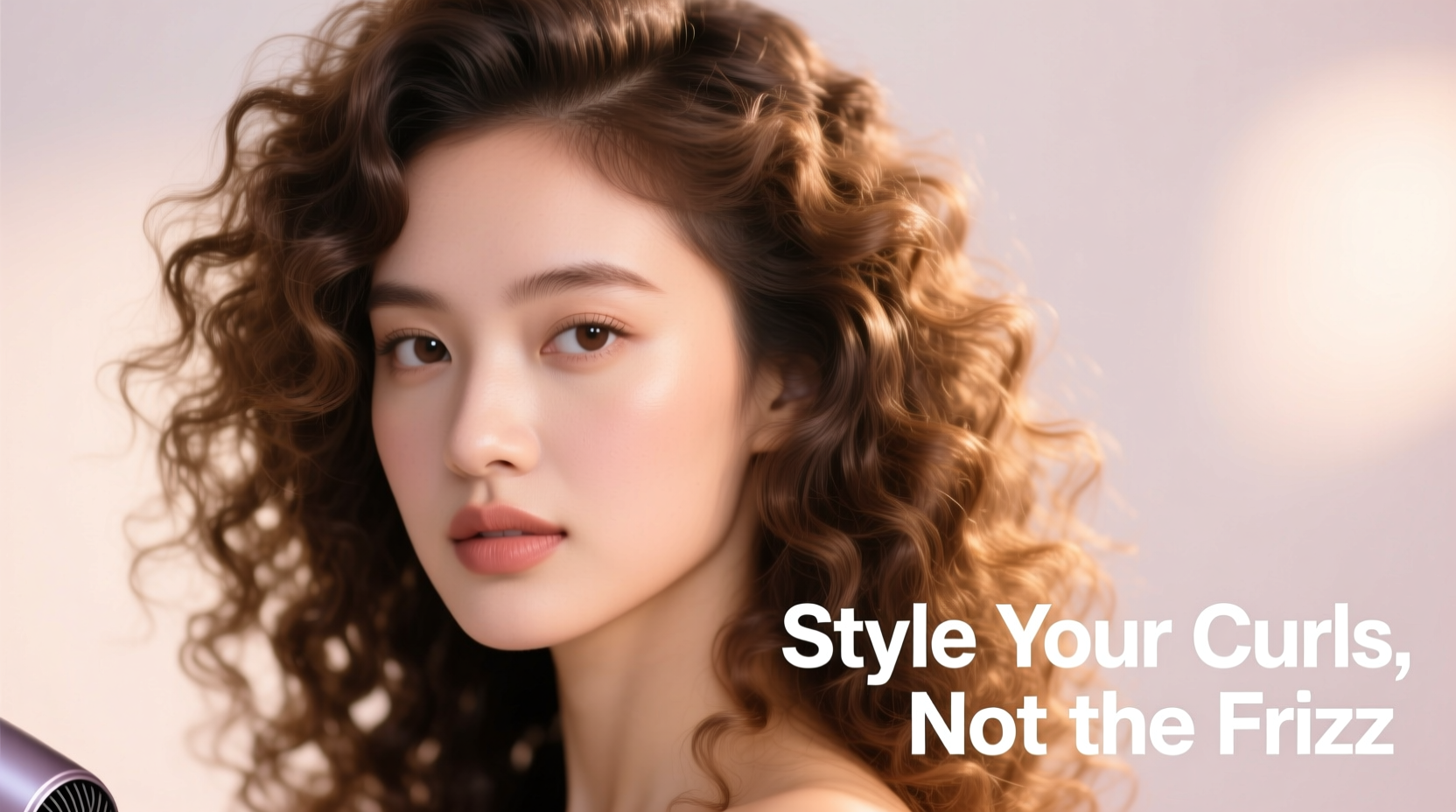
Frizz isn’t just a cosmetic issue—it’s a structural response. Unlike straight hair, curly strands have an uneven cuticle layer due to their spiral shape. This makes them more vulnerable to environmental stressors like humidity, heat, and friction. When the outer layer lifts, the inner cortex absorbs moisture, causing the hair to swell and lose its pattern. Additionally, curly hair tends to be drier because natural scalp oils struggle to travel down the curl shaft.
Daily habits often worsen the problem. Towel-drying with rough cotton, brushing dry curls, using high-heat tools, or skipping leave-in conditioners all contribute to frizz. The solution lies not in fighting your texture but in working with it—sealing the cuticle, locking in moisture, and minimizing disruption.
“Frizz control starts with hydration. If your curls aren’t properly moisturized, they’ll seek moisture from the air—and that’s when frizz takes over.” — Dr. Lisa Monheit, Trichologist & Hair Scientist
The Right Routine: A Step-by-Step Guide to Frizz-Free Styling
A consistent, gentle routine is the foundation of frizz-free curls. Follow these steps to maintain definition and softness:
- Start with clean, damp hair. Use a sulfate-free shampoo once or twice a week to avoid stripping natural oils. Focus on cleansing the scalp and let suds run through ends during rinsing.
- Apply a rich conditioner. Choose a formula with shea butter, glycerin, or ceramides. Use a wide-tooth comb to detangle from ends upward, ensuring even distribution.
- Don’t towel-dry aggressively. After washing, gently squeeze out excess water. Then, use a microfiber towel or 100% cotton T-shirt to scrunch—never rub.
- Layer on liquid moisture. While hair is still very wet, apply a water-based leave-in conditioner. This creates a hydration base before styling products go on.
- Seal with a curl cream or gel. Use a defining product to lock in moisture and support curl formation. Apply using the “praying hands” method or raking motion.
- Diffuse or air-dry. If using a blow dryer, attach a diffuser and keep it on low heat. Hover around sections without touching the hair directly to minimize disruption.
- Preserve overnight. Sleep on a satin pillowcase or wrap hair in a satin bonnet. Pineapple your hair (loose high ponytail) to preserve volume and reduce friction.
Product Selection: Do’s and Don’ts
Using the wrong products can sabotage even the best technique. Ingredients matter as much as application. Below is a comparison of recommended versus problematic choices.
| Category | Do’s | Don’ts |
|---|---|---|
| Shampoo | Sulfate-free, pH-balanced cleansers with coconut oil or aloe vera | Sulfates, alcohol denat, sodium chloride (drying) |
| Conditioner | Deep conditioners with shea butter, panthenol, or argan oil | Heavy silicones (dimethicone) if not followed by cleansing |
| Leave-In | Water-based formulas with humectants like glycerin (in moderation) | Products with drying alcohols (propanol, ethanol) |
| Styling Gel | Flexible-hold gels with flaxseed, marshmallow root, or light polymers | Hard-hold gels that cause crunch without proper scrunch-out |
| Oils | Light sealants like jojoba, grapeseed, or squalane | Heavy oils (mineral oil, petroleum) that coat and block moisture |
Pay attention to climate. In high humidity, opt for anti-humidity serums or gels with polymer technology that form a protective barrier. In dry climates, emphasize humectants that attract moisture. Avoid overloading with too many products—this can weigh down curls and create buildup, leading to dullness and frizz over time.
Real Results: A Case Study in Frizz Transformation
Jamila, a 32-year-old teacher with 3C curls, struggled with morning frizz despite spending 45 minutes styling her hair each day. She used a regular cotton towel, applied gel only to dry hair, and often touched her curls throughout the day. After switching to a microfiber towel, applying a leave-in conditioner and curl cream to soaking-wet hair, and diffusing on low heat, her routine dropped to 20 minutes—and her frizz reduced by over 70% within two weeks.
She also began sleeping with a satin bonnet and refreshing curls with a mix of water and leave-in spray every other day instead of re-washing. “I used to think frizz was just part of having curls,” she said. “Now I realize it was mostly how I was handling them. My hair has never looked so defined.”
Jamila’s experience highlights a key truth: frizz isn’t inevitable. It’s often the result of small missteps in care that compound over time. Adjusting just a few habits can yield dramatic improvements.
Advanced Techniques for Long-Lasting Definition
Beyond basics, advanced styling methods can elevate curl clarity and longevity:
- Praying Hands Method: Smooth product down sections of hair using flat palms. This aligns curls without disturbing their natural clumping.
- Rake and Shake: Gently rake fingers through wet hair to encourage curl formation, then shake roots at the end to loosen and volumize.
- Scrunch-Out the Crunch: After hair dries and forms a gel cast, apply a few drops of facial oil or curl serum to your palms and scrunch upward to break the stiffness while adding shine.
- Plopping: Wrap damp hair in a cotton T-shirt or microfiber cloth after applying products. Leave for 20–30 minutes to speed drying and boost root volume without frizz.
- Refresh Routines: Instead of starting over, revive second- or third-day curls with a spritz bottle of water + leave-in mix. Scrunch gently to reactivate shape.
“Plopping is one of the most underused tools in curly hair care. It cuts drying time, enhances curl formation, and reduces the need for excessive product.” — Neena Hull, Celebrity Curl Specialist
Essential Checklist for Frizz-Free Curls
Follow this daily and weekly checklist to stay on track:
- ✅ Wash hair with sulfate-free shampoo 1–2 times per week
- ✅ Deep condition at least once weekly
- ✅ Use a microfiber towel or cotton T-shirt to dry
- ✅ Apply leave-in conditioner to soaking-wet hair
- ✅ Layer with curl cream or gel using non-disruptive techniques
- ✅ Diffuse on low heat or air-dry in a low-friction environment
- ✅ Sleep on satin or use a bonnet nightly
- ✅ Refresh curls with water + leave-in instead of re-washing
- ✅ Cleanse with a clarifying shampoo monthly to remove buildup
- ✅ Trim ends every 8–12 weeks to prevent split-induced frizz
Frequently Asked Questions
Can I use heat on curly hair without causing frizz?
Yes, but cautiously. Always apply a heat protectant and use tools with adjustable temperature settings. Limit usage to once a week or less, and never apply heat to dry, unprotected curls. Consider using a hooded dryer or diffuser instead of direct heat for safer styling.
Why does my hair get frizzy even after using anti-frizz products?
This often happens due to incorrect application order or incompatible ingredients. Applying oil before water-based products can block moisture absorption. Also, mixing heavy silicones with water-soluble gels may cause pilling or uneven coating. Stick to a coherent regimen—water, then leave-in, then cream, then gel, then oil (if needed).
Is it bad to touch my curls while they’re drying?
Yes. Touching wet curls disrupts the forming pattern and increases surface friction, which leads to frizz. Let your hair dry undisturbed for optimal definition. If you must adjust, use lightly oiled hands and scrunch gently from the bottom up.
Final Thoughts: Embrace Your Curls, Not the Frizz
Styling curly hair without frizz isn’t about achieving perfection—it’s about understanding your hair’s needs and responding with intention. Healthy curls thrive on consistency, moisture, and minimal manipulation. By refining your routine, choosing the right products, and adopting proven techniques, you can enjoy bouncy, defined waves and coils that turn heads for all the right reasons.
Frizz doesn’t mean failure. Sometimes, it signals a need for more hydration, a change in weather, or a reminder to simplify your process. Listen to your hair. Adapt when necessary. Celebrate progress, not just results.




 浙公网安备
33010002000092号
浙公网安备
33010002000092号 浙B2-20120091-4
Comments
No comments yet. Why don't you start the discussion?