
Curtain bangs have become a go-to fringe style for their soft, face-framing effect and effortless elegance. Unlike blunt cuts, they blend seamlessly into the rest of your hair, offering versatility and movement. But what if you don’t own a flat iron, blow dryer with a round brush, or even a curling wand? Styling curtain bangs without heat or professional tools is not only possible—it can actually be healthier for your hair in the long run.
Heat-free styling reduces damage, preserves natural texture, and encourages stronger strands over time. With a few clever techniques and everyday items already in your bathroom drawer, you can achieve polished, voluminous curtain bangs that look salon-finished—no plug required.
The Benefits of Heat-Free Styling
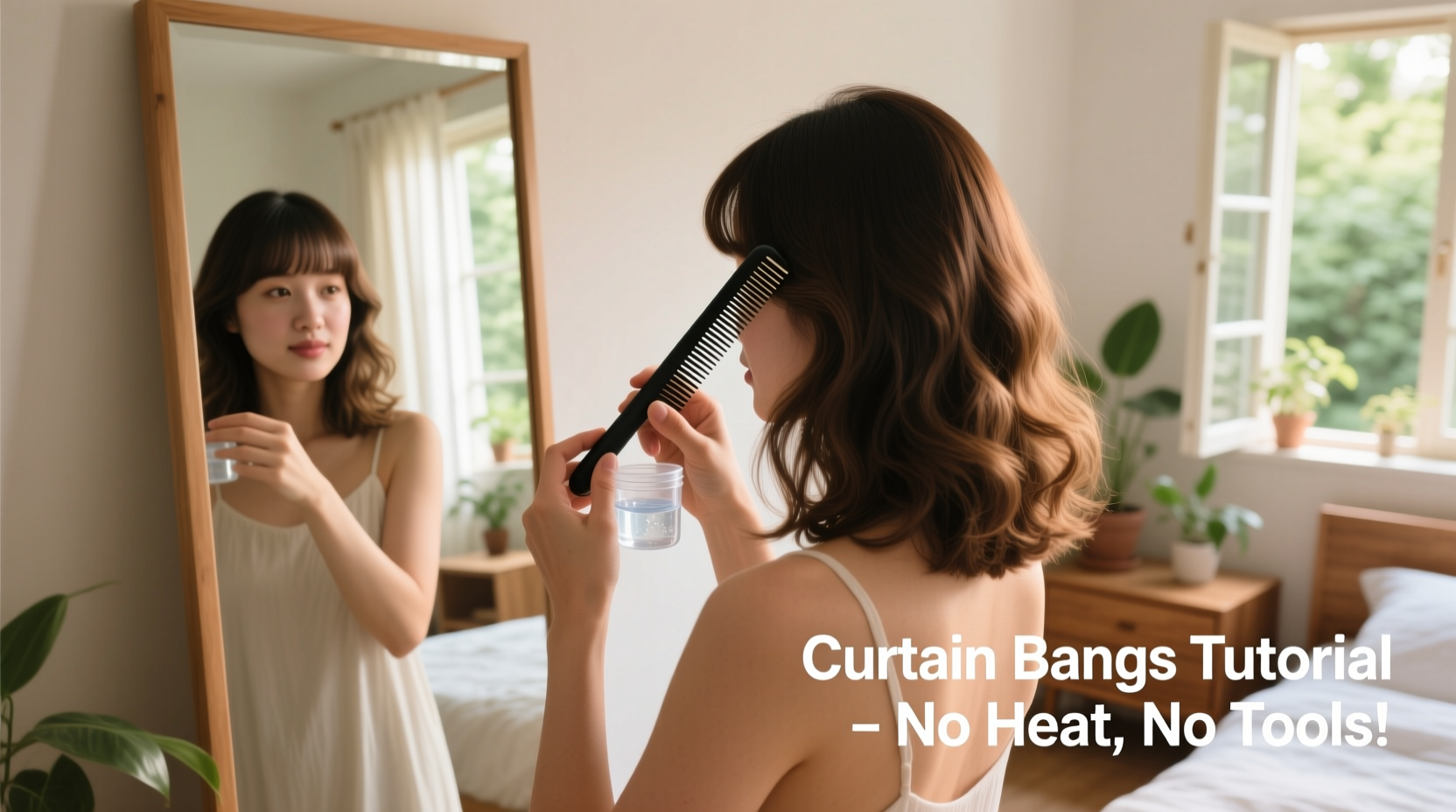
Repeated exposure to high temperatures from styling tools can lead to dryness, split ends, and breakage. Skipping the heat helps maintain your hair’s natural moisture balance and cuticle integrity. Additionally, heat-free methods often enhance your hair’s natural wave or texture, creating a more organic, lived-in look that complements the essence of curtain bangs.
Many stylists now advocate for “hair holidays”—periods where clients avoid thermal tools altogether to let their hair recover. This approach aligns perfectly with low-maintenance beauty trends focused on authenticity and sustainability.
“Letting hair air-dry and using tension-based shaping techniques can actually improve its resilience and bounce.” — Lila Monroe, Celebrity Hairstylist & Texture Specialist
Essential Tools You Already Have at Home
You don’t need a full arsenal of professional gear. Most of what you require is likely already in your home. Here’s what works best:
- Fingers – Your most precise tool for parting and guiding hair.
- Wide-tooth comb or detangling brush – For smoothing without pulling.
- Bobby pins or small clips – To hold sections in place while drying.
- Silk scarf or headband – Helps shape and protect hair overnight.
- Lightweight hair oil or serum – Tames frizz and adds shine.
- Hairspray (optional) – A light hold spray sets the style without stiffness.
Step-by-Step Guide: Creating Curtain Bangs Without Heat
Follow this timeline-based method to shape your curtain bangs naturally. Best results occur when starting with slightly damp hair, but adjustments can be made for dry hair too.
- Wash and gently towel-dry: After shampooing, squeeze excess water from your bangs using a microfiber towel. Avoid vigorous rubbing.
- Apply leave-in conditioner or styling cream: Use a pea-sized amount and emulsify between palms before applying only to the mid-lengths and ends of your bangs. Avoid the roots to prevent greasiness.
- Define the center part: Use your finger to create a clean middle part. Let the bangs fall naturally on both sides.
- Twist each side away from the face: Take one section of your bangs and twist it outward, toward your temple. Repeat on the other side. The twist should be firm but not tight.
- Pin in place: Secure each twisted section with bobby pins, angling them upward into the scalp. Alternatively, use small claw clips to hold the twists flat against your head.
- Air-dry completely: Allow your hair to dry fully before removing the pins. This may take 30 minutes to an hour depending on thickness.
- Release and shape: Once dry, remove the pins. Gently unravel the twists and use your fingers to fan the hair outward, creating soft bends on either side of your forehead.
- Finish with a light serum: Apply a tiny drop of argan or jojoba oil to tame flyaways and add luster.
This technique mimics the effect of a round brush blowout by using tension and directional setting. Over time, your hair will begin to remember the shape, requiring less effort daily.
Alternative Methods for Different Hair Types
Not all hair behaves the same way. Adjust these techniques based on your texture and density.
| Hair Type | Recommended Method | Tips |
|---|---|---|
| Straight, fine | Overnight pin curls with bobby pins | Use extra-hold hairspray before pinning to increase grip and volume. |
| Wavy, medium | Twist-and-dry method | Leverage natural wave pattern—twisting enhances definition. |
| Curly, thick | Bandless flexi-rod set using socks | Roll ends around a rolled-up sock and secure under the rest of your hair to hide. |
| Coily, textured | Pineapple method with silk scarf | Sleep with bangs loosely gathered on top, wrapped in silk to preserve shape. |
Real Example: Maya’s Morning Routine
Maya, a freelance designer in Portland, has thick wavy hair and lives in a humid climate. She avoids heat styling to prevent frizz and keep her color-treated hair vibrant. Every night after showering, she applies a curl-defining cream to her damp bangs, then twists each side back and secures them with mini spiral pins.
She sleeps on a silk pillowcase and removes the pins in the morning. Her bangs naturally fall into soft, brushed-out waves that frame her face perfectly. On busy mornings, she simply spritzes them with water, fingers through a bit of sea salt spray, and goes. “It takes five minutes now because my hair knows the shape,” she says. “I used to spend 20 minutes flat-ironing them—and they still looked flat by noon.”
Her method proves that consistency builds muscle memory—not just for habits, but for hair.
Dos and Don’ts of Heat-Free Curtain Bang Styling
To get the best results, follow these guidelines tailored to non-heat techniques.
| Do | Don’t |
|---|---|
| Start with damp, not soaking wet, hair | Try to style completely dry hair without prep |
| Use products suited to your hair type | Apply heavy gels or pomades that cause buildup |
| Reinforce the part nightly to train hair | Switch parting directions frequently without rebalancing |
| Refresh with water + light product mix | Over-touch your bangs throughout the day |
| Sleep on a silk pillowcase or use a bonnet | Rub hair against cotton bedding aggressively |
Morning Refresh: No Water Needed
Even the best heat-free styles may flatten by midday. Instead of rewetting, try this dry-touch-up method:
- Flip your head forward and gently lift the roots near your part with fingertips.
- Use a boar bristle brush to sweep each side of the bangs outward, following the natural curve.
- If frizz appears, rub a rice-sized amount of hair oil between palms and smooth over the surface.
- For extra hold, mist hairspray onto your brush (not directly on hair) and lightly glaze the ends.
This keeps volume intact without weighing down delicate fringe sections.
Training Your Bangs: Building Long-Term Shape
Like training a plant to grow along a trellis, hair can be guided into preferred patterns. Consistency is key. By repeating the same twisting, pinning, or wrapping technique nightly for 2–3 weeks, you’ll notice your bangs begin to fall into place naturally—even on wash days.
Think of it as conditioning not just your hair, but your routine. The goal isn’t perfection every single day, but progress toward ease and confidence in your personal style.
“Hair remembers repetition. Do the same thing three nights in a row, and you’ll see a difference by day four.” — Jordan Lee, Natural Hair Educator
Frequently Asked Questions
Can I style curtain bangs without getting them wet?
Yes, especially if you’re refreshing a previous style. Use a small amount of texturizing spray or dry shampoo at the roots to revive volume. Then, finger-style them into position and seal with a light oil on the ends.
How do I prevent my bangs from looking greasy when using products?
Always apply styling products sparingly and focus on the mid-lengths to ends. Avoid applying oils or creams directly to the scalp or roots. If needed, blot excess with a tissue or use translucent powder on the root area.
What if my bangs are too short to twist?
If your bangs are very short, try the “clip-back” method: Dampen them, sweep to the sides, and clip each section behind your ears using small butterfly clips. Let them air-dry completely before releasing. This creates a gentle bend without needing length for twisting.
Checklist: Your Heat-Free Curtain Bang Routine
Keep this checklist handy for consistent results:
- ☑ Wash and towel-dry hair gently
- ☑ Apply lightweight product to damp bangs
- ☑ Create a defined center part
- ☑ Twist or pin bangs into desired shape
- ☑ Air-dry fully before touching
- ☑ Release and shape with fingers
- ☑ Finish with a drop of oil or light-hold spray
- ☑ Repeat nightly to train hair direction
- ☑ Refresh during the day with minimal product
- ☑ Trim every 4–6 weeks for optimal shape
Conclusion
Styling curtain bangs without heat or professional tools is not a compromise—it’s a smart, sustainable choice that respects your hair’s health and your time. With patience and repetition, you can create a personalized system that delivers beautiful results every day. Whether you're navigating a hectic schedule, embracing natural textures, or simply reducing your reliance on electronics, these methods empower you to look polished with minimal effort.




 浙公网安备
33010002000092号
浙公网安备
33010002000092号 浙B2-20120091-4
Comments
No comments yet. Why don't you start the discussion?