
Oversized blazers have surged in popularity, becoming a staple in modern wardrobes for their blend of comfort, structure, and effortless cool. But without careful styling, an oversized silhouette can easily tip into shapeless or frumpy territory—especially if proportions aren’t balanced correctly. The key isn’t avoiding the trend altogether, but mastering it. With thoughtful tailoring, strategic layering, and intentional outfit construction, you can wear an oversized blazer with polish, power, and personality.
This guide breaks down exactly how to style oversized blazers so they enhance your figure rather than obscure it. From choosing the right cut to pairing with complementary pieces, every decision plays a role in transforming volume into visual strength.
Step 1: Choose the Right Fit and Structure
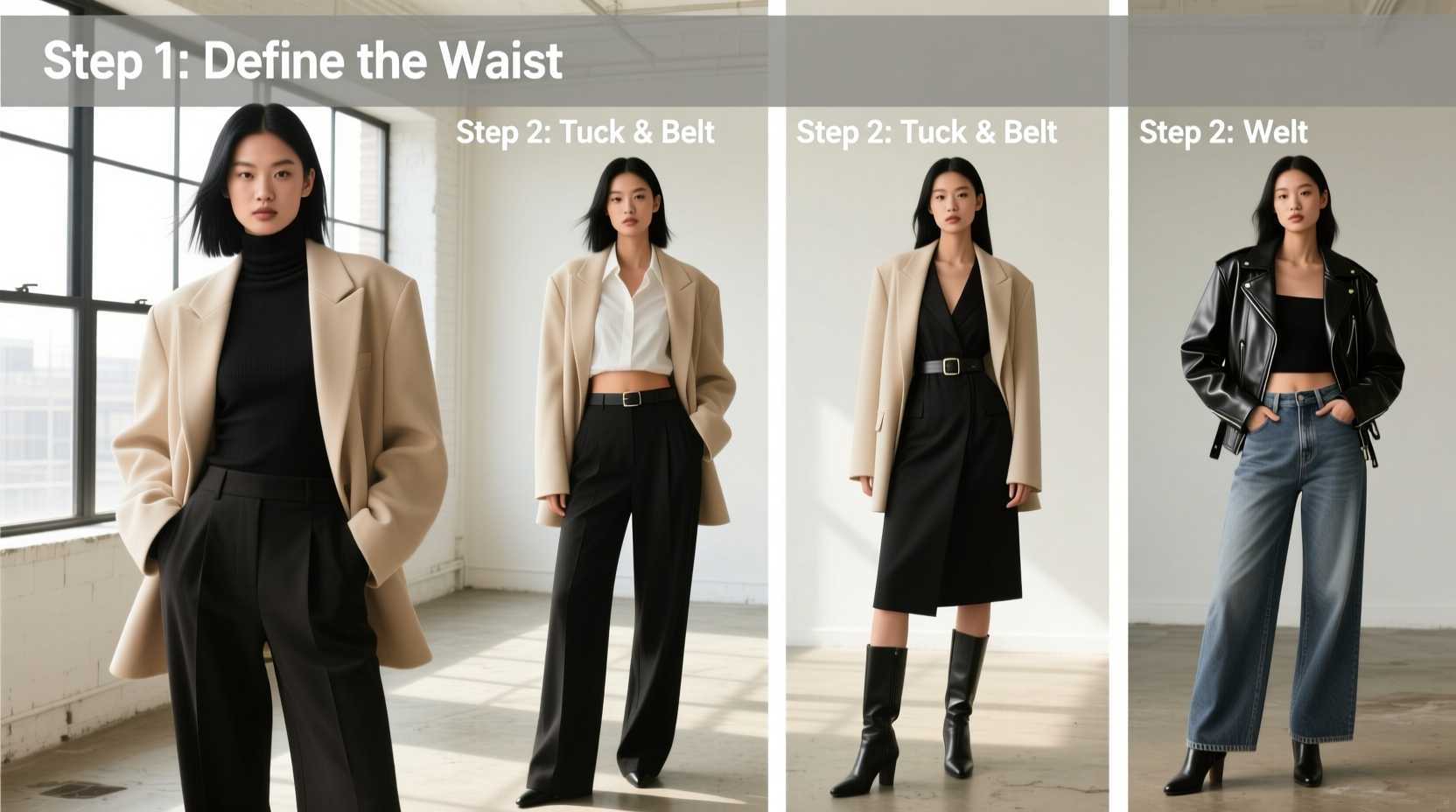
The word “oversized” doesn’t mean “ill-fitting.” A well-chosen oversized blazer should still respect your body’s natural lines while offering relaxed ease. Look for structured shoulders and a defined lapel to anchor the silhouette. Avoid blazers that droop at the shoulders or swallow your frame entirely.
Pay attention to three critical measurements:
- Shoulder seams: Should sit just at the edge of your shoulder bone—not spilling over or hugging too tightly.
- Sleeve length: Ideally ends at the base of your thumb when arms are relaxed. Roll sleeves once or twice if needed.
- Length: Hits at or slightly below the hip is most flattering. Longer styles require more styling finesse to avoid overwhelming shorter torsos.
“An oversized blazer shouldn’t hide you—it should highlight your presence. Structure is what keeps it from looking sloppy.” — Lena Torres, Fashion Stylist & Wardrobe Consultant
Step 2: Balance Proportions with Fitted Bottoms
One of the most common mistakes with oversized blazers is pairing them with equally baggy bottoms, which creates a bottom-heavy, unstructured look. Instead, balance the volume up top with streamlined lower halves.
Fitted trousers, high-waisted jeans, pencil skirts, or tailored shorts help ground the outfit and define your waistline. This contrast between loose and tight is not only visually appealing but also elongates the legs.
| Blazer Volume Level | Recommended Bottoms | Avoid |
|---|---|---|
| Slightly Oversized | Skinny jeans, straight-leg pants, midi skirts | Ultra-baggy cargo pants |
| Moderately Oversized | Cropped wide-leg (with heels), leather leggings, slim chinos | Loose joggers or balloon silhouettes |
| Dramatically Oversized | Bodycon skirt, high-waisted skinny jeans, biker shorts | Any additional bulk below the waist |
For petite frames, keep the hemline of the blazer above the knee and pair with high-waisted bottoms to maintain torso-to-leg ratio. Tucking in your top can further emphasize this balance.
Step 3: Define Your Waist Intentionally
Without a defined waist, an oversized blazer can flatten your shape. Use one of several techniques to reintroduce curvature:
- Belt it: Add a slim belt over the blazer at natural waist level. A leather or fabric sash works best—avoid thick belts that add unnecessary bulk.
- Tuck your top: Wear a fitted camisole, bodysuit, or blouse tucked into high-waisted pants. This creates a waist point even under the blazer.
- Layer strategically: Wear a cropped top underneath so the midriff shows slightly when the blazer gaps open, drawing attention to your narrowest part.
- Double-layer with a vest: For advanced styling, layer a fitted vest under the blazer to create depth and definition.
Step 4: Master the Art of Layering
Layering is where oversized blazers truly shine—but only when done with purpose. The goal is to build dimension without creating bulk.
Start with thin, form-fitting layers beneath the blazer. A turtleneck, tank top, or button-down shirt works well. Avoid bulky sweaters unless they’re worn partially open as outer layers.
For colder months, try this effective layering sequence:
- Base: Lightweight thermal or silk camisole
- Middle: Fitted long-sleeve tee or fine-gauge turtleneck
- Outer: Oversized blazer
- Optional: Long coat or duster worn open over everything
The blazer stays visible and functional rather than buried under heavier outerwear.
Real Example: Office-to-Evening Transition
Consider Sarah, a marketing executive who wears her navy oversized blazer daily. In the office, she pairs it with a white button-down (tucked), black tapered trousers, and loafers. After work, she swaps the shirt for a black halter top, removes her blazer temporarily to tie it around her waist (creating a belted effect), then reapplies it loosely open. She adds hoop earrings and ankle boots. The transformation maintains professionalism while injecting evening-ready flair—all anchored by the same oversized piece.
Step 5: Elevate with Footwear and Accessories
Footwear dramatically influences how an oversized blazer reads. Flat sneakers may increase the loungewear vibe, while heels, boots, or pointed flats instantly sharpen the look.
Heels lift posture and elongate the spine, counteracting any slouchiness that can come from wearing loose clothing. Knee-high boots or heeled ankle booties are particularly effective—they extend the leg line and provide grounding weight.
Accessories serve two functions: draw attention upward and add intentionality.
- Jewelry: Statement earrings or a bold necklace pulls focus to your face.
- Bags: Opt for structured handbags instead of slouchy totes to preserve balance.
- Belts, scarves, watches: These small details signal that your look was curated, not accidental.
Do’s and Don’ts Table
| Do’s | Don’ts |
|---|---|
| Pair with high-waisted bottoms | Wear with low-rise pants that shorten legs |
| Tuck in tops to define waist | Leave long shirts untucked, adding bulk |
| Add heels or structured shoes | Go barefoot or wear flip-flops with formal blazers |
| Use accessories to elevate the look | Overload on multiple loose layers |
| Roll sleeves for cleaner lines | Let sleeves hang past fingertips |
Checklist: Style Your Oversized Blazer Like a Pro
Before stepping out, run through this checklist to ensure your oversized blazer looks polished, not sloppy:
- ✅ Shoulder seams align with the edge of your shoulders
- ✅ Sleeves end at the wrist or are neatly rolled
- ✅ Waist is defined—either by tucking, belting, or layering
- ✅ Bottoms are fitted or proportionally balanced
- ✅ Shoes add height or structure (heels, boots, loafers)
- ✅ At least one accessory draws attention upward (jewelry, scarf)
- ✅ Posture is upright—shoulders back, chin lifted
Frequently Asked Questions
Can short women wear oversized blazers without looking overwhelmed?
Absolutely—but choose shorter lengths (ending at the hip) and always pair with high-waisted bottoms. Heels help maintain proportion. Avoid floor-length or hipster-style blazers that cut across the widest part of the leg.
How do I stop my oversized blazer from making me look boxy?
Add vertical interest. Wear monochrome tones from waist down to elongate the lower body. Use V-neck tops underneath to create a centerline. Belt the blazer slightly or tuck in your top to break up the horizontal bulk.
Is it okay to wear an oversized blazer casually?
Yes, but elevate the casualness. Pair it with dark wash jeans and ankle boots rather than sweatpants and slides. Add minimalist jewelry and a sleek bag to maintain intentionality. The key is controlled relaxation—not total dishevelment.
Final Thoughts: Own the Volume with Confidence
Styling an oversized blazer successfully comes down to control. It’s not about eliminating volume, but directing it. You’re not hiding in the fabric—you’re commanding space with deliberate choices. Every element, from sleeve roll to shoe selection, contributes to whether the look reads as fashion-forward or frumpy.
Remember, fashion is less about rules and more about awareness. Once you understand how proportion, structure, and detail interact, you can bend the guidelines creatively. Try combining a dramatic oversized blazer with a slip dress and boots for dinner out, or wear it open over a swimsuit at a beach resort with linen pants. Context matters, but confidence matters more.




 浙公网安备
33010002000092号
浙公网安备
33010002000092号 浙B2-20120091-4
Comments
No comments yet. Why don't you start the discussion?