
Fall fashion is synonymous with texture, warmth, and layered elegance—and few accessories embody the season quite like an oversized scarf. Generously sized, luxuriously soft, and endlessly versatile, these scarves offer both comfort and style. Yet, for all their appeal, it’s easy to go from cozy chic to shapeless and frumpy if styling isn’t approached with intention. The key lies not in avoiding oversized scarves altogether, but in mastering the art of balance, proportion, and thoughtful draping. With the right techniques, you can wear a voluminous scarf confidently—without drowning in fabric or losing your silhouette.
Understanding Proportion and Volume
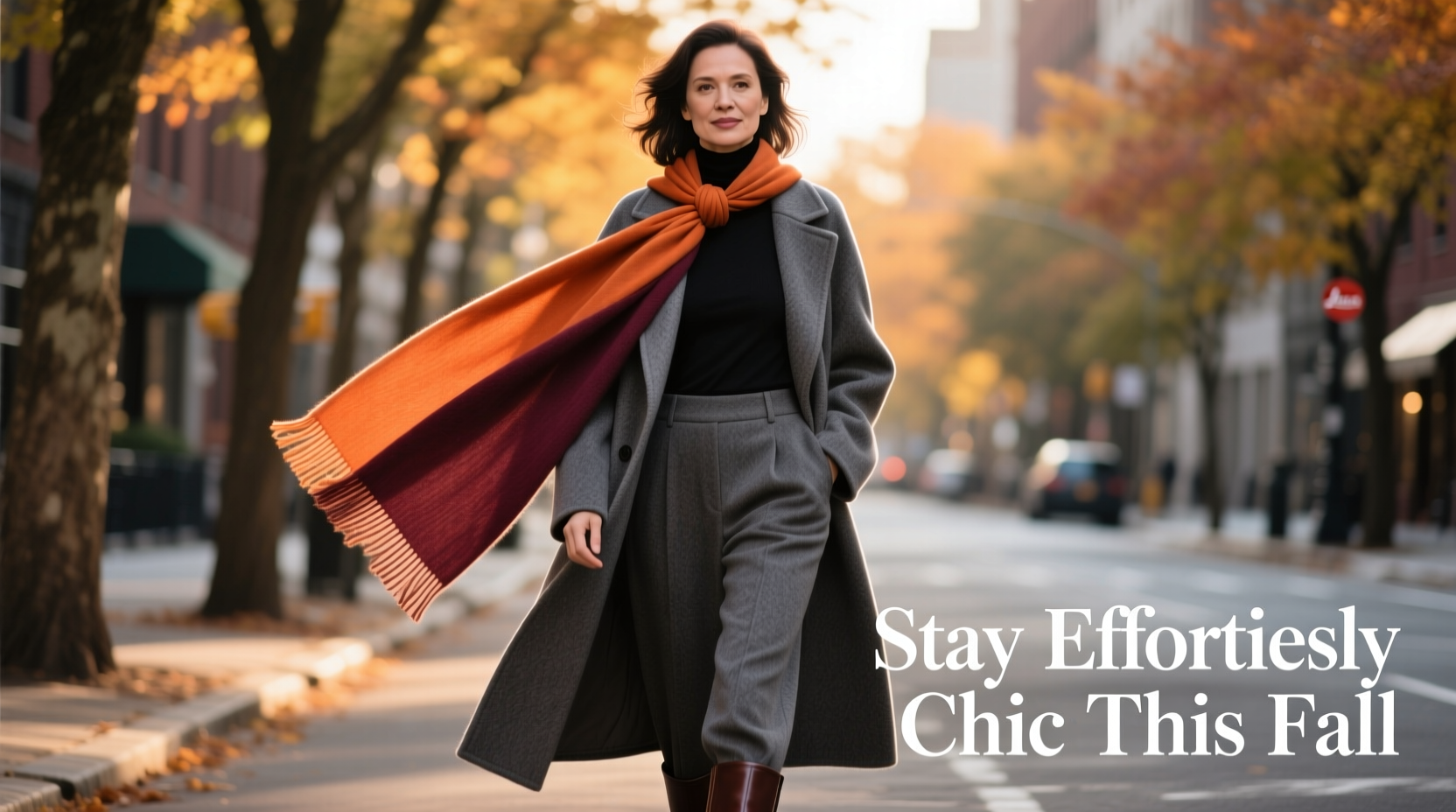
The most common reason oversized scarves end up looking frumpy is poor proportion. When volume is added at the top—especially around the shoulders and neck—it can overwhelm a frame, particularly if the rest of the outfit lacks structure. The solution isn't to abandon bulky knits or wide weaves, but to counterbalance them strategically.
Consider your body shape and the cut of your clothing. If you’re petite or have narrow shoulders, avoid ultra-thick, floor-length scarves that swallow your frame. Instead, opt for scarves that are wide but not excessively long, or choose lighter fabrics like merino wool blends or cashmere that drape elegantly without adding visual weight.
For taller individuals or those with broader frames, generous scarves can be flattering when anchored properly. Pair them with slim-fitting bottoms—like tailored trousers, dark jeans, or a pencil skirt—to create contrast. The goal is harmony: let the scarf be the statement piece, but ensure the rest of your ensemble provides grounding.
Choosing the Right Fabric and Weight
Not all oversized scarves are created equal. The fabric determines not only comfort but also how the piece behaves in real life. A heavy cable-knit blanket scarf may feel indulgent, but if worn incorrectly, it can add bulk where you don’t want it. On the other hand, a lightweight modal or silk-blend wrap offers volume without heaviness, making it easier to style gracefully.
Here’s a breakdown of common scarf materials and their styling impact:
| Fabric Type | Best For | Styling Caution |
|---|---|---|
| Cashmere | Luxurious drape, warmth without weight | Avoid over-layering; pairs best with simple silhouettes |
| Wool Blend | Crisp weather, structured volume | Can add bulk; balance with fitted garments |
| Alpaca | Softness and fluff, excellent insulation | Tends to stretch; avoid constant tugging |
| Silk or Modal | Elegant drape, transitional seasons | Less warmth; ideal under coats, not alone in cold |
| Cable Knit (Acrylic/Wool) | Cozy, rustic aesthetic | High volume; best with minimalist outfits |
Selecting the right fabric means aligning material properties with your wardrobe goals. For instance, a silk-cashmere blend offers the warmth of wool with the fluidity of silk—perfect for elevating a work outfit without sacrificing polish.
Step-by-Step Guide to Styling Techniques
How you drape and secure your scarf dramatically affects your overall look. These five methods help maintain shape, highlight your features, and prevent that “lost in fabric” effect.
- The Belted Drape: Drape the scarf loosely around your shoulders like a shawl. Cinch it at the waist with a slim leather belt over a coat or dress. This technique defines your silhouette and transforms the scarf into a structured outer layer.
- The Single Loop Tuck: Fold the scarf in half lengthwise. Place it behind your neck, pull the loose ends through the loop, then tuck one end inside your coat or jacket. This keeps the scarf secure while minimizing bulk.
- The Shoulder Swag: Let one end of the scarf hang longer over one shoulder, allowing it to drape diagonally across your torso. Ideal with a fitted turtleneck and jeans, this asymmetrical style adds movement and elongates the body.
- The Wrap-and-Tie: Cross the two ends in front, then tie them once at the base of the neck. Loosen slightly for a relaxed, intentional look. Works best with medium-weight scarves to avoid tight knots.
- The Coiled Roll: For extra-long scarves, roll loosely from both ends toward the center, then drape around the neck with the coiled sections resting at the front. Adds height and draws eyes upward—great for creating the illusion of length.
Real-Life Example: From Frumpy to Fashion-Forward
Sophia, a 34-year-old marketing consultant, loved her chunky ivory alpaca scarf but avoided wearing it because it made her look boxy. She typically paired it with an oversized sweater and wide-leg pants—a combination that erased her waist and added unnecessary volume.
After consulting with a personal stylist, she adjusted her approach. She began wearing the same scarf with a belted trench coat over a fitted turtleneck and straight-leg jeans. By draping the scarf outside the coat and using the belt to define her waist, the scarf became a luxurious accent rather than a shapeless layer. The result? A polished, autumn-ready look that drew compliments instead of confusion.
Her transformation wasn’t about changing her clothes—it was about rethinking placement, proportion, and structure. The scarf hadn’t changed; her styling had.
Expert Insight: What Designers Say About Volume
“Volume isn’t the enemy—imbalanced volume is. An oversized scarf should complement your form, not compete with it.” — Lena Moreau, Fashion Stylist & Former Editor at *Vogue Living*
Moreau emphasizes that modern styling is less about hiding the body and more about enhancing it. “Think of the scarf as a frame,” she says. “A painting needs space around it, but too much matting overwhelms the art. The same goes for clothing.”
This philosophy applies directly to scarf-wearing: use the accessory to highlight, not conceal. Choose anchor points—like a defined waist, sharp collar, or sleek neckline—that keep the eye moving naturally through your outfit.
Checklist: Style Your Oversized Scarf Like a Pro
- ✔️ Assess your body proportions before selecting a scarf size
- ✔️ Choose a fabric that suits both climate and outfit complexity
- ✔️ Balance volume on top with streamlined pieces on bottom
- ✔️ Use belts, tucks, or strategic draping to define your waist
- ✔️ Avoid layering multiple bulky items (e.g., turtleneck + cardigan + scarf)
- ✔️ Adjust the scarf after putting it on to ensure even drape
- ✔️ Match scarf color to your complexion—warm tones for golden undertones, cool grays for pink undertones
- ✔️ Store flat or rolled to preserve shape and prevent stretching
Common Mistakes That Lead to a Frumpy Look
Even with the best intentions, small missteps can undermine your efforts. Here are frequent errors and how to fix them:
- Mistake: Wearing an oversized scarf with equally oversized tops.
Solution: Pair voluminous scarves with fitted or semi-fitted tops like bodysuits, slim sweaters, or button-downs. - Mistake: Letting the scarf hang past the hip line.
Solution: Keep the longest point at or above the hip to maintain balanced proportions. - Mistake: Ignoring color coordination.
Solution: Ensure your scarf complements your outerwear. A neutral scarf works well with bold coats; a patterned one pairs best with solids. - Mistake: Over-accessorizing.
Solution: Let the scarf be the focal point. Skip statement necklaces or busy prints elsewhere.
FAQ: Your Scarf Styling Questions Answered
Can I wear an oversized scarf if I’m petite?
Absolutely—but choose wisely. Opt for scarves that are wide but not excessively long (aim for 60–70 inches). Lightweight materials like cashmere or fine wool blends drape better without overwhelming your frame. Avoid floor-length styles, and always pair with high-waisted bottoms to maintain leg-to-torso ratio.
How do I keep my scarf from slipping off?
Use a discreet safety pin at the back of the neck where the fabric overlaps, or try the single loop tuck method. Scarves with textured weaves (like herringbone or cable knit) naturally grip better than slippery silks. You can also invest in a magnetic scarf clip for a seamless hold.
Are oversized scarves appropriate for work settings?
Yes, when styled professionally. Choose neutral colors—charcoal, camel, oatmeal—and pair with tailored coats, sheath dresses, or blazers. Drape neatly and avoid excessive bulk. A belted drape over a wool coat, for example, reads as sophisticated, not sloppy.
Final Thoughts: Own Your Scarf, Don’t Let It Own You
An oversized scarf shouldn’t be something you endure for warmth—it should be a piece you enjoy wearing. The secret to pulling it off lies in intentionality. Every fold, tuck, and drape should serve a purpose: to warm, to accentuate, to elevate. When you treat your scarf as a deliberate design element rather than an afterthought, it becomes an extension of your personal style, not a burden to manage.
This fall, experiment with different fabrics, lengths, and tying methods. Pay attention to what makes you feel confident, not just covered. Whether you're walking through fallen leaves or rushing to a meeting, your scarf should move with you—gracefully, effortlessly, and without a hint of frump.




 浙公网安备
33010002000092号
浙公网安备
33010002000092号 浙B2-20120091-4
Comments
No comments yet. Why don't you start the discussion?