
Oversized shirts have become a wardrobe staple in modern fashion—offering comfort, versatility, and a relaxed aesthetic. Whether it’s an oxford button-down, a linen camp shirt, or a slouchy flannel, the appeal lies in their effortless vibe. But there's a fine line between looking stylishly laid-back and appearing swallowed by fabric. The key isn't avoiding oversized shirts altogether; it's mastering how to wear them in a way that complements your proportions.
The challenge with oversized silhouettes is volume. Without proper styling techniques, excess fabric can distort your natural shape, making you look shorter, broader, or simply lost in the garment. The solution? Strategic tailoring, smart layering, intentional draping, and balance. With the right approach, an oversized shirt can elongate your torso, define your waist, and add dimension rather than disguise your form.
Understand Fit vs. Size: Not All Oversized Shirts Are Created Equal
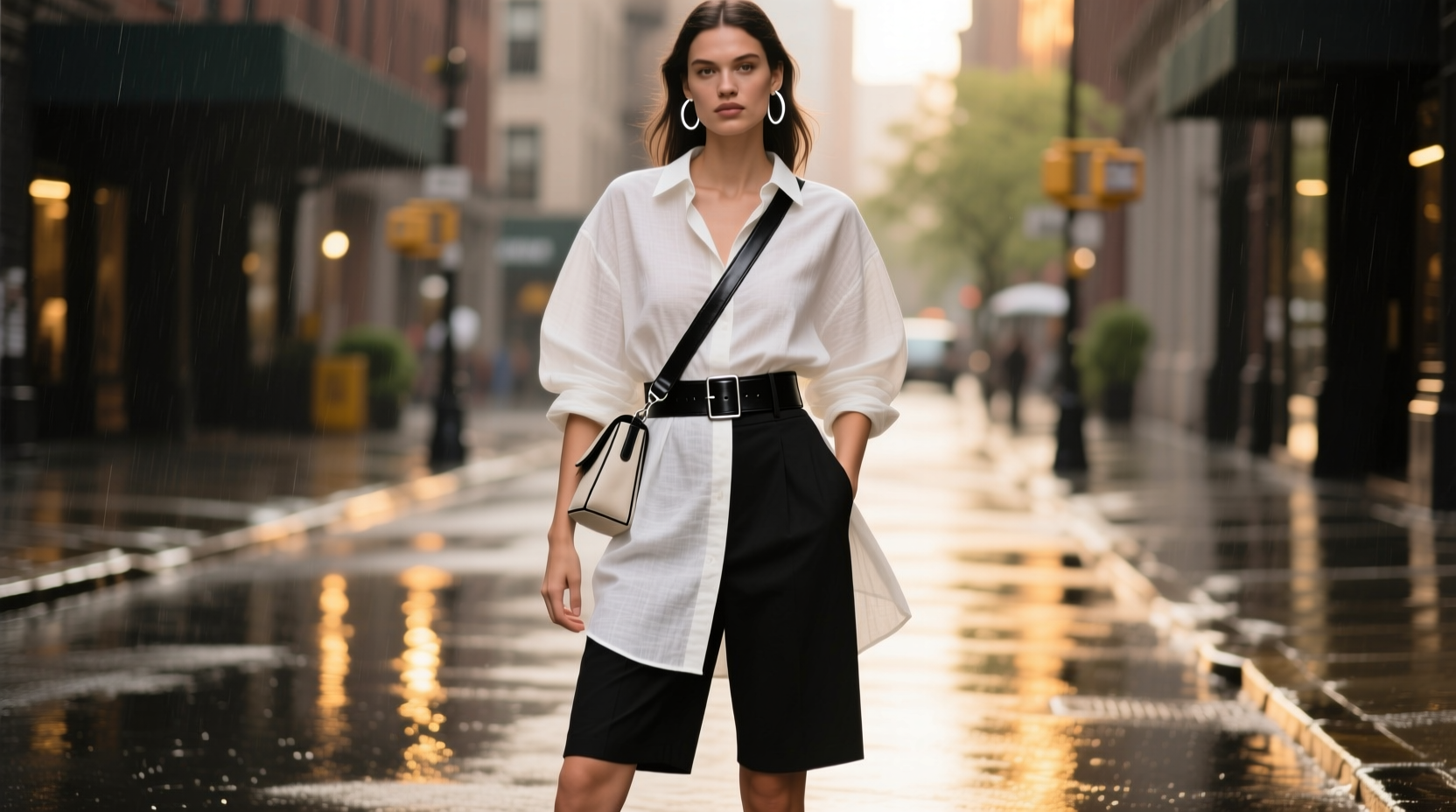
Before diving into styling, it's essential to distinguish between *true* oversized shirts and those that are merely poorly fitted. An oversized shirt should be intentionally designed with extra room through the chest, shoulders, and sleeves—but not so much that structure vanishes entirely. A well-designed oversized piece maintains clean lines while offering breathing space.
Consider these three categories when shopping:
| Fitting Type | Shoulder Seam Placement | Chest Fit | Recommended For |
|---|---|---|---|
| Standard Fit | Sits directly on shoulder bone | Snug but not tight | Classic tailoring, formal settings |
| Relaxed Fit | Extends 1–2 inches past shoulder | Loose around torso | Casual wear, comfort-focused looks |
| True Oversized | Extends 3+ inches past shoulder | Drapes loosely, boxy shape | Fashion-forward styling, statement pieces |
If you're petite or slim-framed, avoid extreme oversized cuts unless you plan to style them with balancing elements. Instead, opt for \"relaxed\" fits that offer ease without overwhelming your silhouette.
Balance Volume with Proportionate Bottoms
One of the most effective ways to prevent being overwhelmed by an oversized top is pairing it with streamlined bottoms. The principle of proportion is foundational in fashion: counterbalance loose tops with tighter or more defined lower garments.
For men and women alike, this means:
- Tapered trousers – Maintain a clean line from hip to ankle, grounding the look.
- Skinny or straight-leg jeans – Avoid baggy denim, which doubles down on volume.
- Belted high-waisted pants – Define the waist and create separation between top and bottom.
- Shorts with a tailored cut – Opt for mid-thigh lengths and structured fabrics like cotton twill.
Avoid pairing an oversized shirt with equally loose chinos, sweatpants, or wide-leg jeans unless you’re aiming for a deliberate streetwear aesthetic—and even then, consider adding vertical definition (like a long-line jacket or vertical stripe).
“Volume on top needs precision below. Think of your outfit as architectural: if the roof is expansive, the foundation must remain stable.” — Lena Park, Fashion Stylist & Editorial Director at *Urban Form*
Master the Art of Tucking and Draping
How you handle the hem of your oversized shirt dramatically affects your overall appearance. Letting it hang freely can elongate the torso only if done intentionally. More often, an untucked oversized shirt creates a boxy, shapeless effect—especially on shorter frames.
Try these four methods to refine the drape:
- The Half-Tuck: Tuck just the front center panel into your pants, leaving the sides loose. This creates subtle waist definition while maintaining casual flair.
- The French Tuck: Also known as the “one-point tuck,” insert only the middle front section about 3–4 inches into your waistband. Ideal for adding polish without overcommitting.
- Front Tuck with Belt: Fully tuck the front while leaving the back untucked. Add a slim belt to emphasize the waist. Works especially well with high-waisted bottoms.
- Roll-Up Hem: If the shirt is excessively long, roll the bottom edge once or twice to shorten its visual length. Secure with a discreet safety pin inside if needed.
Layer Strategically to Add Structure
Layering transforms an oversized shirt from a shapeless garment into a dynamic component of a layered outfit. The outer or inner layers can reintroduce structure and break up horizontal bulk.
Effective layering strategies include:
- Vests (Puffer, Quilted, or Tailored): Add vertical interest and define the upper body without adding sleeve volume.
- Blazers or Structured Jackets: Wear open over the shirt to frame the torso. Choose cropped or waist-length styles to avoid adding more length.
- Longline Coats: For colder weather, pair with a trench or wool coat that extends beyond the shirt’s hem. This creates a cohesive silhouette where the shirt becomes a mid-layer.
- Turtlenecks or Fitted Tees Underneath: In cooler months, layer a slim-knit turtleneck beneath an unbuttoned oversized shirt for texture and warmth, keeping the neck area defined.
Avoid bulky sweaters or hoodies underneath, as they amplify volume and disrupt clean lines. The goal is to enhance, not conceal, your shape.
Mini Case Study: Alex’s Work-to-Weekend Transition
Alex, a 5'7\" software developer with a lean build, loved the comfort of oversized denim shirts but noticed he looked “drowned” in them during hybrid workdays. His usual go-to—a navy oversized chambray left fully untucked with loose-fit chinos—made his torso appear shorter and undefined.
After consulting a stylist, he adjusted his approach:
- Switched to a slightly less voluminous relaxed-fit shirt in light gray.
- Adopted the half-tuck method with dark navy tapered trousers.
- Added a charcoal merino vest for meetings, creating a professional yet relaxed look.
The result? Colleagues commented on his polished presence, and Alex felt confident without sacrificing comfort. By reducing volume and introducing waist definition, he maintained the laid-back essence of the oversized shirt while staying proportionally balanced.
Accessorize to Draw Attention Upward
Accessories play a crucial role in redirecting focus and breaking up large fabric planes. When wearing an oversized shirt, use accessories to draw the eye toward your face and upper body—areas where personal style shines.
Consider these options:
- Statement Collar Jewelry: Delicate chains, bold pendants, or layered necklaces highlight the neckline, especially when the shirt is slightly unbuttoned.
- Structured Bags or Sling Pouches: Worn crossbody or diagonally across the chest, they cut through horizontal bulk and add diagonal movement.
- Sunglasses and Hats: A wide-brimmed hat or cat-eye sunglasses elevate the face, making the rest of the outfit feel intentional.
- Belts (Even Over Shirts): Yes, belting an oversized shirt—especially one worn open like a jacket—can cinch the waist and restore symmetry.
Shoes also matter. Footwear with a slight heel or pointed toe (for any gender) elongates the leg line, counterbalancing top-heavy volume.
Styling Checklist: Do’s and Don’ts
To ensure you’re styling oversized shirts effectively, follow this practical checklist:
| Action | Do | Don’t |
|---|---|---|
| Fit Selection | Choose relaxed or moderately oversized cuts | Go for extreme boxy silhouettes without planning |
| Bottoms Pairing | Wear tapered, fitted, or high-waisted pants | Pair with baggy jeans or sweatpants |
| Tucking | Use half-tucks or front tucks for definition | Leave long hems completely loose on short torsos |
| Layering | Add vests, blazers, or fitted underlayers | Layer with bulky hoodies or thick sweaters |
| Accessories | Use belts, necklaces, and structured bags | Go accessory-free, letting fabric dominate |
FAQ: Common Questions About Styling Oversized Shirts
Can short people wear oversized shirts?
Yes, but with caution. Shorter individuals should avoid extremely long hems and excessive shoulder drop. Opt for shirts that hit at the hip, pair them with high-waisted bottoms, and use tucking techniques to preserve leg length. Vertical accessories like long necklaces or open layered jackets can also create the illusion of height.
Is it okay to wear an oversized shirt as a dress?
Absolutely—if styled intentionally. To avoid looking sloppy, define the waist with a belt, roll up the sleeves, and pair with thigh-high boots or heeled sandals. Add tights or leggings for coverage and structure. This works best with medium-weight fabrics that drape cleanly rather than bunch awkwardly.
How do I know if my oversized shirt is too big?
If the shoulder seam falls more than 3 inches past your natural shoulder, or if the fabric pools excessively around your waist and hips, it’s likely too large. You should still be able to move comfortably, but the shirt shouldn’t obscure your torso’s natural lines. When buttoned, you should be able to pinch no more than 2–3 inches of excess fabric at the chest.
Final Thoughts: Style Is Intention, Not Size
An oversized shirt doesn’t have to erase your shape. In fact, when styled with purpose, it can accentuate your best features—your posture, your confidence, your sense of balance. The secret lies not in rejecting volume, but in managing it. By understanding proportion, using strategic tucks, layering with intent, and accessorizing thoughtfully, you transform what could be a shapeless garment into a statement of controlled ease.
Fashion isn’t about fitting into trends—it’s about adapting them to fit you. The oversized shirt trend endures because it speaks to comfort and individuality. Now, with these techniques, you can embrace it on your own terms: relaxed, refined, and unmistakably you.




 浙公网安备
33010002000092号
浙公网安备
33010002000092号 浙B2-20120091-4
Comments
No comments yet. Why don't you start the discussion?