
Oversized shirts have become a wardrobe staple—comfortable, breathable, and inherently stylish when worn right. But there’s a fine line between relaxed elegance and unintentional dishevelment. The key lies not in avoiding volume, but in mastering balance. Done well, an oversized shirt can project confidence, effortlessness, and modern flair. Done poorly, it risks drowning your frame and muddying your silhouette. The good news? With a few strategic techniques, anyone can wear an oversized shirt with intention and polish.
The appeal of the oversized shirt is its versatility. It works as a beach cover-up, office layer, weekend essential, or evening statement piece. Yet, because of its loose proportions, it demands thoughtful styling to avoid looking like you’re wearing your partner’s laundry. This guide breaks down practical, tested methods to elevate your oversized shirt game—without sacrificing comfort or cool.
Understand Fit vs. Proportion
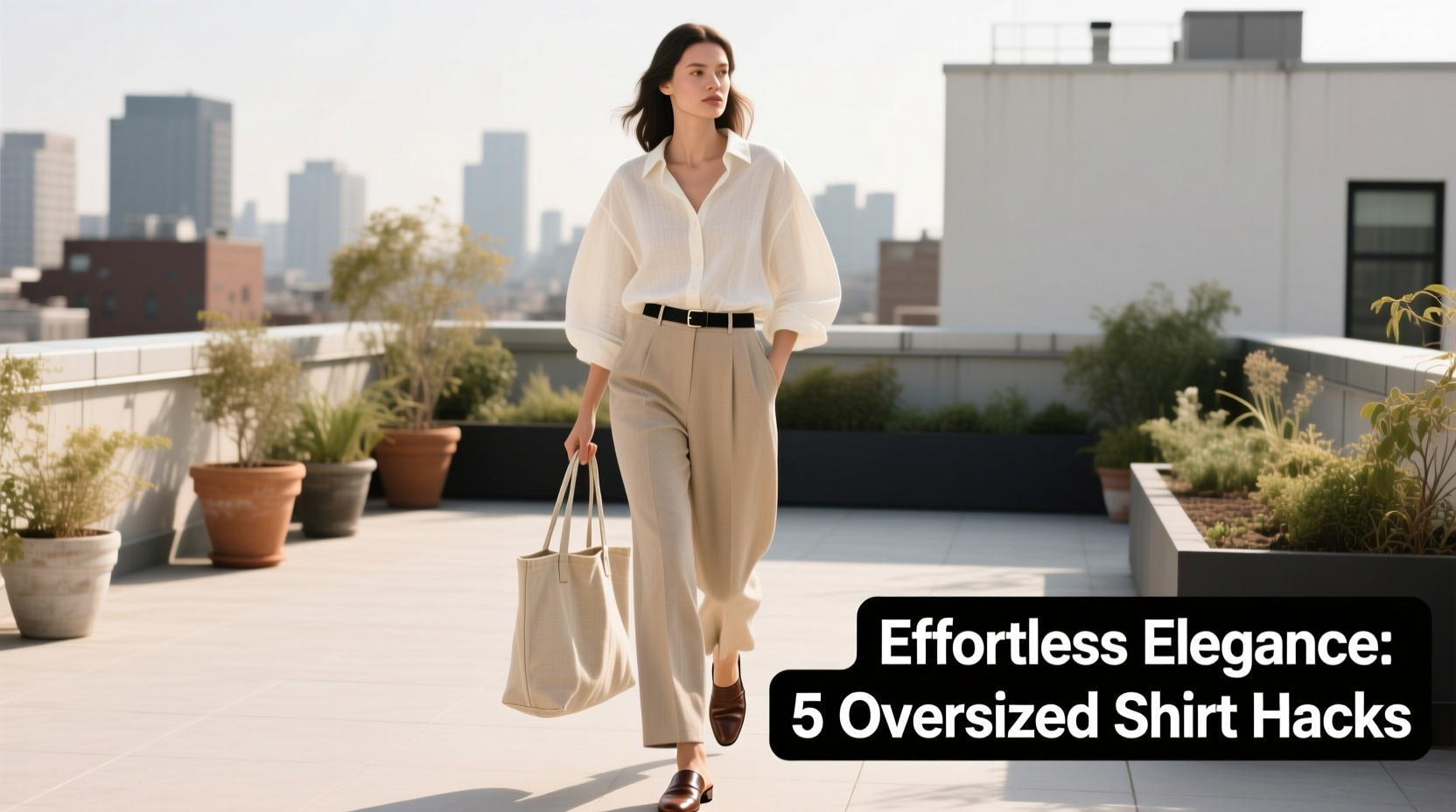
Before diving into styling, it’s important to distinguish between fit and proportion. “Oversized” doesn’t mean “ill-fitting.” A well-chosen oversized shirt should drape intentionally—not cling, not billow uncontrollably. Look for clean shoulders (the seam should sit at or just past your natural shoulder), slightly elongated sleeves, and a hem that lands mid-hip to upper thigh. Avoid pieces where the shoulders droop or the fabric pools excessively around the arms.
Proportion is where styling comes in. Pairing volume on top with structure or slimness below creates visual harmony. Think of it like architectural design: if one element expands, another must anchor. This principle applies whether you're 5'2\" or 6'0\".
Effortless Styling Techniques That Work
Styling an oversized shirt isn't about hiding it—it's about framing it. These five foundational techniques help you maintain control over volume while enhancing your overall look.
1. Tuck Strategically
A full tuck can eliminate all the benefits of an oversized shirt by making it appear too tight. Instead, opt for partial tucks. The half-tuck—one corner casually tucked into your pants or skirt—adds asymmetry and purpose. For denim or tailored trousers, try the French tuck: just enough fabric pulled in at the front to define the waist without overcommitting.
Use softer fabrics like cotton poplin or linen for tucking—they fold cleanly and don’t bulk up. Avoid stiff oxfords unless you’re going for a more structured aesthetic.
2. Belt It Thoughtfully
Belted shirts are no longer reserved for trench coats. A thin leather belt over an oversized button-down instantly defines the waist and transforms the piece into a dress or tunic. Choose a belt in a neutral tone—black, tan, or metallic—to keep focus on the silhouette, not the accessory.
This technique works especially well with long-line overshirts or denim styles. Just remember: the belt should sit at your natural waist or slightly above the hips, never slung low on the pelvis, which can shorten your frame.
3. Layer with Purpose
Layering adds depth and prevents the shirt from dominating your look. Try wearing your oversized shirt open over a fitted tank, bodysuit, or slim turtleneck. In cooler weather, pair it under a tailored blazer or cropped jacket—the contrast of structured outerwear with loose inner layers is inherently chic.
Avoid layering multiple loose pieces. For example, don’t pair an oversized shirt with an oversized cardigan—that’s volume stacking, which overwhelms the frame. Instead, balance one loose item with one fitted one.
4. Roll the Sleeves
Long, dangling sleeves contribute to a sloppy appearance. Rolling them once or twice creates a neater wristline and introduces a touch of intentionality. Aim for a clean fold just above the elbow for a classic prep look, or double-roll tightly for a more casual vibe.
If your shirt has barrel cuffs or decorative buttons, unbutton them before rolling to prevent puckering. This small detail keeps the roll smooth and professional.
5. Play with Hemlines
The length of your oversized shirt determines how you style it. Shirts that fall to mid-thigh work well as dresses with leggings or bike shorts underneath. Longer shirts can be paired with slim jeans and left untucked to create a waterfall effect down the legs.
For petite frames, avoid shirts that extend past the widest part of your hips—this can visually cut you in half. Instead, choose slightly shorter oversize cuts that end near the hip bone.
“An oversized shirt should feel like armor, not a tent. The goal is movement with structure.” — Lena Park, Fashion Stylist & Contributor, *Vogue Korea*
Do’s and Don’ts: What to Avoid
Mistakes with oversized shirts are often subtle but impactful. The following table outlines common pitfalls and their smarter alternatives.
| Don’t | Do |
|---|---|
| Wear with baggy bottoms | Pair with slim jeans, tailored trousers, or leggings |
| Let sleeves hang past fingertips | Roll sleeves to forearm or elbow |
| Tuck entire shirt without definition | Half-tuck or belt for waist emphasis |
| Choose overly wrinkled or flimsy fabric | Opt for crisp cotton, linen blends, or structured poplin |
| Over-accessorize with chunky necklaces | Wear delicate chains or skip necklaces; emphasize earrings instead |
Real-Life Example: From Office to Evening
Consider Sarah, a graphic designer with a lean build and a fondness for vintage menswear. She owns a faded blue oversized oxford she inherited from her brother. At first, she wore it loose with sweatpants at home—functional but forgettable. After learning these techniques, she transformed the same shirt into a versatile piece.
During the week, she pairs it with high-waisted black trousers, rolls the sleeves neatly, and adds a minimalist silver watch. The half-tuck keeps it polished. On weekends, she belts the shirt at her waist, wears it over a black tank and white sneakers, and swaps the watch for hoop earrings. For a dinner out, she layers it open over a slip dress and adds ankle boots.
One shirt, three distinct looks—all intentional, none sloppy. The transformation wasn’t in the garment, but in how she styled it.
Step-by-Step Guide: Styling Your Oversized Shirt in 5 Minutes
Follow this quick routine the next time you reach for an oversized shirt:
- Evaluate the fit: Put on the shirt and check the shoulder seam. It should rest at the edge of your shoulder, not slide down.
- Decide on tuck style: Choose full tuck (for pencil skirts), half-tuck (casual jeans), or belted (dresses or wide-leg pants).
- Roll sleeves: Fold once or twice to just above the elbow. Smooth out any creases.
- Select bottom half: Match volume with fitted or structured bottoms—skinny jeans, bike shorts, or tailored culottes.
- Add finishing touches: Secure loose buttons, adjust collar symmetry, and choose footwear that complements the vibe (boots for edgy, sandals for soft).
This process takes less than five minutes but makes a dramatic difference in perceived effort and style intelligence.
Essential Checklist for Effortless Oversized Shirt Styling
- ☑ Shoulder seam aligns with or slightly extends beyond natural shoulder
- ☑ Fabric has some body—doesn’t cling or collapse
- ☑ Sleeves are rolled to forearm or elbow
- ☑ Bottom half is fitted or balanced (e.g., wide-leg pants require more tailoring)
- ☑ Waist is defined—via tuck, belt, or layering
- ☑ Outfit includes one focal point (e.g., statement shoes or earrings)
- ☑ Overall look feels intentional, not accidental
Frequently Asked Questions
Can short people wear oversized shirts without looking overwhelmed?
Absolutely—but with adjustments. Choose shorter oversized cuts that end at the hip. Pair them with high-waisted bottoms to maintain leg-to-torso ratio. Avoid floor-length shirts unless worn open as a coat. Vertical lines, like a center-front placket or long necklace, also help elongate the frame.
Is it okay to wear an oversized shirt as a dress?
Yes, and it’s one of the easiest ways to style it. Add shape with a belt at the waist and wear with opaque tights or shorts underneath for coverage. Finish with ankle boots or loafers to ground the look. Avoid flat sandals, which can make the outfit feel too casual or unstructured.
How do I keep my oversized shirt from looking like pajamas?
Pajama vibes come from soft, shiny fabrics (like satin) combined with excessive looseness. Stick to matte cotton, linen, or chambray. Press or steam the shirt to remove deep wrinkles. Pair it with structured shoes—think loafers, Chelsea boots, or pointed flats—rather than slippers or flip-flops. Adding a watch or simple jewelry also shifts the perception from loungewear to intentional style.
Final Thoughts: Style Is About Control, Not Constriction
Styling an oversized shirt well isn’t about minimizing its size—it’s about directing attention. Volume becomes powerful when balanced with precision. Whether you’re dressing for work, a weekend brunch, or a creative meeting, an oversized shirt can be your most expressive layer—if you style it with awareness.
The most polished looks aren’t always the tightest. Sometimes, they’re the ones that breathe, move, and still manage to say, “I meant to look this good.” With these tricks, you’re not covering up; you’re curating. And that’s the essence of real style.




 浙公网安备
33010002000092号
浙公网安备
33010002000092号 浙B2-20120091-4
Comments
No comments yet. Why don't you start the discussion?