
Moving to a new state is more than a change of address—it’s an opportunity to reinvent your daily life, reset routines, and redefine what success and happiness mean to you. Whether you're relocating for work, family, or a desire for change, the transition can be both exhilarating and overwhelming. The key to thriving isn’t just about unpacking boxes; it’s about intentionally building a new foundation. With thoughtful planning and proactive engagement, you can turn unfamiliar streets into a sense of belonging.
Plan Your Move with Long-Term Goals in Mind
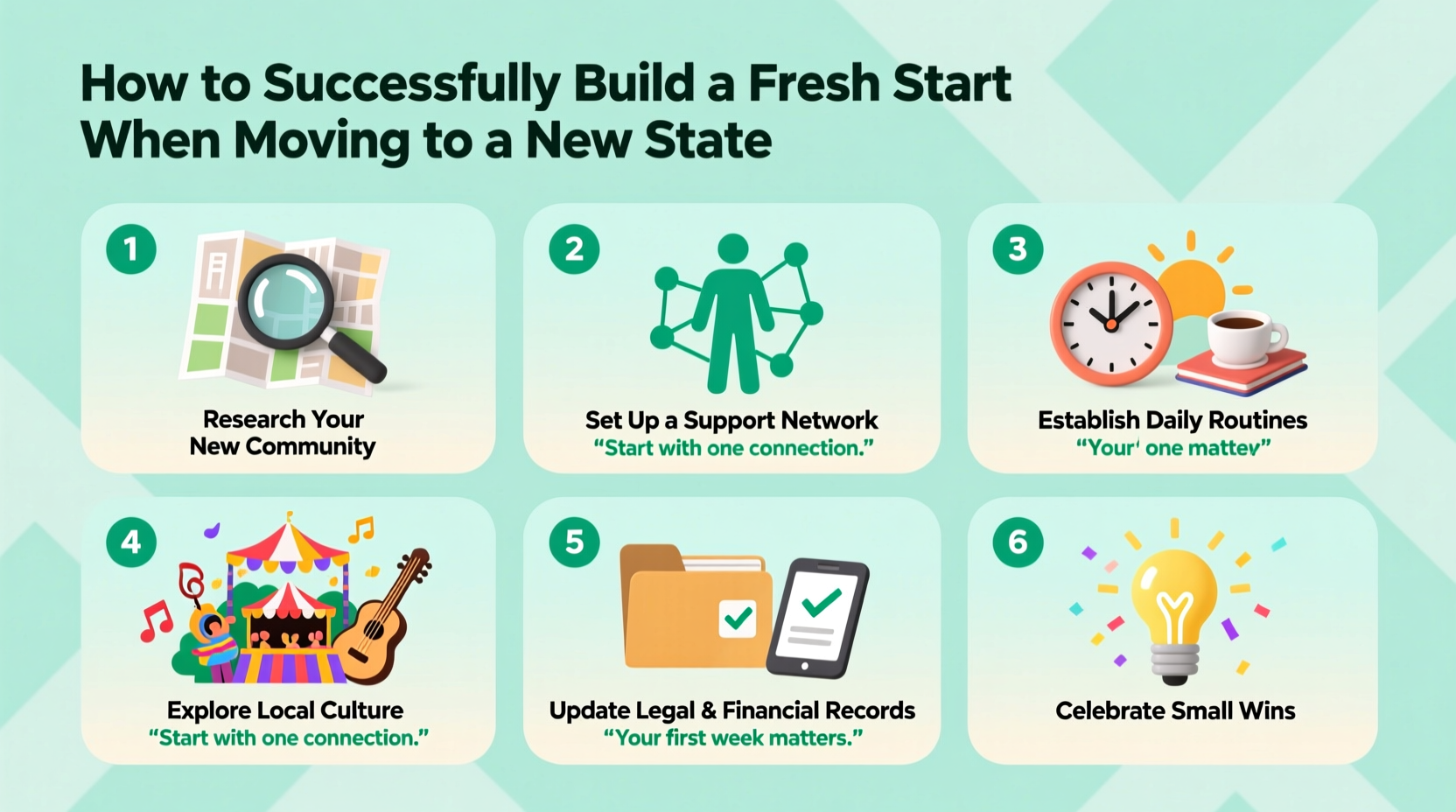
A successful fresh start begins before you even pack your first box. Consider not just where you’re going, but why. Are you seeking a slower pace of life? Better job opportunities? A community that aligns with your values? Clarifying your motivations helps guide decisions—from choosing a neighborhood to identifying potential social circles.
Create a relocation timeline that extends beyond the move-in date. Map out the first 30, 60, and 90 days with specific goals: securing housing, setting up utilities, exploring local amenities, and attending at least one community event. This forward-thinking approach prevents post-move stagnation.
Establish Practical Foundations First
Before diving into social integration, stabilize the essentials. A secure, functional living environment reduces stress and frees mental energy for deeper connection-building.
- Secure reliable housing—whether renting or buying, ensure it fits your lifestyle and budget.
- Transfer or open banking accounts with local institutions to simplify transactions and build financial roots.
- Update your driver’s license and vehicle registration within the required timeframe (usually 30 days).
- Register to vote in your new county to become civically engaged from day one.
- Find a primary care physician and transfer medical records early.
These administrative tasks may seem mundane, but they signal permanence. Completing them quickly fosters a psychological shift from “temporary visitor” to “resident.”
Build Community Through Intentional Engagement
Loneliness after a move is common—even expected. But isolation doesn’t have to be permanent. Connection requires initiative, especially in regions where locals may already have established circles.
Start by identifying environments where people gather around shared interests: libraries, farmers markets, fitness studios, religious centers, or volunteer organizations. Attend recurring events consistently. Familiar faces lead to conversations, then relationships.
| Activity Type | Best For | Where to Find |
|---|---|---|
| Meetup Groups | Social introverts, hobbyists | meetup.com, Facebook Events |
| Volunteer Work | Building purpose & networks | United Way, local nonprofits |
| Fitness Classes | Routine-based bonding | Gyms, YMCAs, studios |
| Neighborhood Associations | Local integration | City websites, Nextdoor app |
“People don’t join communities—they join activities. Show up regularly, and belonging follows.” — Dr. Lena Torres, Sociologist & Urban Integration Researcher
Mini Case Study: From Isolation to Involvement in Austin
After relocating from Chicago to Austin for a tech job, Maria, 34, found herself working remotely and socially adrift. She lived in a downtown apartment with no immediate neighbors she knew. For six weeks, her only interactions were grocery runs and video calls.
Determined to change her trajectory, she committed to two actions: joining a weekly trail running group through Meetup and volunteering at a food pantry every other Saturday. Within two months, she had formed friendships, discovered favorite local coffee spots, and was invited to a housewarming party hosted by a new friend. Her turning point wasn’t luck—it was consistency in showing up.
Today, Maria leads a small organizing team for the running group and considers Austin home. “I didn’t wait for people to include me,” she says. “I created the space I wanted to be part of.”
Create a Personal Reintegration Timeline
Adapting to a new state takes time. Use this realistic 90-day framework to structure your fresh start:
- Days 1–14: Settle In
Unpack essentials, set up internet, locate grocery stores, pharmacies, and gas stations. Take evening walks to learn your block. - Days 15–30: Connect Locally
Visit a library, attend a free community event, introduce yourself to neighbors. Join one interest-based group online. - Days 31–60: Deepen Engagement
Attend the same event twice to build familiarity. Volunteer once. Try a local class (cooking, art, dance). - Days 61–90: Establish Routines
Find a regular gym, café, or park spot. Host a small get-together. Evaluate what’s working—and adjust.
Avoid Common Fresh Start Pitfalls
Even with good intentions, newcomers often stall due to predictable missteps. Awareness helps prevent them:
- Waiting for invitations: People are busy. Be the one to suggest coffee after a group meeting.
- Comparing too much: Constantly measuring your new town against your old one delays acceptance.
- Over-isolating initially: Working from home without external anchors increases loneliness risk.
- Expecting instant belonging: Trust builds over repeated, low-pressure interactions.
Essential Checklist for a Successful Fresh Start
Use this actionable checklist to stay on track during your transition:
- ✅ Research neighborhoods and cost of living before moving
- ✅ Transfer licenses, register vehicle, update voter registration
- ✅ Set up healthcare providers and pharmacy preferences
- ✅ Join at least one local group or club within the first month
- ✅ Attend a community event (farmer’s market, festival, lecture)
- ✅ Volunteer for a cause you care about
- ✅ Identify three “anchor spots”—a café, park, or store you visit regularly
- ✅ Initiate a conversation with a neighbor or coworker
- ✅ Schedule a personal check-in at 30, 60, and 90 days
Frequently Asked Questions
How long does it take to feel settled in a new state?
Most people report feeling “at home” between 3 to 6 months, provided they actively engage with their surroundings. Emotional adjustment varies, but consistent participation in local life accelerates the process.
What if I don’t like the area after moving?
Give it at least 90 days of intentional effort before deciding. Many dislikes stem from unfamiliarity, not incompatibility. If, after genuine engagement, the fit remains poor, reassess with clearer data. There’s no failure in returning or relocating again—only learning.
How do I make friends as an adult in a new place?
Adult friendship grows through repeated, activity-based interaction. Instead of seeking “a best friend,” aim to build loose networks through classes, volunteering, or hobby groups. Shared activity reduces pressure and creates natural rapport.
Start Building Today—Your New Life Is Waiting
A fresh start isn’t something that happens to you—it’s something you create. Moving to a new state offers rare permission to design your environment, habits, and relationships with intention. The early days may feel disjointed, but each small step—introducing yourself, attending an event, finding your favorite diner—adds a brick to your new foundation.
You don’t need to transform overnight. You only need to begin. Pick one action from this guide and do it this week. Then another the next. Over time, these choices compound into a life that feels not just new, but truly yours.




 浙公网安备
33010002000092号
浙公网安备
33010002000092号 浙B2-20120091-4
Comments
No comments yet. Why don't you start the discussion?