
Teaching your puppy its name is the foundation of all future communication. It’s not just about recognition—it’s about building a bond and establishing attention on cue. The good news? With consistency, timing, and positive reinforcement, most puppies can reliably respond to their name within seven days. This guide breaks down exactly how to do it, step by step, using science-backed techniques that professional trainers rely on.
The First Step: Choose the Right Name
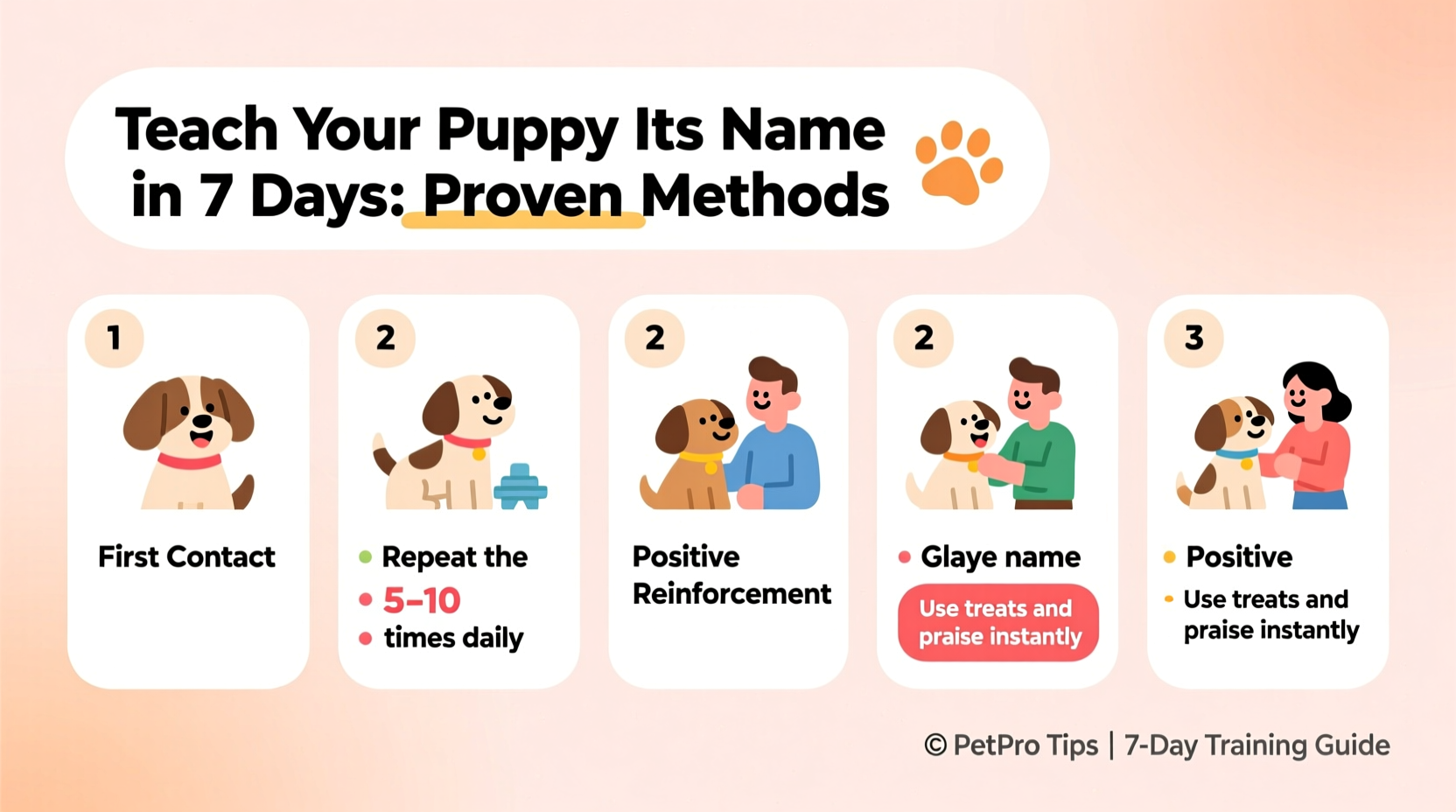
Before training begins, ensure the puppy’s name supports quick learning. Short names (one or two syllables) are easier for dogs to distinguish from background noise. Names like “Max,” “Luna,” or “Benny” work better than longer ones like “Christopher” or “Penelope.” Avoid names that sound like common commands—such as “Kit” (too close to “sit”) or “Bee” (like “be quiet”).
Why Responding to Its Name Matters
A puppy that responds to its name gains confidence and safety. When you call “Luna!” during a walk and she turns to look at you, you’ve created an opportunity to redirect her from danger—like running toward traffic or approaching an aggressive dog. According to Dr. Ian Dunbar, veterinarian and pioneer in puppy training, “The ability to get your dog’s attention on cue is more important than any trick or obedience command. It’s the cornerstone of control and connection.”
Moreover, name recognition builds focus. A puppy who learns early to orient toward you when called will be easier to train in other areas—from housebreaking to leash manners.
Day-by-Day Training Plan: A One-Week Timeline
Success hinges on frequency, positivity, and timing. Dogs learn best through repetition paired with immediate rewards. Follow this structured plan across seven days, dedicating 3–5 short sessions per day (each lasting 2–5 minutes).
- Day 1–2: Create Positive Associations
Create excitement every time you say the puppy’s name. Use a cheerful tone and immediately follow it with a treat, toy, or affection. Do this throughout the day—while feeding, petting, playing—but never when correcting behavior. Goal: The puppy learns “Hearing my name = something good happens.” - Day 3–4: Add Attention and Eye Contact
Say the puppy’s name once. The moment they turn their head or make eye contact, mark it with a clicker or verbal marker like “Yes!” then reward instantly. If there’s no response, avoid repeating the name. Instead, gently tap the floor nearby or use a squeaky toy to draw attention, then try again after a pause. Repeat 5–10 times per session. - Day 5–6: Increase Distractions Gradually
Move training into slightly busier environments—a different room, near a window, or outdoors in a quiet yard. Call the name only once. Reward any acknowledgment, even a slight ear flick. Gradually reduce physical prompts until the puppy responds to voice alone. - Day 7: Test and Reinforce
Practice in multiple locations and situations. Have someone help distract the puppy (e.g., rolling a ball), then call the name calmly. Reward enthusiastic responses generously. By now, your puppy should consistently turn toward you after hearing their name once.
Key Training Principles That Make It Work
Speed and reliability come from understanding canine learning psychology. Here are three core principles to apply daily:
- One Call Only: Never repeat the puppy’s name multiple times. Doing so teaches them to ignore the first few calls. Say it once, wait up to five seconds, then either reposition or lure with a sound if needed.
- Always Reward Response: Even small signs of attention must be rewarded early in training. Over time, you’ll shape full turns and sustained eye contact.
- Never Pair Name with Negative Outcomes: Avoid saying the puppy’s name before unpleasant activities like nail trims, baths, or being put in a crate unless followed by something positive. Otherwise, the name becomes a warning signal rather than a cue for joy.
“Dogs don’t generalize well. If ‘Rex’ is always followed by being dragged away from fun, Rex will eventually stop coming. But if ‘Rex’ means treats, play, or cuddles, he’ll come running every time.” — Sarah Wilson, Certified Professional Dog Trainer (CPDT-KA)
Common Mistakes That Delay Progress
Even well-meaning owners unknowingly sabotage training. These pitfalls are easy to fix once recognized.
| Mistake | Why It Hurts Learning | Better Approach |
|---|---|---|
| Repeating the name over and over | Teaches the puppy to wait until the third or fourth call | Say the name once; if ignored, reset and try again later |
| Using the name during corrections | Creates negative association; pup avoids responding | Use neutral cues like “Ah-ah” instead of the name |
| Calling then forcing compliance | Punishes the dog for not coming (e.g., pulling on leash) | Make coming rewarding—play, praise, or food after arrival |
| Training only in one location | Limits generalization across environments | Practice in at least 3 different rooms or outdoor spots |
| Using low-value treats | Not enough motivation in distracting settings | Use smelly, soft treats like chicken or cheese initially |
Real-Life Example: Teaching Milo in Seven Days
Milo, a 10-week-old Labrador Retriever, arrived at his new home unsure and easily distracted. His owner, Jenna, committed to teaching him his name using the one-week method. On Day 1, she said “Milo!” every time she filled his food bowl, then clapped and gave a tiny piece of boiled chicken. Within hours, Milo began looking up at the sound of his name.
By Day 3, she added the “name + marker + treat” sequence. When Milo turned his head—even slightly—she said “Yes!” and rewarded. She practiced six times a day: during bathroom breaks, playtime, and before naps.
On Day 6, she tested him in the backyard while another dog barked over the fence. She said “Milo!” once. He paused mid-sniff, turned, and trotted to her. She celebrated with a game of tug. By Day 7, Milo responded reliably in all household areas and even in a quiet part of a pet store during a brief visit.
“It felt like magic,” Jenna said. “But really, it was just doing a few minutes at a time, every single day.”
Essential Tools and Environment Setup
You don’t need fancy gear, but having the right tools helps maintain consistency:
- Tiny, soft treats: Size of a pea, easy to eat quickly.
- Clicker (optional): Provides precise marking of desired behavior.
- Quiet initial space: Start in a distraction-free room like a bedroom or kitchen with doors closed.
- Leash (for outdoor practice): Prevents chasing distractions while still allowing freedom to respond.
Checklist: How to Teach Your Puppy Its Name in One Week
Follow this actionable checklist to stay on track:
- ✅ Choose a short, distinct name (1–2 syllables)
- ✅ Gather high-value treats (e.g., cooked chicken, cheese, commercial training bites)
- ✅ Set a daily schedule: 3–5 sessions of 2–5 minutes each
- ✅ Begin in a quiet room with minimal distractions
- ✅ Say the puppy’s name once in a happy tone
- ✅ Immediately reward any response (look, turn, ear movement)
- ✅ Use a clicker or “Yes!” to mark the exact moment of attention
- ✅ Never repeat the name; reset and try again if ignored
- ✅ Practice in new locations daily (bathroom, yard, garage)
- ✅ End each session with a success and praise
- ✅ Avoid using the name before negative events (baths, vet trips)
- ✅ Celebrate small improvements—progress compounds quickly
Frequently Asked Questions
What if my puppy doesn’t respond at all on Day 1?
That’s completely normal. At this age, sounds are still being sorted. Use exaggerated facial expressions, squeaky noises, or crinkle a treat bag to help them connect the name with attention. Keep sessions upbeat and brief. Most puppies begin responding within 24–48 hours.
Can I use two names or nicknames?
During initial training, stick to one consistent name. Once the puppy responds reliably, you can introduce a nickname occasionally. However, always return to the primary name for training and safety cues. Multiple names too soon can cause confusion.
Should I call the puppy’s name when they’re already coming to me?
No. Calling the name when they’re already approaching misses the purpose of teaching attention on cue. Instead, save the name for moments when you want to interrupt or redirect focus. When they’re already headed your way, greet them warmly without saying their name—this keeps the cue meaningful.
Conclusion: Build a Lifelong Habit of Listening
Teaching a puppy its name in one week isn’t about rushing—it’s about being intentional. Every time your puppy hears their name and chooses to look at you, they’re strengthening trust, focus, and cooperation. These small moments accumulate into reliable behavior that protects them in risky situations and deepens your relationship.
The methods outlined here work because they align with how puppies naturally learn: through repetition, emotion, and consequence. You don’t need years of experience—just consistency, patience, and positivity. Start today. In less than a week, you’ll have a puppy who not only knows their name but loves hearing it.




 浙公网安备
33010002000092号
浙公网安备
33010002000092号 浙B2-20120091-4
Comments
No comments yet. Why don't you start the discussion?