
Birds are among the most intelligent and socially complex animals in the avian world. Species like African Greys, Amazon parrots, and budgerigars possess remarkable vocal learning abilities—some capable of mimicking hundreds of words. Yet, unlocking this potential isn’t about random repetition or hoping your bird picks up phrases on its own. The key lies in structured, consistent daily routines that create a predictable environment for learning. Just as children thrive on routine when acquiring language, so do birds. With patience, timing, and repetition, you can guide your feathered companion toward meaningful vocalization.
Why Consistency Matters in Avian Language Learning
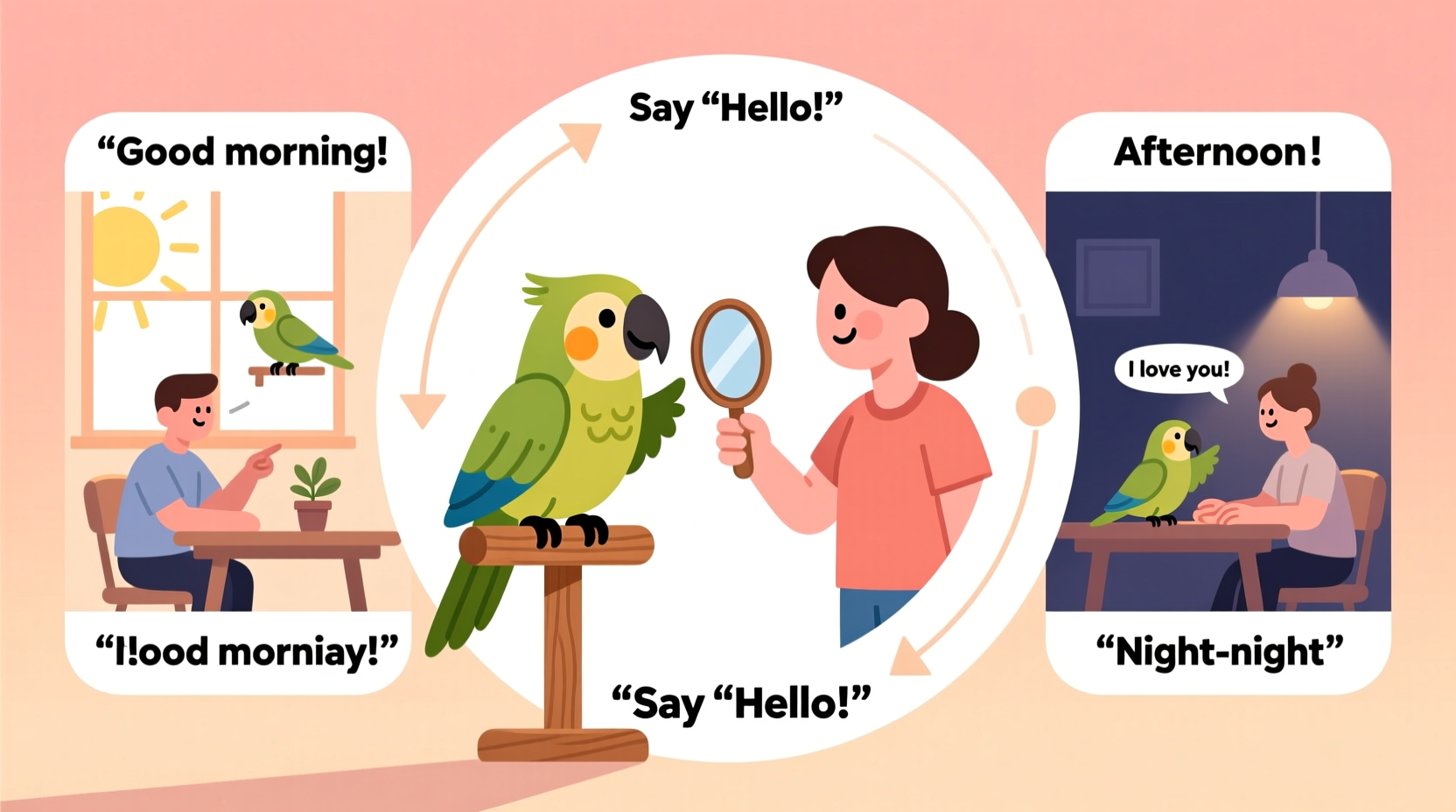
Birds don’t learn human speech through isolated exposure. Instead, they rely heavily on auditory repetition within a stable emotional and environmental context. In the wild, parrots use calls to maintain flock cohesion, identify individuals, and signal danger. When domesticated, they transfer this instinct to human interaction, treating their caregivers as part of their social group.
Dr. Irene Pepperberg, renowned researcher and author of *The Alex Studies*, emphasizes this point:
“Parrots aren’t just mimicking sounds—they’re attempting communication. Consistent routines provide them with the predictability needed to associate words with meaning.” — Dr. Irene Pepperberg, Avian Cognition Researcher
Without consistency, birds become confused. A word said once in the morning and never repeated may be forgotten within hours. Daily reinforcement strengthens neural pathways responsible for sound recognition and reproduction. This is especially critical during the early stages of training when attention spans are short and distractions are high.
Building an Effective Daily Training Schedule
A well-structured routine doesn’t require hours of effort. What matters most is frequency, clarity, and positive association. Below is a sample timeline designed for maximum retention without overwhelming your bird.
Daily Talking Routine (60 Minutes Total, Spread Throughout the Day)
| Time of Day | Activity | Duration | Target Words/Phrases |
|---|---|---|---|
| Morning (7–8 AM) | Greeting & Wake-Up Phrase | 10 min | \"Good morning!\", \"Hello [Bird’s Name]\" |
| Mid-Morning (10–10:15 AM) | Interactive Naming Game | 15 min | Object names: \"Apple\", \"Water\", \"Bell\" |
| Afternoon (1–1:20 PM) | Positive Reinforcement Session | 20 min | \"Pretty bird\", \"Want treat?\", \"Step up\" |
| Evening (6–6:10 PM) | Wind-Down & Affirmation | 10 min | \"Night-night\", \"Love you\", \"Sweet dreams\" |
| Night (Before Covering Cage) | Quiet Repetition | 5 min | Repeat one target phrase softly |
This schedule aligns with natural peaks in avian alertness—early morning and late afternoon—and avoids times when birds are resting or preening. Each session should occur in a calm, low-distraction area with eye contact and gentle tone modulation.
Step-by-Step Guide to Teaching Your Bird Its First Words
Teaching speech is not a race. Progress may take weeks or months, depending on species, age, and individual temperament. Follow this seven-phase process to build a strong foundation.
- Observe and Bond (Days 1–7): Spend quiet time near the cage, speaking in soft tones. Let your bird grow comfortable with your presence before formal training begins.
- Select One Target Word (Day 8): Choose a simple, high-frequency word like “hello” or your bird’s name. Avoid long sentences initially.
- Repetition with Reward (Days 9–21): Say the word clearly three times per session, followed by a small treat or head scratch if your bird shows interest (e.g., turns head, vocalizes).
- Add Context (Week 4): Use the word during relevant moments. Say “hello” when entering the room or “apple” while offering fruit.
- Encourage Imitation (Weeks 5–8): Wait silently after saying the word. If your bird makes any similar sound—even a squeak—reward immediately.
- Expand Vocabulary Gradually (Week 9+): Introduce one new word every two weeks only after the previous one is consistently repeated.
- Integrate into Daily Life (Ongoing): Use learned words naturally throughout the day, reinforcing them outside of formal sessions.
Progress should be tracked in a journal. Note which words elicit responses, the time of day your bird is most vocal, and any signs of stress or disinterest. Adjust timing or phrasing accordingly.
Do’s and Don’ts of Bird Speech Training
Small mistakes can stall progress or even discourage your bird from trying. The following table outlines common pitfalls and best practices.
| Do’s | Don’ts |
|---|---|
| Speak slowly and clearly with exaggerated mouth movements | Yell, over-pronounce, or mimic bird sounds back at them |
| Keep sessions under 20 minutes to prevent fatigue | Force interaction when your bird looks away or fluffs feathers |
| Reward attempts, not just perfect imitation | Punish silence or incorrect sounds |
| Use real-life context (say “water” while drinking) | Play endless recordings without interaction |
| Involve all household members in using the same phrases | Allow inconsistent naming (e.g., calling a toy “bell” sometimes and “ding” other times) |
Real Example: Training Milo the Young Budgie
Milo, a six-month-old male budgerigar, lived in a busy household where family members often spoke over each other. His owners wanted him to say “Milo, want millet?” but saw no progress after two months of sporadic repetition.
They consulted an avian behaviorist who recommended implementing a strict 10-minute morning and evening routine. Every day at 7:15 AM, Milo’s owner would open the curtain, offer millet, and clearly say, “Milo, want millet?” three times before feeding. At night, she repeated the phrase during cage-covering time.
Within three weeks, Milo began chirping a close approximation. By week six, he was clearly saying “millet” after hearing the first part of the phrase. The breakthrough came from consistency—not volume or complexity. The family also stopped using alternate phrases like “snack time” or “treat?” ensuring linguistic uniformity.
This case illustrates that even small birds with limited vocal range can learn targeted phrases when exposed to structured, repetitive input tied to routine events.
Essential Checklist for Success
Use this checklist weekly to evaluate your training effectiveness:
- ✅ Have I used the same word for the same object/action all week?
- ✅ Am I conducting at least two short training sessions daily?
- ✅ Am I rewarding vocal attempts, even if unclear?
- ✅ Is the training environment free from loud noises or sudden movements?
- ✅ Has my bird shown signs of stress (biting, hiding, excessive screaming)?
- ✅ Are all family members using the same vocabulary around the bird?
- ✅ Have I recorded any new sounds or approximations this week?
- ✅ Am I introducing no more than one new word every two weeks?
Check off each item every Friday. If fewer than five boxes are checked, adjust your approach the following week.
Frequently Asked Questions
Can all bird species learn to talk?
No, not all birds can mimic human speech. The ability varies widely by species. African Grey Parrots, Yellow-Naped Amazons, and Budgerigars are among the most proficient. Canaries and finches, while excellent singers, rarely imitate words. Even within capable species, individual variation exists—some birds simply prefer whistling or remain silent.
My bird hasn’t spoken after three months. Should I give up?
Not necessarily. Some birds begin speaking after a year or more of exposure. Focus on building trust and consistency rather than results. Sudden vocalization can occur after long periods of silent listening. As long as your bird is healthy and engaged, continue the routine.
Is it better to train a young or adult bird?
Youth offers an advantage. Most parrots are most receptive to vocal learning between 4 months and 1 year of age. However, adult birds can still learn new words, especially if they already have some speaking ability. Older birds may take longer but can achieve impressive vocabularies with persistent, patient training.
The Role of Environment in Vocal Development
A bird’s surroundings significantly influence its willingness to speak. A noisy, chaotic home with unpredictable schedules makes focused learning difficult. Conversely, a calm space with regular light-dark cycles and scheduled interactions provides ideal conditions.
Ensure the cage is placed in a social area—such as a living room or kitchen—but away from direct drafts, TVs, or loud appliances. Birds need to feel safe enough to experiment vocally. Nighttime covering helps regulate sleep, which supports cognitive processing of daytime auditory input.
Additionally, minimize exposure to uncontrolled audio sources like talk radio or podcasts. These introduce too many voices and topics, diluting focus. If using audio aids, limit them to short clips of your own voice repeating target phrases.
Conclusion: Turn Routine Into Results
Teaching your bird to talk isn’t about talent—it’s about consistency. The most successful bird owners aren’t those with the loudest voices or biggest cages, but those who show up every day with patience and purpose. By embedding clear, repeated language into daily rituals—feeding, greeting, handling—you transform ordinary moments into powerful learning opportunities.
Your bird is watching, listening, and waiting for patterns. When those patterns include your voice saying the same kind words at the same time each day, the odds of imitation rise dramatically. Start small. Stay steady. Celebrate every attempt. Over time, those tiny repetitions will build into recognizable speech, forging a deeper, more expressive bond between you and your companion.




 浙公网安备
33010002000092号
浙公网安备
33010002000092号 浙B2-20120091-4
Comments
No comments yet. Why don't you start the discussion?