
Walking a cat on a leash may seem like an unusual idea, but it's a growing trend among pet owners who want to provide their feline companions with safe outdoor enrichment. Unlike dogs, cats are not instinctively inclined to follow commands or tolerate restraints. However, with patience, consistency, and the right approach, most cats can learn to walk on a leash calmly and even enjoy the experience. The key lies in respecting your cat’s natural instincts while gradually building trust and confidence.
For indoor cats especially, leash walking offers mental stimulation, physical exercise, and sensory enrichment—without exposing them to the dangers of free-roaming outdoors. But forcing the process or skipping foundational steps often leads to fear, resistance, and setbacks. Success comes not from speed, but from understanding feline behavior and progressing at your cat’s pace.
Understanding Feline Behavior and Leash Resistance
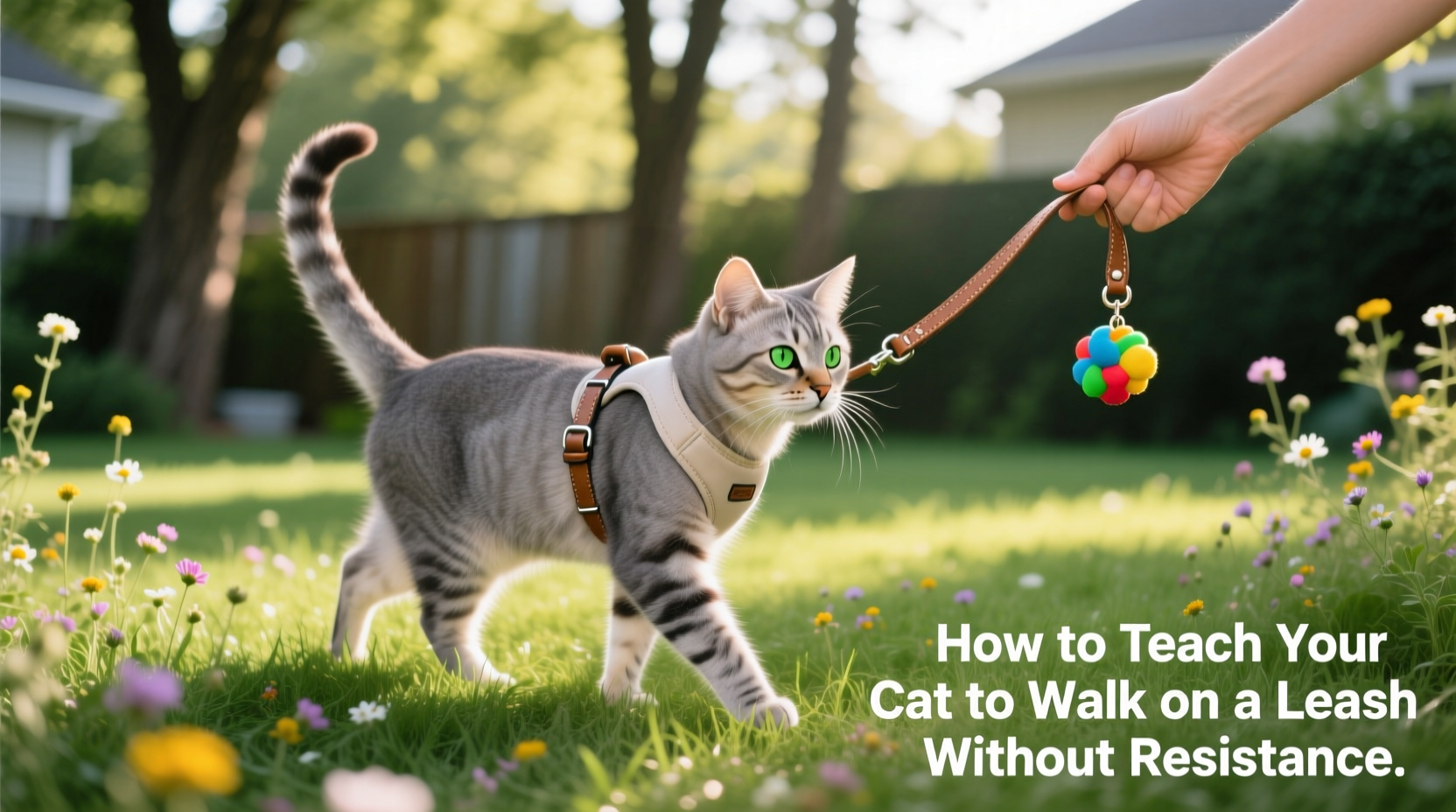
Cats are territorial animals with finely tuned senses. Their reactions to new stimuli—especially something as restrictive as a harness and leash—are rooted in survival instincts. A sudden tug, unfamiliar texture, or loss of control can trigger fear, leading to freezing, backing away, or attempts to escape. This isn’t defiance; it’s self-preservation.
Resistance is common when owners skip acclimation phases or use ill-fitting gear. Many cats panic because they associate the harness with being restrained against their will. To prevent this, it’s essential to decouple the idea of the harness from movement or pressure. Instead, pair it with positive experiences: treats, praise, and calm environments.
Dr. Sarah Ellis, co-author of *The Trainable Cat*, emphasizes that \"cats don’t resist training because they’re stubborn—they resist when they feel unsafe or confused. Our job is to make every step predictable and rewarding.\"
“Cats don’t resist training because they’re stubborn—they resist when they feel unsafe or confused. Our job is to make every step predictable and rewarding.” — Dr. Sarah Ellis, Feline Behavior Expert
Step-by-Step Guide to Leash Training Your Cat
Teaching your cat to walk on a leash is a gradual process that should span several weeks. Rushing leads to setbacks. Follow this timeline to build comfort and confidence:
- Week 1: Introduce the Harness Indoors
Place the harness near your cat’s favorite resting spot. Let them sniff, paw at, or ignore it. Reward any interaction with treats. Do not attempt to put it on yet. - Day 5–7: Touch & Reward
Gently touch your cat with the harness during feeding or playtime. Pair each contact with a high-value treat (e.g., tuna flakes or freeze-dried chicken). Repeat multiple times daily. - Week 2: First Wear (No Leash)
Fasten the harness loosely for short periods—30 seconds to 2 minutes—while offering treats and affection. Never force it. If your cat struggles, remove it immediately and try again later. Goal: wear time increases to 5–10 minutes with no signs of distress. - Week 3: Attach the Leash Indoors
Clip the leash to the harness and let your cat drag it around under supervision. Stay nearby to prevent snagging. Allow them to explore while you offer praise and treats. - Week 4: Controlled Indoor Movement
Hold the leash lightly and follow your cat as they move. Do not pull. Let them lead. Practice in different rooms to build familiarity. - Week 5: Transition to Outdoor Thresholds
Open the door and let your cat peer outside while harnessed. Sit together on the porch or balcony. Reward curiosity. Avoid pulling them out. - Week 6+: First Outdoor Steps
Choose a quiet, enclosed area (e.g., backyard or quiet sidewalk). Walk slowly, letting your cat set the pace. Keep sessions under 5 minutes initially. End on a positive note.
Choosing the Right Equipment
The wrong harness can cause discomfort or escape attempts. Cats are masters at slipping out of poorly fitted gear. Prioritize safety and comfort over aesthetics.
| Feature | Recommended | Avoid |
|---|---|---|
| Harness Type | Secure-fit H-style or figure-eight design | Vest-style with large openings or neck loops |
| Material | Nylon or soft mesh with padding | Leather (hard to clean, less breathable) |
| Adjustability | Multiple adjustment points (neck, chest, girth) | One-size or minimal adjustments |
| Leash | 4–6 foot flat nylon leash (no retractable) | Bungee leashes or dog-style extendable lines |
| Fittings | Double snap buckles or secure clips | Velcro-only closures |
To check fit, ensure you can slip two fingers comfortably under each strap. The harness should be snug but not tight. Test it by gently lifting the back loop—if the harness shifts significantly or slips off, it’s too loose.
Common Mistakes That Cause Resistance
Even well-intentioned owners make errors that undermine progress. Recognizing these pitfalls can save weeks of retraining:
- Rushing the process: Skipping acclimation phases forces your cat into a defensive mindset.
- Pulling or guiding too much: Cats resist when they feel controlled. Let them explore freely within leash limits.
- Training in distracting environments: Starting outdoors overwhelms their senses. Begin in quiet, familiar spaces.
- Using punishment or coercion: Yanking, scolding, or forcing your cat damages trust permanently.
- Ignoring body language: Tail flicking, flattened ears, or crouching indicate stress. Pause or end the session.
Real Example: Luna’s Journey from Fear to Freedom
Luna, a 3-year-old domestic shorthair, lived in a high-rise apartment with little outdoor access. Her owner, Mark, noticed she’d press against the window whenever birds flew by. Curious about leash training, he began with a mesh harness he’d bought online. His first attempt lasted 10 seconds—Luna arched her back and scrambled under the couch.
After researching feline behavior, Mark restarted the process. He left the harness on the floor near Luna’s bed for three days. When she sniffed it, he tossed a treat. Over the next week, he touched her with the harness during mealtime, always following with food. On day 10, he fastened it for 45 seconds while brushing her—she stayed calm and received chicken bits.
By week three, Luna wore the harness for 10 minutes while playing. Mark introduced the leash indoors, letting her drag it safely. After two weeks of indoor practice, they sat by the open balcony door. Within six weeks, Luna walked five meters down a quiet sidewalk, stopping to sniff flowers and watch pigeons. Today, she enjoys 10-minute evening walks three times a week—on her terms.
“I used to think cats couldn’t be trained,” Mark said. “Now I see it’s about listening more than leading.”
Essential Checklist for Successful Leash Training
Follow this checklist to ensure you're covering all critical steps:
- ✅ Choose a properly fitted, escape-proof harness
- ✅ Introduce the harness gradually with positive reinforcement
- ✅ Allow your cat to wear the harness indoors before attaching the leash
- ✅ Let your cat drag the leash indoors under supervision
- ✅ Practice walking indoors with light leash contact
- ✅ Expose your cat to outdoor sights and sounds without pressure
- ✅ Begin outdoor walks in quiet, low-traffic areas
- ✅ Keep initial outdoor sessions under 5 minutes
- ✅ Always carry treats and end on a positive note
- ✅ Monitor body language and respect your cat’s limits
Frequently Asked Questions
Can all cats be trained to walk on a leash?
Most cats can learn with patience, though success varies by temperament. Outgoing, curious cats typically adapt faster. Shy or highly sensitive cats may take longer or prefer limited outdoor exposure. Some may never enjoy walks—and that’s okay. The goal is enrichment, not compliance.
What if my cat refuses to move once outside?
Freezing is common. Your cat is processing new smells, sounds, and textures. Sit quietly, speak softly, and wait. Offer a treat if they show interest. Never pull. If they remain frozen after 2–3 minutes, return inside and try again another day. Short, repeated exposures build confidence.
Is it safe to walk a cat off-leash?
No. Even well-trained cats can bolt at the sight of prey or loud noises. Off-leash walking poses risks of injury, getting lost, or encounters with other animals. Always use a secure harness and leash in unenclosed areas. Consider a fenced catio or portable enclosure for safer outdoor time.
Final Thoughts: Patience Builds Trust
Teaching your cat to walk on a leash isn’t about control—it’s about connection. Every small step forward is a sign of trust. Some cats will strut down sidewalks with pride; others may only tolerate a few steps on the patio. Both outcomes are victories when built on mutual respect.
The most effective trainers aren’t those with the fastest results, but those who listen closely, adapt readily, and celebrate progress however small. With consistent effort, many cats come to associate the harness with adventure, attention, and rewards—transforming what once caused fear into a gateway for exploration.




 浙公网安备
33010002000092号
浙公网安备
33010002000092号 浙B2-20120091-4
Comments
No comments yet. Why don't you start the discussion?