
Recall is one of the most important commands a dog can learn. It’s not just about obedience—it’s a safety skill. Whether your dog slips off leash at the park, chases a squirrel into traffic, or simply ignores you during an off-leash walk, a reliable recall could save their life. Yet many dog owners struggle with inconsistent results. The truth is, teaching a dog to come when called isn’t about repeating the command louder—it’s about building a behavior so ingrained that it becomes automatic, even in distracting environments.
A successful recall combines consistency, positive reinforcement, and smart training progression. This guide walks through the science-backed steps to create a bulletproof recall, explains common pitfalls, and offers real-world strategies used by professional trainers. By the end, you’ll have a clear roadmap to ensure your dog comes running—every single time.
Why Most Dogs Fail the Recall Test
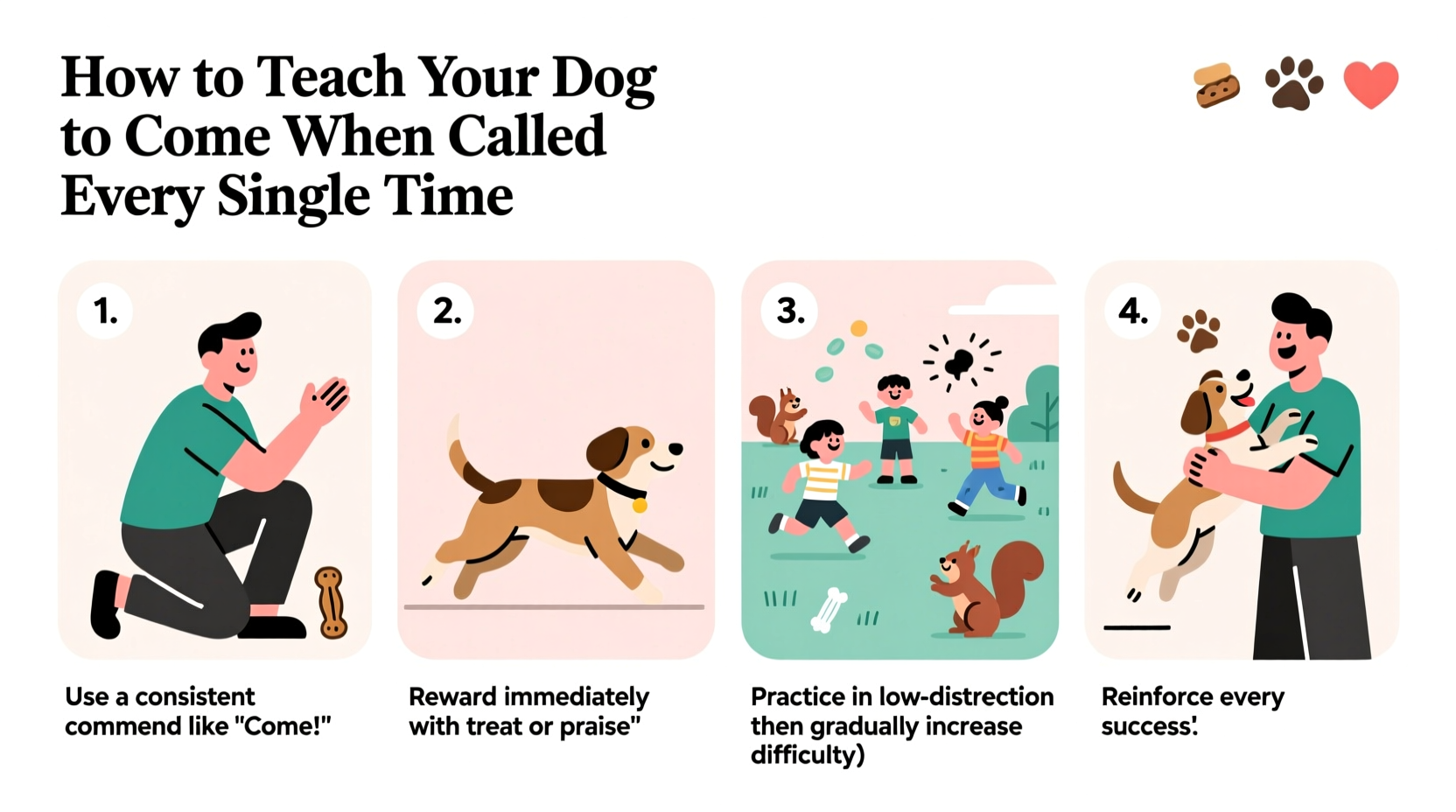
Dogs don’t ignore recall because they’re stubborn or disobedient. They do so because the environment offers stronger rewards than coming back to you. A squirrel darting across the yard, another dog playing, or the smell of food on the breeze can easily override a half-practiced command. If “come” has only been practiced in quiet living rooms, it won’t hold up in high-distraction settings.
The key issue? Many owners make the mistake of moving too fast. They practice indoors for a few days, then expect flawless performance at the dog park. That’s like teaching someone to drive in an empty parking lot and immediately sending them onto a busy highway. The brain needs gradual exposure, repetition, and consistent reinforcement.
“Reliability in recall isn’t built in minutes. It’s built over months, with thousands of positive repetitions under varying conditions.” — Dr. Karen Overall, Veterinary Behaviorist
Step-by-Step Guide to Building a Bulletproof Recall
Follow this structured approach to train your dog to come when called, regardless of distractions. Each phase builds on the last, ensuring long-term success.
- Start in a Low-Distraction Environment
Create a controlled space—like your living room or a fenced backyard with no other animals or people. Use a high-value treat (e.g., boiled chicken, cheese) your dog rarely gets. - Use a Clear, Consistent Cue
Pick one word—“Come,” “Here,” or “Now”—and use it every time. Avoid switching between phrases. Say it once, enthusiastically, then pause. - Pair the Word with Movement
Back away a few steps while saying the cue. Most dogs naturally follow. When they take a step toward you, mark the behavior with a clicker or verbal marker like “Yes!” and reward immediately. - Repeat and Reinforce
Practice 5–10 short sessions daily. Each session should last no more than 2–3 minutes. End on a success. Overtraining leads to burnout. - Add Distance and Leash Control
Move to a larger area with a long leash (15–30 feet). Let your dog explore, then call. If they hesitate, gently reel them in without scolding. Reward the moment their feet move toward you. - Introduce Distractions Gradually
Progress from quiet parks to busier areas. Practice near mild distractions first (a rolling ball), then increase difficulty (other dogs at a distance). - Never Punish After a Recall
If your dog finally comes after ignoring you, never scold them. That teaches them that coming = punishment. Instead, celebrate the return and work on prevention next time. - Maintain Long-Term Reliability
Even after mastery, continue practicing weekly. Surprise rewards keep the behavior fresh. Never assume recall is “finished” training.
Do’s and Don’ts of Recall Training
| Do’s | Don’ts |
|---|---|
| Use high-value treats during training | Call your dog only to end fun activities (bath, crate, etc.) |
| Practice in short, frequent bursts | Yell or repeat the command multiple times |
| Always reward with praise and treats | Use the recall command as a threat (“Come here NOW!”) |
| Gradually increase distractions | Allow off-leash freedom before recall is 100% reliable |
| Use a happy, upbeat tone | Chase your dog when they ignore you |
Real Example: Turning Around Max, the Escape Artist
Max, a two-year-old Border Collie, had a habit of bolting out the front door whenever it opened. His owner, Sarah, tried calling him, but he’d sprint down the street, unresponsive. Frustrated and worried, she consulted a certified dog trainer.
The trainer started by redefining the meaning of “Come.” For two weeks, Sarah practiced indoors using chicken and squeaky toys. She called Max once, backed up, and rewarded any movement toward her. After 50+ repetitions, Max began turning toward her at the sound of the word.
Next, they moved to the backyard with a long line. Every time Max started to run, Sarah called once and gently guided him back. He learned that ignoring the cue led to being pulled in, but responding earned a treat and freedom to play again.
Within six weeks, Max responded reliably in the yard. By week ten, he came when called at a quiet trail—even when a rabbit darted past. Today, Sarah says Max returns instantly, and their walks are stress-free.
The transformation wasn’t magic—it was methodical training that prioritized motivation over correction.
Checklist: Building a Reliable Recall
- ✅ Choose one consistent recall word
- ✅ Use high-value treats exclusively for recall training
- ✅ Practice 5–10 times per day in low-distraction areas
- ✅ Use a long leash (15–30 ft) during outdoor practice
- ✅ Reward immediately upon arrival—every single time
- ✅ Avoid calling your dog to end fun or enforce unpleasant tasks
- ✅ Gradually introduce distractions (people, dogs, wildlife)
- ✅ Never punish your dog after they come
- ✅ Continue occasional surprise practice even after mastery
- ✅ Keep training sessions short and positive
Advanced Tips for High-Energy or Stubborn Breeds
Herding breeds like Australian Shepherds, terriers, and hounds often have strong prey drives or independent streaks. These dogs need extra effort to build recall reliability.
One effective technique is the “run away” game. Instead of standing still when calling, turn and run a few steps in the opposite direction. To a playful dog, this triggers chase instinct—and suddenly, coming to you becomes part of a game.
Another strategy is using variable rewards. Instead of treating every single time, occasionally deliver jackpot rewards—five treats, a toy, or a quick tug session. This unpredictability keeps the dog engaged, similar to how slot machines keep people playing.
For dogs with extreme distractions, consider using a secondary cue like a whistle. Unlike voice commands, whistles cut through noise and remain consistent in tone. Pair the whistle with treats during training until your dog associates the sound with coming and being rewarded.
Frequently Asked Questions
What if my dog doesn’t come when called in the park?
If your dog ignores you in a distracting environment, don’t keep repeating the command—that weakens its meaning. Instead, go get them using a long line or by running away to trigger pursuit. Then, reassess your training level. You may have progressed too quickly. Return to lower-distraction settings and rebuild reliability before trying again.
Should I call my dog if I know they won’t come?
No. Calling when you’re unsure they’ll respond trains your dog to ignore the cue. Instead, go retrieve them quietly. Save the recall command only for moments when success is likely. This preserves the command’s power and prevents it from becoming background noise.
Can older dogs learn a reliable recall?
Absolutely. Age doesn’t prevent learning, though it may require more patience. Older dogs often have established habits, so focus on making coming to you more rewarding than staying away. Use higher-value treats and pair the behavior with affection, play, or freedom. With consistency, even senior dogs can master recall.
Conclusion: Make “Come” the Safest Choice
A dog who comes when called isn’t just well-trained—they’re safer, freer, and more trusted. But achieving that level of reliability takes more than repetition. It requires understanding what motivates your dog, respecting their learning curve, and making every return a celebration.
Forget dominance-based methods or punishment. The most effective recalls are built on joy, anticipation, and trust. When your dog learns that coming to you means good things happen—whether it’s a treat, a game, or praise—you’ve created a bond stronger than any distraction.
Start today. Practice in your living room. Use chicken, cheese, or a squeaky toy. Call once, reward generously, and repeat. In weeks, you’ll see progress. In months, you’ll have a recall you can rely on—no matter where you are.




 浙公网安备
33010002000092号
浙公网安备
33010002000092号 浙B2-20120091-4
Comments
No comments yet. Why don't you start the discussion?