
Hamsters are often seen as quiet, low-maintenance pets that spend their days running on wheels or nibbling on treats. But beneath their tiny, twitching noses lies a surprisingly intelligent creature capable of learning simple behaviors and even tricks. With patience, consistency, and an understanding of their natural instincts, you can teach your hamster to respond to cues, navigate small obstacle courses, or come when called—all without overwhelming them.
The key to success isn’t repetition or force; it’s minimizing stress while maximizing trust. Hamsters are prey animals, meaning they’re naturally skittish and sensitive to loud noises, sudden movements, and unfamiliar environments. A stressed hamster won’t learn—it will retreat, freeze, or even bite. That’s why any training must be approached with calmness, empathy, and respect for their emotional limits.
Understanding Hamster Behavior and Stress Signals
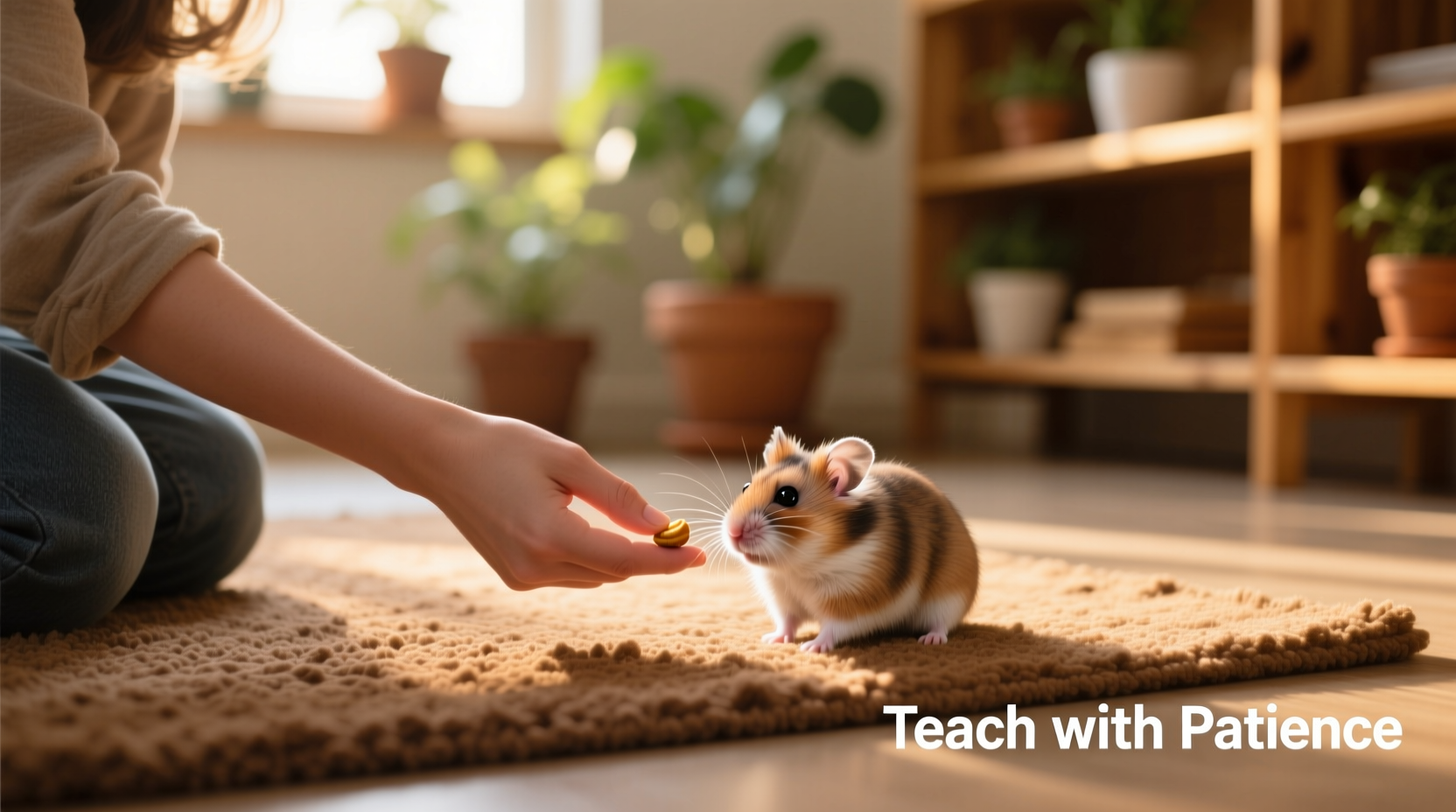
Before attempting any training, it's essential to understand how hamsters perceive the world. In the wild, they live in burrows, avoiding predators by staying hidden and alert. This instinct remains strong in captivity. Even the most domesticated hamster can feel threatened by human hands, bright lights, or changes in routine.
Recognizing signs of stress is the first step in preventing it during training. Common indicators include:
- Freezing in place – A sign of fear or uncertainty.
- Excessive grooming or barbering – Over-grooming, especially chewing fur, suggests anxiety.
- Biting or lunging – Not always aggression; often a panic response.
- Puffing up cheeks or hiding – Defensive behavior indicating discomfort.
- Refusing food – A stressed hamster may ignore treats they usually enjoy.
- Running frantically in circles – Indicates overstimulation or fear.
“Training should never override a hamster’s need for safety. If they seem hesitant, it’s not disobedience—it’s communication.” — Dr. Lena Patel, Small Mammal Veterinarian
If you notice any of these behaviors during interaction, stop immediately. Return the hamster to their enclosure and allow them time to recover. Training sessions should only resume once the animal appears relaxed and curious again—typically after a day or two.
Building Trust Before Teaching Tricks
You cannot train a hamster until they trust you. Unlike dogs or parrots, hamsters don’t seek praise or social approval. They respond best to positive associations—especially food and safety. The foundation of all successful trick training is a bond built on gentle, consistent interaction.
Begin by spending time near the cage daily. Sit quietly nearby while reading or working, allowing your hamster to get used to your presence. Avoid staring directly at them, as this mimics predator behavior. Over several days, begin offering small treats through the bars—unsalted pumpkin seeds, bits of apple, or commercial hamster treats.
Once your hamster approaches you willingly, transition to hand-feeding inside the cage. Open the door slightly and place the treat in your palm on the floor. Don’t reach for them. Let them choose to come to you. This empowers them and reduces fear.
After a week or more of successful hand-feeding, try gently scooping them using both hands from below—not grabbing from above. Support their entire body and hold them close to the ground initially. Keep handling sessions short: 3–5 minutes at first, gradually increasing as they relax.
Only when your hamster climbs onto your hand voluntarily and explores calmly should you consider beginning formal training.
Step-by-Step Guide to Stress-Free Trick Training
Start with simple, low-effort behaviors that align with natural hamster movement. The goal is to reinforce existing actions with a cue, not force unnatural ones. Use high-value treats (e.g., sunflower seeds, bits of banana) and keep sessions under five minutes.
- Choose a quiet, familiar space – Train in the room where the cage is located, free from loud sounds or other pets.
- Pick one trick to start – Recommended beginner tricks: “come,” “spin,” or “high five.”
- Use a clicker or verbal marker – Say “yes!” or use a clicker the exact moment the desired behavior occurs.
- Lure with a treat – Gently guide the motion using a treat. For spinning, move the treat in a circle just outside their nose.
- Reward immediately – Give the treat right after the marker word or click.
- Repeat 3–5 times per session – More than that risks fatigue or frustration.
- End on a success – Always finish with a reward, even if progress was minimal.
- Practice every other day – Hamsters need downtime to process learning.
For example, to teach “spin”:
- Wait for your hamster to turn its head naturally.
- As it begins to rotate, say “spin” and lure with a treat in a circular path.
- The moment it completes a quarter turn, click and reward.
- Gradually increase the expectation—half turn, then full turn—over multiple sessions.
Never force the motion. If the hamster stops or walks away, end the session. Progress may take weeks, but that’s normal. Patience is not just kind—it’s effective.
Do’s and Don’ts of Hamster Training
| Do’s | Don’ts |
|---|---|
| Use high-value, healthy treats in tiny portions | Overfeed or use sugary foods like candy |
| Train during active periods (evening/night) | Wake them up mid-sleep cycle for training |
| Keep sessions short and predictable | Extend sessions beyond 5 minutes |
| Handle gently and support their body fully | Dangle or hold them high above surfaces |
| Respect hesitation—pause or stop if stressed | Persist when the hamster shows fear |
| Use consistent verbal cues or hand signals | Change commands frequently or shout |
Real Example: Training Luna the Dwarf Hamster
Luna, a Roborovski dwarf hamster owned by Sarah in Manchester, was initially terrified of hands. She’d dart into her tunnel at any movement. Sarah began by sitting near the cage daily, tossing in a single millet spray seed each time. After two weeks, Luna would wait near the front when Sarah entered the room.
Next, Sarah introduced hand-feeding, resting her palm flat on the cage floor with a seed. It took eight sessions before Luna stepped onto her hand. From there, Sarah taught “come” using a soft “pspsps” sound followed by a treat. Within three weeks, Luna would run to the cage door when called—even climbing onto Sarah’s hand to receive her reward.
Sarah never pushed for more. She celebrated small wins and accepted setbacks. When Luna ignored the cue after a noisy night, Sarah paused training for two days. “It’s not about what I want,” Sarah said. “It’s about what she’s ready for.”
Today, Luna performs a spin and “go to bed” (entering a small wooden house) on cue. All training happens in a quiet corner of the bedroom, lasts no more than four minutes, and ends with a favorite dried mealworm.
Essential Checklist for Safe Trick Training
- ✅ Ensure your hamster is healthy and well-fed before starting
- ✅ Choose a calm environment with minimal distractions
- ✅ Use a consistent verbal cue or hand signal for each trick
- ✅ Limit sessions to 3–5 minutes, 3–4 times per week
- ✅ Reward with immediate, tiny treats after desired behavior
- ✅ Watch for stress signals and stop if observed
- ✅ Reinforce trust daily, even on non-training days
- ✅ Avoid training during daylight hours if your hamster sleeps heavily
- ✅ Keep training tools simple—no complex devices or forced movement
- ✅ Celebrate progress, no matter how small
Frequently Asked Questions
Can all hamster breeds learn tricks?
Yes, though some are more inclined than others. Syrians and Roborovskis tend to be more responsive due to higher curiosity and activity levels. Dwarfs like Campbells or Chinese may be shyer and require longer trust-building. Age also matters—young adults (3–12 months) learn fastest. Avoid training seniors or ill hamsters.
What if my hamster won’t take treats during training?
This usually means they’re stressed, full, or distrustful. Try switching to a higher-value treat like plain cooked chicken or honey dust (sparingly). Ensure the session isn’t too long or frequent. Most importantly, go back to basic bonding—skip tricks and focus on calm coexistence for a few days.
How long does it take to teach a hamster a trick?
Simple behaviors like coming when called may take 2–4 weeks with consistent effort. More complex tricks like spinning or jumping through a hoop can take 6–8 weeks or longer. Progress varies widely based on temperament, age, and prior handling. Some hamsters may never perform certain tricks—and that’s okay. The relationship matters more than the result.
Final Thoughts: Kindness Over Compliance
Teaching your hamster tricks isn’t about creating a circus performer. It’s about deepening your connection, stimulating their mind, and honoring their individuality. The most successful trainers aren’t those with the flashiest routines—they’re the ones who listen closely, act gently, and celebrate the quiet moments of trust.
Every hamster is different. Some will leap at the chance to interact; others will prefer solitude. Respect that. The goal isn’t obedience—it’s mutual comfort. When you prioritize emotional safety over performance, you create an environment where learning can happen naturally, joyfully, and without pressure.




 浙公网安备
33010002000092号
浙公网安备
33010002000092号 浙B2-20120091-4
Comments
No comments yet. Why don't you start the discussion?