
Typography is everywhere—on street signs, websites, packaging, and books. Yet most people pass by without noticing the subtle differences between one font and another. For designers, marketers, or curious minds, being able to identify a typeface isn’t just useful; it’s empowering. The ability to look at a letterform and say, “That’s Helvetica,” or “This has the flair of Didot,” sets you apart. But how do experts do it so quickly? It’s not magic—it’s method.
Font identification is a skill built on observation, pattern recognition, and a bit of detective work. With practice, anyone can develop this expertise. This guide breaks down the proven strategies professionals use to identify typefaces with precision and confidence.
Start with the Basics: Categorize the Typeface Family
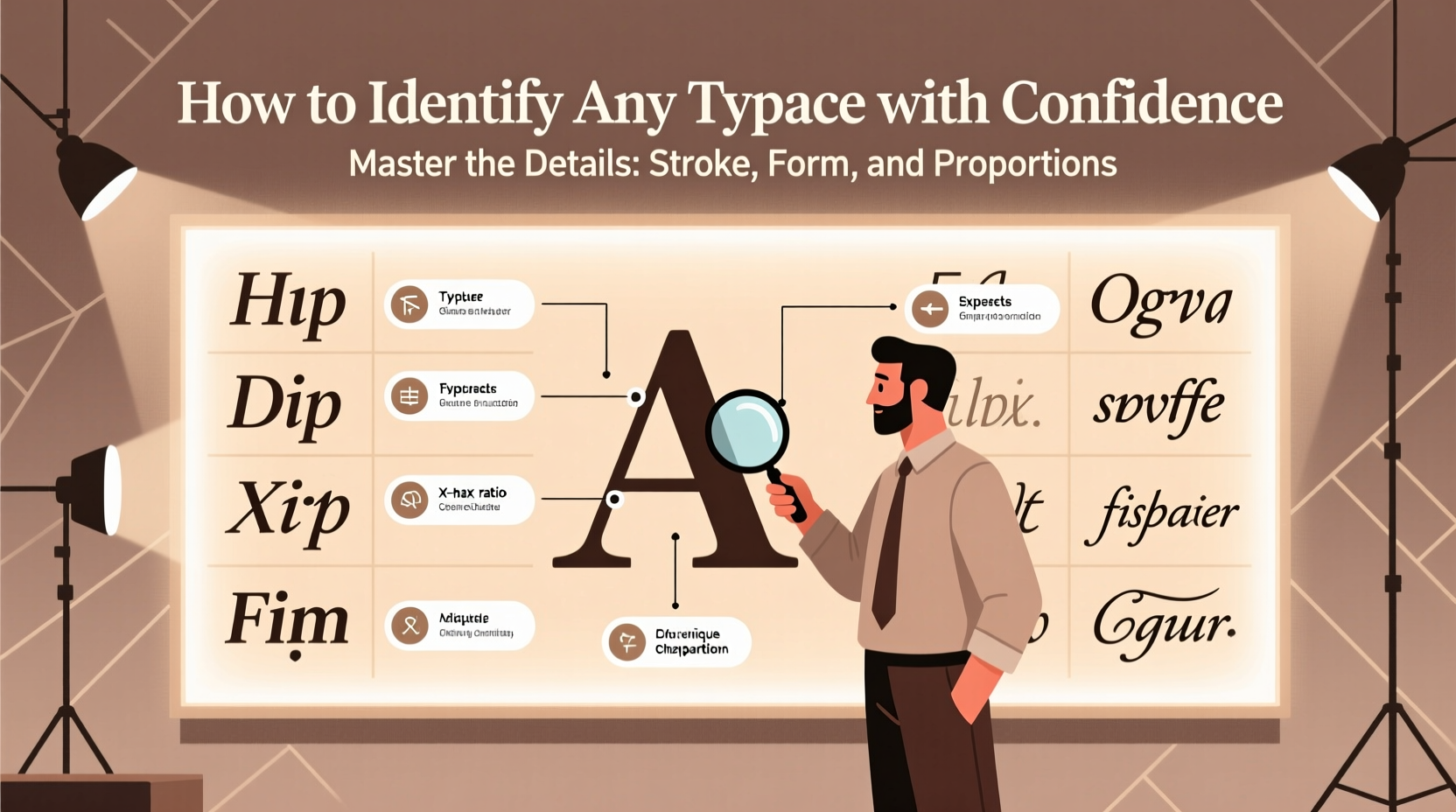
Before diving into specifics, step back and ask: what broad category does this font belong to? Typefaces are grouped into families based on shared structural traits. Knowing these categories helps narrow your search significantly.
- Serif: Letters have small projecting features (serifs) at the ends of strokes. Examples: Times New Roman, Georgia.
- Sans-serif: Clean lines without serifs. Often modern and minimal. Examples: Arial, Futura.
- Script: Mimics handwriting or calligraphy. Can be formal or casual. Examples: Brush Script, Bickham Script.
- Display/Decorative: Designed for headlines or special uses, often stylized. Examples: Impact, Lobster.
- Slab Serif: Bold, block-like serifs. Strong and attention-grabbing. Examples: Rockwell, Courier.
Analyze Key Letterforms for Distinctive Clues
Once you’ve narrowed the family, examine specific letters closely. Experts focus on high-discrimination characters—those with unique shapes that vary widely across fonts.
Critical Letters to Examine
| Letter | What to Look For |
|---|---|
| 'g' | Two-story (like in Georgia) vs. single-story (like in Verdana). A major differentiator in serif and sans-serif fonts. |
| 'a' | Looped or two-story 'a' vs. simpler single-story version. Common in humanist sans-serifs like Gill Sans. |
| 'R' | The shape of the leg—straight, curved, or hooked. Helvetica’s ‘R’ has a straight diagonal leg; Univers curves it gently. |
| 'Q' | Does the tail extend through the bowl? Is it curved or straight? Didone fonts like Bodoni have long, dramatic tails. |
| 'e' | Is the crossbar horizontal or slightly tilted? In some grotesque sans-serifs like Franklin Gothic, it slants subtly. |
“Type is emotion captured in form. The curve of an ‘e’ or the cut of a ‘t’ tells you more than you think.” — Tobias Frere-Jones, Renowned Type Designer
Use Digital Tools Strategically
No expert relies solely on memory. Even seasoned typographers use tools to confirm suspicions or explore possibilities. The key is knowing how to use them effectively.
Recommended Identification Tools
- WhatTheFont (MyFonts): Upload an image, and the tool analyzes visible characters. Best when text is clear and isolated.
- Font Squirrel Matcherator: Similar to WhatTheFont but works well with lower-resolution images.
- Adobe Fonts Search: Filter by classification, mood, and x-height. Great for browsing once you have a hunch.
- Identifont: Answer a series of guided questions about stroke width, serifs, and letter shapes to narrow options.
A Step-by-Step Guide to Identifying Any Typeface
Follow this systematic process to move from uncertainty to confident identification:
- Observe context. Where is the font used? A luxury brand likely uses elegant serifs; tech companies favor clean sans-serifs.
- Determine the type family. Serif, sans-serif, script, etc. Use the visual cues mentioned earlier.
- Inspect critical letters. Focus on 'g', 'a', 'e', 'Q', and 'R'. Note distinctive features like stroke endings or proportions.
- Check for x-height and weight. Is the lowercase relatively tall (high x-height, like Calibri)? Or petite (like Garamond)? Is it bold, light, or regular?
- Look for historical or stylistic clues. Does it feel geometric (Futura), humanist (Frutiger), or mechanical (Eurostile)?
- Test with digital tools. Upload or describe your findings using online resources.
- Cross-reference results. Compare suggested matches side-by-side with the original. Pay attention to细节 like terminal curves and spacing.
Mini Case Study: Identifying a Mysterious Logo Font
A freelance designer was hired to refresh a local café’s branding but wasn’t given access to the original logo files. All they had was a low-res photo from social media showing the name in a sleek, uppercase sans-serif font.
They started by noting the all-caps usage and even stroke width. The ‘A’ had a flat top and slightly angled legs. The ‘C’ was perfectly circular, and the ‘R’ featured a straight leg. These traits ruled out humanist and geometric sans-serifs.
After uploading the image to WhatTheFont, the top suggestion was **Univers Bold Condensed**. Upon comparing character shapes and spacing, the match was nearly perfect. A quick license check confirmed it was available, and the rebrand proceeded smoothly—all from a blurry Instagram post.
Common Pitfalls and How to Avoid Them
Even experienced identifiers make mistakes. Awareness of common errors improves accuracy.
| Do’s | Don’ts |
|---|---|
| Compare multiple characters, not just one. | Rely solely on the letter ‘O’ or ‘H’. |
| Consider the medium—screen rendering can distort thin strokes. | Assume a font is rare just because it looks unfamiliar. |
| Verify licensing before using a matched font commercially. | Trust automated tools blindly without manual verification. |
| Use magnification to study terminals and counters. | Ignore kerning and spacing, which are strong indicators of font identity. |
Frequently Asked Questions
Can I identify a font from a handwritten note?
True handwriting cannot be matched to a standard font, but if the writing mimics a known script typeface (like Zapfino), identification may be possible. Otherwise, focus on finding a font with similar rhythm and flourishes.
What if no tool gives me a match?
This often means the font is custom, heavily modified, or obscure. Try searching by style keywords (e.g., “geometric slab serif 1970s”) or consult typography forums like Typophile or Reddit’s r/typography.
Are free font identifiers accurate?
They’re surprisingly good, especially with clear images. However, they rely on existing databases. Niche, newly released, or non-Latin fonts may not appear in results.
Build Your Visual Library Over Time
The fastest way to become a font expert is consistent exposure. Train your eye like a sommelier trains their palate. Dedicate 10 minutes a day to studying type specimens. Bookmark foundry sites like Linotype, Monotype, and House Industries. Follow designers on social media who post type breakdowns.
Create a personal reference sheet: sketch or screenshot fonts you encounter often, label them, and note distinguishing features. Over time, you’ll recognize patterns—like how most grotesque sans-serifs lack true italics, or how transitional serifs (like Baskerville) have more vertical stress than old-style ones (like Caslon).
Conclusion: Confidence Comes from Practice
Identifying typefaces isn’t about memorizing hundreds of names—it’s about learning to see. Once you understand the language of letterforms, every sign, book cover, or app interface becomes a lesson. You’ll stop guessing and start knowing.
Start today: pick a random piece of text, analyze its structure, and try to name the font. Use tools as allies, not crutches. Share your findings. Challenge yourself weekly. Mastery doesn’t come overnight, but each observation builds your expertise.




 浙公网安备
33010002000092号
浙公网安备
33010002000092号 浙B2-20120091-4
Comments
No comments yet. Why don't you start the discussion?