
Eggs are a staple in kitchens around the world, prized for their versatility, nutrition, and affordability. But like any perishable food, they don’t last forever. Consuming spoiled eggs can lead to foodborne illness, most commonly from Salmonella. Knowing how to accurately assess egg freshness isn't just about taste—it's about safety. While the expiration date on the carton offers a general guideline, it doesn't always reflect the actual condition of the eggs inside. This guide provides reliable, science-backed methods—including the widely trusted float test—and practical freshness hacks that help you confidently determine whether an egg is still good to eat.
The Float Test: A Simple, No-Cost Freshness Check
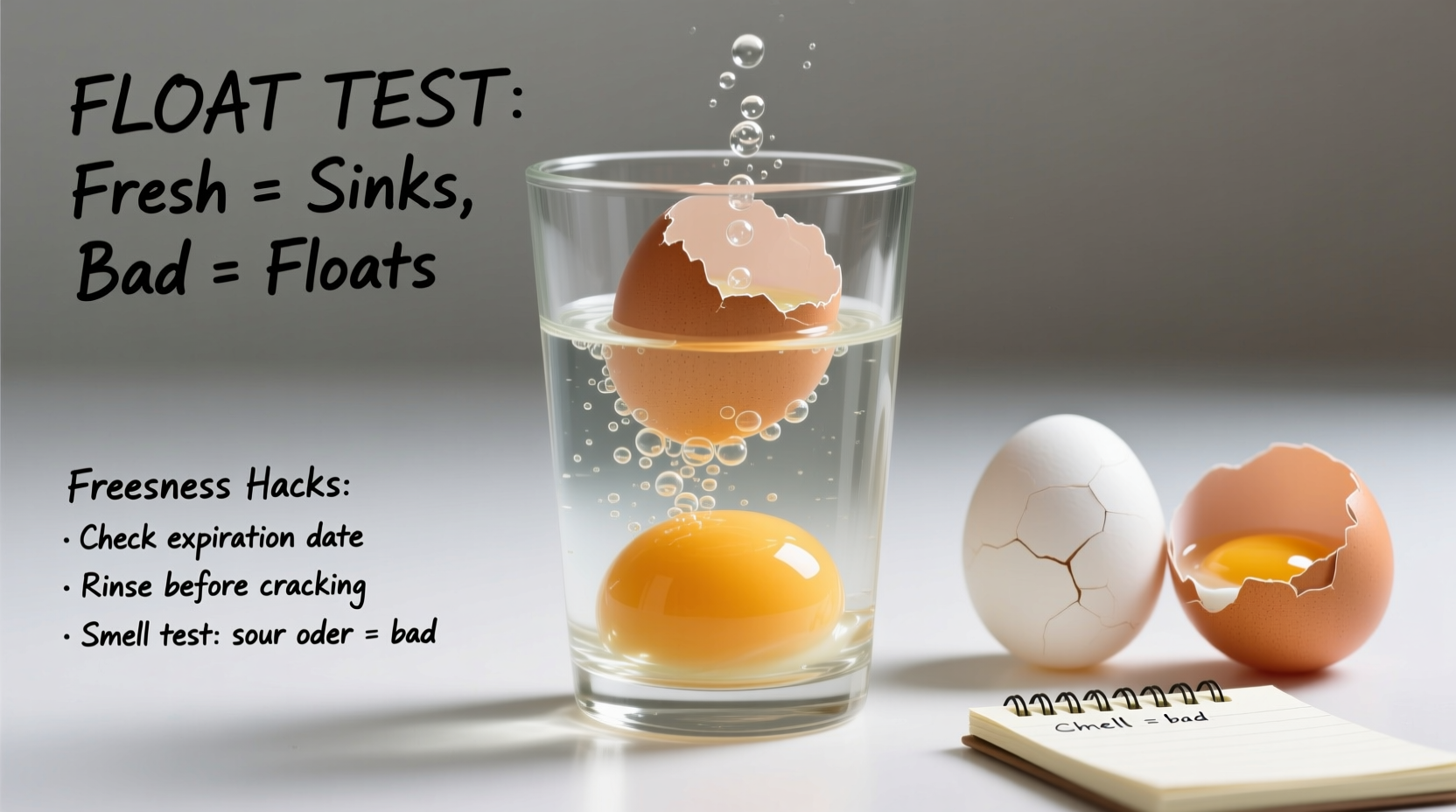
One of the most effective and accessible ways to test egg freshness is the float test. It requires nothing more than a bowl of water and a few seconds of your time. As eggs age, the air cell inside them expands due to moisture loss through the porous shell. The larger this air pocket becomes, the more buoyant the egg will be in water.
- Fill a bowl or glass with cold tap water—about 4 inches deep.
- Gently place the egg into the water.
- Observe how it behaves.
| Result | What It Means | Freshness Level |
|---|---|---|
| Lies flat on the bottom | The air cell is small; minimal moisture has escaped. | Fresh (1–7 days old) |
| Stands upright on the bottom or tilts slightly | Air cell has grown but not excessively. | Still safe to eat, but older (1–3 weeks old) |
| Floats to the surface | Large air cell indicates significant aging and possible bacterial growth. | Discard immediately |
While floating doesn’t automatically mean the egg is contaminated, it strongly suggests spoilage and increased risk. Err on the side of caution: when in doubt, throw it out.
Crack-and-Smell Method: Real-Time Freshness Assessment
The float test is excellent for pre-cracking evaluation, but once an egg is cracked open, sensory cues become critical. The smell test is one of the most immediate indicators of spoilage.
Fresh eggs have a neutral or very mild odor. A rotten egg emits a strong, unmistakable sulfuric stench—often described as resembling “rotten cabbage” or “sewage.” This smell comes from hydrogen sulfide gas produced by bacteria breaking down proteins inside the egg.
What to Look for When Cracked
- Yolk appearance: In a fresh egg, the yolk should be firm, rounded, and centered. If it’s flattened, breaks easily, or appears discolored (pink, green, black), the egg may be spoiled.
- Albumen (egg white): Should be thick and clear, with some cloudiness being normal. Watery, runny whites often indicate age, though not necessarily spoilage.
- Off-colors: Any pink, green, or iridescent tints in the white or yolk suggest bacterial contamination and require disposal.
“Even if an egg passes the float test, never consume it if it smells foul after cracking. Olfactory detection remains one of the fastest and most reliable field tests for spoilage.” — Dr. Linda Harper, Food Safety Microbiologist, USDA Cooperative Extension
Other Proven Freshness Hacks You Can Use at Home
Beyond the float and smell tests, several lesser-known but effective techniques can help assess egg quality and extend shelf life.
1. Candle Test (Traditional Egg Inspection)
Originally used in commercial hatcheries, candling involves shining a bright light behind the egg in a dark room. This allows you to see the size of the air cell and detect cracks or abnormalities.
In a home setting, use a flashlight or phone LED. Hold the egg against the light source and observe:
- A small, defined air pocket near the wide end = fresh.
- A large, shifting air space = older egg.
- Cloudy spots, streaks, or movement inside = potential microbial growth.
2. Shake Test (Less Reliable but Quick)
Gently shake the egg near your ear. If you hear sloshing, the egg is likely old—the contents have thinned and the air cell has expanded. However, this method is not foolproof and should be paired with other checks.
3. Plate Test for Runniness
Break the egg onto a flat plate. A fresh egg will hold its shape with a raised yolk and thick surrounding white. An older egg spreads out quickly, with a thin, watery albumen. While this doesn’t confirm spoilage, it indicates reduced quality suitable only for baking or scrambling, not poaching or frying.
Storage Mistakes That Accelerate Spoilage
How you store eggs dramatically affects their shelf life and safety. Many common habits unknowingly shorten freshness.
Common Storage Errors
- Leaving eggs on the fridge door: Temperature fluctuates every time the door opens, promoting condensation and bacterial penetration through the shell pores.
- Storing in original cardboard cartons on middle shelves: Actually recommended—cardboard helps maintain humidity and protects from odors. Just keep them away from strong-smelling foods like onions.
- Washing eggs before storing: Commercially washed eggs in the U.S. are sanitized and coated to seal pores. Washing at home removes this protection. Only rinse eggs right before use.
- Keeping eggs at room temperature: Perishable foods should not sit out longer than two hours. Bacteria multiply rapidly between 40°F and 140°F (the “danger zone”).
Optimal Storage Conditions
| Factor | Recommended Practice |
|---|---|
| Temperature | Keep below 40°F (4°C) at all times |
| Location | Back of the main compartment (not the door) |
| Container | Original carton or sealed container to prevent odor absorption |
| Duration | Use within 3–5 weeks of purchase for peak quality |
“Proper refrigeration can extend egg shelf life by up to five weeks. Consistent cold storage is the single most important factor in preventing spoilage.” — National Egg Board
Real-Life Example: Avoiding a Kitchen Disaster
Sarah, a home cook in Portland, Oregon, once prepared a frittata for her weekend brunch using eggs she’d bought four weeks earlier. Though the carton’s \"best by\" date had passed, she assumed they were still usable. She skipped checking them individually, cracking three directly into the pan. One released a foul, sulfurous odor instantly. The entire dish had to be discarded, and her kitchen reeked for hours.
After researching egg safety, Sarah adopted the float test as a standard step. Now, she tests older eggs before use—even if they’re within the printed date range. “I realized dates aren’t guarantees,” she says. “Now I trust my senses and simple tests more than labels.” Her habit has prevented multiple incidents and saved both food and time.
Step-by-Step Guide: How to Safely Evaluate Eggs at Home
Follow this routine to ensure every egg you use is fresh and safe:
- Check the date: Note the Julian date or \"best by\" on the carton. Julian dates run from 001 (January 1) to 365 (December 31).
- Inspect the shell: Look for cracks, slime, or powdery mold. Damaged shells increase contamination risk.
- Perform the float test: Especially for eggs over two weeks old.
- Candle if possible: Use a flashlight in a dark room to assess internal quality.
- Crack one at a time: Over a small bowl to avoid contaminating others if spoiled.
- Smell and observe: Discard immediately if foul odor or discoloration appears.
- Store properly: Return unused eggs to the fridge promptly in their carton.
Frequently Asked Questions
Can eggs be safe to eat after the expiration date?
Yes, eggs are often safe to eat 2–3 weeks beyond the \"best by\" date if refrigerated properly. The date reflects peak quality, not safety. Always perform freshness tests before consumption.
Why do some hard-boiled eggs have a green ring around the yolk?
A green-gray ring forms when eggs are overcooked, causing iron in the yolk to react with sulfur in the white. While unattractive, it’s harmless. To prevent it, boil eggs for 9–12 minutes, then cool them quickly in ice water.
Do brown eggs last longer than white eggs?
No. Shell color has no impact on shelf life or nutritional value. Both types degrade at the same rate under identical storage conditions.
Conclusion: Stay Safe, Save Food, Trust Your Instincts
Knowing how to tell if eggs are bad goes beyond reading labels—it’s about applying practical, reliable methods that protect your health and reduce waste. The float test, combined with visual and olfactory checks, gives you real-time insight into egg freshness. Proper storage extends usability, while common mistakes can silently compromise safety.
These techniques are easy to adopt and take mere seconds to perform. By integrating them into your kitchen routine, you gain confidence in every meal you prepare. Whether you're making deviled eggs for a party or a simple omelet for breakfast, a moment of inspection can make all the difference.




 浙公网安备
33010002000092号
浙公网安备
33010002000092号 浙B2-20120091-4
Comments
No comments yet. Why don't you start the discussion?