
Understanding romantic interest isn’t always straightforward. You might find yourself analyzing texts, replaying conversations, or wondering why plans never seem to materialize. While ambiguity is part of dating, there comes a point when patterns reveal disinterest—no matter how much you want to believe otherwise. Recognizing these signs early protects your time, emotions, and self-worth. More importantly, knowing what to do next empowers you to shift focus from chasing someone who isn’t invested to building a life that reflects your value.
1. Clear Signs He’s Not Interested
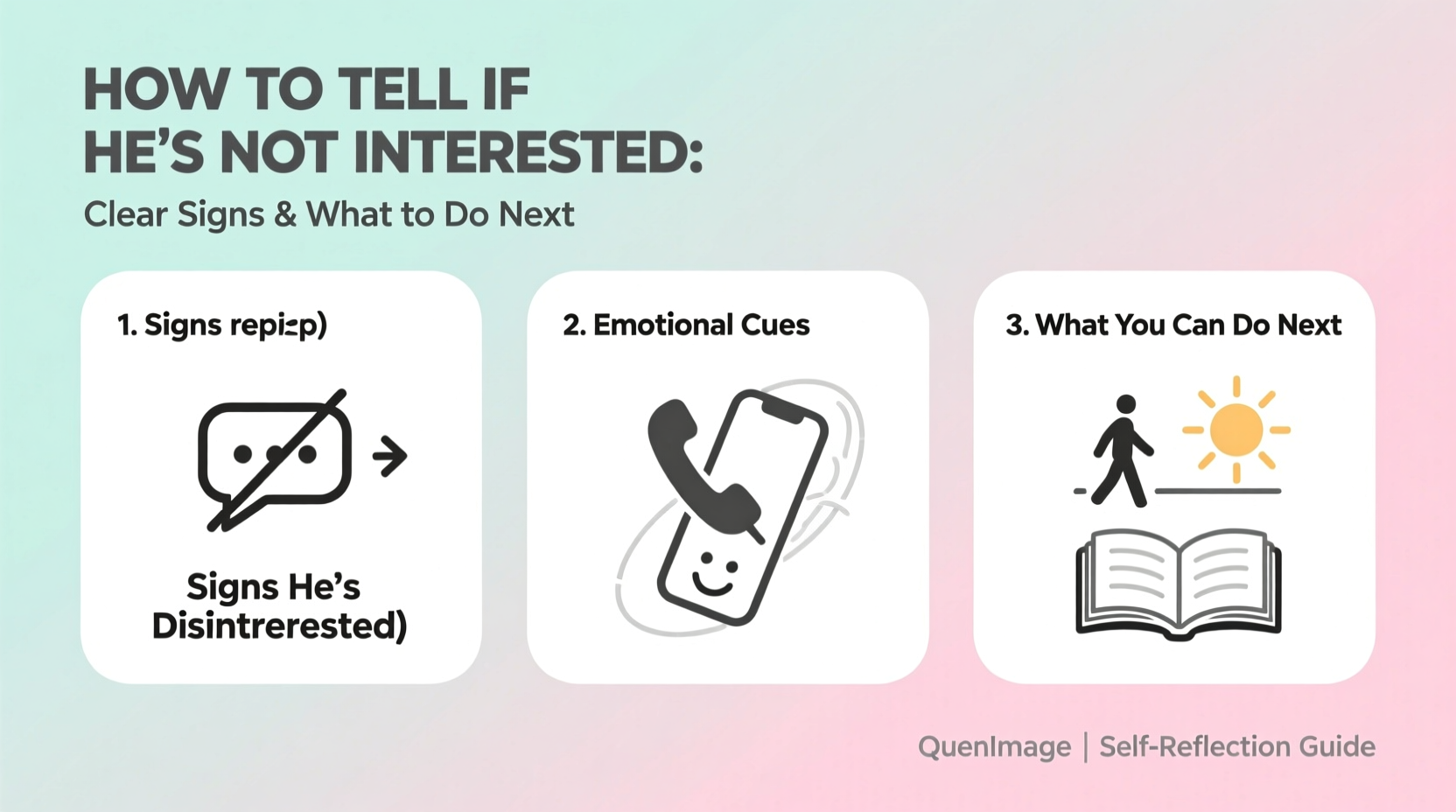
Emotional clarity begins with observation. When someone is genuinely interested, their actions consistently align with their words. Disinterest, on the other hand, shows up in subtle but consistent behaviors. These aren’t about isolated incidents—everyone has busy days—but rather recurring patterns over time.
- Lack of initiation: He rarely reaches out first. Conversations depend on you to keep them going, and even then, responses are short or delayed by hours—or days.
- Inconsistent communication: One day he’s texting nonstop; the next, he ghosts for 48 hours without explanation. This hot-and-cold behavior often signals low investment.
- No effort to plan real-life meetings: Despite months of talking, there’s no concrete plan to meet. Excuses pile up—work, family, fatigue—while you’re left waiting for a date that never happens.
- Avoids deep conversation: Topics stay surface-level: weather, weekend plans, memes. He deflects personal questions or changes the subject when emotions or future intentions come up.
- Doesn’t include you in his world: No introductions to friends, no social media acknowledgment, and no mention of you in stories about his daily life.
2. What Emotional Avoidance Looks Like in Practice
Some men aren’t outright rude—they just emotionally withdraw. They may respond politely, agree to “hang out someday,” or compliment you occasionally. But beneath the surface, they avoid vulnerability, accountability, and forward motion.
This passive disengagement is especially confusing because it leaves room for hope. You might catch yourself thinking, “He just needs time,” or “Maybe he’s shy.” However, prolonged emotional unavailability is a choice—not a condition to be fixed by your patience.
“Indifference is its own answer. If someone wanted to be with you, they would find a way to make it happen—not endless reasons why it can’t.” — Dr. Lena Torres, Relationship Psychologist
When someone values you, they prioritize you—even when life gets busy. Silence, last-minute cancellations, and vague promises are not signs of hesitation; they are quiet closures.
3. Do’s and Don’ts When Facing Disinterest
How you respond matters as much as what you observe. Reacting from insecurity—double-texting, seeking reassurance, making excuses for his behavior—only deepens emotional dependency. Instead, use this moment to reclaim agency.
| Do | Don’t |
|---|---|
| Mirror his level of effort | Over-invest emotionally to win his attention |
| Set boundaries around your time and energy | Tolerate inconsistent behavior hoping it will change |
| Ask direct questions about intent (once) | Accept vague answers without follow-up |
| Focus on people who show up consistently | Compare yourself to others he dates or mentions |
| Reflect on your own needs and standards | Lower your expectations to fit his availability |
4. A Real-Life Example: Sarah’s Story
Sarah met Mark through a mutual friend. They hit it off instantly—long calls, shared jokes, and frequent texts. After six weeks, she suggested dinner. He agreed but canceled twice due to “work emergencies.” On the third try, they met. The date was pleasant, but afterward, his messages dwindled. She initiated every conversation. When she asked if he’d like to see her again, he replied, “I’m really swamped right now. Let’s connect soon.”
Two weeks passed with no contact. Sarah considered reaching out again but paused after discussing it with her sister. She realized: he hadn’t made one plan, never mentioned meeting her friends, and avoided any talk about the future. His silence wasn’t a mystery—it was an answer.
She decided to stop initiating. Within days, she felt lighter. A month later, she matched with someone new who asked her out immediately and followed through. Looking back, she said, “I wasn’t being rejected. I was being respected—with silence. I just didn’t want to hear it at the time.”
5. What You Can Do Next: A Step-by-Step Guide
Once you’ve accepted the truth, the next steps aren’t about him—they’re about you. Healing begins when action replaces rumination.
- Pause all pursuit: Stop initiating contact. Observe whether he reaches out. If he does, note the tone and purpose. Is it casual? Demanding? Apologetic? Let his actions inform your next move.
- Have one honest conversation (optional): If closure matters to you, send a calm message: “I’ve noticed we haven’t been connecting much. I’m curious—are you looking for something casual, serious, or nothing right now?” Give him space to respond honestly. Then believe him.
- Evaluate your pattern: Have you repeatedly pursued unavailable people? Explore whether familiarity is mistaken for compatibility. Journaling or speaking with a counselor can help uncover deeper patterns.
- Redirect your energy: Invest time in hobbies, friendships, fitness, or career goals. Filling your life with meaningful activity reduces fixation on someone who isn’t present.
- Reaffirm your standards: Write down what you truly want in a partner—emotional availability, consistency, mutual respect. Keep this list visible. It becomes your filter moving forward.
Frequently Asked Questions
What if he says he’s interested but acts distant?
Actions define intent. Words without follow-through signal internal conflict or lack of priority. You cannot demand enthusiasm. If he cared deeply, he’d manage his time, communicate openly, and make space for you. Don’t settle for verbal reassurance while living with emotional absence.
Could he come back later if I pull away?
Possibly—but that’s irrelevant. Your goal isn’t to trigger regret or spark competition. It’s to live authentically. If he returns with genuine effort and clarity, evaluate then. But don’t freeze your life waiting for a maybe.
Am I overreacting by walking away?
No. Protecting your peace isn’t dramatic—it’s disciplined. Staying in limbo harms self-trust. Walking away from indifference isn’t quitting; it’s choosing self-respect over false hope.
Conclusion: Move Forward With Purpose
Recognizing disinterest is painful, but clarity is a gift. Every moment spent decoding mixed signals is a moment stolen from your growth. He doesn’t owe you love—but you owe yourself honesty.
Use this experience to refine your boundaries, deepen self-awareness, and redirect your heart toward those who meet you with equal energy. The right person won’t leave you guessing. They’ll show up, speak clearly, and choose you—consistently.




 浙公网安备
33010002000092号
浙公网安备
33010002000092号 浙B2-20120091-4
Comments
No comments yet. Why don't you start the discussion?