
Malware doesn’t always announce itself with flashing warnings or system crashes. Often, it operates silently in the background, stealing data, slowing performance, or hijacking resources—all while remaining invisible to the average user. While antivirus software is a powerful tool for detection and removal, not everyone wants to install third-party programs on their machine. Whether you're dealing with a work laptop under strict IT policies, an older system that struggles with additional software, or simply prefer minimal installations, it’s still possible to detect signs of infection using built-in tools and observant troubleshooting.
This guide walks through practical, actionable ways to identify malware on your computer without relying on antivirus installation. From monitoring system behavior to analyzing network activity and inspecting running processes, you’ll gain the skills to spot red flags early—before damage escalates.
Unusual System Behavior: The First Warning Signs
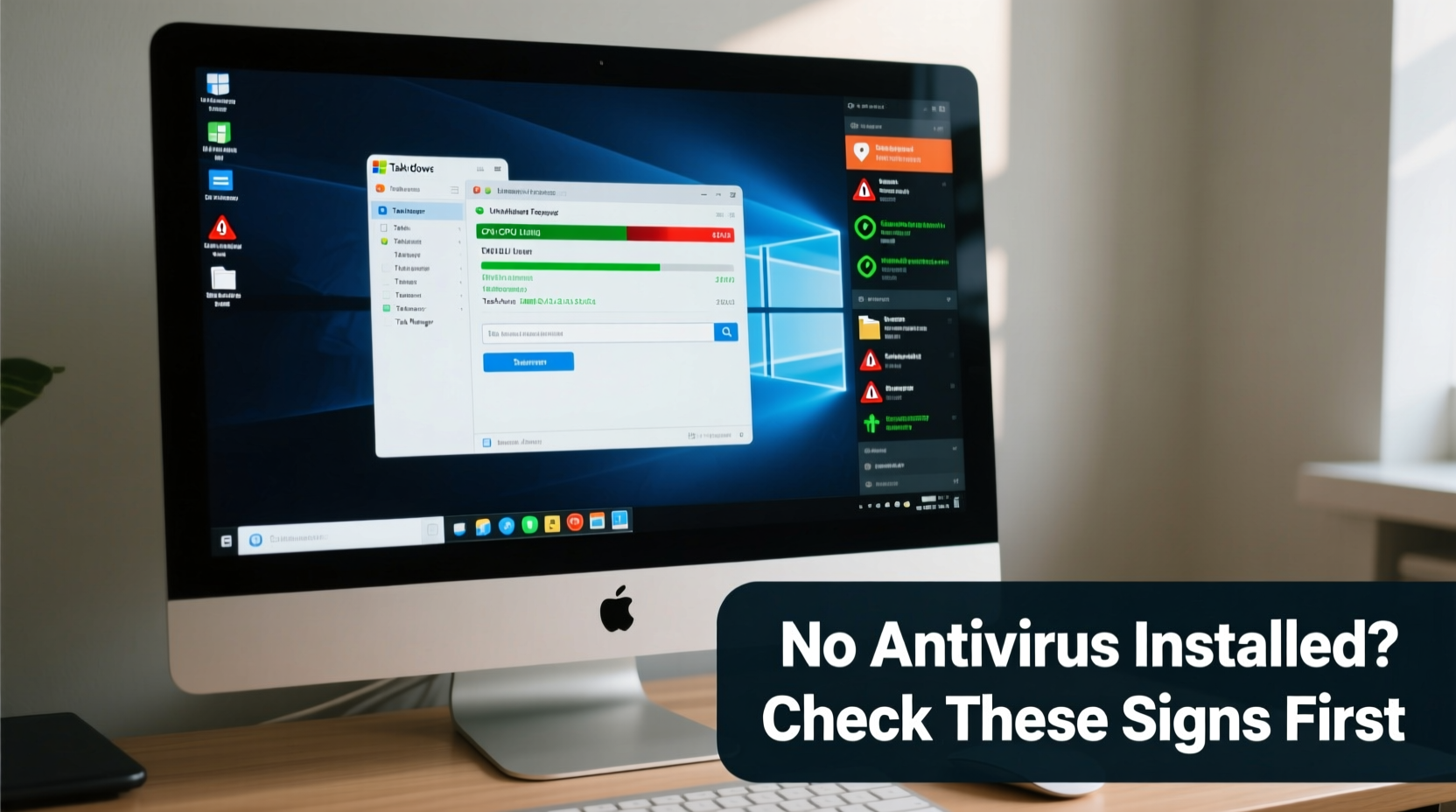
Your computer often gives subtle hints when something is wrong. Malware may not trigger pop-up alerts, but it frequently alters how your system behaves. Recognizing these deviations from normal operation is the first step in self-diagnosis.
- Sudden slowdowns: If your system takes significantly longer to boot up, open programs, or respond to commands—even after closing all apps—it could indicate hidden processes consuming CPU or memory.
- Frequent crashes or freezes: While occasional glitches happen, repeated blue screens (Windows) or kernel panics (macOS) without clear cause suggest instability possibly caused by malicious code interfering with core operations.
- Unexpected pop-ups or ads: Seeing browser-like advertisements outside of any web session—especially promoting fake security scans or tech support—is a classic sign of adware or scareware.
- Homepage or search engine changes: If your default browser homepage redirects to an unfamiliar site, or search results are filled with sponsored links, your system may be infected with a browser hijacker.
- Disabled security features: Malware sometimes disables Windows Defender, Firewall, or Task Manager to avoid detection. If you find these tools grayed out or inaccessible, treat it as a serious red flag.
Analyzing Running Processes Using Built-In Tools
Modern operating systems include diagnostic utilities that let you inspect what’s running behind the scenes. These tools don’t require downloads and can reveal suspicious activity.
On Windows: Use Task Manager and Resource Monitor
Press Ctrl + Shift + Esc to open Task Manager. Navigate to the “Processes” tab and sort by CPU, Memory, or Disk usage. Look for:
- Processes with generic names like “svchost.exe” running unusually high resource loads (note: multiple legitimate services use this name, so context matters).
- Unknown executables located in unusual folders such as
C:\\Users\\Public\\,C:\\Temp\\, or random strings in AppData. - Multiple instances of similar-looking processes (e.g., “UpdateManager.exe,” “Updater.exe,” “AutoUpdate.exe”) that weren’t installed by known software.
To dig deeper, go to the “Details” tab and right-click any suspicious process. Select “Open file location.” Legitimate system files reside in C:\\Windows\\System32 or program folders under Program Files. Files hiding in obscure directories should raise suspicion.
On macOS: Use Activity Monitor
Navigate to Applications > Utilities > Activity Monitor. Check each tab—CPU, Memory, Energy, Disk—for abnormally high usage. Sort by \"% CPU\" and look for unfamiliar entries. Click the process to view its path under “Kind” or “Process ID.” Malicious apps often appear with randomized names or masquerade as system components.
“Many users overlook native monitoring tools, assuming they need third-party software to detect threats. In reality, Task Manager and Activity Monitor are powerful early-warning systems when used correctly.” — David Lin, Cybersecurity Analyst at SecureEdge Labs
Monitoring Network Traffic for Suspicious Connections
One of the most revealing indicators of malware is unauthorized outbound communication. Infected machines often 'phone home' to command-and-control servers, sending stolen data or receiving instructions.
Using Command-Line Tools to Inspect Active Connections
Both Windows and macOS offer command-line utilities to list active network connections.
On Windows:
- Press Win + R, type
cmd, and press Enter. - Type
netstat -anoand press Enter. - Review the output for connections to unfamiliar IP addresses, especially those on ports like 4444, 5555, or 8080, which are commonly used by remote access trojans.
- Note the PID (Process ID) at the end of each line, then cross-reference it in Task Manager under the “Details” tab.
On macOS:
- Open Terminal (found in Utilities).
- Type
lsof -iand press Enter. - Look for persistent connections to unknown domains or foreign IP addresses, particularly if associated with non-browser applications.
Checklist: Steps to Investigate Potential Malware Without Antivirus
Follow this systematic approach to determine whether your computer is compromised:
- Observe system performance: Note slowdowns, crashes, or unexplained restarts.
- Inspect startup programs: On Windows, use Task Manager > Startup tab; on macOS, go to System Settings > Users & Groups > Login Items. Disable unknown or suspicious entries.
- Review browser extensions: Open your browser settings and remove unfamiliar add-ons, toolbars, or plugins.
- Analyze running processes: Use Task Manager (Windows) or Activity Monitor (macOS) to identify high-resource or unknown executables.
- Trace file locations: Right-click suspicious processes and open their file location. Avoid anything outside trusted directories.
- Monitor network activity: Run
netstat -ano(Windows) orlsof -i(macOS) to detect unusual outbound connections. - Check hosts file for redirections: On Windows, navigate to
C:\\Windows\\System32\\drivers\\etc\\hosts; on macOS,/etc/hosts. Open with Notepad or TextEdit. Look for entries redirecting known sites (like google.com) to strange IPs. - Scan with online scanners (optional): If permitted, run a one-time scan using reputable web-based tools like ESET Online Scanner or Bitdefender Quick Scan—these don’t require permanent installation.
Spotting Hidden Threats: Registry and Scheduled Tasks
Advanced malware often embeds itself into system-level configurations to survive reboots and evade casual inspection. Two key areas to examine are the Windows Registry and Task Scheduler.
Windows Registry: A Common Hiding Spot
Press Win + R, type regedit, and press Enter. Navigate to:
HKEY_CURRENT_USER\\Software\\Microsoft\\Windows\\CurrentVersion\\RunHKEY_LOCAL_MACHINE\\SOFTWARE\\Microsoft\\Windows\\CurrentVersion\\Run
These keys control programs that launch at startup. Look for entries with vague names (e.g., “Updater,” “Service Host”) or pointing to executable files in temporary folders. Do not delete anything unless you’re certain—it's easy to damage the system with incorrect edits.
Scheduled Tasks as Persistence Mechanisms
Malware may schedule recurring tasks to reactivate after cleanup. To review:
- Press Win + R, type
taskschd.msc, and press Enter. - In Task Scheduler, browse through the task library.
- Look for tasks with cryptic names, set to run scripts or EXEs from unusual paths, or triggered at odd intervals (e.g., every 10 minutes).
If you find a suspicious task, right-click and disable it rather than deleting immediately. Observe system behavior over the next few hours to assess impact.
Real Example: Identifying Crypto-Mining Malware
Consider the case of Maria, a freelance graphic designer working from home. She noticed her laptop was consistently hot, even when idle, and battery life had dropped from 6 hours to less than 2. Performance lagged during simple tasks. No new software had been installed recently.
She opened Task Manager and sorted by CPU usage. One process named “svchost_update.exe” was consuming 78% of her CPU. It ran from C:\\Users\\Maria\\AppData\\Local\\Temp\\—an atypical location for system services. A quick web search revealed no legitimate software by that name.
Using netstat -ano, she found the process was connecting to an IP address in Eastern Europe. Cross-referencing the IP on AbuseIPDB showed multiple reports of crypto-mining activity. After ending the process and deleting the file, her system returned to normal. The infection likely came from a pirated font downloader she’d used weeks earlier.
This example illustrates how combining behavioral observation with basic command-line tools can uncover stealthy threats without installing additional software.
Do’s and Don’ts When Investigating Malware
| Do | Don’t |
|---|---|
| Take notes of suspicious process names, file paths, and IP addresses. | Immediately delete unknown files without backing up or researching them. |
| Use built-in tools like Task Manager, Activity Monitor, and netstat regularly. | Assume high CPU usage is always due to malware—some legitimate apps (e.g., video editors) are resource-heavy. |
| Disable suspicious startup items or scheduled tasks before removing files. | Edit the Windows Registry unless you understand the risks and have a backup. |
| Search unfamiliar process names online before taking action. | Ignore repeated pop-ups or redirects—they are rarely harmless. |
| Back up important data immediately if you suspect infection. | Continue entering passwords or sensitive information on a potentially compromised machine. |
FAQ: Common Questions About Malware Detection Without Antivirus
Can malware hide from Task Manager or Activity Monitor?
Yes, advanced malware can employ rootkit techniques to mask its presence. However, most common infections—including adware, spyware, and crypto-miners—are visible as regular processes. Unusually high resource consumption by otherwise unknown programs is usually detectable even if the name is disguised.
Is it safe to investigate malware myself?
Basic investigation using built-in tools is generally safe. Avoid modifying system files, registry entries, or deleting critical processes unless you’re certain of their purpose. When in doubt, consult a professional or use a live antivirus scanner on a USB drive.
What should I do if I confirm malware without antivirus software?
First, disconnect from the internet to prevent further data transmission. Next, back up essential files to an external drive (avoid opening them afterward). Then, consider booting from a trusted recovery environment or using a portable antivirus scanner. For persistent infections, a clean OS reinstall may be the safest option.
Conclusion: Stay Alert, Stay Protected
You don’t need antivirus software installed to recognize the signs of a compromised system. By paying attention to performance anomalies, learning how to use built-in diagnostic tools, and understanding normal versus suspicious behavior, you can catch malware early and take informed action. Vigilance is your first line of defense.
The goal isn’t to replace antivirus with manual checks, but to empower yourself with knowledge that works when tools aren’t available or allowed. Early detection often prevents data loss, identity theft, and long-term damage.




 浙公网安备
33010002000092号
浙公网安备
33010002000092号 浙B2-20120091-4
Comments
No comments yet. Why don't you start the discussion?