
Eggs are a staple in kitchens around the world, prized for their versatility, nutrition, and ease of preparation. But one common concern lingers in the back of every home cook’s mind: how can you be sure your eggs are still safe to eat? Grocery store cartons often bear dates that confuse more than clarify—“sell by,” “best before,” or “use by”—but none of these guarantee freshness once the eggs are in your fridge. Enter the float test: a simple, no-cost method backed by food science that helps determine whether an egg is fresh, older but usable, or spoiled. This guide walks you through the science behind the test, how to perform it correctly, what the results mean, and how to interpret them with confidence.
The Science Behind the Egg Float Test
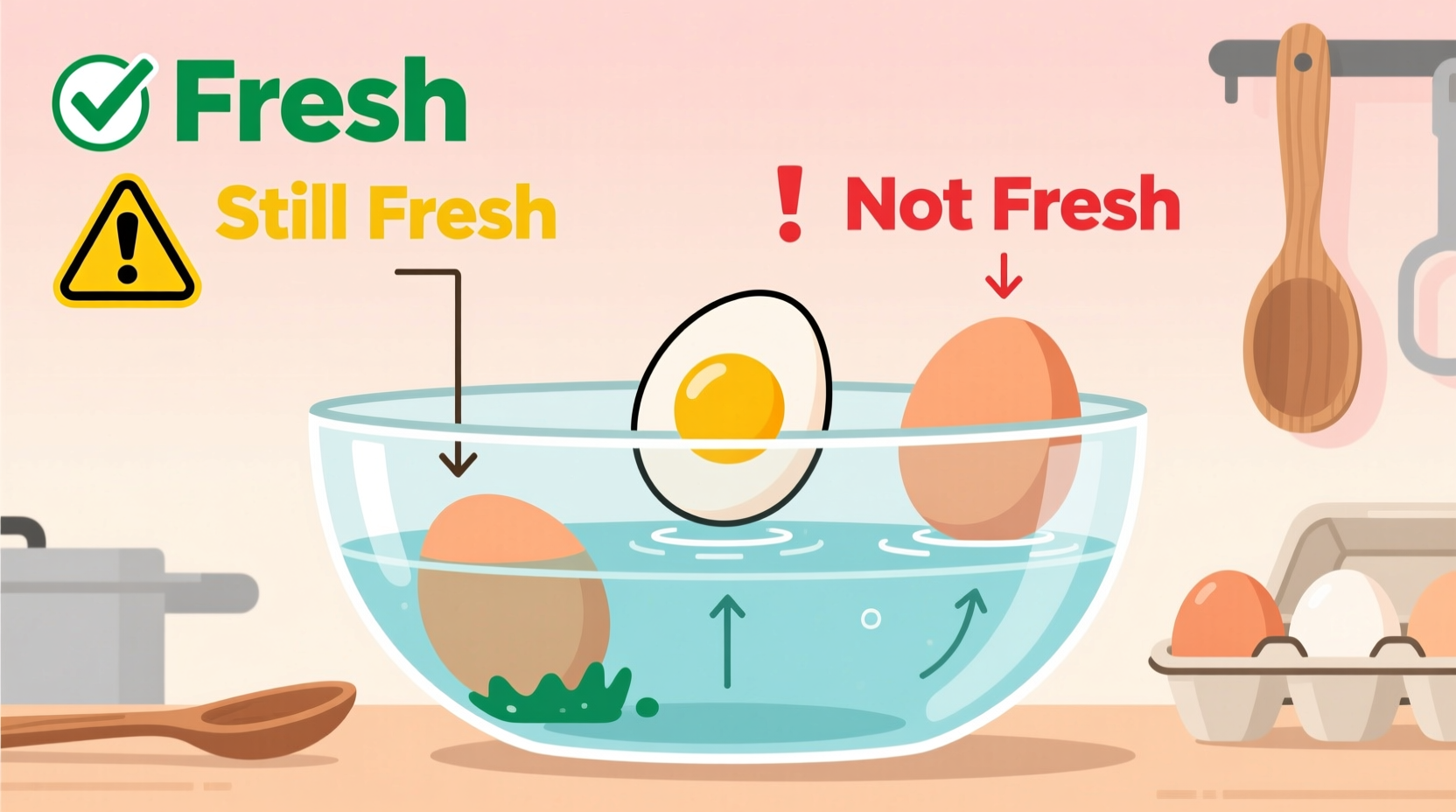
At its core, the float test relies on a fundamental change that occurs inside an egg over time: the growth of the air cell. Every egg has a small pocket of air between the inner and outer shell membranes, typically located at the larger end. When an egg is freshly laid, this air cell is tiny. However, as the egg ages, moisture evaporates through thousands of microscopic pores in the shell, and air gradually replaces it. The longer the egg sits, the larger the air cell becomes.
This increase in internal air volume affects the egg's overall density. A fresh egg is denser than water and will sink. As the air cell expands, the egg becomes more buoyant. Eventually, it may float entirely—indicating it's old enough that its internal composition has changed significantly. While floating doesn’t automatically mean the egg is unsafe, it does signal advanced aging and potential spoilage.
“Eggshell porosity allows for gas exchange over time, which naturally increases buoyancy. The float test is a practical way to estimate age based on physics.” — Dr. Linda Harper, Food Safety Scientist, USDA Agricultural Research Service
How to Perform the Float Test: Step-by-Step Guide
The float test requires nothing more than a bowl of water and your egg. No special tools, timers, or guesswork. Follow these steps carefully for accurate results:
- Gather supplies: Use a clear, deep bowl or measuring cup filled with cold tap water. You’ll need enough water to fully submerge the egg.
- Add the egg gently: Place the egg into the water slowly, pointed end first, to avoid cracking.
- Observe its position: Watch how the egg behaves within the first few seconds. Does it sink? Lie flat? Tilt upward? Float?
- Wait and re-evaluate: Allow the egg to settle for about 30 seconds. Sometimes an egg initially sinks but then slowly tilts or rises as trapped air redistributes.
- Interpret the result: Based on its final position, determine the egg’s freshness level.
What the Results Mean: Interpreting the Float Test
The behavior of the egg in water reveals much about its condition. Here’s a detailed breakdown of what each outcome indicates:
| Result | Description | Freshness Level | Safety & Use |
|---|---|---|---|
| Sinks and lies flat | Egg rests horizontally on the bottom | Fresh (1–6 days old) | Perfect for any use—boiling, frying, baking |
| Sinks but stands upright | Egg tilts or stands on the smaller end | Moderately fresh (1–3 weeks old) | Safe to eat; best for hard-boiling or baking where appearance matters less |
| Floats partially | Top portion breaks surface, but not fully airborne | Aged (3+ weeks) | Potentially spoiled; crack into a separate bowl and check for odor or discoloration |
| Floats completely | Entire egg floats at the surface | Very old or spoiled | Discard immediately—high risk of bacterial contamination |
It’s important to note that while the float test is highly effective at estimating age, it should be paired with sensory checks when in doubt. A floating egg isn’t always dangerous, but it warrants caution. Similarly, a sunken egg isn’t guaranteed perfect—it could still be contaminated if cracked or improperly stored.
Common Misconceptions About Egg Freshness
Many people rely solely on carton dates to judge egg quality, but this approach has limitations. The \"Julian date\" (a three-digit number representing the day of the year) and \"sell by\" labels are primarily for retailers and don’t reflect actual spoilage timelines. Eggs can remain safe and usable well beyond these dates if refrigerated properly.
- Misconception: If an egg floats, it’s definitely rotten.
Reality: Floating indicates age, not necessarily spoilage. Some older eggs may still be edible if they pass smell and visual tests. - Misconception: All supermarket eggs are equally fresh.
Reality: Eggs can be up to 30 days old by the time they reach shelves. Farm-fresh eggs are typically younger and have smaller air cells. - Misconception: Washing eggs removes bacteria, so it improves safety.
Reality: In the U.S., commercial eggs are washed and sanitized, which removes the natural protective cuticle. This makes them more porous and requires refrigeration. Unwashed farm eggs retain their bloom and can be stored at room temperature briefly.
Real-World Example: Testing Eggs from Different Sources
Consider Sarah, a home baker who sources eggs from two places: her local farmers market and a national grocery chain. She buys a dozen from each source on the same day and stores both in her refrigerator. After four weeks, she decides to make custard and wants to ensure her ingredients are fresh.
She performs the float test on two eggs—one from each batch. The farm-fresh egg sinks and lies flat on the bottom. The store-bought egg sinks but stands upright on its end. Though both are technically safe, Sarah opts to use the farm egg for her custard, knowing it will yield a richer yolk and better texture. She uses the store egg later in a baked dish where slight aging won’t affect quality.
This scenario illustrates how the float test empowers consumers to make informed decisions—even when label dates suggest both eggs are equally viable.
Additional Freshness Checks Beyond the Float Test
While the float test is excellent for preliminary screening, combining it with other evaluation methods increases accuracy. After performing the float test, consider these additional checks:
- Smell Test: Crack the egg into a clean bowl. A spoiled egg emits a strong, sulfurous odor almost immediately.
-
: Look for cloudiness in the white (a sign of freshness), firmness of the yolk, and absence of pink, green, or black discoloration. - Sound Test (less reliable): Gently shake the egg near your ear. A sloshing sound may indicate excessive air space or decomposition, though this method is inconsistent.
- Candle Test (for uncracked eggs): Shine a bright flashlight through the egg in a dark room. A fresh egg shows a small air cell and dense contents; older eggs reveal a large air pocket and more translucency.
“The float test is one of the most accessible tools for assessing egg age without equipment. Paired with a smell check, it’s remarkably effective for home use.” — National Center for Home Food Preservation
Do’s and Don’ts of Egg Storage and Handling
Proper storage plays a critical role in maintaining egg quality and safety. Follow these guidelines to maximize shelf life and minimize waste:
| Do’s | Don’ts |
|---|---|
| Store eggs in their original carton in the coldest part of the fridge (not the door) | Leave eggs out at room temperature for more than 2 hours |
| Use older eggs for hard-boiling—they peel more easily | Wash eggs before storing them |
| Label homemade egg dishes with dates | Assume all floating eggs are unsafe without further inspection |
| Rotate stock: use older eggs first | Crack eggs directly into a mixing bowl—always use a separate container first |
Frequently Asked Questions
Can I eat an egg that floats but doesn’t smell bad?
If an egg floats but shows no signs of off-odor, sliminess, or discoloration after cracking, it may still be safe to consume—especially if cooked thoroughly. However, due to increased porosity and potential bacterial infiltration, it’s best to discard floating eggs unless you're certain of their history and storage conditions.
Does the float test work for boiled eggs?
No. Boiling changes the internal structure and pressure of the egg. A hard-boiled egg may float simply because moisture has been driven out during cooking, not because it was old. The float test is only valid for raw, uncooked eggs.
How long do eggs really last in the fridge?
When stored properly at or below 40°F (4°C), raw eggs in their shells can remain safe for 3 to 5 weeks beyond the pack date. Quality declines over time—yolks flatten, whites thin—but safety remains high if refrigerated consistently. Always follow the “2-hour rule”: discard eggs left out longer than two hours (or one hour above 90°F).
Final Thoughts and Call to Action
The float test is more than a kitchen trick—it’s a practical application of food science that puts control back in the hands of the consumer. With rising food costs and growing concerns about waste, being able to accurately assess egg freshness helps reduce unnecessary disposal while ensuring safety. Whether you buy eggs from a backyard coop or the supermarket, this method offers peace of mind grounded in observation and physics.
You don’t need lab equipment or certifications to make smart choices about what goes into your meals. A simple bowl of water and a moment of attention can prevent ruined recipes and potential illness. Start using the float test today. Share your experience with friends and family—especially those who toss eggs based solely on dates. Together, we can build smarter, safer, and more sustainable kitchens.




 浙公网安备
33010002000092号
浙公网安备
33010002000092号 浙B2-20120091-4
Comments
No comments yet. Why don't you start the discussion?