
Finding the perfect foundation shade is a milestone in any makeup routine. But what happens when that carefully matched tone darkens or shifts within hours of application? This common frustration often isn’t due to poor technique or incompatible skincare — it’s oxidation. Foundation oxidation can ruin an otherwise flawless look, leaving skin with an unnatural, muddy appearance. Understanding why it happens, how to spot it, and what you can do to stop it is essential for anyone committed to a consistent, polished complexion.
What Is Foundation Oxidation?
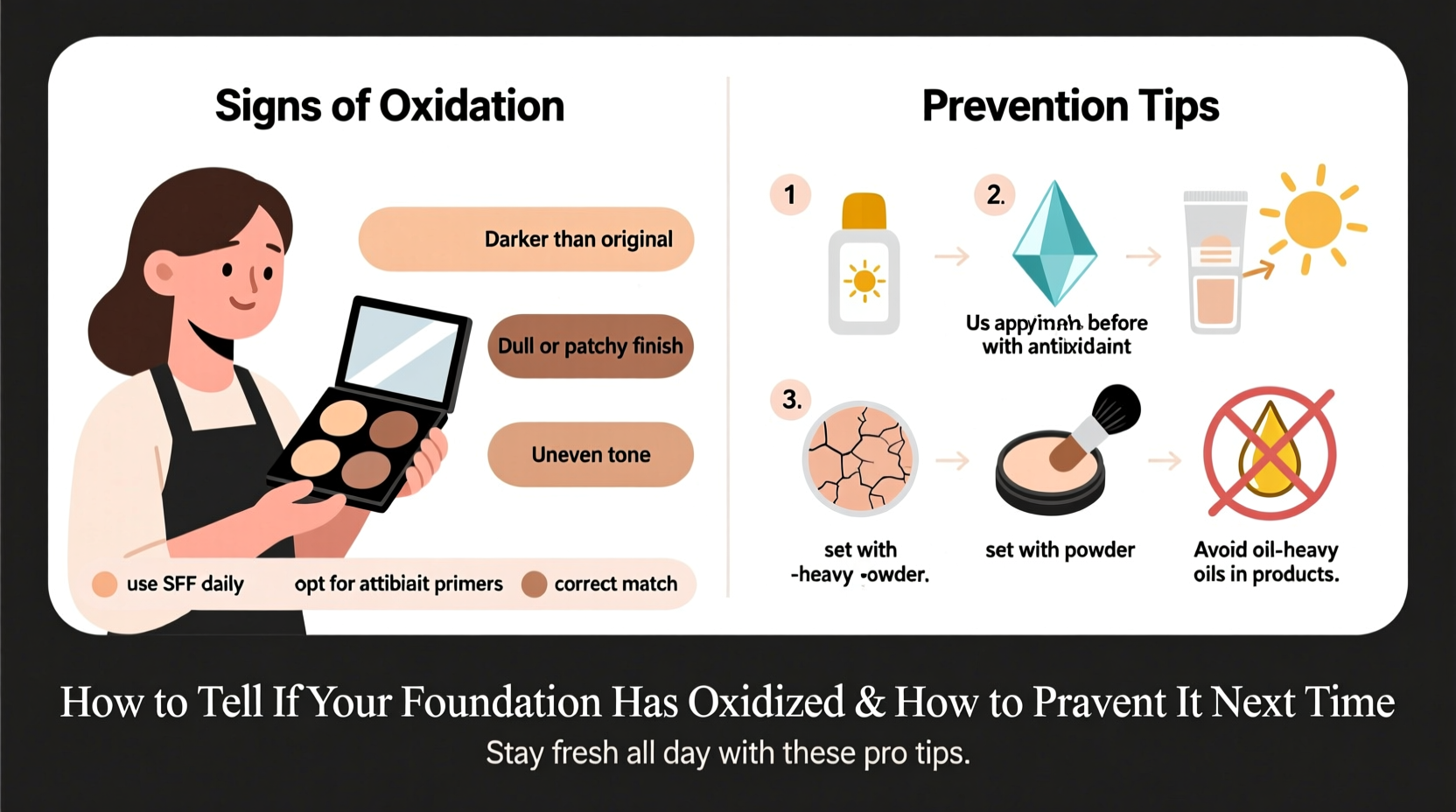
Oxidation occurs when the ingredients in your foundation react with oxygen, your skin’s natural oils, pH levels, or environmental factors. This chemical reaction alters the color of the product, typically causing it to darken or shift toward an orange or ashy tone after application. Unlike settling into pores or fading over time, oxidation changes the actual hue of the foundation on your skin.
This phenomenon doesn’t mean the product is defective. Many high-quality foundations contain ingredients like iron oxides or certain silicones that are more prone to reacting under specific conditions. The key is identifying whether the change is due to oxidation or another factor like mismatched undertones or dehydration.
“Oxidation is one of the most misunderstood issues in makeup formulation. It's not always about shelf life — it's about chemistry meeting biology.” — Dr. Lena Park, Cosmetic Chemist & Formulation Specialist
How to Tell If Your Foundation Has Oxidized
Distinguishing oxidation from other makeup issues requires close observation. Here’s how to identify it accurately:
- The color changes within 15–30 minutes of application: If your foundation looks true-to-bottle at first but noticeably darker or warmer shortly after, oxidation is likely occurring.
- The shift is consistent across your face: Unlike patchiness caused by dryness or oiliness, oxidation affects the entire applied area uniformly.
- It doesn't blend out with powder or setting spray: No amount of blending or touch-ups corrects the underlying color shift.
- The bottle color remains unchanged: The foundation inside the container hasn’t darkened — only the product on your skin has.
It’s important not to confuse oxidation with:
- Undertone mismatch: A yellow-based foundation on cool-toned skin may appear sallow, but this is immediate and doesn’t evolve over time.
- Oily shine: Sebum can make foundation look darker, especially under lighting, but blotting removes the effect.
- Settling into fine lines: This creates shadows, not a uniform color change.
Common Causes of Foundation Oxidation
Several factors contribute to oxidation, many of which are controllable once identified. Knowing the root causes helps in selecting better products and adjusting application techniques.
- High Iron Oxide Content: Pigments used to create deeper shades or neutralize redness are highly reactive with oxygen and skin acidity.
- Skin’s pH Level: Everyone’s skin has a unique pH (typically between 4.5 and 6.5). Alkaline skin can trigger faster oxidation in certain formulas.
- Natural Skin Oils: Sebum interacts with silicone and emollient-rich bases, accelerating the oxidation process.
- Reactive Ingredients: Some foundations contain alcohols, volatile silicones (like cyclopentasiloxane), or certain preservatives that degrade upon air exposure.
- Environmental Exposure: Heat, humidity, and pollution increase oxidative stress on both skin and product.
- Expired Product: Over time, ingredients break down and become more unstable, increasing the likelihood of discoloration.
Real Example: Sarah’s Summer Makeup Struggle
Sarah, a 32-year-old marketing executive, loved her full-coverage matte foundation for its longevity and finish. Every morning, she matched it perfectly to her neck in natural light. Yet by midday, her face appeared two shades darker, especially around the jawline. She blamed her primer or sunscreen until she tested the foundation on her hand. Within 20 minutes, the swatch turned noticeably warmer. After switching to a water-based, low-silicone formula and using an antioxidant serum underneath, the oxidation stopped. Her makeup now stays true all day, even in humid weather.
How to Prevent Foundation Oxidation
Prevention starts with informed choices and ends with smart layering. Follow these science-backed strategies to keep your foundation looking fresh from morning to night.
1. Choose the Right Formula for Your Skin Type
Not all foundations oxidize equally. Match your base to your skin’s chemistry:
| Skin Type | Recommended Foundation Base | Avoid |
|---|---|---|
| Oily | Water-based, matte, alcohol-free | Heavy silicones, oil-infused |
| Dry | Hydrating, glycerin-rich, cream-to-liquid | High-alcohol mattifiers |
| Combination | Balanced hybrid (water + light silicone) | Extremely drying or greasy formulas |
| Sensitive | Mineral-based, fragrance-free | Parabens, synthetic dyes |
2. Prep Skin with Antioxidants
Antioxidant-rich serums act as a protective barrier, reducing the oxidative load on your foundation. Look for ingredients like:
- Vitamin C (L-ascorbic acid)
- Vitamin E (tocopherol)
- Ferulic acid
- Green tea extract (EGCG)
Apply your antioxidant serum before moisturizer. This creates a stable base that minimizes pH fluctuations and free radical activity.
3. Use a Primer Strategically
A good primer does more than blur pores — it seals your skincare and controls oil production. For oxidation-prone skin:
- Choose silicone-free primers with niacinamide to regulate sebum.
- Use pore-filling primers sparingly; excess silicone increases reactivity.
- Let primer set for 60 seconds before applying foundation.
4. Store Foundation Properly
Heat and sunlight accelerate ingredient breakdown. Keep your foundation in a cool, dark place — never in the bathroom near the shower or on a sunlit vanity. Avoid leaving it in cars or gym bags.
Pump or tube packaging is preferable to open jars, which expose the product to more air and bacteria.
5. Check Expiry Dates and Replace Regularly
Liquid foundations typically last 6–12 months after opening. Look for the “period after opening” symbol (an open jar with “12M”). Expired foundations lose stabilizers, making them more prone to oxidation.
“Makeup expiration isn’t just about safety — it’s about performance. Old foundation lacks the emulsifiers needed to maintain color integrity.” — Maria Tran, Licensed Esthetician & Beauty Educator
Step-by-Step Guide to Testing for Oxidation
If you’re unsure whether a new foundation will oxidize, follow this simple 45-minute test:
- Cleanse and prep your face normally — use your regular cleanser, toner, serum, and moisturizer.
- Apply a thin line of foundation along your jawline and another on the back of your hand.
- Wait 15 minutes without touching — let the product interact with your skin chemistry.
- Observe the color shift — compare both swatches to the original shade in natural light.
- Take a photo every 15 minutes for up to 45 minutes to track changes objectively.
- Evaluate: If the foundation darkens by more than one shade or turns orange/gray, it’s likely to oxidize during wear.
This method eliminates guesswork and helps avoid costly mistakes when buying new products online or blind.
Foundation Oxidation Prevention Checklist
Use this checklist to minimize oxidation risk with every new foundation:
- ✅ Patch test on jawline and hand before full-face use
- ✅ Apply antioxidant serum as first step in routine
- ✅ Use non-comedogenic, silicone-balanced primer
- ✅ Avoid mixing foundations from different brands (can destabilize formulas)
- ✅ Store foundation away from heat and direct light
- ✅ Replace liquid foundation every 6–12 months
- ✅ Blot excess oil instead of piling on powder (prevents cakey oxidation)
- ✅ Clean applicators weekly (dirty brushes harbor bacteria that degrade product)
Frequently Asked Questions
Does foundation oxidation happen immediately?
No, oxidation typically begins within 10–30 minutes after application and progresses over the next hour. Immediate darkening is more likely due to undertone mismatch or lighting conditions.
Can I fix an oxidizing foundation once it’s on my skin?
Once oxidation occurs, you can’t reverse it without removing the product. However, you can mitigate the appearance by gently blotting excess oil and applying a brightening concealer on areas where the foundation has turned too warm. Avoid layering more foundation — this worsens the darkness.
Are drugstore foundations more prone to oxidation than high-end ones?
Not necessarily. Both affordable and luxury brands use similar base ingredients. Oxidation depends more on formulation balance than price point. Some drugstore brands actually prioritize stability for mass-market appeal, while niche brands may use more reactive pigments for coverage.
Final Thoughts: Take Control of Your Makeup Longevity
Oxidation doesn’t have to be a recurring problem. With the right knowledge, you can decode why your foundation changes color and take proactive steps to prevent it. The solution lies not in abandoning your favorite products, but in understanding the interplay between your skin, environment, and cosmetics.
Start small: implement one prevention strategy at a time, from switching storage habits to adding an antioxidant serum. Track what works and refine your routine. Over time, you’ll build a personalized system that keeps your foundation looking exactly as it should — seamless, balanced, and true to shade.




 浙公网安备
33010002000092号
浙公网安备
33010002000092号 浙B2-20120091-4
Comments
No comments yet. Why don't you start the discussion?