
Skincare products are designed to improve skin health, but their effectiveness depends heavily on freshness. While expiration dates and period-after-opening (PAO) symbols provide guidance, many people overlook subtle signs that a product has degraded—sometimes continuing to use it long after it’s safe. Using expired skincare can lead to irritation, breakouts, or even infections. Recognizing when a product has gone bad—even if the label hasn’t caught up—is essential for maintaining both skin integrity and routine efficacy.
Understanding Expiration Labels and Their Limitations
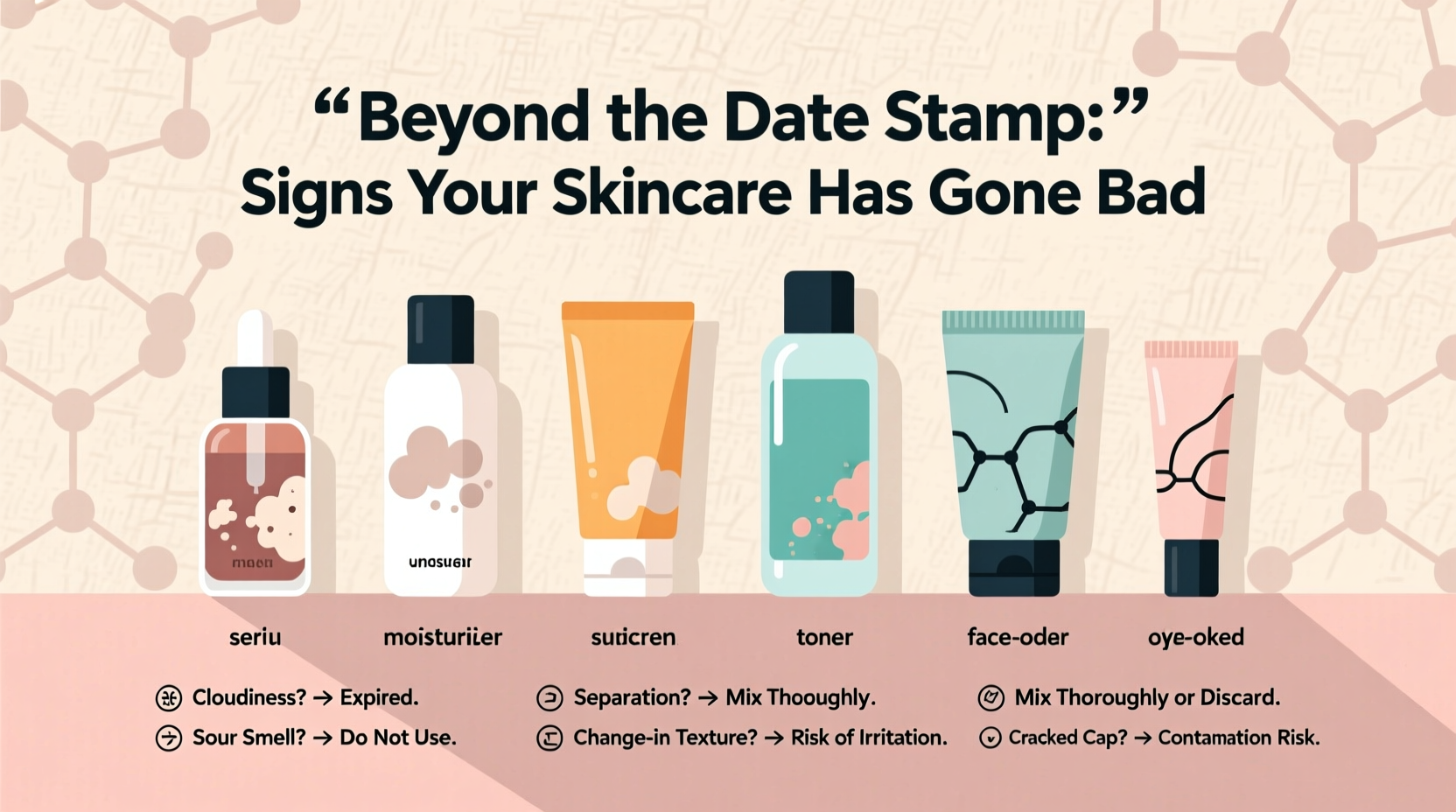
Most skincare products carry either an expiration date or a PAO symbol—a small open jar icon with a number followed by “M” (e.g., 12M means 12 months). These indicators assume ideal storage conditions: cool, dry environments away from direct sunlight and contamination. In reality, bathroom humidity, frequent hand contact, and temperature fluctuations accelerate degradation.
The printed date is only a starting point. A product stored in a steamy shower may degrade months before its labeled expiry. Conversely, unopened serums kept in dark, cool cabinets might remain stable slightly longer than expected. The key is not to rely solely on labels but to assess the product’s condition through multiple sensory and behavioral cues.
“Expiration dates are useful, but they don’t account for individual usage patterns or environmental exposure. Consumers need to become active observers of their products.” — Dr. Lena Patel, Cosmetic Dermatologist
Visual and Textural Changes That Signal Spoilage
Your eyes and fingers are among the most reliable tools for detecting spoilage. Over time, chemical breakdowns alter a product’s appearance and consistency. Watch for these red flags:
- Separation that doesn’t re-blend: Some emulsions naturally separate and can be shaken back into uniformity. If shaking no longer restores consistency, or oil pools persistently rise to the top, the emulsion has likely broken down.
- Discoloration: A noticeable shift in color—such as a vitamin C serum turning brown or a moisturizer developing yellow spots—indicates oxidation or microbial growth.
- Texture changes: Creams becoming grainy, watery, or lumpy suggest ingredient destabilization. Lightweight lotions thickening abnormally may have lost preservative efficacy.
- Presence of particles or mold: Visible specks, fibers, or fuzzy patches inside the container are definitive signs of contamination. Discard immediately.
Sensory Clues: Smell and Skin Reaction
The sense of smell is a powerful early warning system. Fresh skincare typically has a mild, clean scent. If you detect sourness, rancidity, or a sharp medicinal odor, the formulation has likely spoiled. Essential oils and plant extracts oxidize quickly, producing off-putting smells even before visible changes occur.
Equally telling are your skin’s reactions. If a product that once felt soothing now causes stinging, redness, or unexpected breakouts, it may no longer be chemically stable. Preservatives lose potency over time, allowing bacteria and fungi to grow—especially in jars repeatedly dipped into with fingers.
Consider this real-world example:
Mini Case Study: The Jarred Moisturizer Incident
Amy, a 32-year-old esthetician, continued using her favorite hydrating cream six months past its 12-month PAO mark. She noticed no discoloration and assumed it was still safe. After two weeks of renewed facial irritation and clogged pores, she inspected the jar closely under light and spotted faint white specks near the rim. Upon consulting a dermatologist, she learned these were early-stage fungal colonies thriving in compromised preservatives. Switching to a pump-based alternative resolved her issues within days.
Step-by-Step Guide: How to Evaluate Skincare Freshness
Follow this systematic approach to determine whether a product is still viable:
- Check the packaging: Look for the expiration date or PAO symbol. Note when you opened the product if possible.
- Inspect visually: Hold the product in natural light. Look for separation, discoloration, or foreign particles.
- Smell cautiously: Waft air from the opening toward your nose. Avoid inhaling deeply. Trust your instincts—if it smells “off,” it probably is.
- Test texture: Apply a small amount between fingers. Does it feel gritty, slimy, or unusually thin? Reject if so.
- Perform a patch test: Apply a pea-sized amount to your inner forearm or behind the ear. Wait 24 hours. Any redness, itching, or swelling indicates instability.
- Evaluate recent skin response: Have you experienced new sensitivity or breakouts since using this product? Correlate timelines to isolate potential culprits.
Common Product Lifespans and Risk Factors
Different formulations degrade at varying rates due to ingredients and packaging. Below is a general guide to expected shelf lives post-opening:
| Product Type | Typical Shelf Life (PAO) | High-Risk Factors | Low-Risk Alternatives |
|---|---|---|---|
| Vitamin C Serums | 3–6 months | Oxidation from light/air exposure | Airless pumps, opaque packaging |
| Moisturizers (jar) | 6–12 months | Finger contamination, humidity | Tubes or pump dispensers |
| Face Oils | 6–12 months | Rancidity in unsaturated oils | Cool, dark storage; nitrogen-sealed bottles |
| Exfoliating Toners (AHAs/BHAs) | 6–9 months | pH drift reducing efficacy | Stable formulations with buffering agents |
| Sunscreens | 12 months (unopened), 6–9 months (opened) | UV filter degradation | Store below 77°F (25°C); avoid car glove compartments |
Note: Water-based products are especially vulnerable due to microbial growth. Always prioritize hygiene—use clean hands or applicators, and never share skincare.
Expert Tips for Extending Product Viability
Maximizing shelf life starts with smart habits. Follow these expert-recommended practices:
- Store in a cool, dry place: Avoid humid bathrooms and sunny windowsills. A bedroom drawer or closet is ideal.
- Keep caps tightly closed: Minimize air exposure to slow oxidation, especially for antioxidants like retinol and vitamin C.
- Use spatulas for jar products: Prevent bacterial transfer by scooping with a clean tool instead of fingers.
- Buy smaller sizes if usage is slow: For potent actives used infrequently, opt for travel or sample sizes to ensure freshness.
- Label opening dates: Use a permanent marker to write the start date on the bottom or side of the container.
FAQ: Common Questions About Skincare Expiry
Can I use a skincare product one month past its expiration date?
It depends on storage and condition. If there are no changes in smell, texture, or color, and it’s been stored properly, limited use may be safe. However, efficacy likely diminishes, and risk increases. When in doubt, discard.
Does an unopened product last longer?
Yes. Unopened products often remain stable well beyond printed dates if stored correctly—sometimes up to three years. However, check for leaks, discoloration, or bloated packaging, which may indicate internal degradation.
Why do some products expire faster than others?
Formulation complexity plays a major role. Products with water, natural extracts, and active molecules (like peptides or acids) are more prone to microbial growth and chemical breakdown. Oil-based or anhydrous formulas (e.g., balms, scrubs) tend to last longer.
Final Checklist: Is Your Skincare Still Safe?
Before applying any product, run through this quick checklist:
- ✅ Expiration or PAO date not exceeded
- ✅ No unusual odor (rancid, sour, metallic)
- ✅ Consistent color and clarity
- ✅ Smooth, intended texture (no grit, clumps, or separation)
- ✅ No visible mold or particles
- ✅ No adverse skin reaction during patch test
- ✅ Stored properly (away from heat, light, moisture)
If any item fails this checklist, discontinue use immediately. It’s not worth risking irritation or infection for a few leftover drops.
Conclusion: Prioritize Skin Health Over Savings
Skincare is an investment in your health and confidence. Using expired or compromised products undermines that investment and can cause harm. While expiration dates offer a baseline, your best defense is vigilance—regular inspection, proper storage, and willingness to let go when quality declines. Don’t cling to half-empty jars out of habit or frugality. Replace them responsibly and refresh your routine with confidence.




 浙公网安备
33010002000092号
浙公网安备
33010002000092号 浙B2-20120091-4
Comments
No comments yet. Why don't you start the discussion?